

 プレビュー
プレビュー
 プリントを購入
 シェアする
シェアする シェアする
シェアする
 詳細を見る
詳細を見る

 ダウンロード
 似ている作品
 X線調査
X線調査 スライドショー
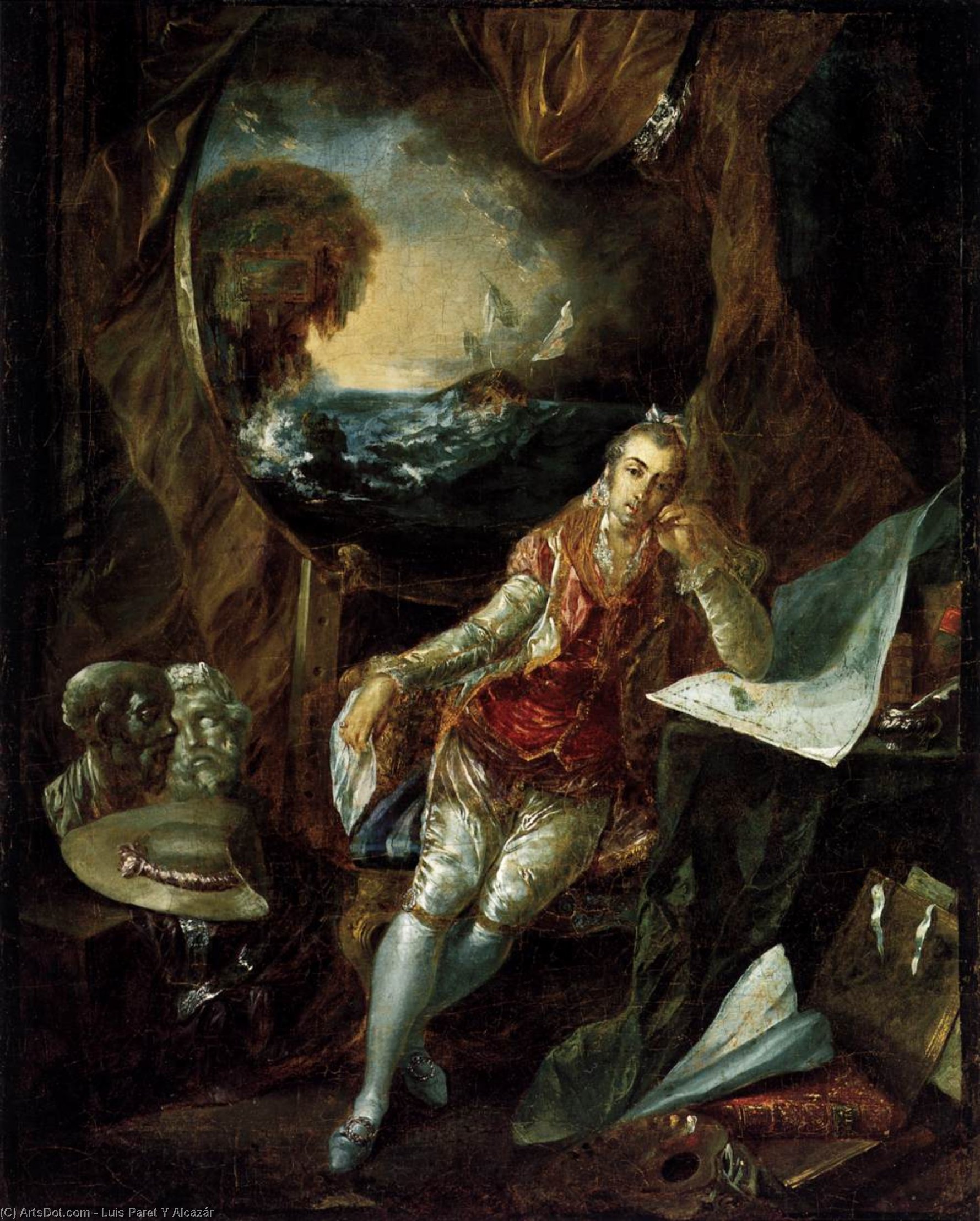
Self-Portrait in the Studio
 Oil On Canvas
- WallArt
- Rococo Visionary
 1786
1786 40.0 x 32.0 cm
 プラド美術館
 詳細を見る
詳細を見る




P118B $10

P118H $10

P118W $10

P438Z $10

P508JH $12

P508YH $12

P805H $10

P805Z $10

P919BZ $10

P919G $10

P919XJ $10

P959ZH $10

P968JZ $12

W106C $8

W218G $10

W218JH $8

W218Y $10

W307PJ $10

W316G $10

W316PJ $8

W316Y $10

W398PJ $8

W4111J $10

W500HY $15

W500JH $15

W692G $12

W849H $8

W940BG $15

W953PJ $8




作品のオリジナル比率に合わせた、当店の規定サイズからお選びください。

特定のフレームやスペースに合わせて、ご希望のサイズをご入力いただけます。選択されたサイズが元の画像の比率と異なる場合、アートワークをトリミングするか、手描きで要素を追加して絵画を拡張いたします。デジタルモックアップ を制作し、制作開始前にご確認(承認)をいただきます。
画面上のプレビューは、実際のトリミングや拡張を正確に反映しているものではありません。最終的な構図は、モックアップによってのみ正確にご確認いただけます。
カスタムサイズもご利用いただけますが、元の比率を維持するためには、あらかじめ用意されたリストからサイズを選択することをお勧めいたします。
ご注文後、ArtsDot.com チームより詳細な指示をお送りするとともに、仕上がりイメージ(モックアップ)をご提供いたします。


 ガラスオプションは、110cm未満のサイズでのみご利用いただけます。

Self-Portrait in the Studio
複製技法
複製画のサイズ
-


合計金額
$ 263
作品解説
The Quiet Intensity of “Self-Portrait in the Studio” by Luis Paret y Alcázar
Luis Paret y Alcázar’s “Self-Portrait in the Studio,” painted in 1786, isn't merely a depiction of an artist at work; it’s a profound meditation on creativity, solitude, and the burgeoning spirit of the Rococo era. This intimate canvas offers a rare glimpse into the private world of a Spanish master, revealing not just his physical likeness but also a carefully constructed atmosphere brimming with intellectual curiosity and artistic contemplation.
The painting immediately draws the eye to Paret himself, seated in a modestly furnished studio bathed in soft, diffused light. He’s rendered with remarkable detail – the slightly furrowed brow, the attentive gaze directed towards two open books resting on a nearby table, the subtle curve of his lips suggesting both concentration and a hint of amusement. The red jacket he wears, a bold splash of color against the muted tones of the room, speaks to his status and perhaps even a touch of self-conscious vanity – a detail that invites speculation about the artist’s perception of himself.
A Rococo Sanctuary: Setting and Symbolism
The studio itself is meticulously rendered, suggesting a space both familiar and carefully curated. Two volumes—one on the left, the other on the right—sit open before him, hinting at his scholarly pursuits and intellectual engagement. A clock hangs prominently on the wall above, a symbol of time’s relentless passage yet seemingly irrelevant to the artist's current focus. The presence of a dining table with a simple bowl adds a touch of domesticity, grounding the scene in everyday life while simultaneously elevating it through the act of artistic creation.
Crucially, the window behind Paret is not depicted as a source of natural light; instead, it’s shrouded in shadow. This deliberate choice is profoundly symbolic. It represents the artist's internal world—his imagination and inspiration—rather than the external reality. The absence of visible nature suggests a retreat from the outside world, a deliberate isolation necessary for focused creative work. This echoes the Rococo ideal of the *saloon*, a private space dedicated to intellectual pursuits and artistic contemplation.
Technique and Artistic Style: A Masterful Blend
Paret’s technique is characterized by its delicate precision and subtle use of color. He employs a soft, diffused light that creates an atmosphere of intimacy and tranquility. The brushstrokes are smooth and controlled, contributing to the painting's overall sense of refinement and elegance – hallmarks of the Rococo style. The artist skillfully utilizes chiaroscuro—the contrast between light and shadow—to sculpt Paret’s features and create a three-dimensional effect, adding depth and realism to the portrait.
Notably, the painting avoids overt grandeur or dramatic poses, aligning with the Rococo preference for understated elegance. Paret's self-portrait isn't about showcasing power or status; it’s about revealing his artistic process and inviting the viewer into his creative space. The composition is balanced and harmonious, reflecting a sense of intellectual order and aesthetic sensibility.
A Window into the Mind: Emotional Resonance
“Self-Portrait in the Studio” transcends a simple likeness; it’s a poignant portrayal of an artist lost in thought. The quiet intensity of Paret's gaze, combined with the carefully arranged details of his studio, evokes a sense of introspection and creative solitude. It speaks to the universal human experience of seeking inspiration within oneself—a theme that resonates deeply across centuries.
This painting offers a valuable insight into the mind of a significant figure in Spanish art history. It’s a testament to Paret's skill as a painter, his understanding of Rococo aesthetics, and his ability to capture not just an image but also a mood—a quiet moment of artistic contemplation that continues to captivate viewers today. Reproductions of this work offer a beautiful addition to any collection or interior space, inviting the viewer to share in the artist’s private world.
関連作品


アーティストの略歴
A Rococo Visionary: The Luminous World of Luis Paret y Alcázar
In the vibrant, sun-drenched tapestry of 18th-century Spain, few artists captured the delicate interplay of light and social elegance as masterfully as Luis Paret y Alcázar. A true visionary of the late Baroque and Rococo periods, Paret possessed a rare ability to transform the mundane into the magnificent. His life, spanning from his birth in Madrid in 1746 to his passing in 1799, was a journey through the heart of Spanish cultural evolution. Through his brush, the rigid structures of tradition met the airy, whimsical spirit of the Rococo, creating a body of work that remains a shimmering window into an era of profound transformation.
Paret’s artistic foundation was laid within the prestigious halls of the Academia Real de San Fernando. Under the tutelage of Antonio González Velázquez, he absorbed the rigorous techniques of the Spanish tradition, yet his spirit yearned for something more cosmopolitan. This thirst for innovation led him to the studio of the French painter Charles de la Traverse. This pivotal association introduced Paret to French artistic sensibilities, infusing his work with a certain je ne sais quoi—a lightness and grace that would become his hallmark. His early academic triumphs, including winning first prize in a prestigious painting contest in 1766, signaled the arrival of a prodigious talent capable of bridging the gap between Spanish gravity and European elegance.
The Art of the Vedute and the Spirit of Place
One of Paret’s most enduring legacies lies in his mastery of the vedute—detailed, panoramic landscapes that serve as topographical chronicles of the Spanish empire. He was a painter of ports and horizons, capturing the bustling maritime life of locations such as Cádiz and Puerto Rico with an almost scientific precision tempered by artistic soul. These works were more than mere maps; they were atmospheric evocations of a world in motion. In his depictions of harbors, one can sense the salt spray and the rhythmic pulse of trade, rendered through a meticulous attention to detail that celebrates both the grandeur of the landscape and the intricate machinery of human commerce.
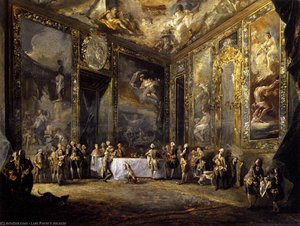
Beyond the sweeping vistas, Paret found profound beauty in the intimate "bambochadas"—genre scenes that offered nuanced portrayals of everyday life. These compositions often featured the upper echelons of society engaged in refined leisure, such as the captivating Elegant Company Preparing for a Masked Ball. In these moments, Paret utilized a palette of soft colors and luminous light to evoke the textures of silk, lace, and powdered skin. His ability to render the opulent spirit of the court, seen in works like Charles III Dining Before the Court, allowed him to document the social dynamics of Enlightenment Spain with unparalleled grace.
Legacy and Artistic Significance
The significance of Luis Paret y Alcázar extends far beyond the borders of Spain. His influence traveled across oceans, notably shaping the trajectory of Puerto Rican art through his pupil, José Campeche. Even when faced with the political upheavals that led to periods of exile, Paret’s commitment to his craft remained unshakable. His technical versatility—ranging from the delicate precision of pen and ink studies to the vibrant, luminous quality of oil on copper—demonstrates an artist who was constantly pushing the boundaries of his medium.
Today, the works of Paret, many of which are preserved in the hallowed halls of the Museo del Prado, serve as essential touchstones for understanding the transition from the dramatic shadows of the Baroque to the light-filled optimism of the Rococo. He remains a celebrated figure whose oeuvre captures the very essence of an age: a period defined by a search for beauty, a fascination with the new, and an enduring reverence for the elegance of the human experience.

luis paret y alcázar
1746 - 1799
基本情報
- Artistic Movement Or Style: Rococo
- Artists Or Movements Influenced By This Artist: ['Charles de la Traverse']
- Artists Who Influenced This Artist: ['Antonio González Velázquez']
- Date Of Death: 1799
- Full Name: Luis Paret y Alcázar
- Nationality: Spanish
- Notable Artworks:
- Village Scene and View of Fuenterrabia
- Esperando los Reyes
- Place Of Birth: Madrid, Spain
関連記事

ゴヤ傑作25選:スペインの魂を揺さぶる、深遠な芸術の世界 | ArtsDot
ゴヤ傑作25選:ロマン主義を代表するスペインの巨匠、フランシスコ・デ・ゴヤの世界へ。黒衣の女からマハまで、魂を揺さぶる絵画の物語と技法を紐解きます。ArtsDotで高品質なアートレプリカを見つけ、インテリアに深みと風格を。今すぐコレクションをご覧ください。

華麗なるロココ:芸術史を彩る10大傑作の世界
華麗なるロココ美術の世界へ。バロックから生まれた優雅な芸術、その10大傑作を徹底解説!ブーシェ、フロマンなど巨匠たちの技と物語を紐解き、お部屋を彩るアートを見つけよう。ArtsDot.comで至高の美術館品質レプリカとインテリアアイデアを発見。
The Rococo Aesthetic: Opulence, Rebellion & the Pursuit of Pleasure in 18th-Century Art
Explore the opulent world of Rococo art! Discover its origins, key artists like Watteau & Boucher, and lasting influence on design. Expert insights for collectors & enthusiasts.
Reflecting the Self: A History of Portraiture & Psychological Insight
Explore the fascinating history of self-portraiture from Renaissance masters like Dürer & Rembrandt to modern interpretations. Discover the psychological insights and artistic techniques behind these iconic works. Expert analysis for art enthusiasts.
The Echo of Self: Reflectivity as a Core Theme in Art History & Contemporary Practice
Explore the rich history of self-representation in art, from Renaissance masters to modern innovators. Discover how artists use portraiture to reveal identity, emotion & the depths of the human psyche. Expert insights for collectors.

