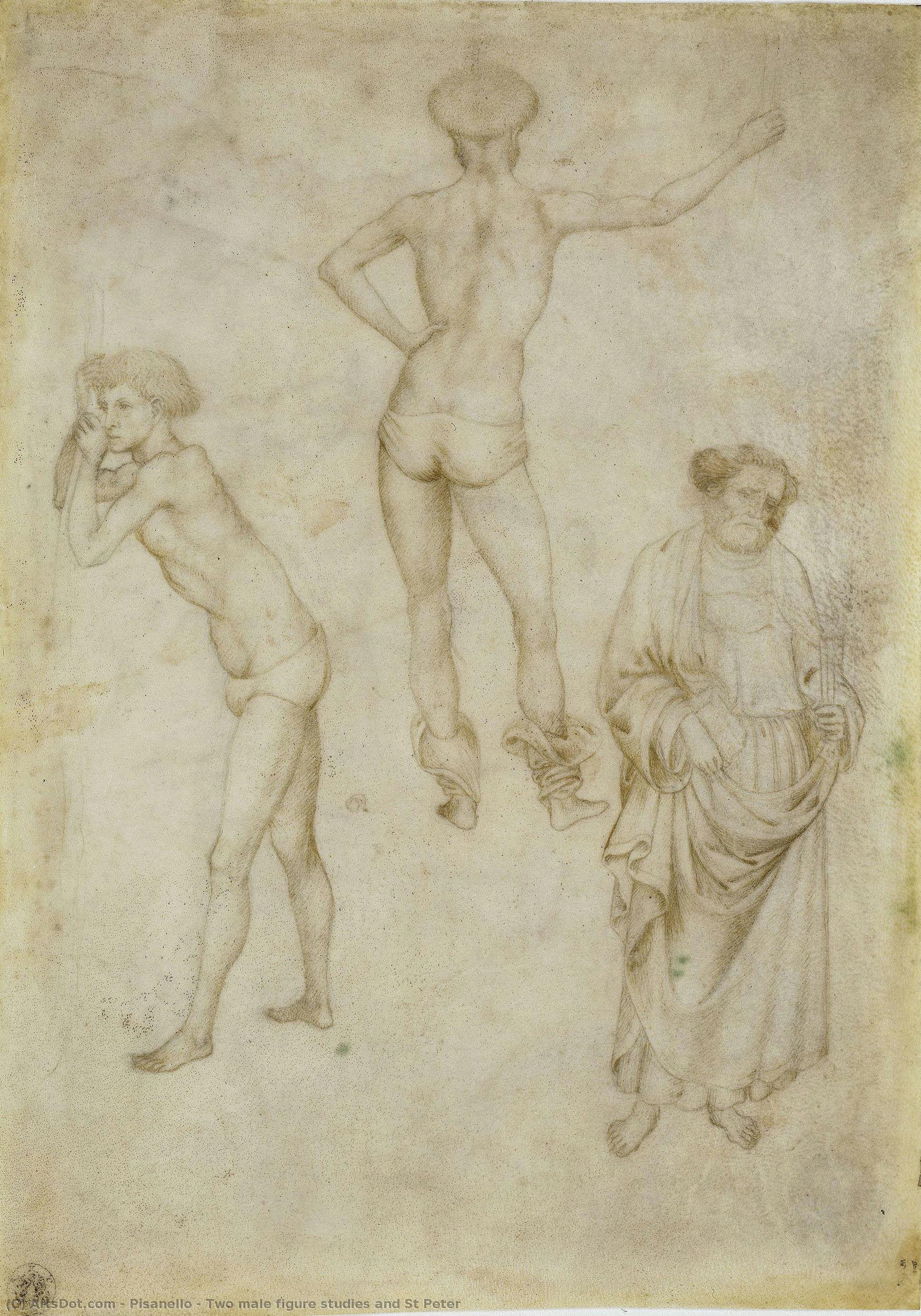
Two Male Figure Studies and St Peter - A Renaissance Echo
Pisanello’s “Two Male Figure Studies and St Peter” stands as an arresting testament to the burgeoning artistic spirit of Florence during the early fifteenth century—a pivotal moment bridging the Gothic legacy with the nascent ideals of the Renaissance. This monochrome drawing, executed in metalpoint and pen on parchment, transcends mere technical prowess; it embodies a profound engagement with humanist principles that would soon dominate European art. Examining its intricacies reveals not only masterful draughtsmanship but also a glimpse into the intellectual currents shaping artistic expression at the time.
- Subject Matter: The composition centers around three nude male figures arranged diagonally across the page, capturing an idealized representation of human anatomy—a cornerstone of Renaissance scholarship and aesthetic appreciation. Alongside these studies of the human form is a detailed drapery study for what appears to be St Peter, reflecting Pisanello’s meticulous observation of naturalistic detail.
- Style: The artwork firmly establishes itself within the stylistic framework of Early Renaissance art, inheriting the refined elegance of Florentine ateliers while simultaneously distancing itself from the ornate conventions of Late Gothic painting. The artist's deliberate use of hatching and cross-hatching techniques skillfully conveys tonal variations and volume, creating a palpable sense of depth and realism—a departure from the flattened perspectives characteristic of earlier styles.
- Technique: Primarily executed in dry media – charcoal or graphite – on parchment, “Two Male Figure Studies” exemplifies the precision demanded by metalpoint drawing. This technique allows for unparalleled control over line weight and shading, resulting in a surface texture that subtly communicates the artist’s hand and contributes to the artwork's aged appearance—a visual reminder of its origins within Pisanello’s sketchbook.
- Historical Context: Created during a period of intense intellectual ferment—marked by rediscovery of classical texts and an emphasis on humanism—the drawing reflects the humanist fascination with studying the human body as a microcosm of the universe. It anticipates the anatomical drawings produced by Leonardo da Vinci, demonstrating Pisanello’s pioneering role in establishing new standards for artistic representation.
- Symbolism: The juxtaposition of nude figures and drapery studies isn't merely formal; it speaks to a deeper symbolic resonance—a deliberate exploration of idealized beauty alongside contemplation of faith and spirituality. The artist’s focus on anatomical accuracy underscores the humanist conviction that understanding the human form is essential for grasping the essence of existence, mirroring the broader philosophical ambitions of the Renaissance era.
Size: 18 x 27 cm
Date: Unknown
Provenance: Likely part of Pisanello’s ‘Taccuino di viaggio,’ a collection of sketches for future reference.
The overall impression is one of intellectual curiosity and artistic exploration—a captivating glimpse into Leonardo da Vinci's formative influences. The artwork’s monochromatic palette enhances its dramatic impact, emphasizing the artist’s masterful command of tonal shading and creating an atmosphere of contemplative solemnity. It serves as a poignant reminder that even in seemingly simple sketches, profound artistic ideas can emerge.
Further Research:
- Two Male Figure Studies and St Peter: Explore this remarkable artwork on Google Arts & Culture for detailed information about its creation, stylistic influences, and historical significance.
- Miracles of St. Francis Xavier (Rubens): Consider the broader artistic context surrounding Rubens’ monumental altarpiece, reflecting the humanist spirit and stylistic innovations prevalent in Northern European art during the same period.