A Portrait of Introspection: Elizabeth at the Piano by Thomas Eakins
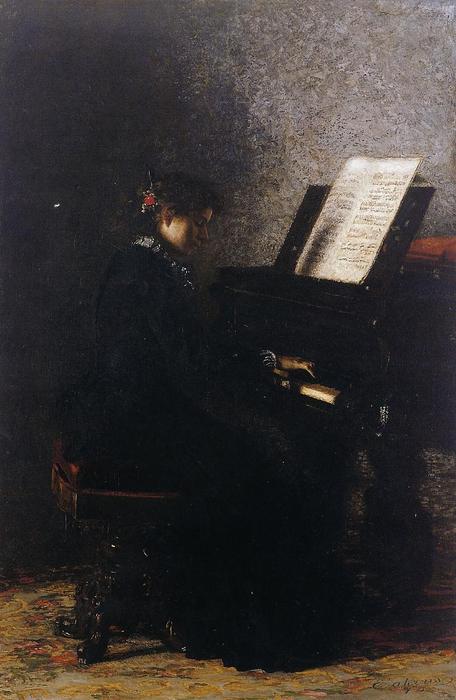
Thomas Eakins’s “Elizabeth at the Piano” is more than a simple depiction of a woman playing an instrument; it's a meticulously crafted meditation on solitude, observation, and the quiet drama of domestic life. Painted in 1875, this grayscale portrait, rendered in oil on canvas with a masterful command of realism, offers a profound glimpse into the artistic sensibilities of one of America’s most significant realist painters. The artwork immediately draws the viewer into a space of contemplative stillness, a feeling reinforced by the muted palette and the almost unnervingly direct gaze of Elizabeth Shipton, the model who posed for the piece.
- Subject Matter: The scene unfolds within a richly detailed interior – a room subtly imbued with an atmosphere of both formality and intimacy. The focus is undeniably on Elizabeth, seated at a grand piano, but her presence is framed by two indistinct figures observing her, adding layers of narrative ambiguity. This juxtaposition suggests the interplay between performance and audience, private experience and shared observation.
- Style & Technique: Eakins’s commitment to realism is absolute. He employs a technique rooted in meticulous observation and scientific precision – a characteristic often associated with his work alongside Philadelphia's medical community. The visible brushstrokes, particularly in the rendering of the piano keys and the fabric of Elizabeth’s dress, speak volumes about his deliberate approach; an impasto style adds to the tactile quality of the painting, inviting the viewer to almost feel the surface beneath their fingertips.
- Composition & Lighting: The vertical orientation emphasizes Elizabeth's form, anchoring her within the frame and directing our attention to her posture and expression. The diffused lighting, seemingly emanating from an unseen source, casts soft shadows that heighten the sense of intimacy and melancholy. This deliberate lack of strong directional light contributes significantly to the painting’s subdued mood, fostering a feeling of quiet contemplation.
Decoding the Symbolism: Melancholy and Observation
The monochromatic color scheme is not merely an aesthetic choice; it's deeply symbolic. The absence of vibrant hues amplifies the emotional weight of the scene, lending itself to interpretations of solitude, reflection, and perhaps even a touch of melancholy. Elizabeth’s pose – poised yet withdrawn – reinforces this impression. Her gaze, directed outwards but seemingly unfocused, suggests an internal world of thought and emotion. The two observers in the background, rendered as indistinct shapes, add another layer of complexity. Are they friends? Family members? Or simply witnesses to a private moment? Their anonymity fuels speculation and invites the viewer to project their own interpretations onto the scene.
- Historical Context: Eakins was working during a period of significant artistic change in America, as artists sought to establish their own distinct national identity. His unflinching realism stood in contrast to the prevailing romantic styles, and his focus on everyday subjects – particularly those found within Philadelphia’s social circles – challenged conventional notions of what constituted worthy artistic subject matter.
- Symbolic Elements: The piano itself is a potent symbol – representing both musical expression and intellectual pursuit. Elizabeth's engagement with it suggests a connection to the world of ideas and emotions, further reinforcing the painting’s themes of introspection and contemplation.
A Legacy of Realism: Eakins’s Enduring Influence
"Elizabeth at the Piano" exemplifies Thomas Eakins’s profound understanding of human psychology and his extraordinary ability to translate that understanding onto canvas. His meticulous attention to detail, combined with his innovative use of light and shadow, created a work that continues to resonate with viewers today. It's a testament to his belief in the power of observation and his unwavering commitment to portraying reality as he saw it – unflinchingly honest, profoundly moving, and undeniably captivating.
Materials Used: Oil paints, canvas, brushes
Date: 1875
Artist: Thomas Eakins (1844-1916)