

 プレビュー
プレビュー
 プリントを購入
 シェアする
シェアする シェアする
シェアする
 詳細を見る
詳細を見る

 ダウンロード
 似ている作品
 X線調査
X線調査 スライドショー
Landscape with Buildings
 Oil On Canvas
- WallArt
- Baroque
 Early Modern
 78.0 x 103.0 cm
 エルミタージュ美術館
 詳細を見る
詳細を見る




P118B $10

P118H $10

P118W $10

P438Z $10

P508JH $12

P508YH $12

P805H $10

P805Z $10

P919BZ $10

P919G $10

P919XJ $10

P959ZH $10

P968JZ $12

W106C $8

W218G $10

W218JH $8

W218Y $10

W307PJ $10

W316G $10

W316PJ $8

W316Y $10

W398PJ $8

W4111J $10

W500HY $15

W500JH $15

W692G $12

W849H $8

W940BG $15

W953PJ $8




作品のオリジナル比率に合わせた、当店の規定サイズからお選びください。

特定のフレームやスペースに合わせて、ご希望のサイズをご入力いただけます。選択されたサイズが元の画像の比率と異なる場合、アートワークをトリミングするか、手描きで要素を追加して絵画を拡張いたします。デジタルモックアップ を制作し、制作開始前にご確認(承認)をいただきます。
画面上のプレビューは、実際のトリミングや拡張を正確に反映しているものではありません。最終的な構図は、モックアップによってのみ正確にご確認いただけます。
カスタムサイズもご利用いただけますが、元の比率を維持するためには、あらかじめ用意されたリストからサイズを選択することをお勧めいたします。
ご注文後、ArtsDot.com チームより詳細な指示をお送りするとともに、仕上がりイメージ(モックアップ)をご提供いたします。


 ガラスオプションは、110cm未満のサイズでのみご利用いただけます。

Landscape with Buildings
複製技法
複製画のサイズ
-


合計金額
$ 263
A Journey Through Time: The Majesty of Landscape with Buildings
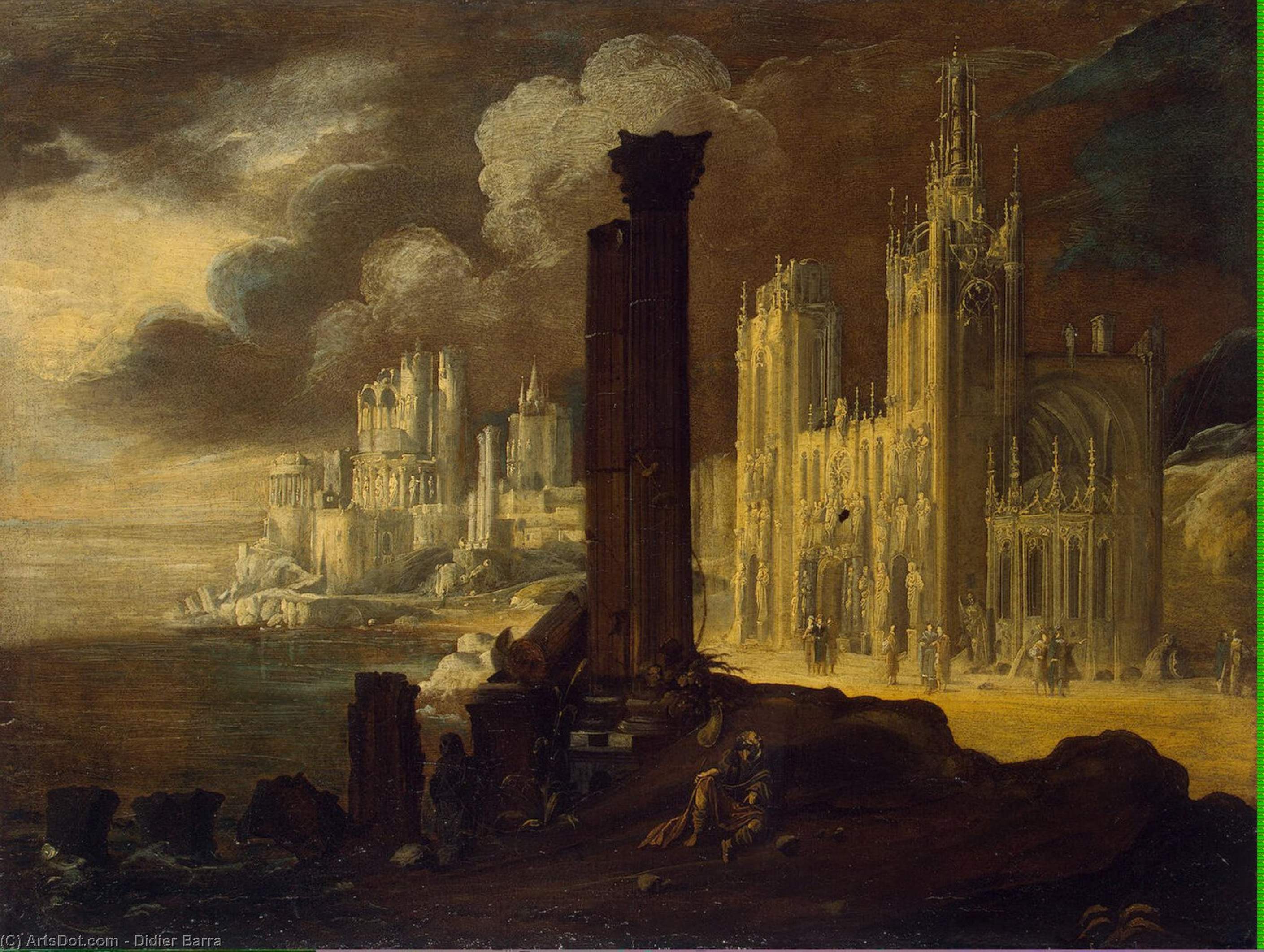
To gaze upon this depiction, Landscape with Buildings, is to step across the threshold of history itself. Didier Barra’s masterful composition transports the viewer into an imagined vista where the grandeur of human endeavor meets the timeless sweep of nature. Dominating the scene are two imposing towers, structures that speak in silent stone narratives of bygone eras—a castle-like permanence anchoring the left and right flanks of the canvas. These architectural sentinels suggest a civilization both mighty and perhaps melancholic, inviting contemplation on the rise and fall of empires.
Baroque Echoes and Human Presence
The style whispers with the confident sweep of the Baroque period, even as Barra’s biography suggests an artist navigating stylistic currents between Renaissance ideals and later dramatic flair. The landscape itself is not merely a backdrop; it is a stage upon which life unfolds. Scattered figures dot the foreground and recede into the middle distance, their presence lending scale and narrative weight to the monumental architecture. They are fleeting moments against the permanence of stone, suggesting daily routines unfolding beneath the shadow of history. Further enhancing this sense of depth and journey is the subtle inclusion of a boat on the left, hinting at passage, trade, or perhaps an escape from the very drama depicted ashore.
Technique and Evocative Depth
Barra’s handling of light and atmosphere is particularly captivating. One can almost feel the quality of the Mediterranean air filtering through the scene. The technique employed allows for both meticulous detail in the stonework—the texture, the weathering—and a soft, atmospheric haze that softens the edges of the distant background. This interplay between sharp focus on human activity and diffused mystery in the distance is what gives the piece its profound emotional resonance. It speaks to the Baroque fascination with the sublime: moments where overwhelming beauty meets palpable drama.
Symbolism for the Modern Collector
For the collector or designer seeking a piece that anchors a room with intellectual depth, this work offers rich symbolic ground. The juxtaposition of nature (the expansive landscape) and civilization (the towers) is an eternal dialogue—a perfect metaphor for the human condition itself. It suggests that even amidst monumental structures built by man, life continues its gentle, persistent flow. Reproducing this piece allows one to bring not just a painting, but a contemplation on endurance, passage, and the enduring beauty of historical narrative into your own space.
関連作品

アーティストの略歴
The Enigmatic Wanderer of the Baroque
Didier Barra remains an artist shrouded in a profound and captivating mystery, his life a series of shadows cast by the remarkable brilliance of his surviving works. Born around 1590 in the quiet environs of Metz, Lorraine—then part of the Duché de Lorraine—Barra’s early years are largely lost to the mists of time, leaving historians to reconstruct his trajectory through the very brushstrokes he left behind. Around 1608, he embarked on a transformative journey toward Italy, a migration that would fundamentally alter his artistic soul. Upon arriving in Naples, a city then pulsating with the vibrant energy of the Baroque era, Barra found more than just a new home; he found a canvas for a vision that was uniquely his own, blending the meticulous precision of his French roots with the dramatic, emotive intensity of the Italian landscape.Visions of Decay and Sublime Grandeur
To encounter a Barra landscape is to step into a world caught in the silent, slow-motion collapse of time itself. He achieved a singular renown for his cityscapes—visions of crumbling towers and desolate, near-barren buildings that evoke an unsettling, almost post-apocalyptic atmosphere. His palette was intentionally austere, dominated by the somber tones of muted browns, ochres, and grays, which served to heighten the psychological weight of his compositions. Through a masterful command of perspective, Barra created architectural sentinels that seem both mighty and melancholic, inviting the viewer to contemplate the inevitable decay of human endeavor. In works such as Landscape with Buildings, one observes an incredible interplay between the sharp, weathered textures of stone and a soft, atmospheric haze that suggests the heavy, humid air of the Mediterranean. These were not merely depictions of ruins; they were psychological landscapes where the grandeur of the past meets the haunting stillness of a world ravaged by time.The Shadow of Monsù Desiderio
For centuries, the true identity of this master was obscured by a collective misattribution. Until the mid-twentieth century, much of Barra’s extraordinary output was credited to a single, mythical figure known as Monsù Desiderio. It was only through rigorous modern scholarship that the veil was lifted, revealing that this singular "hand" was actually the work of several distinct artists, with Didier Barra standing as one of its most vital contributors alongside figures like François de Nomé. This revelation has reshaped our understanding of the Neapolitan school, transforming a single legend into a complex tapestry of individual genius. Today, Barra is celebrated not just for his technical skill, but for his ability to capture the sublime—that terrifyingly beautiful intersection of awe and dread. His legacy persists in the way he taught us to look at ruins, not as mere debris, but as profound monuments to the fleeting nature of existence.
Didier Barra
1590 - 1644 , Italy
基本情報
- Artistic Movement Or Style: Renaissance
- Artists Or Movements Influenced By This Artist: ['Baroque']
- Artists Who Influenced This Artist:
- Alessandro Baratta
- Claude Deruet
- Date Of Birth: Metz, Italy (1590)
- Date Of Death: Naples (1644)
- Full Name: Didier Barra
- Nationality: French
- Notable Artworks:
- Vue De Metz Depuis La Colline Bellecroix Anciennement
- Fantastic View Of A Gothic Cathedral
- The Martyrdom Of Saint Catherine
- Place Of Birth: Metz, Italy
関連記事
Decoding Baroque Grandeur: A Guide to the Drama and Emotion of 17th-Century Art
Explore the breathtaking drama of 17th-century Baroque art. Our expert guide decodes the use of chiaroscuro, emotional intensity, and historical grandeur to help you appreciate and curate timeless masterpieces for your collection.

ロマン派ランドスケープ:時代を彩る巨匠の10選|アートとインテリアの世界
ロマン派絵画の時代を彩る10選。巨匠たちの風景が織りなす感動の世界へ。ターナー、ルーベンスなど、名作の裏話と高精細複製でアートをお部屋に。ArtsDot.comで至福のアート体験を。

Evocations of Place: A Historical Journey Through Landscape Art
Explore the rich history of landscape art with ArtsDot. Discover renowned artists, movements like Impressionism & Romanticism, and expert guidance for collecting timeless pieces. Find your perfect serene escape today!

ジョン・コンスタブルの傑作25選:英国風景画の巨匠が描く自然と光の詩 | ArtsDot
ジョン・コンスタブルの傑作25選。英国風景画の巨匠が描く自然と光の詩の世界へ。ロマン主義を代表する絵画、デダム・ヴェールやヘイ・ウェインなど、ArtsDotで高品質なアートプリントをお楽しみください。インテリアに深みと感動を。コレクションはこちら。

バロック美術を極めた至宝:時代を彩る10大名作の世界
バロック美術の華!カラヴァッジョ、ベルニーニら巨匠が創り上げた10大名作を徹底解剖。ドラマチックな色彩と豪華絢爛の世界観に触れ、至宝のアートプリントで空間を彩ろう。ArtsDot.comで美術館品質の複製と洗練されたインテリアを見つけましょう!