

 プレビュー
プレビュー
 プリントを購入
 シェアする
シェアする シェアする
シェアする
 詳細を見る
詳細を見る

 ダウンロード
 似ている作品
 X線調査
X線調査 スライドショー
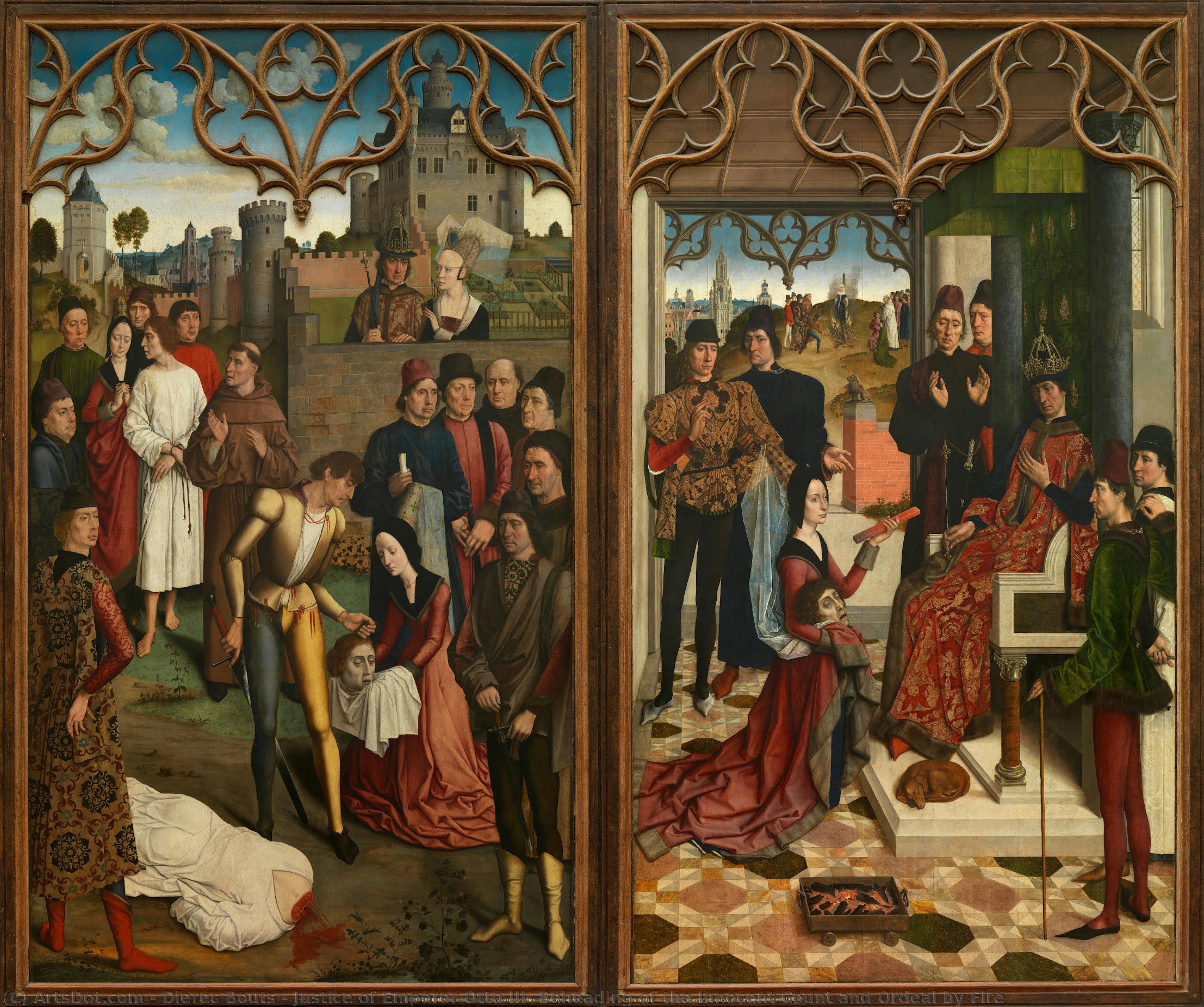
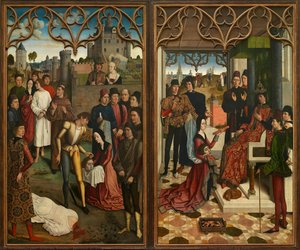
Justice of Emperor Otto III: Beheading of the Innocent Count and Ordeal by Fire
 Oil On Canvas
- WallArt
- Early Netherlandish Painting
 1475
1475- Late Medieval
 ベルギー王立美術館 (Berugī Ōryoku Bijutsukan)
 詳細を見る
詳細を見る
オンラインプレビューをはるかに凌ぐ、高解像度で鮮明なデジタル画像をご購入いただけます。
各ファイルは、社内の専門家が高度なツールと熟練した手作業によるレタッチを用いて、細心の注意を払って準備されています。すべての画像において、卓越した鮮明度、正確な色彩再現性、そして繊細なディテールを保証いたします。
最終ファイルは、プロフェッショナルな編集・印刷環境ですぐにご利用いただけるよう最適化された状態で、72時間以内にメールにてお届けいたします。これは、一流のデザインスタジオ、出版社、ギャラリーから信頼されているものと同等の品質です。
デジタル画像のご注文に付随する特典
高品質なデジタル画像配信を、確かな品質で。
ArtsDot.com を選ぶことは、単に画像を手に入れることではありません。それは、プロの手によって精密に仕上げられ、満足保証が付いた高品質なデジタルアートワークを受け取ることを意味します。ご注文いただいた際に自動的に付随する内容は、以下の通りです:

メールですぐにお届け
ご注文から72時間以内に、高解像度のデジタル画像ファイルがメールでお手元に届きます。すぐにそのままご利用いただけます。

AI技術で最適化されたデジタルファイル
お客様の作品は、高度なAIツールと専門家による手作業の編集を組み合わせてプロフェッショナルに最適化されており、細部のディテール、鮮明さ、そして正確な色再現性を最大限に引き出しています。

一生涯無料の再送サービス
ファイルを誤って削除したり、紛失してしまったりしましたか?ご安心ください。いつでも無料で再送いたします。

輸入手数料は一切かかりません
関税や手数料、配送料を気にすることなく、お気に入りのアートワークをすぐにお楽しみいただけます。デジタルダウンロードは常に免税です。

色彩再現の保証
プロ仕様のツールとカラーマネジメント技術を用いることで、デジタル画像が元の色を最大限に忠実に再現することを保証いたします。

60日間満足保証
ご購入いただいたデジタル画像にご満足いただけない場合は、60日以内であれば、修正または100%の返金(理由を問う必要はありません)をさせていただきます。

100% 返金保証
ご満足いただけない場合は、デジタルファイルを受け取ってから60日以内であれば、理由を問わず全額返金いたします。

まとめ買い割引
3枚購入で10%OFF - 5枚購入で15%OFF - 10枚以上購入で20%OFF。クリエイティブなプロジェクト、ギャラリー、エージェンシーに最適です。
関連作品


作家の略歴
Dieric Bouts: The Silent Master of Early Netherlandish Painting
In the vibrant, bustling landscape of the fifteenth-century Netherlands, where the works of Jan van Eyck and Rogier van der Weyden dazzled with their dramatic flair and technical virtuosity, there existed a different kind of mastery. Dieric Bouts, often referred to as the "painter of silence," carved out a legacy not through theatrical emotion, but through a profound, meditative stillness. Born in Haarlem around 1415, Bouts emerged from the Northern Netherlands to become one of the most respected figures of the Early Netherlandish period. His life and work represent a unique intersection of technical innovation and spiritual introspection, offering a window into a world where every brushstroke served to deepen the viewer's contemplation of the divine.
The early years of Bouts’s journey are shrouded in the soft mists of history, yet his artistic lineage is clearly etched in the masterpieces he left behind. It is widely believed that he received formative training under the legendary Rogier van der Weyden, an influence that manifests in his meticulous attention to detail and a sophisticated command of color. However, Bouts was far from a mere imitator. While he inherited the Northern Renaissance's obsession with realism, he departed from the overt emotionalism of his peers. Instead, he developed a signature style characterized by a deliberate restraint and an almost architectural approach to composition. He possessed a singular ability to organize space, often utilizing a single vanishing point to create a sense of deep, structured perspective that was revolutionary for his time.
A Vision of Stillness and Sacred Space
Bouts’s career found its most significant expression in the city of Leuven, where he worked from at least 1457 until his death in 1475. His ascent within the local community was marked by great prestige; in 1468, he was appointed the official painter of the town, a testament to his standing among the civic and religious elite. This period saw the creation of some of his most enduring works, which often eschewed narrative chaos in favor of a carefully orchestrated solemnity. In his monumental altarpieces, such as The Last Supper, one does not find frantic gestures or weeping figures, but rather a quiet, heavy atmosphere that emphasizes the gravity of the sacred event through precise spatial relationships and balanced forms.
His technical prowess was particularly evident in his handling of light and texture. Whether working in tempera on panel or the burgeoning medium of oil, Bouts achieved a level of clarity that allowed the viewer to inhabit the scenes he created. His works often feature:
- Architectural Precision: A masterful use of geometric structures to frame religious narratives.
- Psychological Depth: Characters who appear lost in thought, inviting the viewer into a shared moment of prayerful reflection.
- Luminous Detail: An incredible ability to render the subtle textures of medieval clothing and the soft glow of divine light.
Legacy of the Flemish Primitive
The historical significance of Dieric Bouts lies in his role as a bridge between the foundational realism of the early Flemish masters and the more complex spatial explorations of the later Renaissance. By introducing a sense of mathematical order and a singular vanishing point into his compositions, he helped pave the way for future generations of painters to master the illusion of three-dimensional space on a flat surface. His ability to marry the spiritual with the structural ensured that his art was not merely a decoration, but a profound theological tool designed to inspire awe through clarity.
Though he may lack the flamboyant reputation of Van Eyck, Bouts remains an indispensable figure in the study of Northern Renaissance art. He taught us that power does not always require volume or noise; sometimes, the most profound truths are found in the quietest corners of a painting, held within the steady, unblinking gaze of a saint or the silent, structured shadows of a sacred hall. His life, spanning from the Netherlands to the heights of Leuven's artistic circles, remains a testament to the enduring strength of the contemplative spirit.
dierec bouts
1410 - 1475
プロフィール概要
- Artistic Movement Or Style: Early Netherlandish
- Artists Or Movements Influenced By This Artist:
- Hans Memling
- Gerard David
- Artists Who Influenced This Artist:
- Rogier van der Weyden
- Jan van Eyck
- Date Of Birth: c. 1415?
- Date Of Death: 6 May 1475
- Full Name: Dieric Bouts
- Nationality: Flemish
- Notable Artworks:
- The Entombment
- Head of Christ
- Last Supper
- Justice Panels
- Place Of Birth: Haarlem, Netherlands

