

 プレビュー
プレビュー
 プリントを購入
 シェアする
シェアする シェアする
シェアする
 詳細を見る
詳細を見る

 ダウンロード
 似ている作品
 X線調査
X線調査 スライドショー
Saint John the Evangelist on Patmos


 詳細を見る
詳細を見る




































作品のオリジナル比率に合わせた、当店の規定サイズからお選びください。

特定のフレームやスペースに合わせて、ご希望のサイズをご入力いただけます。選択されたサイズが元の画像の比率と異なる場合、アートワークをトリミングするか、手描きで要素を追加して絵画を拡張いたします。デジタルモックアップ を制作し、制作開始前にご確認(承認)をいただきます。
画面上のプレビューは、実際のトリミングや拡張を正確に反映しているものではありません。最終的な構図は、モックアップによってのみ正確にご確認いただけます。
カスタムサイズもご利用いただけますが、元の比率を維持するためには、あらかじめ用意されたリストからサイズを選択することをお勧めいたします。
ご注文後、ArtsDot.com チームより詳細な指示をお送りするとともに、仕上がりイメージ(モックアップ)をご提供いたします。


 ガラスオプションは、110cm未満のサイズでのみご利用いただけます。

Saint John the Evangelist on Patmos
複製技法
複製画のサイズ
-


合計金額
$ 288
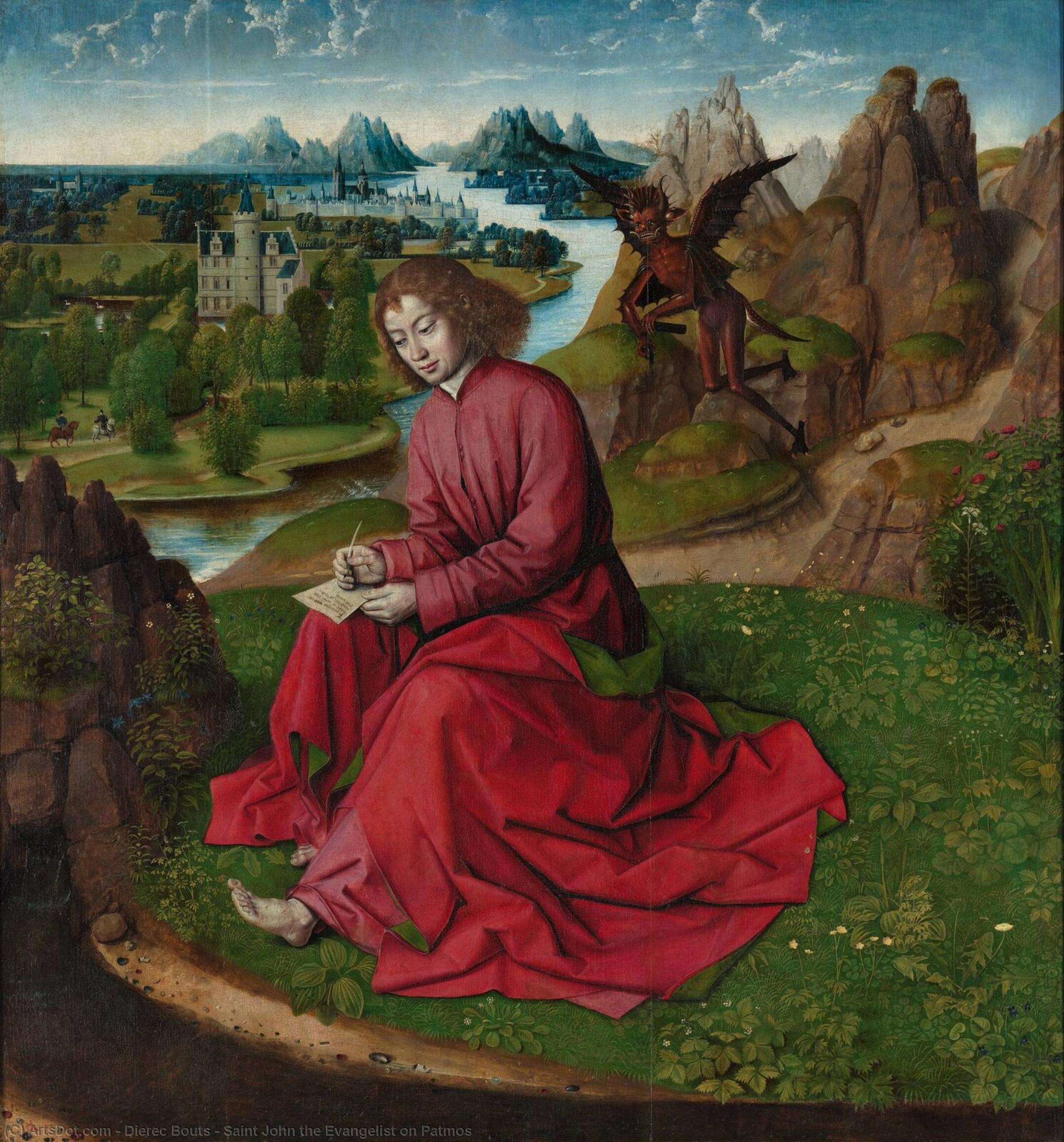
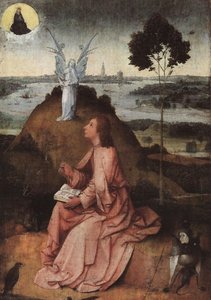
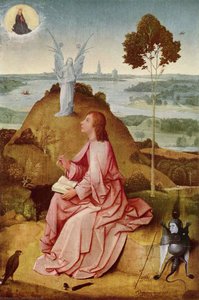
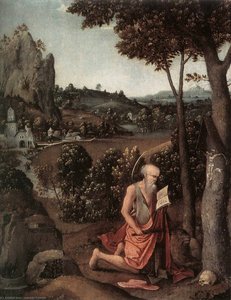
The scene depicts Saint John the Evangelist as a young man with long hair, sitting on a grassy hillside, holding a book in his hands while writing. The composition is characterized by its use of linear perspective, creating a sense of depth and space. A demon or devil figure, possibly representing temptation or evil, stands behind him, adding a sense of tension to the scene.
Dirk Bouts was an Early Netherlandish painter, greatly influenced by Jan van Eyck and Rogier van der Weyden. His work is characterized by its use of symbolism and attention to detail. The Saint John the Evangelist on Patmos painting is a prime example of his skill in capturing the essence of his subjects.
Artistic Style and Influences
The Northern Renaissance style, which emerged in the 15th century, is characterized by its use of oil painting and attention to detail. Dirk Bouts was among the first northern artists to adopt this style, and his work had a significant influence on the development of art in the region.- Northern Renaissance art is characterized by its use of symbolism and attention to detail.
- The Museo Thyssen-Bornemisza in Madrid, Spain, houses an impressive collection of Northern Renaissance art, including works by Jan Van Eyck and Rogier van der Weyden.
- For more information on Dirk Bouts and his work, visit the Dierec Bouts page on ArtsDot.com.
The Saint John the Evangelist on Patmos painting is a masterpiece of Northern Renaissance art, and its beauty and significance can be appreciated by art lovers around the world. For those interested in owning a piece of history, ArtsDot.com offers handmade oil painting reproductions of this and other famous works of art. Visit ArtsDot.com to learn more.
関連作品
![Life Of St John The Evangelist - [03] - Ascension Of The Evangelist — ジョット, Proto-renaissance Painting](/media/artworks/images-thumb/ab/15/ab151a8ad105b1ef78444cd367849cb4.jpg)
アーティストの略歴
Dieric Bouts: The Silent Master of Early Netherlandish Painting
In the vibrant, bustling landscape of the fifteenth-century Netherlands, where the works of Jan van Eyck and Rogier van der Weyden dazzled with their dramatic flair and technical virtuosity, there existed a different kind of mastery. Dieric Bouts, often referred to as the "painter of silence," carved out a legacy not through theatrical emotion, but through a profound, meditative stillness. Born in Haarlem around 1415, Bouts emerged from the Northern Netherlands to become one of the most respected figures of the Early Netherlandish period. His life and work represent a unique intersection of technical innovation and spiritual introspection, offering a window into a world where every brushstroke served to deepen the viewer's contemplation of the divine.
The early years of Bouts’s journey are shrouded in the soft mists of history, yet his artistic lineage is clearly etched in the masterpieces he left behind. It is widely believed that he received formative training under the legendary Rogier van der Weyden, an influence that manifests in his meticulous attention to detail and a sophisticated command of color. However, Bouts was far from a mere imitator. While he inherited the Northern Renaissance's obsession with realism, he departed from the overt emotionalism of his peers. Instead, he developed a signature style characterized by a deliberate restraint and an almost architectural approach to composition. He possessed a singular ability to organize space, often utilizing a single vanishing point to create a sense of deep, structured perspective that was revolutionary for his time.
A Vision of Stillness and Sacred Space
Bouts’s career found its most significant expression in the city of Leuven, where he worked from at least 1457 until his death in 1475. His ascent within the local community was marked by great prestige; in 1468, he was appointed the official painter of the town, a testament to his standing among the civic and religious elite. This period saw the creation of some of his most enduring works, which often eschewed narrative chaos in favor of a carefully orchestrated solemnity. In his monumental altarpieces, such as The Last Supper, one does not find frantic gestures or weeping figures, but rather a quiet, heavy atmosphere that emphasizes the gravity of the sacred event through precise spatial relationships and balanced forms.
His technical prowess was particularly evident in his handling of light and texture. Whether working in tempera on panel or the burgeoning medium of oil, Bouts achieved a level of clarity that allowed the viewer to inhabit the scenes he created. His works often feature:
- Architectural Precision: A masterful use of geometric structures to frame religious narratives.
- Psychological Depth: Characters who appear lost in thought, inviting the viewer into a shared moment of prayerful reflection.
- Luminous Detail: An incredible ability to render the subtle textures of medieval clothing and the soft glow of divine light.
Legacy of the Flemish Primitive
The historical significance of Dieric Bouts lies in his role as a bridge between the foundational realism of the early Flemish masters and the more complex spatial explorations of the later Renaissance. By introducing a sense of mathematical order and a singular vanishing point into his compositions, he helped pave the way for future generations of painters to master the illusion of three-dimensional space on a flat surface. His ability to marry the spiritual with the structural ensured that his art was not merely a decoration, but a profound theological tool designed to inspire awe through clarity.
Though he may lack the flamboyant reputation of Van Eyck, Bouts remains an indispensable figure in the study of Northern Renaissance art. He taught us that power does not always require volume or noise; sometimes, the most profound truths are found in the quietest corners of a painting, held within the steady, unblinking gaze of a saint or the silent, structured shadows of a sacred hall. His life, spanning from the Netherlands to the heights of Leuven's artistic circles, remains a testament to the enduring strength of the contemplative spirit.
dierec bouts
1410 - 1475
基本情報
- Artistic Movement Or Style: Early Netherlandish
- Artists Or Movements Influenced By This Artist:
- Hans Memling
- Gerard David
- Artists Who Influenced This Artist:
- Rogier van der Weyden
- Jan van Eyck
- Date Of Birth: c. 1415?
- Date Of Death: 6 May 1475
- Full Name: Dieric Bouts
- Nationality: Flemish
- Notable Artworks:
- The Entombment
- Head of Christ
- Last Supper
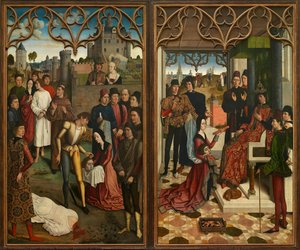
- Justice Panels
- Place Of Birth: Haarlem, Netherlands
関連記事

ジョン・シンガー・サージェント:至高の25選 - 美と光の肖像画の世界 | ArtsDot
ジョン・シンガー・サージェントの至高の25選。肖像画、写実主義、光と影の表現が美しい作品群を紐解きます。マダムXや少女の肖像など、時代を超えて愛される名作をArtsDotで鑑賞。高品質なアート複製で、お部屋に美術館のような空間を。今すぐコレクションをご覧ください。

ジョン・コンスタブルの傑作25選:英国風景画の巨匠が描く自然と光の詩 | ArtsDot
ジョン・コンスタブルの傑作25選。英国風景画の巨匠が描く自然と光の詩の世界へ。ロマン主義を代表する絵画、デダム・ヴェールやヘイ・ウェインなど、ArtsDotで高品質なアートプリントをお楽しみください。インテリアに深みと感動を。コレクションはこちら。
Gwen John: Intimacy, Modernity & the Quiet Power of Welsh Portraiture
Explore the captivating world of Gwen John, a pioneering Welsh artist renowned for her intimate portraits & subtle style. Discover her life, legacy, and how to bring her timeless beauty into your home with ArtsDot.
John Frederick Lewis: Orientalism, Detail & Genre Painting in 19th-Century British Art
Explore the captivating Orientalist paintings of John Frederick Lewis! Discover his mastery of detail, genre scenes & influence on 19th-century British art. Learn about his life, techniques & legacy at ArtsDot.
The Northern Renaissance: A Flourishing of Realism, Religious Reform & Artistic Innovation
Explore the Northern Renaissance! Discover Jan van Eyck's innovations, religious shifts, & key artists of this influential period. Expert analysis and insights into Early Netherlandish painting at ArtsDot.

