

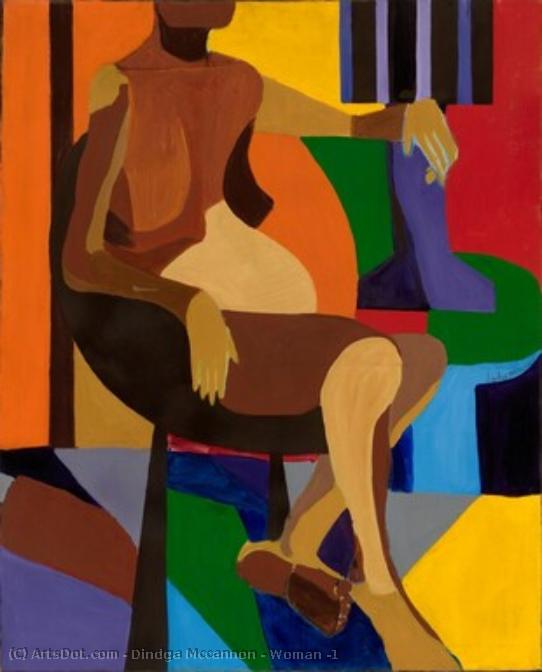
 プレビュー
プレビュー
 シェアする
シェアする シェアする
シェアする
 詳細を見る
詳細を見る

 ダウンロード
 似ている作品
 X線調査
X線調査 スライドショー
 Stats
StatsWoman #1
 1977
1977 107.0 x 84.0 cm
 詳細を見る
詳細を見る
手描き油彩複製画
当社のアーティストが、お客様のご希望のサイズと額縁に合わせて、キャンバスに手描きで制作する油彩画です。 ( Switch to Print Switch to Digital Image)




































作品のオリジナル比率に合わせた、当店の規定サイズからお選びください。

特定のフレームやスペースに合わせて、ご希望のサイズをご入力いただけます。選択されたサイズが元の画像の比率と異なる場合、アートワークをトリミングするか、手描きで要素を追加して絵画を拡張いたします。デジタルモックアップ を制作し、制作開始前にご確認(承認)をいただきます。
画面上のプレビューは、実際のトリミングや拡張を正確に反映しているものではありません。最終的な構図は、モックアップによってのみ正確にご確認いただけます。
カスタムサイズもご利用いただけますが、元の比率を維持するためには、あらかじめ用意されたリストからサイズを選択することをお勧めいたします。
ご注文後、ArtsDot.com チームより詳細な指示をお送りするとともに、仕上がりイメージ(モックアップ)をご提供いたします。


 ガラスオプションは、110cm未満のサイズでのみご利用いただけます。

Woman #1
複製技法
複製画のサイズ
-


合計金額
$ 263
関連作品

アーティストの略歴
The Roots of a Harlem Legacy
Dindga McCannon, born in the summer of 1947, carries within her the very pulse of Harlem. Her journey as an artist did not begin in a studio, but in the oral traditions and ancestral echoes of her childhood. Raised amidst the vibrant textures of Roosevelt Island and Harlem, she was a child shaped by the profound narratives shared by her grandmother—stories that acted as the first threads in the complex tapestry of her creative consciousness. By the tender age of ten, McCannon had already made a solemn declaration to the world: she would become an artist. This early conviction was not merely a dream but a calling, rooted in a deep-seated connection to her community and the rich, cultural landscape of her upbringing.Her formative years were a period of navigating both the physical and social transformations of New York City. As the landscapes of her youth shifted—marked by the monumental changes like the demolition of Lincoln Center—McCannon was simultaneously constructing her own internal landscape of artistic purpose. Her early education at the Fashion Institute of Technology provided a technical foundation, yet it was her pursuit of a deeper, more expressive language that would eventually define her career. Through the mentorship of legendary figures such as Jacob Lawrence and Charles Alston at the Art Students League, she began to bridge the gap between formal technique and the raw, emotive power of the Black experience.
A Tapestry of Resistance and Community
The trajectory of McCannon’s career is inseparable from the seismic shifts of the Black Arts Movement. In 1964, her entry into the Weusi Artist Collective marked a pivotal moment of alignment with a generation of creators seeking to reclaim their narrative. This era was defined by a collective spirit, and McCannon flourished within this supportive ecosystem, honing her craft alongside luminaries like Faith Ringgold and Kay Brown. However, the path was not without its obstacles; she navigated an art world often fraught with pervasive racism and sexism, challenges that did not stifle her but rather fueled a radical necessity for community-building.In 1971, McCannon co-founded the Where We At Black Women Artists collective, a groundbreaking movement that provided a sanctuary for Black women to express their identities without compromise. This group was more than an artistic circle; it was a vital support system that addressed the multifaceted needs of its members, from childcare to financial stability, ensuring that the creative flame of Black womanhood could burn brightly and uninterrupted. Through these collectives, McCannon helped forge a space where the personal and the political were inextricably linked, creating a legacy of empowerment that continues to resonate through the decades.
The Sacred Threads of Identity
McCannon’s artistic practice is a masterful blend of the tactile and the temporal. She is a pioneer of textile assemblage, utilizing mixed-media quilting, mural painting, and printmaking to weave together the disparate fragments of history. Her work often incorporates found objects, textiles, and photographic elements, transforming the mundane into the monumental. In her hands, a piece of fabric or a discarded object becomes a vessel for memory, imbuing each creation with the vibrancy and richness of her ancestors' worlds.Her subject matter is a profound celebration of Black womanhood, ranging from the recognition of celebrated public figures to the quiet honoring of anonymous heroines—the friends, family, and neighbors who shape the fabric of society. Her distinctive style, often described as Afrofemcentric, uses color and texture to demand space for stories that have historically been pushed to the margins. Whether through a sprawling mural or an intricate, hand-sewn quilt, McCannon’s work remains a testament to resilience, a vibrant reclamation of history, and an enduring refusal to let the voices of her people be silenced.
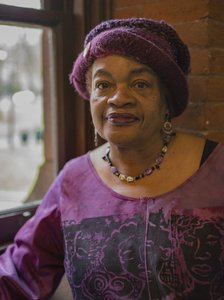
Dindga McCannon
1947 - , United States of America
基本情報
- Artistic Movement Or Style: Black Arts Movement
- Artists Or Movements Influenced By This Artist: ['Zora Neale Hurston']
- Artists Who Influenced This Artist:
- Faith Ringgold
- Jacob Lawrence
- Charles Alston
- Date Of Birth: July 31, 1947
- Full Name: Dindga McCannon
- Nationality: American
- Notable Artworks:
- United Community
- Mercedes
- yekk's song
- Place Of Birth: Harlem, United States of America