

 プレビュー
プレビュー
 シェアする
シェアする シェアする
シェアする
 詳細を見る
詳細を見る

 ダウンロード
 似ている作品
 X線調査
X線調査 スライドショー
 統計情報
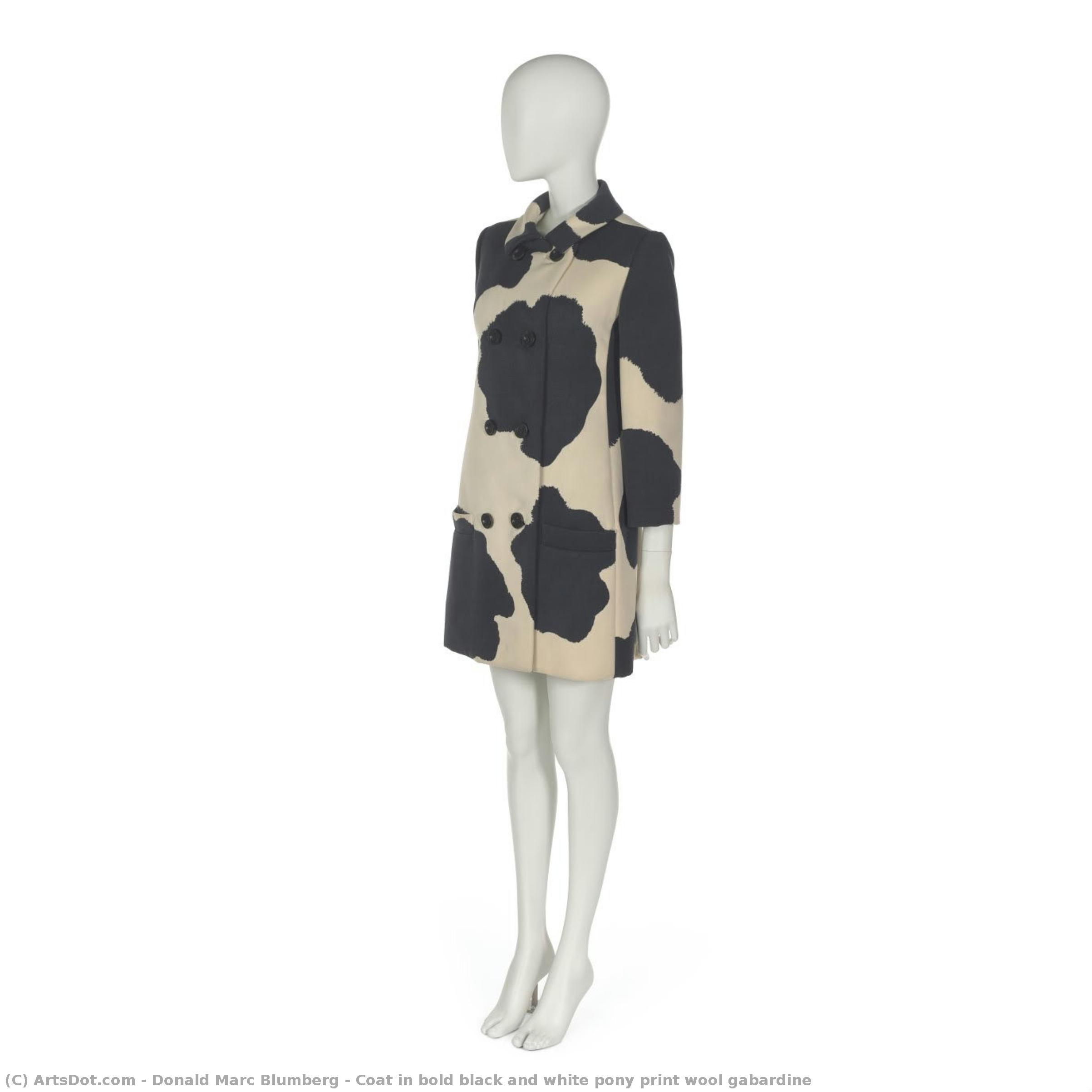
統計情報Coat in bold black and white pony print wool gabardine


 詳細を見る
詳細を見る
ジークレー/アートプリント
迅速な制作と多彩な仕上げオプションを備えた、ミュージアムクオリティのジークレーまたはキャンバスプリント。 ( 手描きの絵画を購入 デジタル画像販売へ切り替え)




































作品のオリジナル比率に合わせた、当店の規定サイズからお選びください。

特定のフレームやスペースに合わせて、ご自身でサイズを指定することも可能です。選択されたサイズが元の画像の比率と一致しない場合、作品をトリミングするか、鏡面反射または単色での塗りつぶしによって画像を拡張いたします。制作を開始する前に、ご確認用のデジタルモックアップをお送りいたします。
画面上のプレビューには、実際のトリミングや拡張は反映されませんのでご注意ください。最終的な構図を正確に確認できるのは、モックアップのみとなります。
カスタムサイズも承っておりますが、元の比率を維持するためには、あらかじめ用意されたリストからサイズを選択することをお勧めいたします。


 ガラスオプションは、110cm未満のサイズでのみご利用いただけます。

Coat in bold black and white pony print wool gabardine
ジークレー/アートプリント
複製画のサイズ
-


合計金額
$ 62
関連作品

アーティストの略歴
The Architect of the ‘American Look’: Donald Marc Blumberg (Donald Brooks)
Donald Marc Blumberg, known professionally as Donald Brooks, was a pivotal figure in shaping American fashion during its mid-century ascent. Born on January 10, 1928, in New Haven, Connecticut, Brooks didn’t simply design clothes; he crafted an identity – the confident, sophisticated ‘American Look’ that resonated with a nation eager to define itself after the austerity of war years. His journey began not in tailoring houses or fashion ateliers, but within the creative realms of art and theater. He initially pursued studies at Syracuse University before delving into costume design at the Yale University School of Drama and later refining his skills at the Fashion Institute of Technology and Parsons School of Design. This foundation proved crucial, instilling a holistic understanding of visual storytelling that would become a hallmark of his work. Brooks understood clothing not merely as adornment but as an extension of character, capable of conveying mood, status, and aspiration.From Broadway to Seventh Avenue: A Rising Star
Brooks’s early career was marked by versatility. He honed his eye working as a window designer for Lord & Taylor, quickly gaining recognition for innovative displays that captured attention and sparked interest. This led to a significant opportunity in 1958 when he took over the reins of Townley Frocks, a position previously held by the influential Claire McCardell. However, it was his collaboration with Dorothy Shaver, the visionary president of Lord & Taylor, that truly launched his career. Shaver entrusted Brooks with designing an entire clothing line, and from this partnership emerged designs that eschewed European imitation in favor of a distinctly American sensibility. He attracted attention for not relying on Paris or Milan, instead focusing on creating clothes for the modern American woman. By the 1960s, he had become one of “the three B’s” of fashion – alongside Bill Blass and Geoffrey Beene – solidifying his position as a leading force in the industry. This period saw him co-founding the Council of Fashion Designers of America (CFDA) in 1962, further championing American design on a national stage.A Theater of Style: Costume Design and Awards
While celebrated for his ready-to-wear collections, Brooks’s passion extended deeply into the world of theater and film. He designed costumes for over 3500 productions, bringing his meticulous attention to detail and understanding of character to life on stage and screen. His work wasn't simply about creating beautiful garments; it was about embodying a role, enhancing performances through visual cues. The 1963 production of “No Strings,” starring Diahann Carroll, earned him the New York Drama Critics’ Award, recognizing his ability to translate narrative into wearable art. This success paved the way for numerous Academy Award nominations – three in total, for "The Cardinal" (1963), "Star!" (1968), and “Darling Lili” (1970) – as well as a Tony nomination. In 1982, he received an Emmy Award for his work on the television show “The Letter,” starring Lee Remick, demonstrating his continued relevance and mastery across different media.Legacy of Innovation: Beyond the Silhouette
Brooks’s influence wasn't limited to specific designs or awards; it resided in a fundamental shift in American fashion consciousness. He championed practicality without sacrificing elegance, creating clothes that were both wearable and aspirational. His use of bold colors, geometric lines, and luxurious textures – as exemplified by his 1973 ensemble featuring a canary yellow silk dress paired with a dark turquoise linen coat – became synonymous with the era. Beyond clothing itself, Brooks explored other design avenues, including sweaters for Jane Irwill, shoes for Newton Elkin, furs for Coopchik-Forrest, and even drapery fabrics and bed linens for Burlington in 1971. He opened his own store in 1963, allowing him to directly connect with consumers and further refine his vision. Donald Marc Blumberg passed away on August 1, 2005, leaving behind a legacy that continues to inspire designers today. His work remains a testament to the power of clothing as a form of self-expression and a reflection of cultural identity.
donald marc blumberg
1928 - 2005 , United States of America
基本情報
- Artistic Movement Or Style: Fashion & Costume Design
- Date Of Birth: January 10, 1928
- Date Of Death: August 1, 2005
- Full Name: Donald Marc Blumberg
- Nationality: American
- Notable Artworks:
- Day ensemble (1973)
- Coat in pony print wool
- Coat dress in brown tweed
- Place Of Birth: New Haven, USA