

 プレビュー
プレビュー
 プリントを購入
 シェアする
シェアする シェアする
シェアする
 詳細を見る
詳細を見る

 ダウンロード
 似ている作品
 X線調査
X線調査 スライドショー
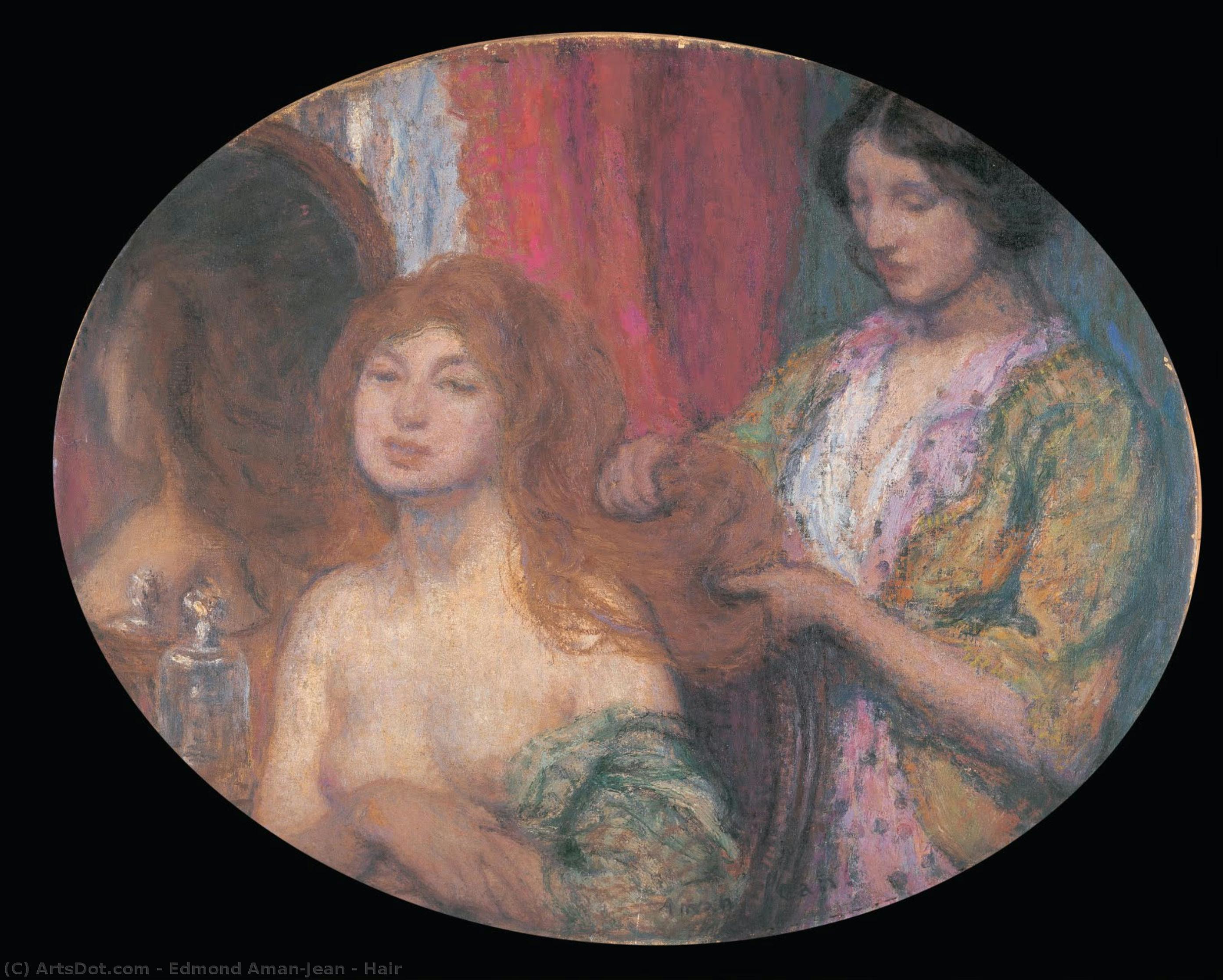
Hair


Symbolist painter Edmond Aman-Jean captivated audiences with ethereal works like 'The Sphynx' and his evocative use of light, creating dreamlike scenes that explore the mysteries of the human psyche—discover his enchanting art today.
 詳細を見る
詳細を見る




































Standard
custom
CM
INCH
作品のオリジナル比率に合わせた、当店の規定サイズからお選びください。
Loading sizes...

幅
高さ
特定のフレームやスペースに合わせて、ご希望のサイズをご入力いただけます。選択されたサイズが元の画像の比率と異なる場合、アートワークをトリミングするか、手描きで要素を追加して絵画を拡張いたします。デジタルモックアップ を制作し、制作開始前にご確認(承認)をいただきます。
画面上のプレビューは、実際のトリミングや拡張を正確に反映しているものではありません。最終的な構図は、モックアップによってのみ正確にご確認いただけます。
カスタムサイズもご利用いただけますが、元の比率を維持するためには、あらかじめ用意されたリストからサイズを選択することをお勧めいたします。
カスタマイズの例:顔をお客様の写真に置き換える、ペットを追加する(例:猫を犬に変更)、背景に隠れたメッセージを入れる、背景の風景や要素を変更するなど。
ご注文後、ArtsDot.com チームより詳細な指示をお送りするとともに、仕上がりイメージ(モックアップ)をご提供いたします。
ご注文後、ArtsDot.com チームより詳細な指示をお送りするとともに、仕上がりイメージ(モックアップ)をご提供いたします。


 ガラスオプションは、110cm未満のサイズでのみご利用いただけます。

Hair
複製技法
複製画のサイズ
-


合計金額
$ 288
関連作品







アーティストの略歴
The Ethereal Visions of Edmond Aman-Jean
Edmond Aman-Jean, a name perhaps less immediately recognizable than some of his Symbolist contemporaries, nevertheless occupies a significant and fascinating niche in the art history of late 19th and early 20th century France. Born in 1861 in Port-Leuc, Brittany, Aman-Jean’s artistic journey was one deeply rooted in academic training yet ultimately blossomed into a highly personal and evocative style characterized by its dreamlike atmosphere, muted palettes, and exploration of psychological states. His life, though relatively private, mirrored the broader cultural shifts occurring during his formative years – a period marked by increasing industrialization, scientific advancement, and a growing fascination with the inner world. He initially studied at the École des Beaux-Arts in Paris under Jean-Léon Gérôme, a master of academic realism, receiving a solid foundation in draftsmanship and composition. However, Aman-Jean soon found himself drawn to the burgeoning Symbolist movement, rejecting the strict objectivity of Realism in favor of expressing emotions, ideas, and spiritual experiences through suggestive imagery and veiled narratives.From Academic Roots to Symbolic Realms
The influence of Gérôme is visible in Aman-Jean’s early works – meticulously rendered scenes often depicting historical or mythological subjects. Yet even these pieces hint at a deeper sensibility, a preoccupation with melancholy and the passage of time. It was his encounter with Symbolist painters like Gustave Moreau and Pierre Puvis de Chavannes that truly set him on his distinctive path. Moreau's opulent, fantastical visions and Puvis de Chavannes’ serene, allegorical compositions resonated deeply with Aman-Jean, inspiring him to move beyond mere representation towards a more subjective and symbolic language. He began experimenting with unconventional lighting effects, creating an almost twilight atmosphere in his paintings. His palette softened, dominated by grays, blues, and violets – colors that evoke introspection and mystery. This shift is particularly evident in works like “The Sailor’s Dream” (1895), where the boundary between reality and fantasy blurs, and a lone figure contemplates an ethereal seascape bathed in otherworldly light. Aman-Jean wasn't interested in depicting concrete events but rather in capturing fleeting emotions and psychological states.Themes of Longing and the Feminine Mystique
A recurring theme throughout Aman-Jean’s oeuvre is that of longing – a sense of yearning for something unattainable, a melancholic awareness of loss or separation. This sentiment often manifests through depictions of solitary figures, frequently women, lost in contemplation or gazing towards distant horizons. The female form, in his hands, becomes an embodiment of mystery and the subconscious. His women are rarely portrayed as active agents but rather as passive recipients of emotion, symbols of beauty, fragility, and spiritual grace. “The Sphinx” (1897), perhaps his most famous work, exemplifies this fascination. The painting depicts a woman with the head of a sphinx, her gaze enigmatic and distant, embodying both allure and inscrutability. It’s not simply a depiction of a mythological creature but rather an exploration of the feminine psyche – its hidden depths and unknowable nature. The use of symbolism is paramount; the sphinx itself represents secrets and riddles, while the muted colors and atmospheric lighting contribute to the painting's overall sense of mystery.Recognition and Legacy
Aman-Jean achieved considerable recognition during his lifetime, exhibiting regularly at the Salon des Champs-Élysées and other prestigious venues. He was awarded a gold medal at the 1900 Exposition Universelle in Paris, solidifying his position as a leading figure of the Symbolist movement. While he never fully abandoned academic techniques, he successfully integrated them into his highly personal vision, creating paintings that are both technically accomplished and emotionally resonant. His work resonated with a public increasingly disillusioned with materialism and seeking solace in spirituality and introspection. Although his popularity waned somewhat after World War I, interest in Aman-Jean’s art has experienced a revival in recent decades. Today, he is recognized as a key exponent of Symbolism, whose paintings offer a captivating glimpse into the anxieties and aspirations of a bygone era.- His influence can be seen in the work of later artists who explored themes of dreamlike imagery and psychological states.
- Aman-Jean’s mastery of atmospheric lighting and muted color palettes continues to inspire contemporary painters.
- He remains a significant figure for scholars interested in the intersection of art, psychology, and spirituality.


