

 プレビュー
プレビュー
 プリントを購入
 シェアする
シェアする シェアする
シェアする
 詳細を見る
詳細を見る

 ダウンロード
 似ている作品
 X線調査
X線調査 スライドショー
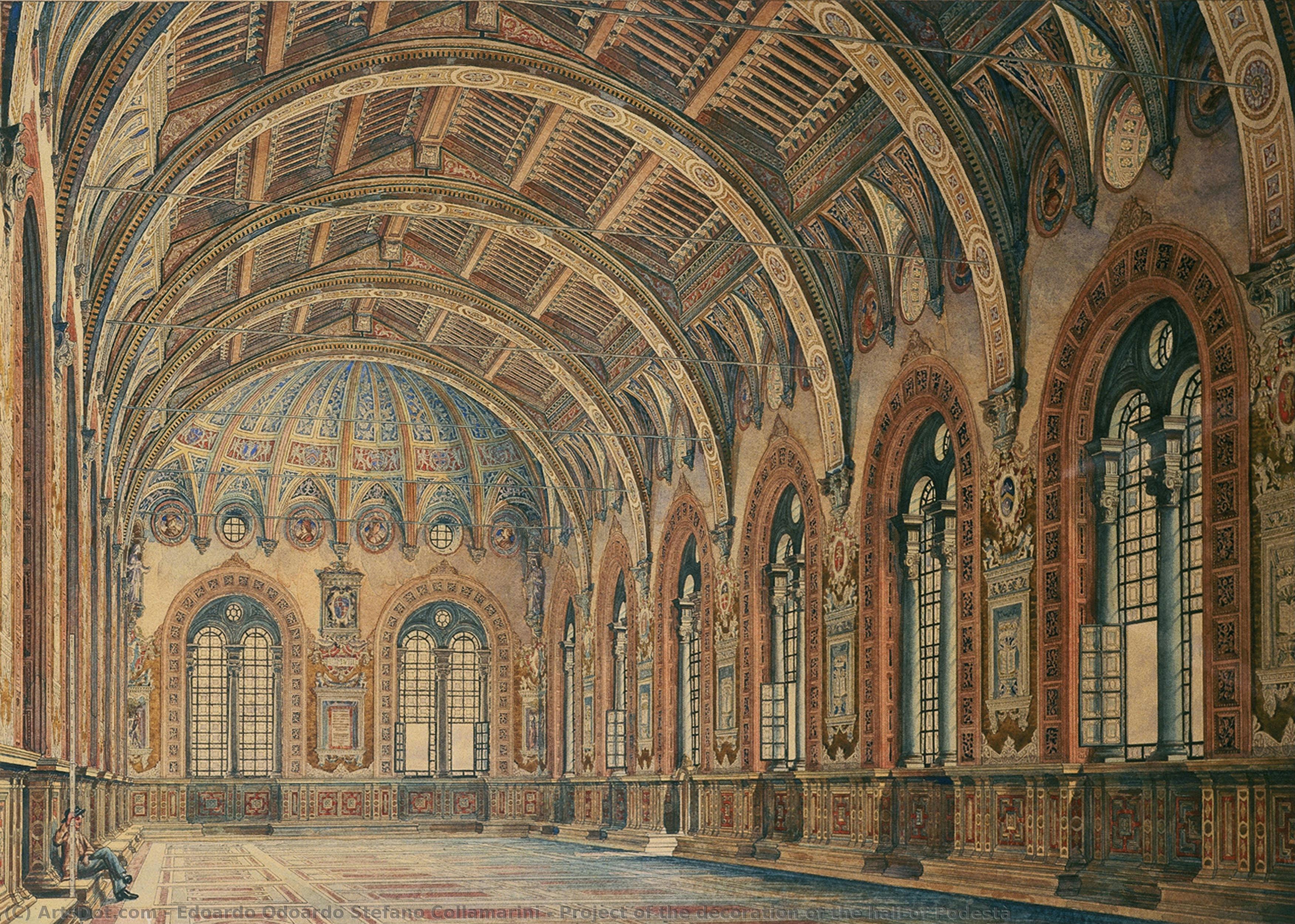
Project of the decoration of the hall of Podestà


 詳細を見る
詳細を見る




P118B $10

P118H $10

P118W $10

P438Z $10

P508JH $12

P508YH $12

P805H $10

P805Z $10

P919BZ $10

P919G $10

P919XJ $10

P959ZH $10

P968JZ $12

W106C $8

W218G $10

W218JH $8

W218Y $10

W307PJ $10

W316G $10

W316PJ $8

W316Y $10

W398PJ $8

W4111J $10

W500HY $15

W500JH $15

W692G $12

W849H $8

W940BG $15

W953PJ $8




作品のオリジナル比率に合わせた、当店の規定サイズからお選びください。

特定のフレームやスペースに合わせて、ご希望のサイズをご入力いただけます。選択されたサイズが元の画像の比率と異なる場合、アートワークをトリミングするか、手描きで要素を追加して絵画を拡張いたします。デジタルモックアップ を制作し、制作開始前にご確認(承認)をいただきます。
画面上のプレビューは、実際のトリミングや拡張を正確に反映しているものではありません。最終的な構図は、モックアップによってのみ正確にご確認いただけます。
カスタムサイズもご利用いただけますが、元の比率を維持するためには、あらかじめ用意されたリストからサイズを選択することをお勧めいたします。
ご注文後、ArtsDot.com チームより詳細な指示をお送りするとともに、仕上がりイメージ(モックアップ)をご提供いたします。


 ガラスオプションは、110cm未満のサイズでのみご利用いただけます。

Project of the decoration of the hall of Podestà
複製技法
複製画のサイズ
-


合計金額
$ 263
A Vision of Grandeur: The Architectural Majesty of Collamarini
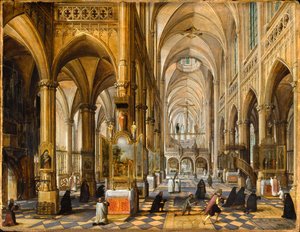
In the sweeping expanse of "Project of the decoration of the hall of Podestà," we are invited into a realm where stone and spirit converge. Created in 1911 by the visionary Italian architect Edoard Odoardo Stefano Collamarini, this work serves as more than a mere blueprint; it is a window into a lost era of monumental splendor. The painting captures the breathtaking interior of a cathedral-like hall, defined by soaring arched ceilings and an intricate web of ornate decorations that guide the eye upward toward the heavens. Through his masterful use of perspective, Collamarini creates a profound sense of depth, where massive pillars anchor the composition while light filters through distant windows, bathing the sacred space in a soft, ethereal glow.
The scene is brought to life by the presence of numerous figures scattered throughout the hall, their small scale emphasizing the overwhelming magnitude of the architecture. Some wander in quiet contemplation, while others gather in groups, suggesting a vibrant communal life centered around this magnificent structure. This interplay between the monumental and the human creates a rhythmic movement across the canvas, transforming a static architectural study into a living, breathing narrative of devotion and social gathering.
The Intersection of Faith and Form
Collamarini’s artistic identity was deeply rooted in his ability to translate Christian ideals into tangible, breathtaking forms. As an architect of "Christian Visions," he possessed a unique talent for utilizing Art Nouveau flourishes and classical grandeur to evoke a sense of the divine. In this particular project, one can observe how the structural elements—the rhythmic repetition of arches and the strength of the vertical supports—symbolize stability and eternal truth. The light, playing across the textured surfaces of the hall, acts as a metaphor for enlightenment, piercing through the shadows of the earthly realm to touch the souls of those within.
For the discerning collector or interior designer, this piece offers an unparalleled opportunity to introduce a sense of historical weight and spiritual serenity into a contemporary space. The painting’s ability to command attention through its scale and complexity makes it a perfect centerpiece for grand foyers, libraries, or formal dining rooms. It does not merely decorate a wall; it expands the boundaries of a room, offering a view into an era where every architectural detail was a deliberate prayer in stone.
A Timeless Legacy for the Modern Collector
Owning a reproduction of such a significant work allows one to preserve the legacy of Bologna’s illustrious architectural history. The technical mastery displayed in the depiction of light, shadow, and atmospheric perspective provides a rich sensory experience that remains as captivating today as it was in 1911. Whether you are drawn to the intricate decorative motifs or the emotional resonance of the gathered crowds, this artwork serves as an enduring testament to Collamarini’s genius.
Integrating this piece into a curated collection provides:
- A sense of historical continuity that connects modern interiors with the classical traditions of Italy.
- An atmospheric focal point capable of evoking feelings of awe, peace, and intellectual curiosity.
- A sophisticated aesthetic layer that complements both traditional period rooms and minimalist modern settings through its complex textures and grand scale.
関連作品

アーティストの略歴
The Visionary Architect of Sacred Spaces
Edoardo Odoardo Stefano Collamarini, born in the historic heart of Bologna in 1863, was far more than a mere designer of structures; he was an architect of Christian visions. His life, which concluded in his beloved Bologna in 1928, was defined by a profound intellectual engagement with the intersection of spiritual meaning and aesthetic grandeur. Collamarini possessed a rare ability to translate the intangible essence of faith into tangible, monumental forms, creating spaces that did not merely house worshippers but actively engaged their souls through light, proportion, and symbolic depth.
His artistic journey began within the prestigious halls of the Accademia di Belle Arti in Bologna. It was here that his early aptitude for architectural design blossomed, nurtured by a vibrant local atmosphere that celebrated both classical heritage and emerging modern sensibilities. However, Collamarini’s true education extended far beyond the classroom. He sought out mentors who challenged his perceptions, most notably the controversial restorer Alfonso Rubbiani. From Rubbiani, Collamarini inherited an appreciation for architectural theatricality—a daring willingness to manipulate space and style to evoke emotional responses. This influence, combined with a nuanced reading of Eugène Viollet-le-Duc’s theories on structural honesty, allowed him to develop a style that respected historical integrity while embracing the expressive potential of new materials.
A Synthesis of Tradition and Innovation
As his career progressed, Collamarini’s work became a sophisticated dialogue between the past and the present. While he drew heavily from the rich tapestry of Italian history, he avoided the trap of mere imitation. His approach was characterized by a careful curation of styles, blending elements of the Neo-Byzantine with the flowing, organic lines of Art Nouveau. This synthesis is perhaps most evident in his religious commissions, where he sought to create environments that felt both ancient and eternally contemporary.
His mastery was particularly evident in his detailed architectural studies and large-scale projects. His ability to manipulate perspective and detail can be seen in works such as:
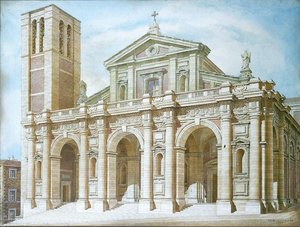
- Three projects for the facade of the basilica of St. Lorenzo in Florence: A masterful Renaissance study executed in watercolor and pen, demonstrating a profound command over light and structural complexity.
- The Church of St. Lorenzo in Florence: A testament to his ability to envision monumental religious architecture that commands presence through balanced design.
Beyond the grand facades, Collamarini’s early work decorating tombs in the Certosa di Bologna provided him with a foundational understanding of how architecture interacts with memory and mortality. These intimate, somber commissions prepared him for the monumental task of designing churches like the Sacro Cuore di Gesù, where his architectural language reached its most spiritual zenith.
Legacy of a Spiritual Craftsman
The historical significance of Edoardo Collamarini lies in his role as a bridge between eras. He stood at the crossroads of traditional craftsmanship and the burgeoning modern movement, proving that architecture could serve as a powerful medium for religious expression in a changing world. His work remains a vital chapter in the history of Italian architecture, representing a period when the built environment was used to capture the sublime.
Today, his legacy is preserved not only in the stone and mortar of the buildings he envisioned but in the enduring beauty of his architectural drawings. Through these works, we witness a creator who viewed every line and every arch as an opportunity to touch the divine, leaving behind a blueprint of how art and faith can inhabit the same physical space.
edoardo odoardo stefano collamarini
1863 - 1928 , Italy
基本情報
- Artistic Movement Or Style: Christian themes, Art Nouveau
- Artists Or Movements Influenced By This Artist: ['Art Nouveau']
- Artists Who Influenced This Artist:
- Viollet-le-Duc
- Giosuè Carducci
- Alfonso Rubbiani
- Date Of Birth: September 13, 1863
- Date Of Death: September 25, 1928
- Full Name: Edoardo Odoardo Stefano Collamarini
- Nationality: Italian
- Notable Artworks:
- Talon Chapel
- Sacro Cuore di Gesù
- Santuario della Madonna del Sangue
- Place Of Birth: Bologna, Italy
関連記事
The Shadow of Faith: Exploring Gothic Art's Spiritual Intensity & Architectural Innovation
Explore the spiritual intensity & architectural innovation of Gothic art! Discover the symbolism behind cathedrals, stained glass & master artists like Giotto and Monet. A deep dive into medieval history & artistic expression.
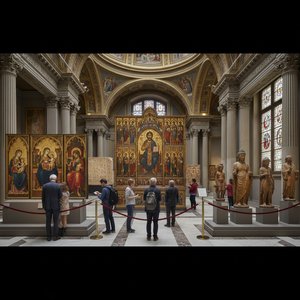
Sacred Narratives Embodied: A Comprehensive Exploration of Religious Iconography in Art History
Explore the rich history of religious iconography in art! Discover symbolism, movements & masterpieces from Byzantine to Renaissance periods. Expert insights for collectors and enthusiasts at ArtsDot.

Sacred Narratives on Canvas: Exploring Religious Painting Through History
Explore the rich history of religious painting with ArtsDot.com! Discover iconic artworks, symbolism & techniques from antiquity to the Renaissance. Enhance your art appreciation today.

Alfred Thompson Bricher: Luminism & the American Landscape Tradition
Explore the luminous landscapes of Alfred Thompson Bricher (1837-1908), a key figure in American Luminism and the Hudson River School. Discover his masterful maritime paintings & legacy.

Sacred Narratives on Canvas: Exploring Religious Scenes & Their Enduring Influence
Explore the rich history of religious art from Giotto to the Renaissance masters with ArtsDot. Discover symbolism, techniques & enduring legacies. Museum-quality reproductions available.

