

 プレビュー
プレビュー
 シェアする
シェアする シェアする
シェアする
 詳細を見る
詳細を見る

 ダウンロード
 似ている作品
 X線調査
X線調査 スライドショー
 Stats
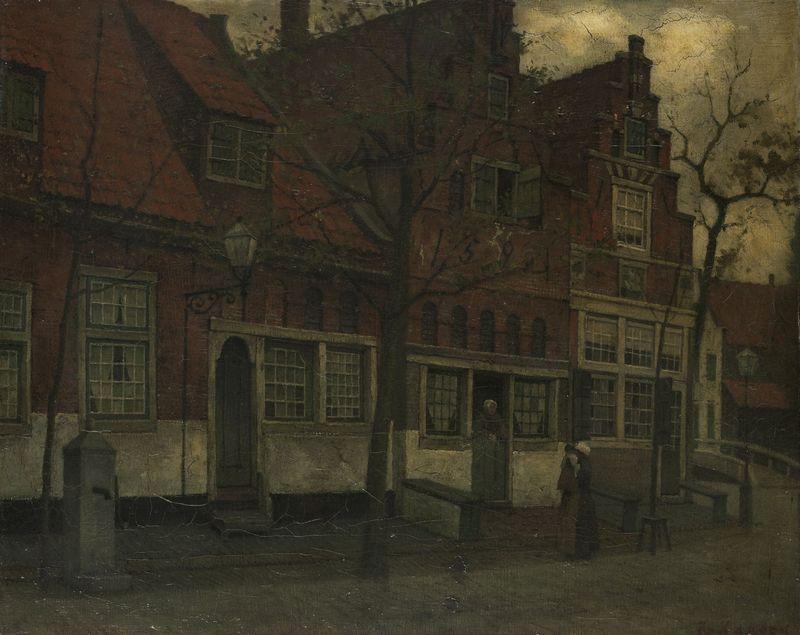
StatsHouses on the Breedstraat in Enkhuizen

 詳細を見る
詳細を見る
ジークレー/アートプリント
迅速な制作と多彩な仕上げオプションを備えた、ミュージアムクオリティのジークレーまたはキャンバスプリント。 ( 手描きの絵画を購入 Switch to Digital Image)




































作品のオリジナル比率に合わせた、当店の規定サイズからお選びください。

特定のフレームやスペースに合わせて、ご自身でサイズを指定することも可能です。選択されたサイズが元の画像の比率と一致しない場合、作品をトリミングするか、鏡面反射または単色での塗りつぶしによって画像を拡張いたします。制作を開始する前に、ご確認用のデジタルモックアップをお送りいたします。
画面上のプレビューには、実際のトリミングや拡張は反映されませんのでご注意ください。最終的な構図を正確に確認できるのは、モックアップのみとなります。
カスタムサイズも承っておりますが、元の比率を維持するためには、あらかじめ用意されたリストからサイズを選択することをお勧めいたします。


 ガラスオプションは、110cm未満のサイズでのみご利用いただけます。

Houses on the Breedstraat in Enkhuizen
ジークレー/アートプリント
複製画のサイズ
-


合計金額
$ 62
関連作品








アーティストの略歴
The Quiet Resonance of Eduard Karsen
In the soft, melancholic light of the Dutch landscape, the works of Eduard Karsen offer a window into a world of profound stillness and introspective beauty. Born in Amsterdam on March 10, 1860, Karsen emerged as a vital voice within the Post-Impressionist movement, carving out a niche for himself through scenes that feel less like mere depictions of geography and more like captured fragments of a soul. His canvases are famously characterized by their moody atmospheres, often featuring quiet villages, weathered farmhouses, and the haunting presence of a solitary figure wandering through the twilight of the Low Countries. There is a rhythmic, almost poetic loneliness in his compositions, where the architecture of man and the vastness of nature exist in a delicate, somber equilibrium.
Karsen’s artistic lineage was deeply rooted in the traditions of his homeland. As the son of the Romantic painter Kaspar Karsen, his earliest education was one of intimacy and heritage. He underwent a long, rigorous apprenticeship under his father’s watchful eye, absorbing the emotive power and structural discipline of the Romantic style. This foundational period instilled in him a reverence for the landscape that would serve as the bedrock of his later experimentation. However, Karsen was not content to remain a mere disciple of the past. Seeking to expand his horizons, he entered the Rijksakademie in Amsterdam, where his brushwork began to evolve. Surrounded by a generation of transformative talents—including Anton Derkinderen, Willem Tholen, and Jan Toorop—Karsen moved toward a more modern sensibility, integrating the fleeting light and atmospheric textures of Impressionism into his established Dutch foundations.
A Convergence of Art and Literature
Beyond the easel, Karsen’s life was deeply intertwined with the intellectual pulse of late 19th-century Netherlands. He was not merely a painter of scenery but a participant in a broader cultural renaissance. Through his close associations with figures like Willem Witsen and Albert Verwey, he found himself woven into the fabric of the Tachtigers (the "Eighties"), an influential literary movement that sought to revolutionize Dutch art and literature through a focus on individual emotion and sensory perception. This connection to the literary avant-garde infused his work with a certain symbolic depth; his landscapes often mirror the poetic nuances found in the writings of his contemporaries, where the external world serves as a vessel for internal sentiment.
His commitment to the artistic community was further solidified through his role as a founder. In 1880, Karsen joined forces with Jan Toorop, Anton Derkinderen, and Willem Witsen to establish the Kunstenaarsvereniging Sint Lucas. This society, inspired by the historic guilds of Saint Luke, was designed to foster a sense of professional unity and creative excellence among artists in the Low Countries. His membership in prestigious institutions like Arti et Amicitiae further cemented his status within the Dutch art establishment, yet he always maintained that characteristic, quiet independence that allowed his unique, moody vision to flourish without being overshadowed by the more boisterous movements of his era.
Legacy and Artistic Significance
The enduring power of Eduard Karsen’s oeuvre lies in its ability to evoke a sense of timelessness. While many of his contemporaries chased the rapid-fire changes of modernity, Karsen remained anchored to the evocative textures of the earth and sky. His mastery of tone—the way he could render the damp chill of a Dutch evening or the heavy silence of a rural farmstead—remains his greatest achievement. To look upon a Karsen painting is to experience a moment of pause, an invitation to contemplate the solitude that exists within the heart of the landscape.
His historical significance can be summarized through several key contributions:
- Bridging Eras: He successfully navigated the transition from the Romantic traditions learned from his father to the atmospheric innovations of Post-Impressionism.
- Cultural Integration: His role in the Tachtigers movement helped bridge the gap between visual arts and the burgeoning modern Dutch literary scene.
- Institutional Foundation: As a co-founder of the Sint Lucas Society, he contributed to the structural development of the Dutch artist community.
- Atmospheric Mastery: He redefined the "moody landscape" genre, using solitary figures and architectural elements to explore themes of isolation and peace.
Though he passed away in Amsterdam in 1941, Karsen’s ability to capture the ephemeral beauty of a fading light continues to resonate with collectors and historians alike, ensuring his place as a master of the quiet, evocative Dutch landscape.
eduard karsen
1860 - 1941
基本情報
- Artistic Movement Or Style: Post-Impressionism
- Artists Or Movements Influenced By This Artist: ['Tachtigers']
- Artists Who Influenced This Artist: ['Kaspar Karsen']
- Date Of Birth: March 10, 1860
- Date Of Death: October 31, 1941
- Full Name: Johann Eduard Karsen
- Nationality: Dutch
- Notable Artworks:
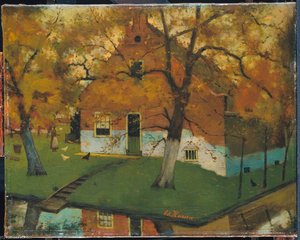
- Farm in Northern Holland
- Houses on the Breedstraat in Enkhuizen
- Place Of Birth: Amsterdam, Netherlands