

 プレビュー
プレビュー
 シェアする
シェアする シェアする
シェアする
 詳細を見る
詳細を見る

 ダウンロード
 似ている作品
 X線調査
X線調査 スライドショー
 統計情報
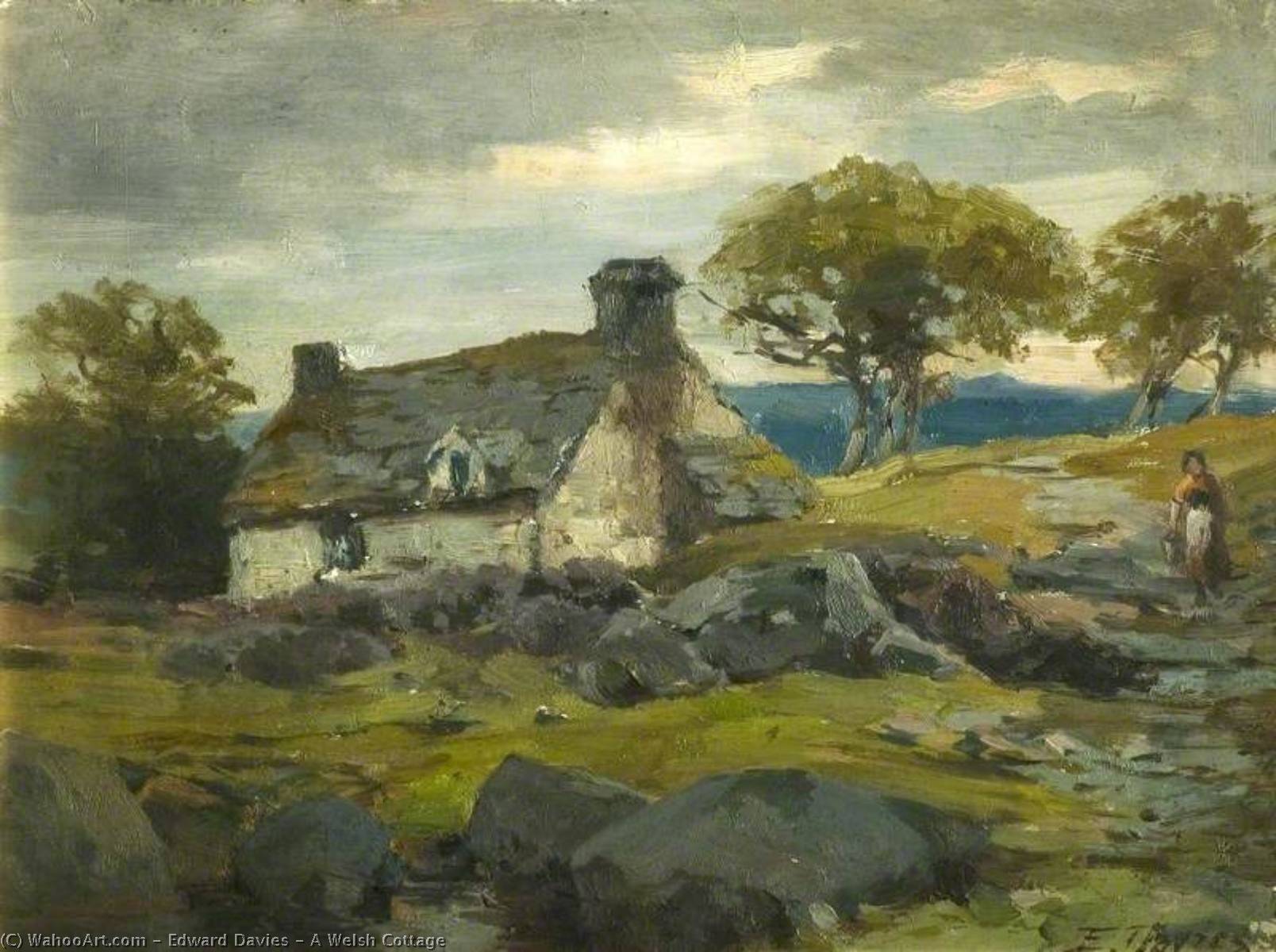
統計情報A Welsh Cottage
 23.0 x 31.0 cm
 New Walk Museum - Art Gallery
 詳細を見る
詳細を見る
手描き油彩複製画
当社のアーティストが、お客様のご希望のサイズと額縁に合わせて、キャンバスに手描きで制作する油彩画です。 ( プリント版に切り替え デジタル画像販売へ切り替え)




































作品のオリジナル比率に合わせた、当店の規定サイズからお選びください。

特定のフレームやスペースに合わせて、ご希望のサイズをご入力いただけます。選択されたサイズが元の画像の比率と異なる場合、アートワークをトリミングするか、手描きで要素を追加して絵画を拡張いたします。デジタルモックアップ を制作し、制作開始前にご確認(承認)をいただきます。
画面上のプレビューは、実際のトリミングや拡張を正確に反映しているものではありません。最終的な構図は、モックアップによってのみ正確にご確認いただけます。
カスタムサイズもご利用いただけますが、元の比率を維持するためには、あらかじめ用意されたリストからサイズを選択することをお勧めいたします。
ご注文後、ArtsDot.com チームより詳細な指示をお送りするとともに、仕上がりイメージ(モックアップ)をご提供いたします。


 ガラスオプションは、110cm未満のサイズでのみご利用いただけます。

A Welsh Cottage
複製技法
複製画のサイズ
-


合計金額
$ 263
関連作品










アーティストの略歴
The Architect of Molecular Innovation: The Dual Legacy of George Edward Davis
In the grand, sweeping tapestry of the nineteenth century—an era where the soot of the Industrial Revolution collided with the burgeoning light of scientific inquiry—few figures cast a shadow as profound yet specialized as George Edward Davis. To understand Davis is to witness a rare convergence of two seemingly disparate worlds: the tactile, emotive realm of fine art and the rigorous, invisible architecture of chemical engineering. While his contemporaries were often preoccupied with capturing the fleeting light of the English or American landscape on canvas, Davis sought to map the very flows of matter itself, bridging the gap between the aesthetic appreciation of nature and the mathematical precision of modern industry.
Born in 1850, Davis’s early life was defined by a transition from traditional craft to scientific mastery. His journey began not with a paintbrush, but with the scent of leather and glue during an apprenticeship in bookbinding at the age of fourteen. This early immersion in the meticulous details of physical form provided a foundational discipline that would later inform his scientific observations. Driven by an insatiable curiosity, he moved toward higher learning at the Slough Mechanics Institute and the prestigious Royal School of Mines in London. It was here that the artist’s eye began to merge with the engineer’s intellect, as he developed a fascination with the molecular structures that underpin our physical reality.
A Revolutionary Vision: Stereoscopic Projection and Scientific Realism
Davis’s most significant contribution to the visual record of his time was his ability to redefine how we perceive industrial progress. In 1893, he published “The Handbook of Chemical Engineering,” a work that transcended the standard technical manual of the period. Rather than relying on flat, two-dimensional topographical sketches, Davis employed a revolutionary technique: stereoscopic projection. By utilizing twin cameras positioned at slight intervals, he captured scenes of factories, refineries, and laboratories with a profound sense of depth and three-dimensionality.
This method was far more than a mere technical gimmick; it was a philosophical statement. Through these stereoscopic images, Davis aimed to educate the viewer on the complex, layered realities of modern industry, elevating scientific illustration to a form of high realism. His work allowed the observer to step into the heart of the machine, noticing the subtle gradations of light reflecting off steel and the intricate textures of industrial processes. In doing so, he fundamentally reshaped the perception of landscape painting, proving that the "industrial landscape" possessed a beauty and a structural complexity worthy of the most rigorous artistic scrutiny.
The Enduring Impression of a Visionary
Though his name may not always occupy the same immediate spotlight as titans like John Singer Sargent, the historical significance of George Edward Davis lies in his role as a pioneer of interdisciplinary vision. He stood at the threshold of a new age, where the boundaries between the observer and the observed were being redrawn by technology. His ability to apply the sensitivity of an artist to the precision of a chemist allowed him to document a world in transition—a world moving from the organic rhythms of nature toward the structured complexity of the chemical age.
The legacy of Davis remains etched in both the annals of science and the history of visual documentation. His life serves as a testament to the idea that true innovation often occurs at the intersection of different disciplines. Whether through his evocative watercolors of New England coastlines or his groundbreaking stereoscopic engineering diagrams, Davis reminded us that to truly see the world, one must possess both the heart of an artist and the mind of an architect.

基本情報
- Artistic Movement Or Style: Regionalist Art Style
- Artists Who Influenced This Artist: ['John Singer Sargent']
- Date Of Birth: (1850)
- Date Of Death: (1907)
- Full Name: George Edward Davis
- Nationality: American
- Notable Artworks:
- Wolf Point
- Mrs. Edward Davis and her Son, Livingston
- Mrs. Edward L. Davis and Her Son Livingston
- Place Of Birth: Philadelphia, Pennsylvania