

 プレビュー
プレビュー
 プリントを購入
 シェアする
シェアする シェアする
シェアする
 詳細を見る
詳細を見る

 ダウンロード
 似ている作品
 X線調査
X線調査 スライドショー
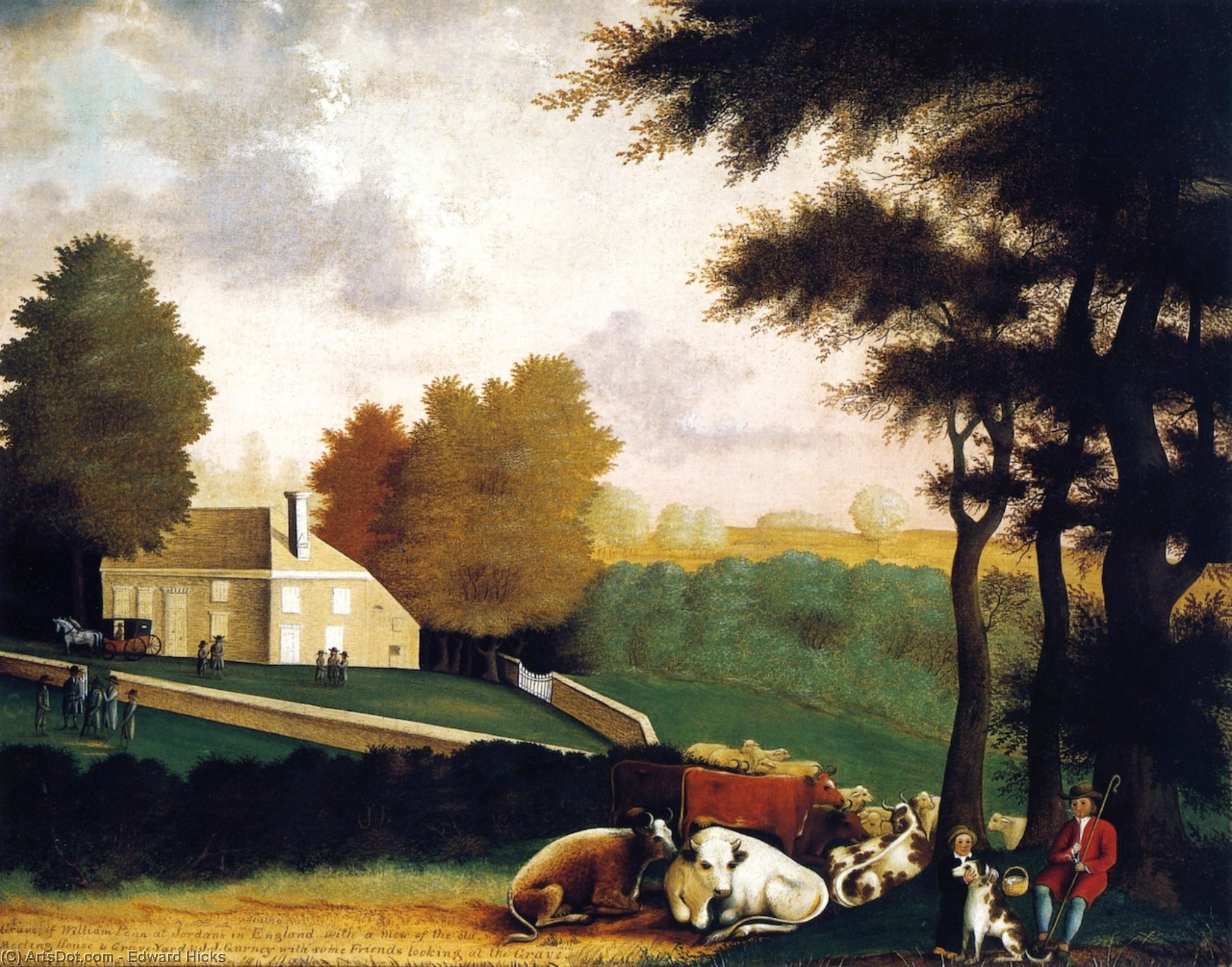
Grave of William Penn at Jordans in England


 詳細を見る
詳細を見る




P118B $10

P118H $10

P118W $10

P438Z $10

P508JH $12

P508YH $12

P805H $10

P805Z $10

P919BZ $10

P919G $10

P919XJ $10

P959ZH $10

P968JZ $12

W106C $8

W218G $10

W218JH $8

W218Y $10

W307PJ $10

W316G $10

W316PJ $8

W316Y $10

W398PJ $8

W4111J $10

W500HY $15

W500JH $15

W692G $12

W849H $8

W940BG $15

W953PJ $8




作品のオリジナル比率に合わせた、当店の規定サイズからお選びください。

特定のフレームやスペースに合わせて、ご希望のサイズをご入力いただけます。選択されたサイズが元の画像の比率と異なる場合、アートワークをトリミングするか、手描きで要素を追加して絵画を拡張いたします。デジタルモックアップ を制作し、制作開始前にご確認(承認)をいただきます。
画面上のプレビューは、実際のトリミングや拡張を正確に反映しているものではありません。最終的な構図は、モックアップによってのみ正確にご確認いただけます。
カスタムサイズもご利用いただけますが、元の比率を維持するためには、あらかじめ用意されたリストからサイズを選択することをお勧めいたします。
ご注文後、ArtsDot.com チームより詳細な指示をお送りするとともに、仕上がりイメージ(モックアップ)をご提供いたします。


 ガラスオプションは、110cm未満のサイズでのみご利用いただけます。

Grave of William Penn at Jordans in England
複製技法
複製画のサイズ
-


合計金額
$ 263
作品解説
The Serene Vision of Faith: Edward Hicks’ Grave of William Penn
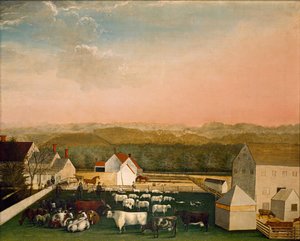
Edward Hicks' "Grave of William Penn at Jordans in England," painted in 1847, is more than just a depiction of a rural English scene; it’s a profound meditation on faith, community, and the ideals underpinning the nascent American colony of Pennsylvania. This oil-on-canvas masterpiece, now residing within the National Gallery of Art, offers a glimpse into the heart of Quaker belief through Hicks' distinctive artistic lens. The painting immediately draws the viewer in with its harmonious composition – a carefully orchestrated tableau of cows grazing peacefully, a horse standing patiently, and a solitary figure observing the grave. Yet, it’s not merely a pastoral landscape; it’s a deliberate construction designed to evoke a sense of tranquility and spiritual resonance.
Hicks, a self-taught artist deeply rooted in Quaker principles, eschewed the grand narratives favored by many of his contemporaries. Instead, he focused on capturing the everyday virtues of rural life – simplicity, honesty, and a connection to nature – as embodiments of Quaker values. The warm palette—dominated by ochres, browns, and muted greens—creates an atmosphere of gentle warmth and serenity. Hicks’ masterful use of soft brushstrokes contributes significantly to this effect, blurring the lines between objects and figures, fostering a feeling of unity and interconnectedness within the scene. Notice how he renders the light; it's diffused and even, avoiding harsh contrasts that might disrupt the painting’s peaceful mood.
A Quaker Narrative: Symbolism and Composition
The composition itself is laden with symbolic meaning. The placement of the grave at the center-right subtly directs the viewer’s eye, inviting contemplation. The cows, often associated with humility and gentleness in Quaker iconography, represent a connection to the earth and a rejection of material wealth. The horse, a symbol of strength and endurance, stands as a testament to the pioneering spirit of Pennsylvania. The figure standing respectfully near the grave is deliberately ambiguous; it’s not a specific individual but rather a representation of the community paying its respects to William Penn, the founder who championed religious freedom and established a haven for dissenters.
Crucially, Hicks' decision to include elements like the chair suggests an ongoing gathering, a shared moment of remembrance. This reinforces the theme of communal faith—the idea that spiritual life is not solitary but thrives within a supportive community. The inclusion of a pig on the far right might seem incongruous at first glance, but it’s often interpreted as a symbol of earthly pleasures and temptations, subtly reminding viewers to maintain balance between spiritual devotion and worldly concerns – another core tenet of Quaker belief.
The Artist's Vision: Edward Hicks and His Context
Edward Hicks (1780-1849) was a pivotal figure in the development of American folk art. Born in Attleboro, Pennsylvania, he initially trained as a coach maker before dedicating himself to painting. His work reflects his deep commitment to Quakerism; many of his most celebrated paintings, including this one, depict scenes from the Bible and embody Quaker values such as peace, simplicity, and social justice. Hicks’ art wasn't intended for commercial success but rather served as a visual sermon, communicating his faith to his community.
The painting emerged during a period of significant religious and social upheaval in America. The Second Great Awakening was stirring spiritual fervor across the nation, and Quakerism, with its emphasis on individual conscience and social reform, found itself at the forefront of these movements. Hicks’ "Grave of William Penn" can be seen as a reflection of this broader context—a celebration of the ideals that underpinned Pennsylvania's founding and a quiet affirmation of the enduring power of faith.
A Timeless Reproduction: Bringing Hicks’ Vision Home
ArtsDot offers meticulously crafted, hand-painted reproductions of Edward Hicks’ “Grave of William Penn at Jordans in England,” allowing you to experience the beauty and depth of this iconic artwork firsthand. Each reproduction is created by skilled artisans using traditional oil painting techniques, faithfully capturing the artist's nuanced brushstrokes, rich colors, and evocative atmosphere. Whether displayed in a formal living room or a contemplative study, this reproduction serves as a powerful reminder of Hicks’ artistic vision—a testament to faith, community, and the enduring legacy of William Penn.
To explore more exquisite reproductions by Edward Hicks and discover how you can bring a piece of American folk art history into your home, visit https://ArtsDot.com
関連作品
アーティストの略歴
信仰とヴィジョンに根ざした生涯
1780年4月4日、ペンシルベニア州バックス郡のアトルボロ(現在のラングホーン)の穏やかな風景の中に、エドワード・ヒックスは生を受けました。彼は、宗教的な信念と芸術的表現が交差する地点に、比類なき立ち位置を見出した人物でした。彼の物語は、単なる独学の画家のそれではありません。その精神的な旅路が、独自の視覚言語を深く形作った、献身的なクエーカー教徒の牧師の物語なのです。イングランド国教会の両親のもとに生まれましたが、幼いエドワードの人生は、敬虔なクエエーカーであったエリザベス・トゥイニング夫人との出会いによって決定的な転換を迎えました。彼女は彼の中に、簡素さ、平和、そして「内なる光」への揺るぎない信念という、この信仰の核心となる教義を植え付けたのです。この幼少期の経験が、彼の芸術的ヴィジョンの礎となりました。13歳からヒックスは馬車製造業者のウィリアムとヘンリー・トムリンに弟子入りし、当初の生活を支えることになる装飾画の技術を習得しました。しかし、馬車に華やかな意匠を描き出す技術を磨きながらも、彼の内面にはより深い天命が響き渡っていました。それは最終的に、彼を誰も歩んだことのない道、すなわち信仰と芸術が融合する道へと導くことになります。1803年までにヒックスは友の会(クエーカー)を完全に受け入れ、サラ・ワーストルと結婚し、フィラデルフィア各地を巡る伝道師としての生活を始めました。その傍らで、彼は絵画の技術を通じて成長する家族を支え続けたのです。進化するキャンバス:馬車装飾から精神的な風景へ
ヒックスの芸術的発展は、決して型にはまったものではありませんでした。当時のアカデミックな伝統による正式な教育を受けたわけではなく、むしろ観察、必要性、そして深く抱かれた信念から生まれた、極めてアメリカ的なフォークアート(民俗芸術)のスタイルを育んでいきました。当初、彼の絵画は実用的な目的を果たしていました。建物の塗装、馬車の装飾、居酒屋の看板、さらには家具や農機具の装いまで、その範囲は多岐にわたりました。これらの初期の依頼は経済的な安定をもたらした一方で、簡素さを重んじ、世俗的な虚飾を避けるクエーカーの教義としばしば衝突することもありました。1815年の苦難の時期には、装飾画を一時的に捨てて農業に転身しましたが、その試みは成功しませんでした。しかし、友人たちの励ましによって1816年に再び筆を執ったことが、大きな転換点となりました。これにより、彼は自身の芸術的才能と精神的な天命を調和させることができたのです。この復帰は単なる以前の仕事の再開ではありませんでした。それは、宗教的なテーマや寓意的な風景を探求する、比類なき旅の始まりだったのです。彼は自らの絵画に象徴的な意味を込め始め、クエーカーの精神世界や聖書への個人的な解釈を反映させていきました。彼のキャンバスは、平和と調和、そして神によって定められた秩序の約束を伝えるための媒体となったのです。平和な王国:調和のヴィジョン
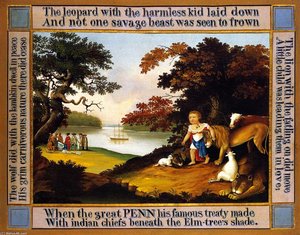
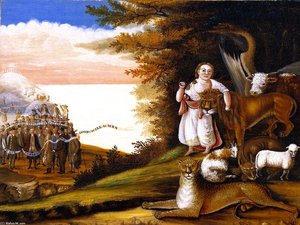
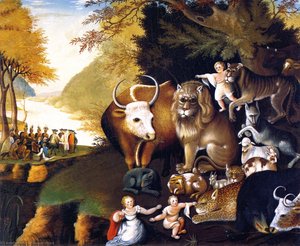
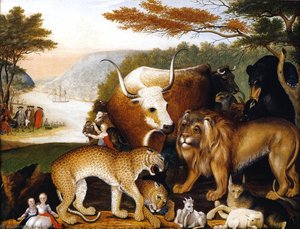
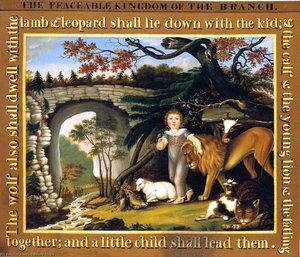
今日、エドワード・ヒックスが最も高く称賛されているのは、「平和な王国(The Peaceable Kingdom)」として総称される一連の絵画群によるものです。生涯を通じて制作された60点を超えるバリエーションを持つこれらの作品は、間違いなくアメリカン・フォークアートの最も象徴的な例と言えるでしょう。イザヤ書11章6節から9節――天敵たちが平和に共存する時代を予言する一節――に触発され、ヒックスは野生動物と子供たちが牧歌的な調和の中で暮らす光景を描き出しました。これらの絵画には、先住民と条約を交渉するウィリアム・ペンといった、植民地時代のペンシルベニアの歴史的人物もしばしば登場し、聖書のヴィジョンをアメリカという文脈の中にさらに深く根付かせています。「平和な王国」は、単に動物たちの愛らしい描写ではありません。それは、ペンシルベニアこそがこの預言的な理想の成就、すなわち平和と正義が支配する場所であるという、ヒックスの信念を力強く表明したものなのです。それぞれの「平和な王国」には、構図、色彩、細部において微妙な差異があり、それはヒックスの進化し続ける芸術的感性と、深まりゆく精神的な理解を反映しています。特筆すべき作品としては、イェール大学美術館に収蔵されている「平和able Kingdom (31)」や、穏やかな風景の中にノアの方舟を描いた「Peaceable Kingdom (34)」などが挙げられます。王国の向こう側へ:広がる芸術的領域
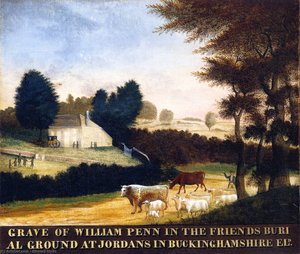
「平和な王国」が彼の代表作であり続ける一方で、エドワード・ヒックスの芸術的成果は、この有名なシリーズに留まりませんでした。彼は風景画、肖像画、そして歴史的な場面を描き、そのどれにも彼特有のフォークアート様式とクエーカー的な感性が宿っています。アビー・アルドリッチ・ロックフェラー・フォークアート・センターに所蔵されている「ナイアガラの滝」は、簡素さと畏敬の念を保ちながら、自然の壮大さを捉える彼の能力を示しています。同様に、同じく同センターにある「デラウェア川を渡るジョージ・ワシントンと軍隊」の描写は、アメリカ史におけるこの象徴的な瞬間に対し、フォークアートならではの独自の視点を提供しています。さらには、イングランドのジョーダンズにある「ウィリアム・ペンの墓」のような一見ありふれた主題でさえ、クエーカーの遺産に対するヒックスの深い結びつきと、日常の光景の中に精神的な意義を見出す力を明らかにしています。これらの作品を合わせると、ヒックスの芸術的ヴィジョンの広がりと、自身の信仰と価値観を表現する手段として芸術を用いることへの献身が見えてきます。不朽の遺産:フォークアートのアイコン
エドワード・ヒックスは1849年8月23日、ペンシルベニア州ニュータウンでその生涯を閉じましたが、彼が残した作品群は今なお人々の心に響き続けています。彼は現在、アメリカン・フォークアートにおける極めて重要な人物として認められており、その独特なスタイル、繰り返されるテーマ、そして深い精神性によって称えられています。彼の絵画は、19世紀における「友の会」の信仰と価値観に対する貴重な洞察を与えてくれるものであり、平和、簡素、そして社会正義への彼らの献身を視覚的な記録として伝えています。宗教的信仰と芸術的表現を融合させたヒックス独自の能力は、視覚的に魅力的であると同時に、精神的にも意味深い作品群を生み出しました。彼の遺産は、作品が展示されている美術館やコレクションの枠を超えて広がっています。それは、彼の芸術に対する絶え間ない賞賛の中に、そして人類、自然、そして神の間に調和が支配する「平和な王国」という、彼のヴィジョンの不朽の力の中に生き続けているのです。彼は、独学の芸術が持つ力と、信仰が創造的な表現に与え得る深い影響を物語る、生きた証として存在し続けています。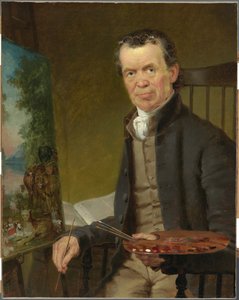
エドワード・ヒックス
1780 - 1849 , アメリカ合衆国
基本情報
- Artistic Movement Or Style: フォークアート
- Date Of Birth: 1780年4月4日
- Date Of Death: 1849年8月23日
- Full Name: エドワード・ヒックス
- Nationality: アメリカ
- Notable Artworks:
- 安らかな王国 (31)
- ナイアガラの滝
- デラウェア川を渡るジョージ・ワシントン...
- 安らかな王国 (34)
- Place Of Birth: アメリカ合衆国、ラングホーン
関連記事
エドワード・ホッパー傑作25選:アメリカの孤独と光影の世界 | ArtsDot
エドワード・ホッパーの傑作25選。アメリカ絵画を代表するモダンアート、孤独と光影の世界を紐解きます。名画「Nighthawks」や「ハウス・バイ・ザ・レールロード」など、美術史に残る作品群をArtsDotで高品質複製画としてお楽しみください。インテリアに深みを与えるアートプリントも多数。今すぐコレクションをご覧ください。
Edward Hicks’ ‘Peaceable Kingdom’: American Folk Art & the Shaping of a National Identity
Explore the profound symbolism & historical context of Edward Hicks’ ‘Peaceable Kingdom.’ Discover how this iconic American folk art masterpiece reflects Quaker values and shaped a nation's identity. Learn more at ArtsDot.
Penry Williams: Evoking Welsh Nostalgia Through Impressionistic Landscapes
Explore the captivating world of Penry Williams (1802-1885), a Welsh artist renowned for his evocative Impressionistic landscapes and scenes of Italy. Discover his life, style & legacy with ArtsDot.
Christopher Williams: Deconstructing Representation & Materiality in Contemporary Art
Explore the groundbreaking work of Christopher Williams, a pivotal figure in contemporary art. This analysis delves into his deconstruction of representation, materiality, and institutional critique – essential reading for serious collectors.
Edward Wilkins Waite: A Victorian Vision of Surrey's Serene Landscapes & Artistic Legacy
Explore the serene landscapes of Edward Wilkins Waite (1854-1924), a prolific Victorian painter celebrated for his depictions of Surrey's countryside. Discover his artistic influences, career highlights & collecting guide.

