

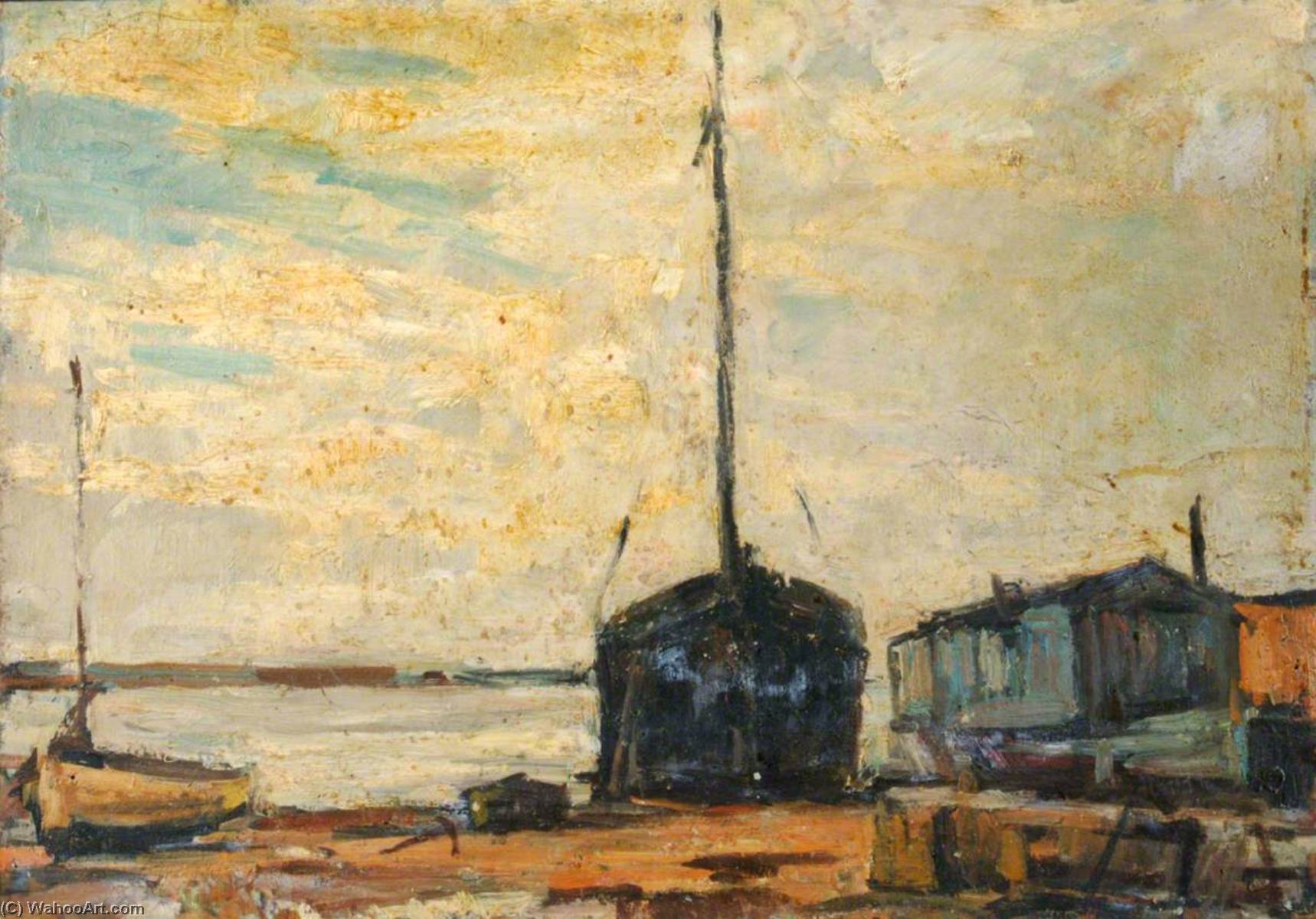
 プレビュー
プレビュー
 シェアする
シェアする シェアする
シェアする
 詳細を見る
詳細を見る

 ダウンロード
 似ている作品
 X線調査
X線調査 スライドショー
 統計情報
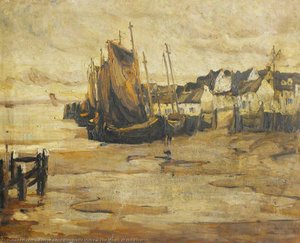
統計情報Houseboats at Milton, No.7
 34.0 x 49.0 cm
 詳細を見る
詳細を見る
ジークレー/アートプリント
迅速な制作と多彩な仕上げオプションを備えた、ミュージアムクオリティのジークレーまたはキャンバスプリント。 ( 手描きの絵画を購入 デジタル画像販売へ切り替え)




































作品のオリジナル比率に合わせた、当店の規定サイズからお選びください。

特定のフレームやスペースに合わせて、ご自身でサイズを指定することも可能です。選択されたサイズが元の画像の比率と一致しない場合、作品をトリミングするか、鏡面反射または単色での塗りつぶしによって画像を拡張いたします。制作を開始する前に、ご確認用のデジタルモックアップをお送りいたします。
画面上のプレビューには、実際のトリミングや拡張は反映されませんのでご注意ください。最終的な構図を正確に確認できるのは、モックアップのみとなります。
カスタムサイズも承っておりますが、元の比率を維持するためには、あらかじめ用意されたリストからサイズを選択することをお勧めいたします。


 ガラスオプションは、110cm未満のサイズでのみご利用いただけます。

Houseboats at Milton, No.7
ジークレー/アートプリント
複製画のサイズ
-


合計金額
$ 62
関連作品


アーティストの略歴
The Quiet Observer: The Life and Legacy of Edward Robert King
Born in the heart of London in 1862, Edward Robert King emerged from a lineage that traced its roots back to the era of Elizabethan England. The son of a solicitor, Robert King, Edward was raised in an environment where intellectual discipline and precision were paramount. While his upbringing suggested a path toward the legal profession, his spirit was irrevocately drawn to the canvas. This early tension between the structured world of law and the fluid beauty of art would later manifest in his unique ability to marry meticulous detail with the soft, atmospheric qualities of the Impressionist movement. His formative years, enriched by travels across continental Europe, allowed him to witness firsthand the shifting tides of European art, fostering a lifelong fascination with how light interacts with the natural world.
King’s formal artistic identity was forged at the prestigious Slade School of Fine Art in London. Under the tutelage of the legendary Frederic Leighton, King absorbed the principles of the Beaux Arts tradition, learning to command composition and form with academic rigor. However, he was not content to remain a mere traditionalist. While his early works often reflected Leighton’s influence through their careful attention to detail—particularly in his coastal scenes of Cornwall—King began to experiment with looser brushstrokes and a more emotive use of color. This evolution allowed him to capture the fleeting, ephemeral moments of light that define the Edwardian era, moving beyond mere representation toward a profound sense of atmosphere.
A Mastery of Landscape and Light
The soul of King’s oeuvre lies in his deep connection to the British landscape, specifically the rugged and enchanting coastlines of Cornwall. As a prolific watercolorist and oil painter, he became a master of capturing the tranquility of the English countryside. Unlike the turbulent, dramatic Romanticism championed by contemporaries like J.M.W. Turner, King sought a different kind of power: the power of stillness. His paintings of windswept beaches, dramatic cliffs, and sun-drenched villages are characterized by an observational grace that invites the viewer into a state of peaceful contemplation.
His technical repertoire was remarkably versatile, allowing him to navigate various moods and historical moments:
- Impressionistic Landscapes: In works such as Houseboats at Milton, King utilized soft, blended tones to evoke the shimmering reflections of water and the gentle movement of coastal life.
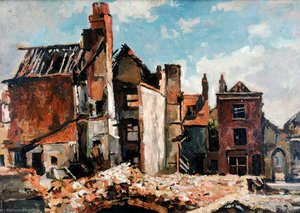
- Historical Realism: During the tumultuous years of the mid-20th century, his work took on a more poignant, documentary quality. Pieces like Cathedral Amongst the Ruins in the High Street and High Street, Old Portsmouth serve as powerful testaments to resilience, capturing the devastation of London and Portsmouth during World War II with an unflinching yet beautiful realism.
- Portraiture and Detail: Beyond the landscape, his ability to render human presence and architectural detail provided a sense of permanence to his otherwise atmospheric scenes.
Historical Significance and Enduring Resonance
Though Edward Robert King may have been overlooked by the mainstream art market during much of his lifetime, his historical significance has undergone a profound reassessment in recent decades. He stands as a vital bridge between the disciplined academic traditions of the Victorian era and the more emotive, light-focused sensibilities of the early 20th century. His work does more than merely document landscapes; it preserves the emotional essence of a vanished era—the Edwardian period’s sense of social refinement and its deep-seated reverence for the natural beauty of the British Isles.
Today, scholars and collectors alike look to King’s paintings as windows into the past. His ability to find tranquility amidst devastation—a theme particularly evident in his wartime oils—ensures that his work remains relevant. Through his mastery of watercolor and oil, King achieved a rare feat: he captured the ephemeral nature of light while creating a permanent, evocative record of the English spirit. His legacy continues to resonate through the quiet strength of his compositions and the enduring beauty of his vision.
edward robert king
1862 - 1951
基本情報
- Artistic Movement Or Style: Romantic Landscape Painting
- Artists Or Movements Influenced By This Artist: ['Hudson River School']
- Artists Who Influenced This Artist:
- John Constable
- George Frederic Handel
- Date Of Birth: 1862
- Date Of Death: 1951
- Full Name: Edward Robert King
- Nationality: British
- Notable Artworks:
- The Old Mill
- Cornfield at Dusk
- Place Of Birth: London, England