

 プレビュー
プレビュー
 シェアする
シェアする シェアする
シェアする
 詳細を見る
詳細を見る

 ダウンロード
 似ている作品
 X線調査
X線調査 スライドショー
 統計情報
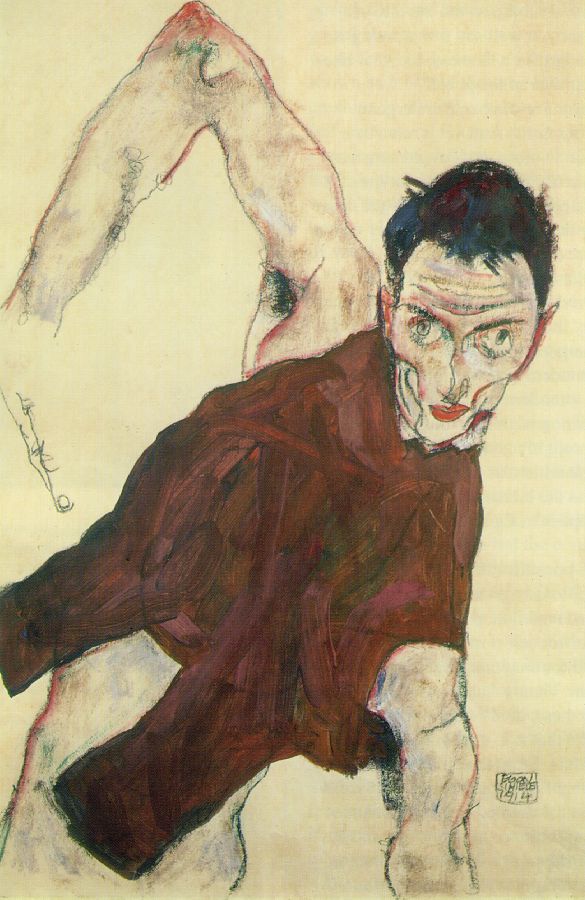
統計情報Self-Portrait with Raised Right Elbow1914


 詳細を見る
詳細を見る
オンラインプレビューをはるかに凌ぐ、高解像度で鮮明なデジタル画像をご購入いただけます。
各ファイルは、社内の専門家が高度なツールと熟練した手作業によるレタッチを用いて、細心の注意を払って準備されています。すべての画像において、卓越した鮮明度、正確な色彩再現性、そして繊細なディテールを保証いたします。
最終ファイルは、プロフェッショナルな編集・印刷環境ですぐにご利用いただけるよう最適化された状態で、72時間以内にメールにてお届けいたします。これは、一流のデザインスタジオ、出版社、ギャラリーから信頼されているものと同等の品質です。
デジタルアート
個人での鑑賞、印刷、クリエイティブなプロジェクト用に、高解像度ファイルをダウンロードできます。 ( プリント版に切り替え 手描きの絵画を購入)
デジタル画像のご注文に付随する特典
高品質なデジタル画像配信を、確かな品質で。
ArtsDot.com を選ぶことは、単に画像を手に入れることではありません。それは、プロの手によって精密に仕上げられ、満足保証が付いた高品質なデジタルアートワークを受け取ることを意味します。ご注文いただいた際に自動的に付随する内容は、以下の通りです:

メールですぐにお届け
ご注文から72時間以内に、高解像度のデジタル画像ファイルがメールでお手元に届きます。すぐにそのままご利用いただけます。

AI技術で最適化されたデジタルファイル
お客様の作品は、高度なAIツールと専門家による手作業の編集を組み合わせてプロフェッショナルに最適化されており、細部のディテール、鮮明さ、そして正確な色再現性を最大限に引き出しています。

一生涯無料の再送サービス
ファイルを誤って削除したり、紛失してしまったりしましたか?ご安心ください。いつでも無料で再送いたします。

輸入手数料は一切かかりません
関税や手数料、配送料を気にすることなく、お気に入りのアートワークをすぐにお楽しみいただけます。デジタルダウンロードは常に免税です。

色彩再現の保証
プロ仕様のツールとカラーマネジメント技術を用いることで、デジタル画像が元の色を最大限に忠実に再現することを保証いたします。

100日間満足保証
ご購入いただいたデジタル画像にご満足いただけない場合は、100日以内であれば、理由を問わず修正または100%の返金対応をさせていただきます。

100% 返金保証
ご満足いただけない場合は、デジタルファイルを受け取ってから100日以内であれば、理由を問わず全額返金いたします。

まとめ買い割引
3枚購入で10%OFF - 5枚購入で15%OFF - 10枚以上購入で20%OFF。クリエイティブなプロジェクト、ギャラリー、エージェンシーに最適です。
A Portrait of Anguish and Intensity: Egon Schiele’s Self-Portrait
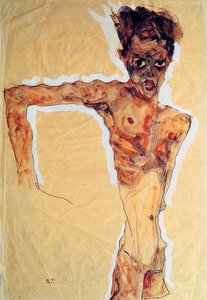
Egon Schiele's "Self-Portrait with Raised Right Elbow" (1914) is not merely a depiction of an individual; it’s a raw, visceral expression of the artist’s internal landscape. Painted during a period of intense personal and artistic transformation, this work embodies the core tenets of Expressionism – a rejection of objective representation in favor of conveying subjective emotion and psychological states. The painting immediately confronts the viewer with a figure dominated by a palpable sense of unease and perhaps even despair. The subject, rendered in Schiele’s signature elongated, almost skeletal form, stares directly ahead, his face a mask of severe concentration and suppressed anguish. His posture – the raised right elbow, jutting outwards as if bracing against an unseen force – is particularly arresting, suggesting both defiance and vulnerability.
The color palette contributes significantly to the painting’s unsettling effect. Dominated by somber browns, deep reds, and muted blues, the colors are applied with thick, impasto brushstrokes that create a textured surface, almost as if the paint itself is struggling to contain the emotions being depicted. Schiele's use of color isn’t decorative; it’s deliberately jarring, reflecting the turmoil within the subject. The red shirt, a bold and somewhat unsettling choice against the predominantly dark tones, draws attention to the figure’s chest – an area often associated with vulnerability and mortality in Schiele’s oeuvre.
The Shadow of Loss and Mortality
To understand “Self-Portrait with Raised Right Elbow,” it's crucial to consider the context of Egon Schiele’s life. Born in 1890, he experienced a childhood marked by profound loss and instability. His father, a railway station master, succumbed to syphilis when Schiele was just fourteen, an event that deeply scarred the young artist and became a recurring theme in his work. The premature death of his sister Elvira further fueled his preoccupation with mortality and the fragility of human existence. These personal tragedies undoubtedly informed his artistic vision, leading him to explore themes of sickness, death, and psychological distress with unflinching honesty.
Schiele’s early life was characterized by a lack of stability – he moved frequently between Tulln, Krems, and Klosterneuburg, often under the guardianship of an uncle. This instability, coupled with his father's illness, fostered a sense of isolation and perhaps contributed to the melancholic atmosphere that permeates many of his paintings. The image of trains, which fascinated Schiele as a boy, subtly reappears in some of his works, serving as a potent symbol of movement, transition, and ultimately, loss.
Expressionist Techniques and Symbolism
Schiele’s technique is undeniably Expressionistic. He employed distorted forms, exaggerated proportions, and intense colors to convey emotional intensity rather than realistic representation. The elongated limbs, the sharp angles, and the overall sense of unease are hallmarks of this style. The raised elbow itself is a key symbolic element – it can be interpreted as a gesture of resistance against an overwhelming force, or perhaps as a desperate attempt to ward off impending doom. The downward gaze of the subject suggests introspection and a confrontation with his own mortality.
Furthermore, the painting’s composition—the stark contrast between light and shadow, the claustrophobic space—heightens the sense of tension and psychological distress. Schiele's masterful use of line – particularly in defining the figure’s contours – adds to the work’s raw energy and emotional impact. The small writing in the bottom right corner, though obscured in many reproductions, likely contained further details about the painting or the artist’s intentions, adding another layer of intrigue for art historians.
A Window into a Troubled Soul
“Self-Portrait with Raised Right Elbow” is more than just a portrait; it's a poignant and deeply unsettling glimpse into the mind of a tormented genius. It’s a testament to Schiele’s ability to translate his personal struggles—his grief, his anxieties, and his fascination with death—into powerful and enduring works of art. Reproductions of this painting offer a unique opportunity to engage with one of the most significant figures in Expressionism, allowing us to contemplate the complexities of human emotion and the enduring power of artistic expression.
関連作品
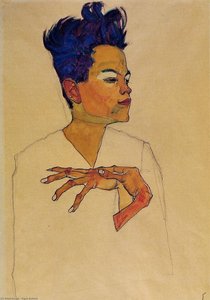
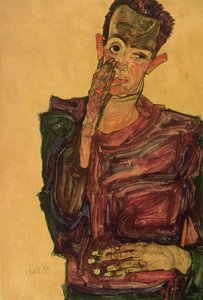
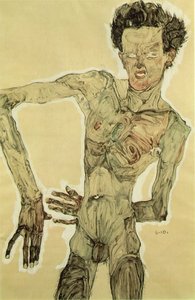
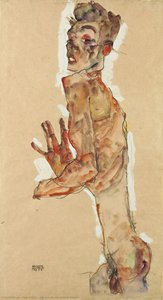
作家の略歴
表現の中に刻まれた生涯
1890年、オーストリアのトゥルン・アン・デア・ドナウに生を受けたエゴン・シーレの人生は、類まれな芸術的ヴィジョンと、深い個人的な苦難が交錯する激動の旅路でした。彼の幼少期は、病と喪失の影に覆われていました。わずか14歳の時、父が梅毒によってこの世を去った悲劇は、その後の彼の作品に深く共鳴し、死への執着や存在の儚さというテーマに火をつけることとなります。当初は母に、その後は叔父レオポルド・チハチェックによる、やや支配的な後見のもとで育ったシーレの子供時代には、一般的な安定こそ欠けていたものの、そこから強烈な独立心が養われました。少年時代から彼は鉄道に対して深い魅惑を抱いており、そのモチーフは後の絵画にも密かに姿を現します。また、芽生えつつあった描画の才能は、当初、実利的な道から逸れるものとして父の不興を買うこともありましたが、こうした形成期の経験が、彼の中に鋭い感受性と剥き出しの感情をもたらしました。それは、生と死、そして人間という存在の本質を問い続ける、彼の芸術表現の代名詞となることになります。
ウィーンという試練:芸術的発展
シーレの正式な芸術教育は、ウィーンの工芸学校(Kunstgewerbeschule)から始まりましたが、彼はすぐにその保守的なアプローチに閉塞感を抱くようになります。その後、美術アカデミー(Akademie der bildenden Künste)へと移るものの、厳格なアカデミズムの伝統に対してさらなる幻滅を感じることとなりました。この不満は、彼に正式な訓練を放棄させることにつながりましたが、それは自らの道を切り拓こうとする揺るぎない芸術的信念の証でもありました。初期の年月において、グスタフ・クリムトの影響は決定的なものでした。シーレはクリムキムトの装飾的な様式や象徴性の探求に敬意を払い、その大家から直接的な指導を受けることもありました。しかし、シーレはやがてクリムトの美学から離脱し、剥き出しの誠実さと心理的な強烈さを特徴とする、極めて個性的な独自の声を確立していきます。1909年には「新ウィーン芸術集団」を共同設立し、既存の芸術規範に挑む進歩的な芸術家たちと肩を並べました。初期の作品、とりわけ不安をかき立てる肖像画や自画像は、歪んだ人物像と触知できるほどの脆弱性を描き出し、感情の混乱を力強く表現する声明として現れ始めました。これらの絵画は単なる肉体の描写ではなく、人間の精神を苛む不安、欲望、恐怖といった「内なる風景」の探求だったのです。彼は、目に見えるものとしてではなく、自らが感じたものを描こうとしたのでした。
剥き出しの感情と揺るぎない真実
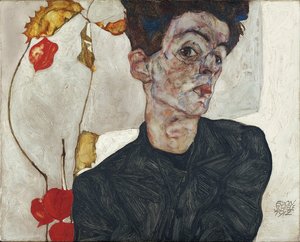
エゴン・シーレの芸術は、その生々しい誠実さと心理的な深みによって、一目でそれと分かります。彼は、性、死、不安、孤独といった、しばしばタブーとされるテーマに対し、逃げ隠れすることのない眼差しで立ち向かいました。彼の独特な様式は、引き伸ばされた肢体、ねじ曲がったポーズ、そして不安感や感情の昂ぶりを伝える表現力豊かな線によって特徴づけられます。人体、特に裸体は彼の主要な主題となりましたが、それは理想化された美の対象としてではなく、人間体験の複雑さを探求するための器としての役割を果たしていました。自画像は彼の作品群の重要な部分を占め、孤独と自己疑念に満ちた彼自身の内面世界を、親密なほど間近に覗かせます。彼は自分自身を、決して美化することなく、あえて不格好で脆弱な姿で描くことを厭いませんでした。そこには深い自己認識と内省が宿っています。自画像にとどまらず、シーレは他者の肖像も数多く描き、表面の下に潜む真実を突き刺すような、不穏なまでのリアリズムでその人物像を捉えました。風景画は人物画ほど中心的ではありませんでしたが、形態と色彩の習熟を示しており、しばしば肖像画と同様の感情的な強烈さを反映しています。特にシーレの作品において「線」の使用は際立っています。それは単に形を定義するための道具ではなく、感情や心理的緊張を伝える表現力としての力を持っています。また、繊細で紙のような外皮を持つホオズキ(Physalis)のような繰り返されるモチーフは、死と無常の象徴として、彼の死への執着をさらに強調しています。
断ち切られた遺産:業績と意義
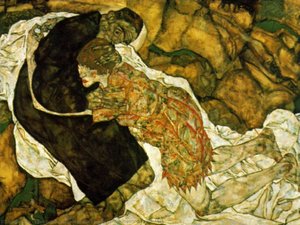
検閲や法的困難――自身の芸術によって未成年者を堕落させたという容疑による短期間の投獄を含む――に直面しながらも、シーレはウィーンの前衛的なサークルにおいて確かな地位を築きました。彼の作品は当時の慣習に挑み、称賛と憤慨の両方を巻き起こしました。1918年、スペイン風邪のパンデミックの中で28歳という若さで早すぎる死を迎えるまでに、彼はオーストリア表現主義の旗手としての地位を確立していました。ホオズキのある自画像、抱き合うカップル、
- 主要なテーマ: 死、性、孤独、心理的葛藤
- 影響を受けたもの: グスタフ・クリムト、ウィーン分離派、個人的なトラウマ
- 様式の特徴: 引き伸ばされた肢体、ねじ曲がったポーズ、表現力豊かな線、剥き出しの感情
エゴン・シエレ
1890 - 1918 , オーストリア
プロフィール概要
- Artistic Movement Or Style: 表現主義
- Artists Who Influenced This Artist: ['グスタフ・クリムト']
- Date Of Birth: 1890年6月12日
- Date Of Death: 1918年10月31日
- Full Name: Egon Leo Adolf Ludwig Schiele
- Nationality: オーストリア
- Notable Artworks:
- フィザリスと自画像
- 抱擁する男女
- クロウズベルクの風景
- Place Of Birth: オーストリア・トゥルン