

 プレビュー
プレビュー
 プリントを購入
 シェアする
シェアする シェアする
シェアする
 詳細を見る
詳細を見る

 ダウンロード
 似ている作品
 X線調査
X線調査 スライドショー
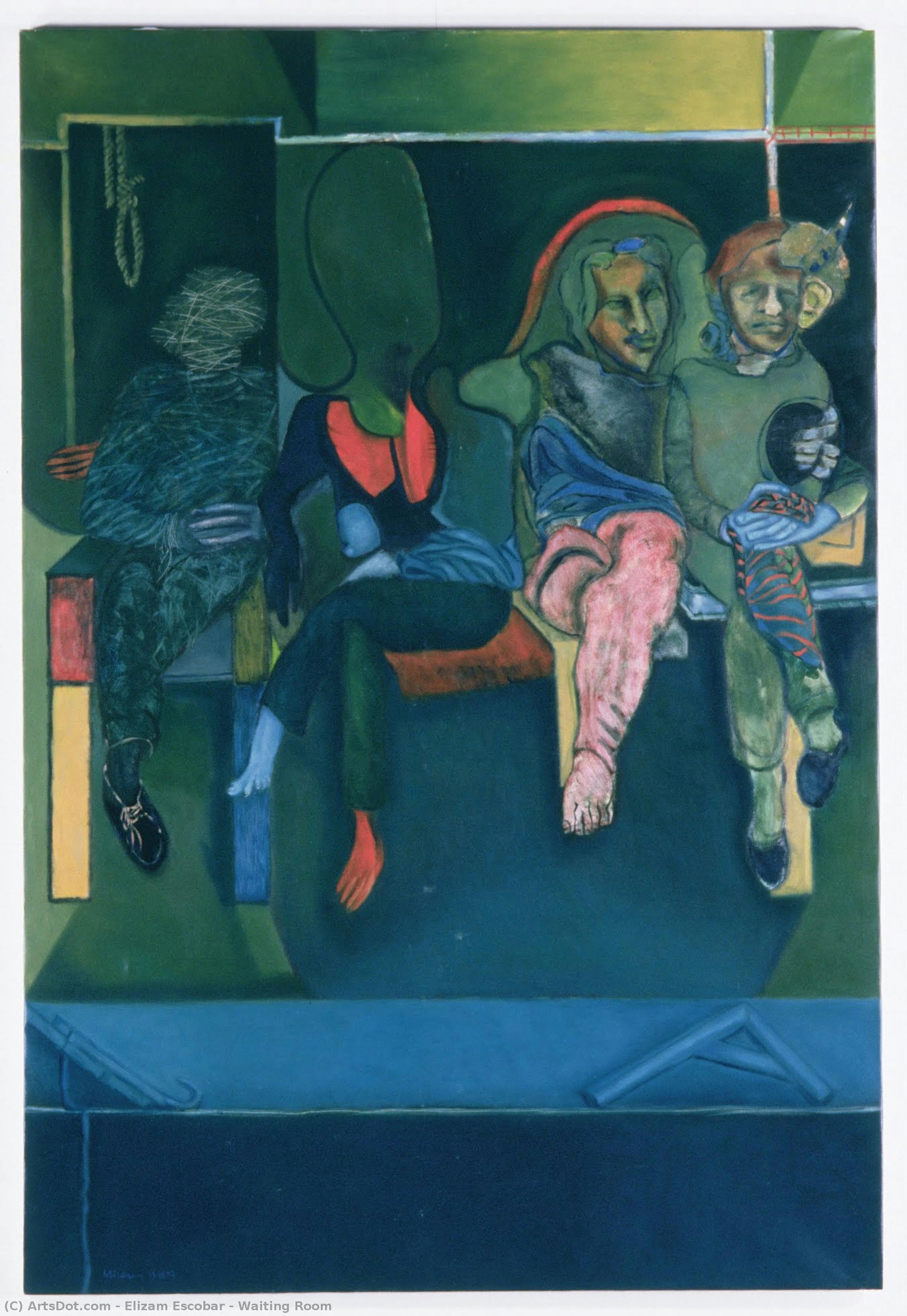
Waiting Room
 1993
1993 175.0 x 121.0 cm
 Museo de Arte Contemporáneo de Puerto Rico
 詳細を見る
詳細を見る




































作品のオリジナル比率に合わせた、当店の規定サイズからお選びください。

特定のフレームやスペースに合わせて、ご希望のサイズをご入力いただけます。選択されたサイズが元の画像の比率と異なる場合、アートワークをトリミングするか、手描きで要素を追加して絵画を拡張いたします。デジタルモックアップ を制作し、制作開始前にご確認(承認)をいただきます。
画面上のプレビューは、実際のトリミングや拡張を正確に反映しているものではありません。最終的な構図は、モックアップによってのみ正確にご確認いただけます。
カスタムサイズもご利用いただけますが、元の比率を維持するためには、あらかじめ用意されたリストからサイズを選択することをお勧めいたします。
ご注文後、ArtsDot.com チームより詳細な指示をお送りするとともに、仕上がりイメージ(モックアップ)をご提供いたします。


 ガラスオプションは、110cm未満のサイズでのみご利用いただけます。

Waiting Room
複製技法
複製画のサイズ
-


合計金額
$ 263
関連作品









アーティストの略歴
A Tapestry of Resistance and Poetic Vision
The life of Elizam Escobar was a profound testament to the indomitable strength of the human spirit, woven from threads of political conviction, literary grace, and visual mastery. Born in the vibrant southern city of Ponce, Puerto Rico, in 1948, Escobar emerged not merely as an artist, but as a polymath—a poet, theorist, and writer whose very existence became a canvas for the struggles of his nation. His early years were steeped in the cultural richness of the island, where a childhood passion for drawing and painting began to coalesce with a burgeoning awareness of the turbulent political landscape. As he pursued formal studies at the University of Puerto Rico, the echoes of the independence movement and the weight of colonial tensions became inseparable from his creative identity.
Escobar’s journey was marked by a dramatic intersection of art and activism. His involvement with the Fuerzas Armadas de Liberación Nacional (FALN) led to a period of profound personal and professional upheaval, including a conviction for seditious conspiracy and a sentence that threatened to silence his voice forever. Yet, it was within the confines of incarceration that his artistry underwent a transformative evolution. Rather than succumbing to the isolation of prison, Escobar utilized his time to cultivate an intense intellectual life, studying philosophy and producing a prolific body of work that served as a vital tool in the campaign for the release of Puerto Rican political prisoners. His art during these years was not merely a reflection of struggle, but a defiant act of existence.
Symbolism and the Language of the Canvas
To encounter an Elizam Escobar painting is to enter a space where color and texture speak a language far more complex than mere representation. His aesthetic style, refined through studies in New York City at institutions such as the Brooklyn Museum and the New York Art Students League, is characterized by a sophisticated use of visual symbolism. He moved beyond the boundaries of traditional painting, eventually incorporating digital and electronic transfer media to explore the nuances of contemporary existence. His works often grapple with themes of marginality, isolation, and the intricate nature of human communication, using bold palettes and evocative imagery to bridge the gap between the personal and the political.
Escobar’s theoretical contributions were as significant as his visual ones. He was a thinker who resisted the reduction of art to mere political propaganda, instead advocating for an artistic autonomy that allowed for a deeper, more symbolic exchange with the viewer. His essays explored the capacity of aesthetics to reveal the underlying structures of consciousness and thought. This intellectual rigor is evident in his most celebrated works, such as:
- Los sepultureros (1985): A haunting exploration of mortality and memory.
- El velorio (1991): A poignant reflection on ritual and loss.
- El embalsamador y la viuda (2001): A complex narrative piece that showcases his mastery of symbolic storytelling.
A Lasting Legacy of Cultural Identity
Following his release from prison in 1999 through presidential clemency, Escobar returned to Puerto Rico, bringing with him a renewed sense of purpose and a global perspective. He dedicated himself to teaching at the School of Visual Arts and Design in Old San Juan, passing his knowledge to a new generation of creators. His later works continued to push boundaries, reflecting on the phenomenon of the painter as an observer of reality and the shifting landscapes of the modern world. Even as he faced his final battle with cancer, his commitment to the intersection of art and truth remained unshakable.
The passing of Elizam Escobar in 2021 marked the end of a life that was, in every sense, a masterpiece of resilience. He leaves behind a legacy that transcends the boundaries of Puerto Rican art, standing as a monumental figure in Latin American contemporary history. Through his paintings, his poetry, and his unwavering dedication to social justice, Escobar ensured that the struggle for identity and liberation would forever be etched into the collective memory of the world. His work remains a vital, breathing testament to the power of art to transform suffering into profound, enduring beauty.
Elizam Escobar
1948 - 2021 , Puerto Rico
基本情報
- Artistic Movement Or Style: Political Painting
- Artists Or Movements Influenced By This Artist: ['Latin American Art']
- Artists Who Influenced This Artist:
- Samuel Sánchez González
- Emilio Rosado
- Date Of Birth: 1948
- Date Of Death: 2021
- Full Name: elizam escobar
- Nationality: Puerto Rican
- Notable Artworks:
- Waiting Room
- The Card Game # 2
- Place Of Birth: Ponce, Puerto Rico