

 プレビュー
プレビュー
 シェアする
シェアする シェアする
シェアする
 詳細を見る
詳細を見る

 ダウンロード
 似ている作品
 X線調査
X線調査 スライドショー
 統計情報
統計情報D.H. (Domestic Helper)
 Painting
- Contemporary Realism
 Contemporary
 152.0 x 153.0 cm
 福岡アジア美術館
 詳細を見る
詳細を見る
ジークレー/アートプリント
迅速な制作と多彩な仕上げオプションを備えた、ミュージアムクオリティのジークレーまたはキャンバスプリント。 ( 手描きの絵画を購入 デジタル画像販売へ切り替え)




P118B $10

P118H $10

P118W $10

P438Z $10

P508JH $12

P508YH $12

P805H $10

P805Z $10

P919BZ $10

P919G $10

P919XJ $10

P959ZH $10

P968JZ $12

W106C $8

W218G $10

W218JH $8

W218Y $10

W307PJ $10

W316G $10

W316PJ $8

W316Y $10

W398PJ $8

W4111J $10

W500HY $15

W500JH $15

W692G $12

W849H $8

W940BG $15

W953PJ $8




作品のオリジナル比率に合わせた、当店の規定サイズからお選びください。

特定のフレームやスペースに合わせて、ご自身でサイズを指定することも可能です。選択されたサイズが元の画像の比率と一致しない場合、作品をトリミングするか、鏡面反射または単色での塗りつぶしによって画像を拡張いたします。制作を開始する前に、ご確認用のデジタルモックアップをお送りいたします。
画面上のプレビューには、実際のトリミングや拡張は反映されませんのでご注意ください。最終的な構図を正確に確認できるのは、モックアップのみとなります。
カスタムサイズも承っておりますが、元の比率を維持するためには、あらかじめ用意されたリストからサイズを選択することをお勧めいたします。


 ガラスオプションは、110cm未満のサイズでのみご利用いただけます。

D.H. (Domestic Helper)
ジークレー/アートプリント
複製画のサイズ
-


合計金額
$ 62
The Silent Narrative of Domesticity
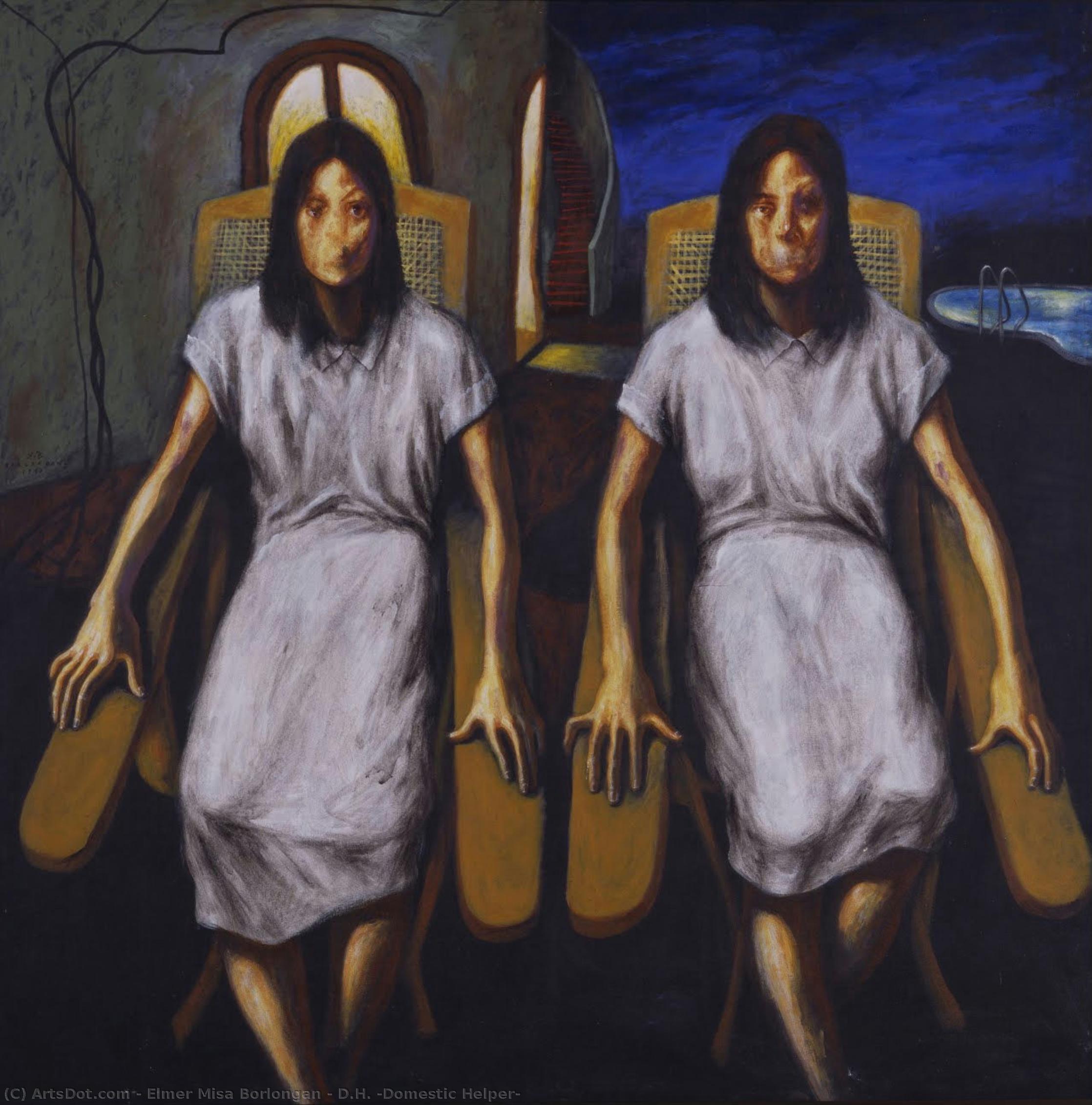
Elmer Misa Borlongan’s evocative piece, D.H. (Domestic Helper), immediately draws the viewer into a tableau steeped in unspoken histories and palpable tension. The composition presents several figures, predominantly women, seated within chairs that whisper tales of Spanish colonial grandeur in the Philippines. Yet, this veneer of historical elegance belies an underlying current of constraint. The faces of these women are rendered with a deliberate ambiguity—partially obscured, blurred—as if memory itself is struggling to fully capture their essence. They are arranged before the lush backdrop of a wealthy home's garden, a setting that typically suggests leisure and abundance, but here feels more like a stage for quiet endurance.
A Study in Subdued Presence
The visual language employed by Borlongan is one of profound restraint. The figures are clad in ethereal white garments, lending them an almost spectral quality against the darker tones of the setting and the surrounding individuals. This monochromatic palette enhances the sense of timelessness, pulling the viewer out of a specific moment and into a realm of generalized emotional weight. It is as if all potential communication, every sharp retort or whispered secret, has been magically muted, leaving behind only a shared, weighty silence. The arrangement itself—the placement of figures on either side, the empty chairs suggesting absence or waiting—creates an intricate visual dialogue that demands contemplation.
Symbolism and Socio-Cultural Echoes
The title, D.H., anchors the work to themes of service, labor, and the often invisible roles women play within domestic spheres. Borlongan masterfully transforms a potentially mundane subject into a powerful socio-political commentary. The feeling that any utterance is forbidden suggests systemic silencing—a critique woven subtly into the fabric of beautiful representation. For the collector or designer, this piece offers more than mere decoration; it offers a conversation starter, an intellectual anchor for a space that desires depth alongside beauty. It speaks to the weight of expectation and the quiet dignity found in enduring unspoken narratives.
Technique and Emotional Resonance
While the specific medium allows for varied interpretations, the overall effect is one of masterful figurative expressionism. Borlongan’s technique seems to blend sharp observation with a dreamlike diffusion, particularly noticeable in the treatment of the faces. This juxtaposition—the clarity of the setting against the blurriness of the self—is what gives the work its captivating emotional pull. Owning this reproduction allows one to bring into an interior space not just art, but a mood: one of thoughtful introspection, quiet resilience, and the enduring mystery that resides beneath polished surfaces.
関連作品



アーティストの略歴
A Life Etched in Expression: The World of Elmer Borlongan
Elmer Misa Borlongan, born January 7th, 1967, in the bustling district of Santa Mesa, Manila, Philippines, is a name synonymous with contemporary Filipino figurative expressionism. His canvases aren’t merely depictions of life; they are visceral experiences, pulsating with the energy and complexities of everyday existence. From humble beginnings nurtured by a father who encouraged early artistic exploration, Borlongan has risen to become one of Southeast Asia's most celebrated artists, his work consistently sought after in galleries and auctions alike. He didn’t emerge from a vacuum; his journey reflects a deep engagement with the socio-political landscape of the Philippines, transforming personal observations into universally resonant narratives.Early Influences and Artistic Formation
Borlongan’s artistic foundation was laid surprisingly early, beginning formal training at the age of eleven under the tutelage of Fernando Sena. This mentorship proved pivotal, instilling in him not just technical skills but also a crucial understanding of art history – particularly the Dutch Masters like Rembrandt and Frans Hals. While initially tasked with imitation to grasp fundamental techniques, Sena ultimately encouraged his students to forge their own unique identities. This early exposure to classical painting would later inform Borlongan’s approach to realism, even as he deliberately distorted forms and employed an intensely personal color palette. Crucially, it was during workshops led by Sena in the impoverished areas of Tondo, Montalban, and Antipolo that Borlongan encountered the realities of urban poverty – a theme that would become central to his oeuvre. Growing up amidst the political turbulence of the 1970s and 80s—the First Quarter Storm, the Plaza Miranda bombing, Martial Law—further fueled a social consciousness that permeates his work. His father’s encouragement was more than just logistical support; it was an implicit validation of seeing the world through an artistic lens, prompting him to observe and interpret the nuances of daily life with growing sensitivity.The Rise of a Distinctive Style
Borlongan's style is often described as figurative expressionism, but this label only begins to capture its essence. His canvases are dominated by the human figure—often elongated, contorted, or rendered in unconventional hues—conveying a sense of tension and emotional weight. Early works frequently depicted figures navigating the chaotic streets of Manila, contrasting sharply with the idyllic rural scenes favored by previous generations of Filipino artists like Fernando Amorsolo. This deliberate shift in focus signaled a commitment to portraying the contemporary urban experience, raw and unfiltered. Later, after relocating to Zambales province, his subject matter expanded to include rural life, yet the underlying energy remained consistent—a palpable sense of struggle, resilience, and human connection. He masterfully blends realism with impressionistic brushwork, creating scenes that are both immediate and deeply evocative. The artist himself describes his approach as an attempt to capture not just *what* he sees but *how* it feels – the weight of poverty, the joy of simple pleasures, the complexities of familial bonds.Major Achievements and Recognition
The year 1994 marked a turning point in Borlongan’s career with his recognition as one of the Thirteen Artists Awardees by the Cultural Center of the Philippines (CCP). This prestigious award catapulted him into national prominence, providing a platform for wider exposure and critical acclaim. Since then, his work has been exhibited extensively both domestically and internationally, garnering consistent praise from critics and collectors alike. Paintings like “Father and Son 2” exemplify his ability to capture poignant familial moments with striking emotional depth. "Life Goes On" showcases his talent for portraying childhood joy through vibrant realism and dynamic brushstrokes. “Violin Lessons,” another celebrated piece, beautifully illustrates the intimacy of musical connection. Beyond individual works, Borlongan’s consistent presence at auctions throughout Southeast Asia underscores his enduring appeal and growing market value. His marriage to fellow artist Plet Bolipata further solidifies his position within the vibrant Filipino art community.Historical Significance and Enduring Legacy
Elmer Borlongan's significance extends beyond his technical prowess or commercial success. He represents a crucial shift in Filipino art—a move away from idealized representations towards a more honest, unflinching portrayal of contemporary life. His work serves as a powerful commentary on social issues, prompting viewers to confront uncomfortable truths about poverty, inequality, and the human condition. He doesn’t offer easy answers or romanticized narratives; instead, he presents raw, visceral experiences that resonate with audiences on a deeply emotional level. His ability to imbue everyday scenes with such profound meaning has cemented his place as one of the most important Filipino artists of his generation. As his work continues to be exhibited and collected worldwide, Elmer Borlongan’s legacy will undoubtedly continue to inspire future generations of artists to engage with their own realities and translate them into powerful visual statements.
elmer misa borlongan
1967 - , Philippines
基本情報
- Artistic Movement Or Style: Figurative Expressionism
- Artists Who Influenced This Artist: ['Fernando Sena']
- Current Status: Living
- Date Of Birth: January 7, 1967
- Full Name: Elmer Misa Borlongan
- Nationality: Filipino
- Notable Artworks:
- Father and Son 2
- Life Goes On
- Violin Lessons
- Place Of Birth: Santa Mesa, Philippines
関連記事

White on Canvas: 10 Masterpieces & Timeless Elegance for Your Home Decor
Explore 10 iconic white paintings by Monet, Whistler & Rothko! Discover the stories behind these serene masterpieces and their impact on art history. Find museum-quality reproductions for your home decor at .
Mars Black Masterpieces: 10 Iconic Paintings & Timeless Art Decor Ideas
Delve into the power of 'Mars Black' with 10 iconic paintings by masters like Rembrandt & Caravaggio. Explore dramatic chiaroscuro, gothic art, and timeless beauty. Find museum-quality reproductions & elevate your home decor on .

Monochrome Visions: Exploring the Aesthetic & Historical Significance of Black & White Photography
Explore the rich history & artistic power of black and white photography. From early techniques to iconic masters like Ansel Adams, discover why monochrome continues to captivate art lovers today. Expert insights for collectors.
ジェームズ・マクニール・ホイストラー:至高の25選 - 美と調和を求めた芸術家の軌跡 | ArtsDot
ジェームズ・マクニール・ホイストラーの至高の25選。ノクターン、印象派、美しい色彩に満ちた作品群を紐解きます。ArtsDotで高品質なアートプリントとインテリアをお楽しみください。名画の世界へ – ArtsDot.com

Dark Masterpieces: 10 Iconic Paintings Dominated by Black Tones |
Explore 10 iconic paintings dominated by black tones, from Rembrandt’s chiaroscuro to Goya's dark expressions. Discover the stories behind these masterpieces & find museum-quality art reproductions for your home at .