

 プリントを購入
 シェアする
シェアする シェアする
シェアする
 詳細を見る
詳細を見る

 ダウンロード
 似ている作品
 スライドショー
Saint George Slaying the Dragon


 詳細を見る
詳細を見る




































作品のオリジナル比率に合わせた、当店の規定サイズからお選びください。

特定のフレームやスペースに合わせて、ご希望のサイズをご入力いただけます。選択されたサイズが元の画像の比率と異なる場合、アートワークをトリミングするか、手描きで要素を追加して絵画を拡張いたします。デジタルモックアップ を制作し、制作開始前にご確認(承認)をいただきます。
画面上のプレビューは、実際のトリミングや拡張を正確に反映しているものではありません。最終的な構図は、モックアップによってのみ正確にご確認いただけます。
カスタムサイズもご利用いただけますが、元の比率を維持するためには、あらかじめ用意されたリストからサイズを選択することをお勧めいたします。
ご注文後、ArtsDot.com チームより詳細な指示をお送りするとともに、仕上がりイメージ(モックアップ)をご提供いたします。


 ガラスオプションは、110cm未満のサイズでのみご利用いただけます。

Saint George Slaying the Dragon
複製技法
複製画のサイズ
-


合計金額
$ 263
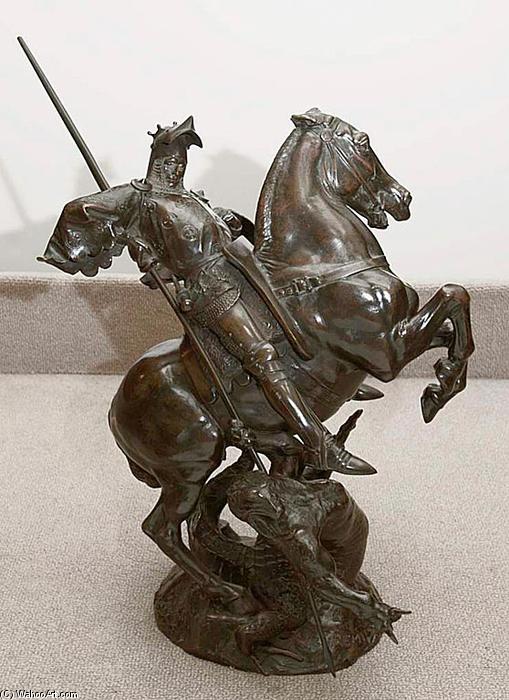
The Lionheart’s Triumph: Emmanuel Frémiet's Saint George Slaying the Dragon
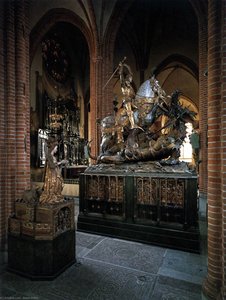
Emmanuel Frémiet’s 1871 bronze sculpture, “Saint George Slaying the Dragon,” is more than a depiction of a legendary battle; it’s a visceral embodiment of Christian virtue triumphing over primal darkness. This monumental work, now housed within The Art Institute of Chicago, captures a pivotal moment in Christian mythology – the valiant knight’s decisive victory against a fearsome dragon – with an intensity that resonates powerfully even today. Frémiet, a master of the Animalier movement, renowned for his remarkably realistic portrayals of animals, here elevates this narrative to a heroic scale, imbuing it with a dramatic energy and profound symbolic weight.
The sculpture’s genesis lies within a rich tapestry of pre-Christian folklore. The dragon itself draws upon ancient myths – the serpent entwined around the Tree of Life, the monstrous Typhon challenging the gods, the fearsome Chimera of Greek legend – all representing chaos and the forces threatening to overwhelm order. Saint George's story, rooted in Cappadocia and later transferred to Libya, similarly speaks to a timeless struggle between good and evil, light and darkness. Frémiet skillfully synthesizes these diverse threads, creating an image that transcends its specific religious context and taps into universal archetypes of courage, faith, and the ultimate victory of righteousness.
A Study in Bronze: Technique and Realism
Frémiet’s technical prowess is immediately evident in the sculpture's remarkable detail. The bronze itself, a material he expertly manipulated, possesses a rich, lustrous surface that captures the play of light and shadow with breathtaking accuracy. Notice the meticulously rendered scales on the dragon’s body, each one subtly textured to convey its formidable power. The musculature of Saint George’s horse is powerfully depicted, conveying both the animal's frantic energy and the knight’s unwavering determination. The dynamic pose—Saint George poised mid-strike, lance aimed directly at the dragon’s heart—is a testament to Frémiet’s understanding of anatomy and movement.
Crucially, Frémiet wasn’t simply replicating a static scene; he was capturing a moment of intense action. The rearing horse, straining against its bonds, adds a layer of dramatic tension, while the dragon's coiled form suggests a desperate struggle for survival. The use of *lost-wax* casting, a traditional bronze-making technique, allowed Frémiet to achieve an astonishing level of detail and precision, ensuring that every element of the sculpture contributes to its overall impact.
Symbolism and Spiritual Resonance
Beyond its technical brilliance, “Saint George Slaying the Dragon” is laden with symbolic meaning. The dragon, often interpreted as a representation of sin, temptation, or evil itself, is vanquished by Saint George, embodying Christ’s sacrifice and triumph over death. The lance, piercing the dragon's heart, symbolizes divine justice and the power of faith to overcome earthly obstacles. The setting—a stylized landscape suggesting both wilderness and a hint of civilization—underscores the battle between the sacred and the profane.
Furthermore, the sculpture’s placement within the broader context of Christian iconography reinforces its spiritual significance. It echoes earlier depictions of Christ as the “Lion of Judah,” battling against the forces of darkness – a potent visual metaphor for the ongoing struggle between good and evil that has resonated throughout Western art history. The choice of bronze itself—a durable, enduring material—suggests the lasting power of faith and virtue.
A Legacy in Reproduction: Bringing the Masterpiece to Life
Today, “Saint George Slaying the Dragon” continues to captivate audiences with its dramatic intensity and profound symbolism. ArtsDot.com offers meticulously crafted hand-painted reproductions that faithfully capture the essence of Frémiet’s original masterpiece. These high-quality reproductions provide a stunning way to experience this iconic work of art in your own home or office, allowing you to appreciate its beauty and significance for generations to come. Whether as a statement piece in a grand salon or a subtle accent in a more intimate setting, this sculpture's enduring power remains undiminished.
関連作品
アーティストの略歴
The Sculptor of Nature’s Majesty
Born in the vibrant heart of Paris in 1824, Emmanuel Frémiet emerged as a transformative force in nineteenth-century sculpture, a master who breathed life into cold stone and bronze through an unparalleled devotion to realism. His artistic journey was deeply rooted in the traditions of French excellence, shaped significantly by the mentorship of his uncle, Sophie Frémiet, and the revolutionary sculptor François Rude. These early influences instilled in him a profound respect for anatomical precision and an expressive vitality that would later define his signature style. Before ascending to the heights of monumental fame, Frémiet honed his observational prowess through scientific lithography, a discipline that demanded an exacting eye for detail—a skill that would become the cornerstone of his legendary ability to capture the raw essence of the natural world.
Frémiet’s career is most distinguished by his pioneering role within the Animalier movement, a genre dedicated to the lifelike portrayal of animals. Unlike many of his contemporaries who sought only idealized forms, Frémiet pursued a visceral truth, rendering creatures such as bears, dogs, and primates with such anatomical accuracy that they seemed to pulse with hidden life. His works often transcended mere biological study to convey deep emotion and narrative tension. Whether depicting the tender vulnerability of Pan with Bear Cubs or the harrowing, controversial power dynamics found in his more dramatic compositions, Frémiet utilized texture and form to evoke a sense of movement and instinctual drama that captivated the Victorian era's fascination with natural history.
Monumental Legacies and Heroic Narratives
While his animal studies earned him intimate renown, Frémiet’s ability to command scale allowed him to leave an indelible mark on the Parisian landscape through monumental public works. He possessed a rare talent for imbuing historical and mythological figures with a sense of spiritual fortitude and national pride. His collaborative masterpiece, the Joan of Arc statue in Paris—a project involving the legendary Auguste Rodin—stands as a towering testament to his ability to weave heroic narrative into equestrian sculpture. This work, alongside his commemoration of Ferdinand de Lesseps through the Suez Monument, demonstrates his capacity to handle grand-scale themes of patriotism and human achievement with the same meticulous care he applied to the smallest detail of a creature's fur.
The breadth of Frémiet’s technical mastery is perhaps best observed in the dynamic interplay of light and shadow within his bronze works. In pieces such as Saint George Slaying the Dragon, the viewer is not merely observing a legend but is thrust into the center of a struggle defined by intricate detail and kinetic energy. His life, though marked by periods of economic hardship—including a formative tenure as a painter to the morgue—served only to deepen his understanding of the human condition and the delicate balance between life and death. Ultimately, Emmanuel Frémiet remains a titan of French sculpture, an artist whose legacy resides in the seamless fusion of scientific observation and profound, emotive artistry.
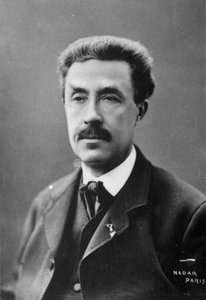
emmanuel frémiet
1824 - 1910 , France
基本情報
- Artistic Movement Or Style: Animalier
- Artists Who Influenced This Artist:
- François Rude
- Pierre-Nicolas Tourgueneff
- Date Of Birth: December 6, 1824
- Full Name: Emmanuel Frémiet
- Nationality: French
- Notable Artworks:
- Joan of Arc Statue
- Female Gorilla Carrying off a Negress
- Saint George Slaying the Dragon
- Place Of Birth: Paris, France
関連記事

ジョルジュ・ブラック傑作25選:革新的なキュビスムの世界と装飾への誘い
ジョルジュ・ブラックの傑作25選。キュビスムを代表する画家、その革新的な色彩と技法に迫ります。名画から知られざる逸品まで、美術史に残る作品群をArtsDot.comで鑑賞。お部屋を彩るアートプリントも多数ご用意。今すぐオンラインでコレクションをご覧ください。

Bronze Age to Modern Masters: 10 Sculptures That Redefined Art | ArtsDot
Journey through art history with 10 legendary bronze sculptures – from Michelangelo's David to Rodin’s Thinker. Explore the stories, techniques & timeless beauty of these masterpieces. Find museum-quality reproductions & elevate your home decor on ArtsDot.com.

Bronze Sculptures That Defined Art History | ArtsDot
Journey through art history with our Top 10 bronze sculptures! Explore masterpieces by Rodin, Michelangelo & more. Discover stories behind iconic statues and find museum-quality reproductions for your home decor at ArtsDot.com.

The Enduring Legacy of Bronze: A Historical & Artistic Exploration for the Collector
Explore the rich history & enduring appeal of bronze sculpture with expert insights for collectors at ArtsDot. Learn about casting techniques, iconic artists, collecting tips & contemporary interpretations.

The Enduring Legacy of Bronze: History, Technique & Artistic Expression for the Collector
Explore the rich history & enduring appeal of bronze sculpture with expert insights for collectors at ArtsDot. Learn about casting techniques, iconic artists, and collecting tips.

