

 プレビュー
プレビュー
 シェアする
シェアする シェアする
シェアする
 詳細を見る
詳細を見る

 ダウンロード
 似ている作品
 X線調査
X線調査 スライドショー
 Stats
StatsRitratto immaginario di Asger Jorn


 詳細を見る
詳細を見る
ジークレー/アートプリント
迅速な制作と多彩な仕上げオプションを備えた、ミュージアムクオリティのジークレーまたはキャンバスプリント。 ( 手描きの絵画を購入 Switch to Digital Image)




































作品のオリジナル比率に合わせた、当店の規定サイズからお選びください。

特定のフレームやスペースに合わせて、ご自身でサイズを指定することも可能です。選択されたサイズが元の画像の比率と一致しない場合、作品をトリミングするか、鏡面反射または単色での塗りつぶしによって画像を拡張いたします。制作を開始する前に、ご確認用のデジタルモックアップをお送りいたします。
画面上のプレビューには、実際のトリミングや拡張は反映されませんのでご注意ください。最終的な構図を正確に確認できるのは、モックアップのみとなります。
カスタムサイズも承っておりますが、元の比率を維持するためには、あらかじめ用意されたリストからサイズを選択することをお勧めいたします。


 ガラスオプションは、110cm未満のサイズでのみご利用いただけます。

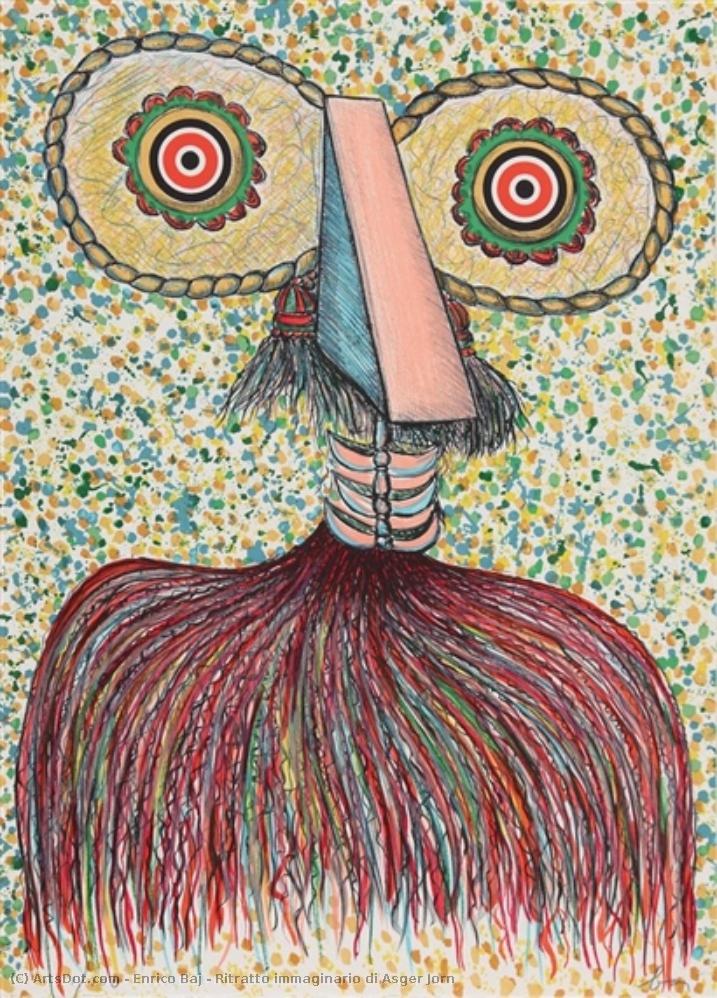
Ritratto immaginario di Asger Jorn
ジークレー/アートプリント
複製画のサイズ
-


合計金額
$ 62
A Visionary Encounter with Chaos
In the mesmerizing depths of Enrico Baj’s Ritratto immaginario di Asger Jorn, viewers are not merely observing a portrait, but are instead pulled into a swirling vortex of psychological intensity. Created in 1976, this work serves as a profound homage to the Danish artist Asger Jorn, yet it transcends simple representation to become an abstract exploration of identity and fragmentation. The painting presents a face that is both present and dissolving, a spectral presence emerging from a dense thicket of color and motion. It is a masterpiece of controlled chaos, where the boundaries between the human form and the surrounding cosmic energy blur into a singular, vibrating experience.
The composition is a brilliant study in tension and balance, or perhaps more accurately, a deliberate embrace of imbalance. The upper portion of the canvas focuses on stylized, circular motifs that suggest eyes or masks, adorned with intricate geometric patterns that catch the light of an unseen sun. Below this focal point, the painting erupts into a wild, organic mass of tangled lines and amorphous shapes, reminiscent of thick foliage or a mane of electrified hair. This structural division creates a sense of movement that pulls the eye downward through layers of complexity, making the artwork feel as though it is breathing, expanding, and contracting with every glance.
The Alchemy of Color and Texture
Technically, the piece is a triumph of Abstract Expressionism infused with the raw energy of the CoBrA movement. Baj utilizes a highly textured approach, likely employing acrylics to achieve a surface that feels sculptural in its depth. Through the masterful application of layering, dripping, and splattering, he creates a tactile landscape where thick impasto meets delicate, fine-lined webs. The palette is an exuberant riot of hues—vibrant yellows, deep forest greens, fiery reds, and ethereal purples all dance together in a seemingly random yet deeply rhythmic arrangement. This kaleidoscopic variety ensures that the painting remains dynamic, offering new details to the discerning eye upon every encounter.
For the collector or interior designer, this artwork offers an unparalleled emotional resonance. It is a piece that demands attention, acting as a powerful focal point in any sophisticated space. The lack of traditional perspective and light sources creates a dreamlike, surreal atmosphere that invites contemplation and intellectual engagement. Whether placed in a contemporary gallery setting or a curated private study, Ritratto immaginario di Asger Jorn brings with it an aura of avant-garde prestige and a sense of profound mystery. It is more than a reproduction; it is an invitation to inhabit a world where the boundaries of reality are beautifully, and permanently, undone.
関連作品
アーティストの略歴
The Architect of Nuclear Anxiety
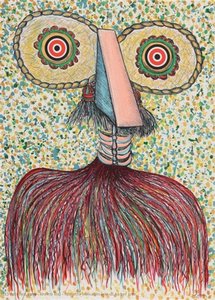
Enrico Baj was far more than a mere painter; he was a visionary provocateur who captured the fractured psyche of the twentieth century. Born in Milan on October 31, 1924, into a life of relative privilege, Baj possessed a rebellious spirit that would eventually lead him to abandon the predictable path of legal studies for the chaotic, transformative world of avant-garde art. His early years were marked by an anarchic impulse, a drive to dismantle established norms that would later define his creative identity. This period of intellectual formation was deeply enriched by his time at the Brera Academy of Art in Milan, where he engaged in profound dialogues with contemporaries such as the renowned scholar Umberto Eco. These connections fostered a multidisciplinary approach to art, blending visual expression with literary depth and philosophical inquiry.
As the world emerged from the devastation of World War II, Baj became obsessed with the looming specter of nuclear annihilation. This preoccupation was not merely a thematic choice but the very engine of his artistic evolution. In 1951, alongside Sergio Dangelo, he co-founded Arte Nucleare, a movement that stood in stark opposition to the emotional detachment of Abstract Expressionism. Instead, Baj sought to confront the viewer with the grotesque, the political, and the unsettling. His work became a mirror held up to a civilization teetering on the brink of self-destruction, utilizing imagery that was as intellectually rigorous as it was visually jarring.
A Tapestry of Surrealism and Pataphysics
The technical brilliance of Baj’s oeuvre lies in his ability to merge disparate textures and concepts into a cohesive, albeit unsettling, whole. He was a master of collage, a medium that allowed him to physically assemble the fragments of a broken world. By layering found objects, sculptural elements, and painterly strokes, he created works that possessed a tactile, almost breathing quality. His fascination with 'pataphysics—the pseudo-science of imaginary solutions—permeated his process, allowing him to construct parallel realities governed by logic far removed from conventional physics. This whimsical yet dark intellectual framework enabled him to navigate the boundaries between the subconscious and the tangible.
His stylistic development saw him moving through various influential movements, most notably finding a home within the CoBrA movement. In works such as Dame Ninette de Valois, one can witness his unique ability to blend surrealist whimsy with existential dread. He might present a figure of striking elegance, yet adorn her with a dress composed of countless buttons, transforming a garment into a sculptural landscape of repetition and texture. Even in his more abstract portraits, such as his homage to Asger Jorn, Baj utilizes a swirling vortex of color and motion to explore the fragmentation of identity, ensuring that every brushstroke serves the larger narrative of psychological intensity.
Legacy of the Avant-Garde
Throughout his long and prolific career, Enrico Baj remained a steadfast promoter of the avant-garde. His contributions extended beyond the canvas into the realms of printmaking, sculpture, and literature, leaving behind a legacy that is as much about intellectual movement as it is about aesthetic innovation. He successfully bridged the gap between the Dadaist tradition of absurdity and the Surrealist exploration of dreams, all while maintaining a sharp, contemporary focus on the political realities of his era.
The historical significance of Baj’s work resides in its refusal to provide comfort. He forced his audience to confront the apocalypse, the grotesque, and the anxiety of the atomic age through a lens of profound creativity. Today, he is remembered as an artist who could find beauty in the wreckage of modern thought, a creator who used the tools of chaos to build a lasting monument to human resilience and the enduring power of the imagination.
enrico baj
1924 - 2003
基本情報
- Artistic Movement Or Style: Surrealism, Dada, CoBrA
- Artists Or Movements Influenced By This Artist: ['Carlo Carrà']
- Artists Who Influenced This Artist:
- Leonardo da Vinci
- Picasso
- Date Of Birth: October 31, 1924
- Date Of Death: June 16, 2003
- Full Name: Enrico Baj
- Nationality: Italian
- Notable Artworks:
- When I Was Young
- Fire! Fire!
- Ritratto immaginario di Asger Jorn
- Place Of Birth: Milan, Italy
関連記事
マックス・エルンスト傑作25選:シュルレアリスムの深淵と装飾への誘い
マックス・エルンストの傑作25選。シュルレアリスムを代表する画家、その夢と無意識の世界を描いた絵画や版画を紐解きます。リビングやオフィスに飾るモダンアート、インテリアに最適な作品を見つけませんか?ArtsDot.comで全コレクションをオンラインで探す。

Kandinsky's Masterpieces: 25 Paintings That Define Abstract Art | ArtsDot
Journey through Wassily Kandinsky's 25 most iconic abstract paintings. Explore his revolutionary use of color, form & spiritual expressionism. Find museum-quality Kandinsky reproductions and elevate your home decor with ArtsDot.com. Discover all masterpieces on ArtsDot.com!
Beyond Sight: Exploring Tactile Dimensions and Illumination in Abstract Painting
Explore the captivating world of tactile abstraction! Discover impasto techniques, influential artists like Richter & Hoyland, and expert insights for collecting textured art. Elevate your space with museum-quality pieces.

抽象表現主義を定義する十大傑作:芸術と装飾の深遠な旅
抽象表現主義を定義する10の傑作。ポロック、ロスコら巨匠たちの情熱と色彩の世界へ。各作品に込められた物語と技法を紐解き、至高のアート体験を。ArtsDot.comで、ミュージアムクオリティの複製画や洗練されたインテリアアイデアを発見してください。
Acrylic on Paper: A Modern Canvas for Contemporary Expression
Explore the versatility of acrylic painting on paper! Discover expert techniques, artist insights & archival practices for creating stunning contemporary art. Learn more at ArtsDot.