

 プレビュー
プレビュー
 プリントを購入
 シェアする
シェアする シェアする
シェアする
 詳細を見る
詳細を見る

 ダウンロード
 似ている作品
 X線調査
X線調査 スライドショー
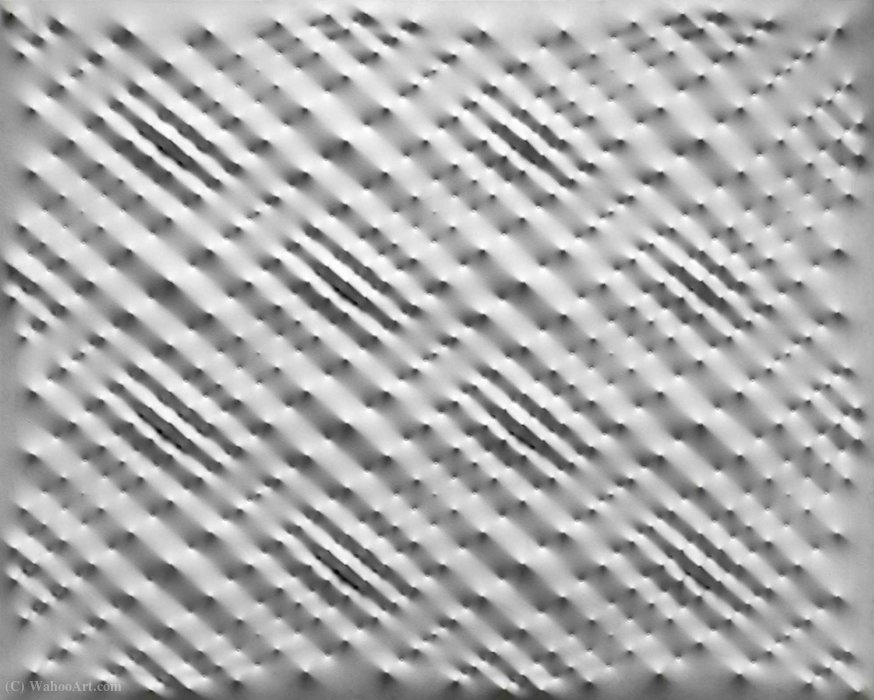
Untitled (881)
 詳細を見る
詳細を見る




































作品のオリジナル比率に合わせた、当店の規定サイズからお選びください。

特定のフレームやスペースに合わせて、ご希望のサイズをご入力いただけます。選択されたサイズが元の画像の比率と異なる場合、アートワークをトリミングするか、手描きで要素を追加して絵画を拡張いたします。デジタルモックアップ を制作し、制作開始前にご確認(承認)をいただきます。
画面上のプレビューは、実際のトリミングや拡張を正確に反映しているものではありません。最終的な構図は、モックアップによってのみ正確にご確認いただけます。
カスタムサイズもご利用いただけますが、元の比率を維持するためには、あらかじめ用意されたリストからサイズを選択することをお勧めいたします。
ご注文後、ArtsDot.com チームより詳細な指示をお送りするとともに、仕上がりイメージ(モックアップ)をご提供いたします。


 ガラスオプションは、110cm未満のサイズでのみご利用いただけます。

Untitled (881)
複製技法
複製画のサイズ
-


合計金額
$ 263
関連作品




アーティストの略歴
Enrico Castellani: Sculpting Light and Space
Enrico Castellani (1930-2017) stands as a pivotal figure in 20th-century art, a pioneer who radically redefined the boundaries of painting. Born in Castelmassa, Italy, a small town nestled within the Veneto region, his artistic journey was marked by a relentless pursuit of spatiality and an innovative engagement with light – concepts he termed “paintings of light.” Castellani’s work wasn't merely about depicting reality; it was about creating immersive experiences that challenged traditional notions of two-dimensionality and invited viewers to actively participate in the artwork’s construction. His legacy extends far beyond Italy, profoundly influencing artists like Donald Judd, who famously recognized him as a foundational figure in minimalism.Early Influences and Artistic Formation
Castellani's artistic trajectory began with formal training in sculpture and painting at the Académie Royale des Beaux-Arts in Brussels, followed by studies in architecture at the École Nationale Supérieure des Beaux-Arts in Belgium. This diverse educational background proved crucial to his later work, providing him with a sophisticated understanding of spatial relationships, material properties, and structural principles. Crucially, he moved to Milan in 1956, immersing himself within a vibrant artistic community that included luminaries like Lucio Fontana and Piero Manzoni. These encounters were instrumental in shaping his artistic vision, pushing him towards experimentation and challenging established conventions. The atmosphere of Milan’s avant-garde scene fostered a spirit of radical innovation, encouraging artists to question the very nature of art itself.The ‘Paintings of Light’ and Geometric Reliefs
Castellani's most significant contribution to the art world lies in his development of what he termed “paintings of light.” Beginning in 1959, he began creating monochromatic geometric reliefs using nails hammered into the frames of stretched canvases. This seemingly simple technique yielded astonishing results – the nails subtly distorted the surface of the canvas, creating a complex interplay of light and shadow that transformed the flat plane into a dynamic topography. The resulting works resembled lunar landscapes or intricate geological formations, evoking a sense of depth and spatial ambiguity. He moved beyond nails to incorporate other materials like hazelnuts and fabrics, further manipulating the surface texture and enhancing the illusion of three-dimensionality. These pieces weren’t static objects; they were constantly shifting in appearance depending on the angle of observation and the quality of light.Association with Azimuth and the Zero Movement
Castellani's artistic explorations coincided with a broader movement within European art – the Zero movement. Founded in 1959 alongside Piero Manzoni, he established the Milan gallery Azimut and its associated journal, *Azimuth*, which became a vital platform for disseminating radical ideas and exhibiting groundbreaking works. The group’s aim was to challenge the dominant trends of Abstract Expressionism and other post-war movements, advocating for a new aesthetic sensibility that prioritized spatiality, materiality, and the exploration of the limits of perception. The “Zero” artists sought to dismantle traditional artistic categories and create a space for experimentation and innovation—a rejection of established norms in favor of pure form and concept.Recognition and Legacy
Castellani’s work gained international recognition throughout the 1960s and beyond, with exhibitions at prestigious institutions such as the Museum of Modern Art (MoMA) in New York, the Solomon R. Guggenheim Museum, Centre Pompidou in Paris, and Stedelijk Museum in Amsterdam. He represented Italy at the Venice Biennale in 1964, 1966, 1984, and 2003, solidifying his position as a leading figure in contemporary art. In 2010, he was awarded the Praemium Imperiale for painting – the first Italian artist to receive this prestigious honor. His influence can be seen in the work of numerous artists, including Donald Judd, who considered him a key precursor to minimalism. Enrico Castellani’s legacy endures as a testament to his innovative spirit and his profound impact on the development of 20th-century art, forever changing our understanding of what painting could be.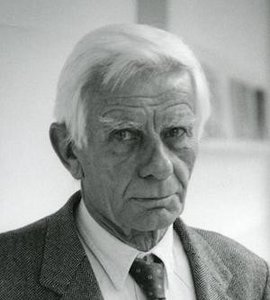
Enrico Castellani
1930 - 2017
基本情報
- Artistic Movement Or Style: Zero movement, Minimalist
- Artists Or Movements Influenced By This Artist: ['Vincenzo Agnetti']
- Artists Who Influenced This Artist:
- Donald Judd
- Piero Manzoni
- Date Of Birth: 1930
- Date Of Death: 2017
- Full Name: Enrico Castellani
- Nationality: Italian
- Notable Artworks:
- Paintings of light
- Untitled (793)
- Place Of Birth: Castelmassa, Italy