

 プレビュー
プレビュー
 シェアする
シェアする シェアする
シェアする
 詳細を見る
詳細を見る

 ダウンロード
 似ている作品
 X線調査
X線調査 スライドショー
 Stats
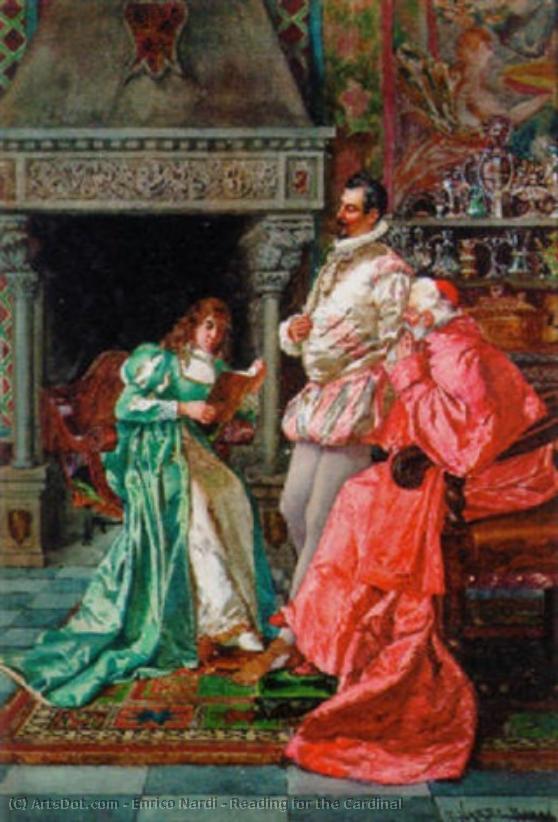
StatsReading for the Cardinal
 Academic Realism
 55.0 x 38.0 cm
 詳細を見る
詳細を見る
手描き油彩複製画
当社のアーティストが、お客様のご希望のサイズと額縁に合わせて、キャンバスに手描きで制作する油彩画です。 ( Switch to Print Switch to Digital Image)




































作品のオリジナル比率に合わせた、当店の規定サイズからお選びください。

特定のフレームやスペースに合わせて、ご希望のサイズをご入力いただけます。選択されたサイズが元の画像の比率と異なる場合、アートワークをトリミングするか、手描きで要素を追加して絵画を拡張いたします。デジタルモックアップ を制作し、制作開始前にご確認(承認)をいただきます。
画面上のプレビューは、実際のトリミングや拡張を正確に反映しているものではありません。最終的な構図は、モックアップによってのみ正確にご確認いただけます。
カスタムサイズもご利用いただけますが、元の比率を維持するためには、あらかじめ用意されたリストからサイズを選択することをお勧めいたします。
ご注文後、ArtsDot.com チームより詳細な指示をお送りするとともに、仕上がりイメージ(モックアップ)をご提供いたします。


 ガラスオプションは、110cm未満のサイズでのみご利用いただけます。

Reading for the Cardinal
複製技法
複製画のサイズ
-


合計金額
$ 313
関連作品
アーティストの略歴
The Dual Legacy of Enrico Nardi: Speed and Soul
In the grand tapestry of twentieth-century Italian culture, few figures possess a legacy as uniquely bifurcated as Enrico Nardi. To the world of motorsport, he remains a titan of engineering and a pioneer of automotive design, a man whose hands shaped the very essence of racing heritage through his work with Lancia and Scuderia Ferrari. Yet, beneath the grease and grit of the workshop lay the soul of a sensitive observer, an artist capable of translating the kinetic energy of the racetrack and the serene beauty of the Italian landscape onto canvas. Born in Bologna in 1907, Nardi’s life was a continuous dialogue between the mechanical precision of his engineering education and the evocative, fluid expressions of his artistic temperament.
Nardi’s early years were defined by a rigorous pursuit of technical mastery. His formal training in mechanical engineering provided him with a structural understanding of the world, an expertise that would later allow him to innovate within the automotive industry. During his formative years with Lancia between 1929 and 1937, he demonstrated a remarkable ability to blend function with forward-thinking design. This period saw the birth of the Nardi-Monaco Chichibio, a vehicle that challenged the conventions of its time through its innovative air-cooled engine. This same spirit of experimentation—the desire to push boundaries and redefine what was possible—would become the hallmark of both his engineering prototypes and his visual compositions.
The Intersection of Motion and Canvas
As Nardi’s reputation as a racing driver grew, so too did his ability to capture the visceral intensity of competition. His participation in legendary endurance races like the Mille Miglia provided him with a front-row seat to the drama of speed. This experience profoundly influenced his artistic output, leading to works that do not merely depict machines, but rather capture the very atmosphere of racing intensity. In pieces such as "Armed at the gate," one can sense the tension and the fleeting moments of adrenaline that defined his era. His brushstrokes often mirrored the velocity of the cars he designed, blending a realist's eye for detail with an impressionistic sense of movement.
Beyond the roar of engines, Nardi possessed a profound reverence for the timeless elegance of Italy. His artistic range allowed him to pivot from the mechanical to the pastoral, finding deep inspiration in the light and architecture of his homeland. His depictions of Venice, St. Mark’s Square and the Island of San Giorgio reveal a different facet of his genius—a contemplative artist mesmerized by the interplay of water, stone, and sky. In these works, the precision of an engineer is softened by a romanticist's touch, creating a sense of enduring peace that stands in stark contrast to the high-octane world of Scuderia Ferrari.
A Lasting Impression on History
The post-war era saw Nardi establishing himself as a master of bespoke automotive creation in Torino. Alongside collaborators like Renato Danese, his workshop became a sanctuary for racing prototypes and specialized engineering. Even as he contributed to the development of iconic components like the Nardi steering wheel—an object that would become a staple in the cockpits of legendary racers—his artistic identity remained inextricably linked to his mechanical pursuits. He did not see these two worlds as separate, but rather as two different methods of documenting the human experience: one through the tangible evolution of technology, and the other through the ephemeral beauty of paint.
Though his life was tragically cut short in 1966, the impact of Enrico Nardi continues to resonate across disciplines. He remains a singular figure who bridged the gap between the industrial revolution's mechanical triumphs and the enduring traditions of Italian fine art. His legacy is found not only in the roar of a vintage engine or the grip of a classic steering wheel but also in the quiet, evocative power of his paintings, which continue to invite viewers to experience the dual heartbeat of speed and serenity.
Enrico Nardi
1907 - 1966 , Italy
基本情報
- Artistic Movement Or Style: Realism & Impressionism
- Artists Or Movements Influenced By This Artist: ['Automotive design']
- Artists Who Influenced This Artist: ['Michelotti']
- Date Of Birth: 1907 Bologna Italy
- Date Of Death: 1966
- Full Name: Enrico Nardi
- Nationality: Italian
- Notable Artworks:
- Armed at the gate
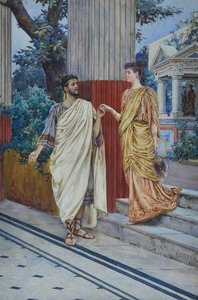
- Scene from antiquity
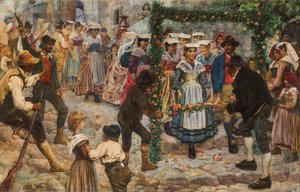
- Wedding procession in the Rieti area
- Place Of Birth: Bologna Italy
関連記事

The Enduring Legacy of Oil on Canvas: Technique, History & Aesthetic Impact
Explore the rich history & techniques of oil painting – from Renaissance masters to Impressionism. Discover pigments, layering methods, and why this timeless medium endures. Expert insights for artists & art enthusiasts.

Oil on Canvas: A Historical & Technical Exploration of a Timeless Artistic Medium
Explore the rich history & enduring techniques of oil painting on canvas. Discover the science behind its longevity, conservation practices, and contemporary relevance. Expert insights for art enthusiasts.

油彩のキャンバス:技法、歴史、そして現代の実践 - 古典美術愛好家へ
油彩の技法、歴史、巨匠たちの秘密を徹底解説。古典美術愛好家向けに、初期フランドル絵画から現代の実践まで深く掘り下げます。ArtsDotで高品質な複製画やカスタムオーダーも承ります。
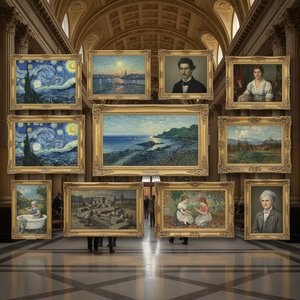
19th Century Masterpieces: 10 Paintings That Defined an Era | ArtsDot
Journey through 19th century art with ArtsDot! Explore 10 iconic paintings – from Monet & Renoir to Courbet – and discover the stories behind Romanticism, Realism & Impressionism. Find museum-quality reproductions for your home decor. Explore the full collection online!

The Enduring Power of Painting: A Historical & Contemporary Exploration of Form and Emotion
Explore the rich history & enduring techniques of oil painting with ArtsDot. Discover masterpieces, learn about art collecting, and find authentic handmade reproductions crafted by skilled artists.