

 プレビュー
プレビュー
 プリントを購入
 シェアする
シェアする シェアする
シェアする
 詳細を見る
詳細を見る

 ダウンロード
 似ている作品
 X線調査
X線調査 スライドショー
An indian ong

 詳細を見る
詳細を見る




P118B $10

P118H $10

P118W $10

P438Z $10

P508JH $12

P508YH $12

P805H $10

P805Z $10

P919BZ $10

P919G $10

P919XJ $10

P959ZH $10

P968JZ $12

W106C $8

W218G $10

W218JH $8

W218Y $10

W307PJ $10

W316G $10

W316PJ $8

W316Y $10

W398PJ $8

W4111J $10

W500HY $15

W500JH $15

W692G $12

W849H $8

W940BG $15

W953PJ $8




作品のオリジナル比率に合わせた、当店の規定サイズからお選びください。

特定のフレームやスペースに合わせて、ご希望のサイズをご入力いただけます。選択されたサイズが元の画像の比率と異なる場合、アートワークをトリミングするか、手描きで要素を追加して絵画を拡張いたします。デジタルモックアップ を制作し、制作開始前にご確認(承認)をいただきます。
画面上のプレビューは、実際のトリミングや拡張を正確に反映しているものではありません。最終的な構図は、モックアップによってのみ正確にご確認いただけます。
カスタムサイズもご利用いただけますが、元の比率を維持するためには、あらかじめ用意されたリストからサイズを選択することをお勧めいたします。
ご注文後、ArtsDot.com チームより詳細な指示をお送りするとともに、仕上がりイメージ(モックアップ)をご提供いたします。


 ガラスオプションは、110cm未満のサイズでのみご利用いただけます。

An indian ong
複製技法
複製画のサイズ
-


合計金額
$ 263
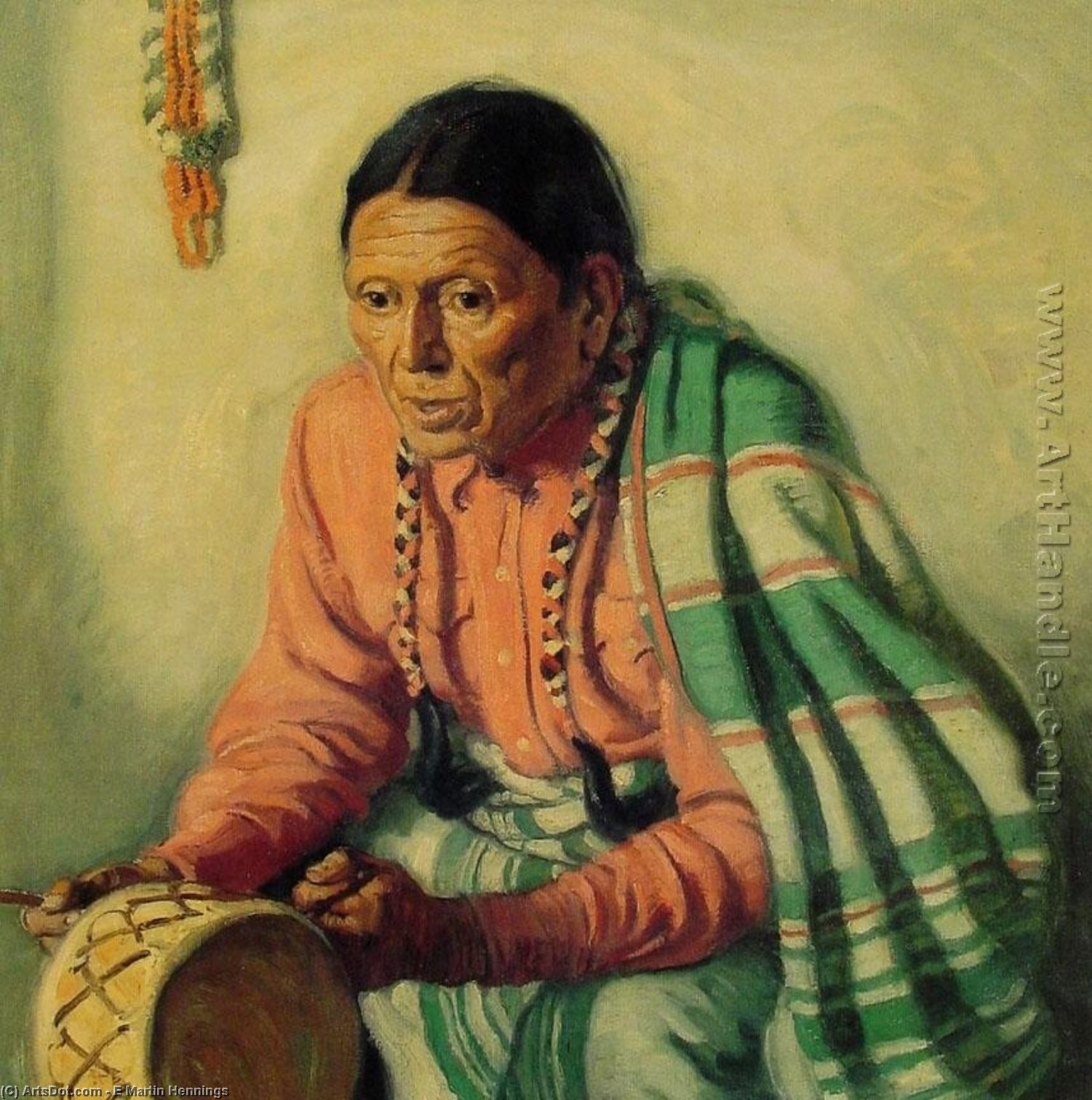
A Portrait of Resilience: Ernest Martin Hennings’ “An Indian Ong”
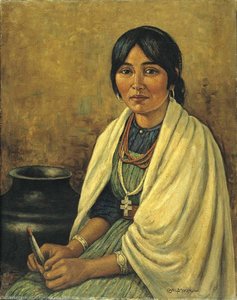
This captivating portrait by Ernest Martin Hennings offers a poignant glimpse into the life and dignity of a Native American woman. Painted with a masterful blend of realism and impressionistic flair, the artwork centers on an elderly woman seated and holding a meticulously woven basket – objects that immediately speak to tradition, skill, and a deep connection to her cultural heritage. The composition is intimate, drawing the viewer’s eye directly to her face, rendered with subtle yet powerful detail. Hennings expertly utilizes directional lighting to sculpt her features, emphasizing the lines etched by time and experience, while simultaneously creating an atmosphere of quiet contemplation.The Taos Society & A Western Vision
Ernest Martin Hennings (1886-1956) was a key figure in the *Taos Society of Artists*, a collective that profoundly shaped the landscape of American art in the early 20th century. Founded in 1915, the society aimed to capture the beauty and spirit of New Mexico’s landscapes and its Native American and Hispanic cultures. Hennings, having studied at the Art Institute of Chicago, brought a strong academic foundation to his work but embraced the looser brushwork and emphasis on light characteristic of Impressionism. This painting exemplifies that synthesis – a refined realism infused with an evocative atmospheric quality. His decision to dedicate himself to art was sparked by a childhood visit to the Art Institute of Chicago, demonstrating a lifelong passion for artistic expression.Symbolism & Emotional Resonance
The artwork is rich in symbolic meaning. The woven basket isn’t merely a prop; it represents generations of knowledge, artistry, and cultural continuity. It speaks to the woman's role as a keeper of traditions. Her gaze, though perhaps tinged with melancholy, conveys an undeniable sense of strength and resilience. Hennings doesn’t portray her as a romanticized figure but as a real person, weathered by life yet possessing inherent dignity. The warm color palette – dominated by pinks, greens, and browns – further enhances the feeling of intimacy and grounding, inviting viewers to connect with the subject on an emotional level. The slight low-angle perspective subtly elevates her status, suggesting respect and reverence for her wisdom and experience.Technique & Aesthetic Qualities
“An Indian Ong” showcases Hennings’ technical prowess. The visible brushstrokes, a hallmark of his style, create texture and depth, lending the painting a dynamic quality. He masterfully layers oil paint to build form and capture the nuances of light and shadow.- The contrast between the rough texture of the basket and the smooth skin of the woman is particularly striking,
- demonstrating his attention to detail.
- The composition, while centered, avoids rigidity through subtle background elements that provide context without distracting from the central figure.
関連作品

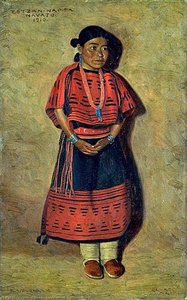
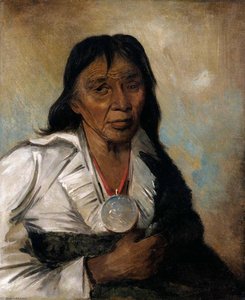
アーティストの略歴
Early Life and Education
- Born: February 5, 1886, Penns Grove, New Jersey
- Parents: Martin and Louis Dunklau Hennings (German immigrants)
- Family moved to Chicago around 1889.
- Developed an early interest in art, inspired by a visit to the Art Institute of Chicago at age 12.
- Studied at the School of the Art Institute of Chicago from 1900-1904, graduating with honors.
- Mentored by John Vanderpoel, who significantly influenced his artistic development.
- Further studies included illustration courses with Thomas Wood Stevens and outdoor painting in Saugatuck, Michigan.
Career Development and Artistic Influences
- Initially worked as a commercial artist in Chicago, creating murals and portraits.
- Briefly studied at the Royal Academy in Munich and the Academy of Fine Arts, Munich under Angelo Junk, Walter Thor, and Franz von Stuck.
- Became a member of the American Artists Club in Munich (1914).
- Influenced by European modernist art during his time in Munich.
- Carter Harrison Jr.'s patronage led to a pivotal trip to Taos, New Mexico in 1917.
- Permanent relocation to Taos in 1923 marked a significant shift in his artistic focus.
- Joined the Taos Society of Artists in 1924.
Artistic Style and Subject Matter
- Developed a distinctive style characterized by thin layers of paint, warm tones, and stylized lines.
- Primarily focused on portrait painting, particularly depicting Native Americans living around Taos Pueblo.
- Frequently painted en plein air (outdoors), capturing the natural beauty of the Southwestern landscape.
- His compositions often featured decorative patterns and a sense of quiet dignity.
- Early works showed classical realism, evolving into a more colorful and precise style after his time in Munich.
Major Achievements and Recognition
- Won numerous awards throughout his career, including the Clyde M. Carr Memorial Prize, Martin B. Cahn Prize, and the Englewood Women's Club prize from the Art Institute of Chicago.
- Exhibited extensively in both Chicago and New Mexico.
- Received twelve national prizes between 1916 and 1938.
- Recognized as one of the most talented painters within the Taos Society of Artists.
- Commissioned by the Santa Fe Railway for a series of paintings depicting the Navajo Reservation.
Historical Significance
- Contributed significantly to the development and promotion of Southwestern art.
- His portraits of Native Americans offer valuable insights into early 20th-century life in Taos Pueblo.
- As a member of the Taos Society of Artists, he helped establish Taos as a major center for American artists.
- His work reflects a blend of European academic training and Southwestern influences, creating a unique artistic voice.
- Died May 19, 1956 in Taos, New Mexico.
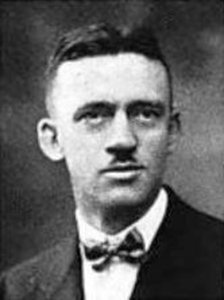
Ernest Martin Hennings
1886 - 1956 , United States of America
基本情報
- Artistic Movement Or Style: Realism, Western art
- Artists Or Movements Influenced By This Artist: ['Taos Society of Artists']
- Artists Who Influenced This Artist:
- Franz von Stuck
- John Vanderpoel
- Date Of Birth: February 5, 1886
- Date Of Death: May 19, 1956
- Full Name: Ernest Martin Hennings
- Nationality: American
- Notable Artworks:
- Spanish Beggars
- An Indian Ong
- Place Of Birth: Penns Grove, United States
関連記事
Eanger Irving Couse: Bridging Tradition & Modernity in American Southwest Art
Explore the life & art of Eanger Irving Couse, a pivotal figure in Southwestern Impressionism and founder of the Taos Society of Artists. Discover his captivating paintings & legacy.
Joseph Henry Sharp: Capturing the Spirit of the Plains – Life, Art & Legacy
Explore the life & art of Joseph Henry Sharp, a founding member of the Taos Society of Artists renowned for his realistic depictions of Native American culture and Western landscapes. Discover his legacy with ArtsDot.
Grant Wood & American Regionalism: Identity, Myth & the Rural Landscape
Explore the world of Grant Wood & American Regionalism with ArtsDot. Discover the symbolism behind 'American Gothic', recurring themes, and the movement's lasting impact on art history. High-quality reproductions available.
American Realism's Defining Works: 10 Masterpieces for Your Home
Explore 10 defining American Realism masterpieces – Hopper, Homer & more. Discover the stories behind these iconic paintings and bring timeless art to your home with ArtsDot's museum-quality reproductions. Explore the full collection online.
James Otto Lewis: Navigating American Modernism Through Regional Identity & Stylistic Innovation
Explore the captivating portraits of James Otto Lewis, a pivotal figure bridging 19th-century realism & American Modernism. Discover his groundbreaking work documenting Native American culture and regional identity.