

 プレビュー
プレビュー
 シェアする
シェアする シェアする
シェアする
 詳細を見る
詳細を見る

 ダウンロード
 似ている作品
 X線調査
X線調査 スライドショー
 統計情報
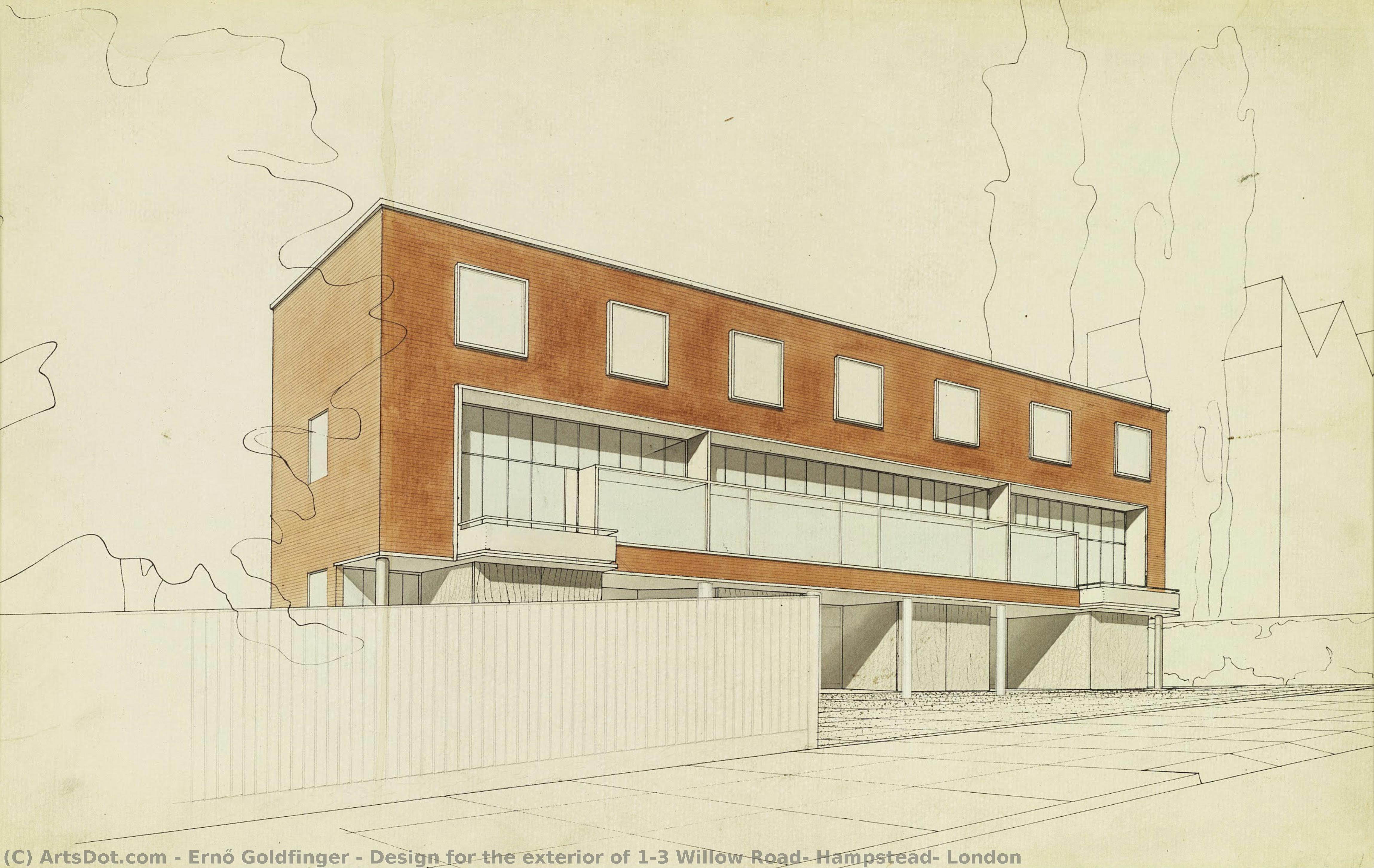
統計情報Design for the exterior of 1-3 Willow Road, Hampstead, London


 詳細を見る
詳細を見る
ジークレー/アートプリント
迅速な制作と多彩な仕上げオプションを備えた、ミュージアムクオリティのジークレーまたはキャンバスプリント。 ( 手描きの絵画を購入 デジタル画像販売へ切り替え)




































作品のオリジナル比率に合わせた、当店の規定サイズからお選びください。

特定のフレームやスペースに合わせて、ご自身でサイズを指定することも可能です。選択されたサイズが元の画像の比率と一致しない場合、作品をトリミングするか、鏡面反射または単色での塗りつぶしによって画像を拡張いたします。制作を開始する前に、ご確認用のデジタルモックアップをお送りいたします。
画面上のプレビューには、実際のトリミングや拡張は反映されませんのでご注意ください。最終的な構図を正確に確認できるのは、モックアップのみとなります。
カスタムサイズも承っておりますが、元の比率を維持するためには、あらかじめ用意されたリストからサイズを選択することをお勧めいたします。


 ガラスオプションは、110cm未満のサイズでのみご利用いただけます。

Design for the exterior of 1-3 Willow Road, Hampstead, London
ジークレー/アートプリント
複製画のサイズ
-


合計金額
$ 62
関連作品





アーティストの略歴
The Architect of Concrete Poetry: The Life and Legacy of Ernő Goldfinger
To walk through the streets of London is to encounter the enduring, rhythmic presence of Ernő Goldfinger. A man whose name became inextricably linked with both architectural revolution and cinematic villainy, Goldfinger was far more than a mere builder of towers; he was a poet of structural functionalism. Born in 1902 amidst the lush, timber-rich landscapes of Budapest, Hungary, his early years were steeped in the textures of forestry and sawmills. This primal connection to raw material and spatial organization would later manifest in his profound mastery of concrete—a medium he transformed from a cold, industrial necessity into a soaring expression of modern life. His journey from the heart of Hungary to the vanguard of British Modernism is a saga of movement, intellect, and an unyielding commitment to the aesthetic potential of simplicity.
Goldfinger’s intellectual formation was a tapestry woven from the finest threads of European modernism. After moving to Paris in 1921, he immersed himself in the rigorous atmosphere of the École des Beaux-Arts, studying under luminaries such as Léon Jaussely. It was during this period that the radical currents of the Bauhaus movement and the functionalist philosophies of Le Corbusier began to take root in his mind. He found inspiration not only in the avant-garde but also in the classical elegance of English domesticity, a duality that would define his unique architectural voice. By the time he relocated to London in 1934 with his wife, the artist Ursula Blackwell, Goldfinger possessed a vision that sought to marry the geometric precision of the machine age with a deeply humanistic approach to habitation.
A Vision Carved in Stone and Sky
The architectural evolution of Goldfinger is best understood through his pursuit of geometric harmony. His early London projects, most notably his own residence at 2 Willow Road, serve as intimate studies in restraint and symmetry. In this celebrated home, now preserved by the National Trust, one can observe how he utilized clean lines and unadorned surfaces to create a sense of timelessness, drawing subtle cues from Greek and Roman archetypes while remaining firmly planted in the modern era. However, as the post-war era demanded new solutions for a rebuilding nation, Goldfinger’s ambitions expanded upward, leading him to become a pioneer of the Brutalist movement.
His later works are characterized by a bold, muscular use of reinforced concrete, creating landmarks that redefined the London skyline. The Trellick Tower and Balfron Tower stand as monumental achievements of his career—structures that were once controversial but are now revered as icons of mid-century design. These residential high-rises were not merely utilitarian blocks; they were experiments in vertical living, designed to provide light, air, and a sense of communal dignity through sophisticated spatial planning. In these towers, the weight of the concrete is balanced by the lightness of the sky, creating a dramatic tension that remains captivating to the contemporary eye.
The Shadow of Legend and Historical Significance
It is impossible to discuss the legacy of Ernő Goldfinger without acknowledging the curious cultural shadow cast by his name. The novelist Ian Fleming, a neighbor of the architect in Hampstead, famously utilized the name for his iconic antagonist, Auric Goldfinger. While the character’s villainy was born from Fleming's personal distaste for the destruction of Victorian terraces, this literary connection inadvertently granted the architect a form of global immortality. Yet, beneath the veneer of cinematic intrigue lies the true historical significance of a man who reshaped the social fabric of Britain through design.
Goldfinger’s contribution to the world of art and architecture extends beyond the skyline into the very objects we touch and use. As a furniture designer, he applied the same principles of functionalism to domestic life, creating pieces that emphasized durability and geometric clarity. His legacy is found in:
- The Brutalist Aesthetic: Redefining the use of raw concrete as a medium for monumental beauty.
- Social Modernism: Pioneering high-density housing solutions that prioritized the well-being of urban populations.
- Architectural Integrity: Maintaining a steadfast belief in the marriage of form and function, free from superfluous ornamentation.
- Cultural Impact: Leaving an indelible mark on both the physical landscape of London and the collective imagination of the 20th century.
Ultimately, Ernő Goldfinger remains a titan of the modernist era—a designer who looked at the ruggedness of concrete and saw the potential for grace, and who looked at the chaos of the modern city and sought to impose a beautiful, geometric order.
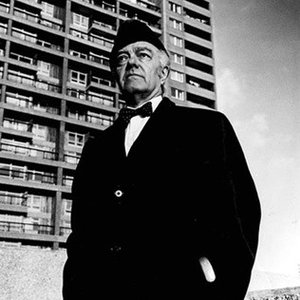
ernő goldfinger
1902 - 1987 , Hungary
基本情報
- Artistic Movement Or Style: Modernist Architecture
- Artists Or Movements Influenced By This Artist: ['Roman Architecture']
- Artists Who Influenced This Artist: ['Hermann Muthesius']
- Date Of Birth: September 11, 1902
- Date Of Death: November 15, 1987
- Full Name: Ernő Goldfinger
- Nationality: Hungarian
- Notable Artworks:
- Balfron Tower
- Carradale House
- Place Of Birth: Budapest, Hungary