

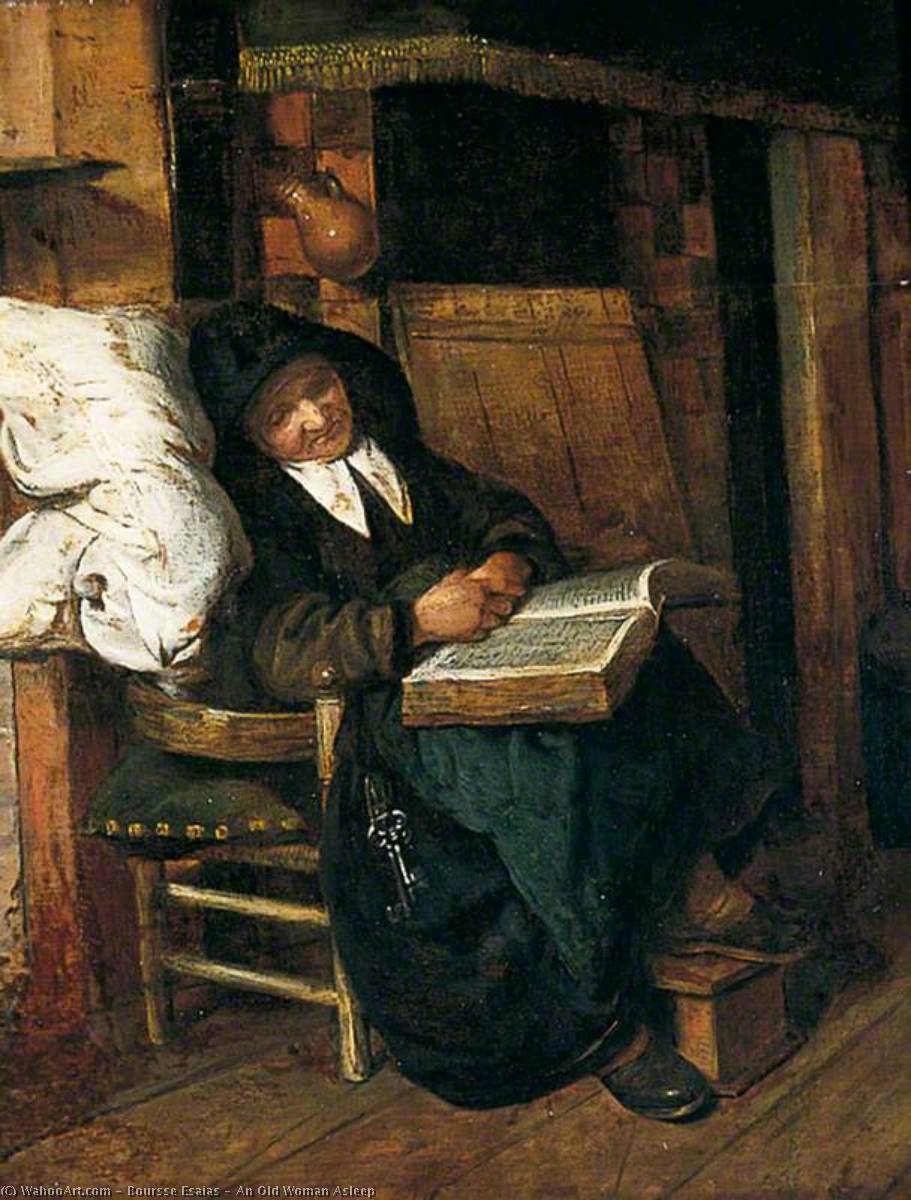
 プレビュー
プレビュー
 プリントを購入
 シェアする
シェアする シェアする
シェアする
 詳細を見る
詳細を見る

 ダウンロード
 似ている作品
 X線調査
X線調査 スライドショー
An Old Woman Asleep
 36.0 x 29.0 cm
 詳細を見る
詳細を見る




































作品のオリジナル比率に合わせた、当店の規定サイズからお選びください。

特定のフレームやスペースに合わせて、ご希望のサイズをご入力いただけます。選択されたサイズが元の画像の比率と異なる場合、アートワークをトリミングするか、手描きで要素を追加して絵画を拡張いたします。デジタルモックアップ を制作し、制作開始前にご確認(承認)をいただきます。
画面上のプレビューは、実際のトリミングや拡張を正確に反映しているものではありません。最終的な構図は、モックアップによってのみ正確にご確認いただけます。
カスタムサイズもご利用いただけますが、元の比率を維持するためには、あらかじめ用意されたリストからサイズを選択することをお勧めいたします。
ご注文後、ArtsDot.com チームより詳細な指示をお送りするとともに、仕上がりイメージ(モックアップ)をご提供いたします。


 ガラスオプションは、110cm未満のサイズでのみご利用いただけます。

An Old Woman Asleep
複製技法
複製画のサイズ
-


合計金額
$ 263
関連作品







アーティストの略歴
Esaias Boursse: A Quiet Master of Dutch Domesticity
Esaias Boursse, a name perhaps less familiar than those of Vermeer or Rembrandt, nevertheless stands as a significant figure in the rich tapestry of 17th-century Dutch painting. Born in Amsterdam in 1631 and tragically lost at sea in 1672, Boursse’s life was marked by both artistic talent and financial pragmatism. Unlike many of his contemporaries who sought fame and fortune through grand commissions, Boursse remained largely unmarried and childless, dedicating himself primarily to the meticulous depiction of everyday family life – a path that ultimately proved remarkably lucrative for him. His legacy rests on approximately 28 surviving paintings, predominantly housed in private collections across Europe, offering intimate glimpses into the domestic interiors and quiet moments of his era.A Life Shaped by Travel and Trade
Boursse’s early life remains somewhat shrouded in mystery. Records indicate he was the youngest son of Walloon immigrants who settled in Amsterdam, marrying Anna des Forest in 1618. Crucially, Boursse embarked on a journey to Italy around 1650, a common practice for young Dutch artists seeking to immerse themselves in the artistic traditions of the Renaissance. However, unlike many of his peers who returned brimming with new ideas and techniques, Boursse’s Italian sojourn appears to have yielded little discernible influence on his subsequent work. Instead, he joined the Verenigde Oostindische Compagnie (VOC), the Dutch East India Company, a decision that profoundly shaped both his life and his art. His voyages to Ceylon (modern-day Sri Lanka) provided him with unparalleled opportunities to observe and document the lives of its inhabitants – scenes which would later form the core of his artistic output. This experience, coupled with his financial struggles, led him to return to Amsterdam in 1663, only to be compelled to rejoin the VOC a year later, ultimately meeting his demise aboard the ship *Rhenen* on November 16, 1672.Stylistic Influences and Distinctive Vision
Boursse’s artistic style is often described as being reminiscent of Pieter de Hooch, Quiringh van Brekelenkam, and Cornelis de Man – masters known for their subtle use of light, atmospheric perspective, and depictions of urban interiors. However, Boursse possesses a unique sensibility that distinguishes his work from these contemporaries. His paintings are characterized by an almost unsettling stillness—a sense of suspended time within the confines of a domestic space. He eschewed dramatic narratives or overtly emotional scenes, instead focusing on capturing the quiet rhythms of daily life: women diligently spinning wool, children playing quietly in the background, families gathered around a warm hearth. The lighting is typically soft and diffused, creating an atmosphere of intimacy and tranquility. His compositions are carefully constructed, often employing a shallow depth of field to draw the viewer into the scene, as if they too were silently observing the unfolding drama within the room.The Intimate World of Domestic Scenes
Boursse’s oeuvre is overwhelmingly devoted to scenes of domestic life. These aren't grand celebrations or momentous events; rather, they are snapshots of ordinary moments – a woman meticulously sewing, children engaged in playful pursuits, a family sharing a simple meal. These seemingly mundane subjects are rendered with remarkable detail and sensitivity, revealing Boursse’s keen eye for capturing the nuances of human interaction and the subtle beauty of everyday objects. The figures within his paintings are often anonymous, contributing to the universality of his themes. He avoids explicit portraits, instead focusing on portraying the collective experience of family life. Works like “Dutch Interior with Woman Sewing” (Wallace Collection, London) and "Interior with a Woman Cooking" (Ryksmuseum Amsterdam) exemplify this approach, offering viewers a poignant glimpse into the lives of ordinary people during the Dutch Golden Age. The meticulous rendering of fabrics, furniture, and domestic utensils further enhances the realism and authenticity of these scenes.A Financial Success Despite Personal Modesty
Interestingly, despite his modest personal life – lacking a family to support and seemingly eschewing grand artistic ambitions – Boursse enjoyed considerable financial success during his lifetime. His commissions from the VOC, documenting the lives and landscapes of Ceylon, provided him with a steady income. Art historians have noted that he was one of the highest-paid artists of his time, a testament to the value placed on his detailed depictions of everyday life. This remarkable achievement underscores the evolving role of the artist in 17th-century Dutch society – where artistic skill and observation could translate into substantial wealth, even without seeking fame or recognition. His paintings continue to be admired for their quiet beauty, offering a valuable window into the domestic realities of a bygone era.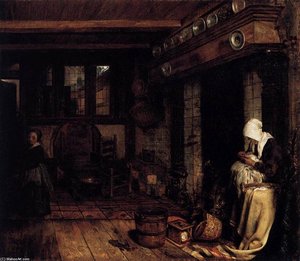
Esaias Boursse
1631 - 1672 , Netherlands
基本情報
- Artistic Movement Or Style: Genre painting
- Artists Or Movements Influenced By This Artist: ['Cornelis de Man']
- Artists Who Influenced This Artist:
- Pieter de Hooch
- Johannes Vermeer
- Date Of Birth: March 3, 1631
- Date Of Death: November 16, 1672
- Full Name: Esaias Boursse
- Nationality: Dutch
- Notable Artworks:
- Interior with Woman Sewing
- Boys blowing bubbles
- Place Of Birth: Amsterdam, Netherlands

