

 プレビュー
プレビュー
 プリントを購入
 シェアする
シェアする シェアする
シェアする
 詳細を見る
詳細を見る

 ダウンロード
 似ている作品
 X線調査
X線調査 スライドショー
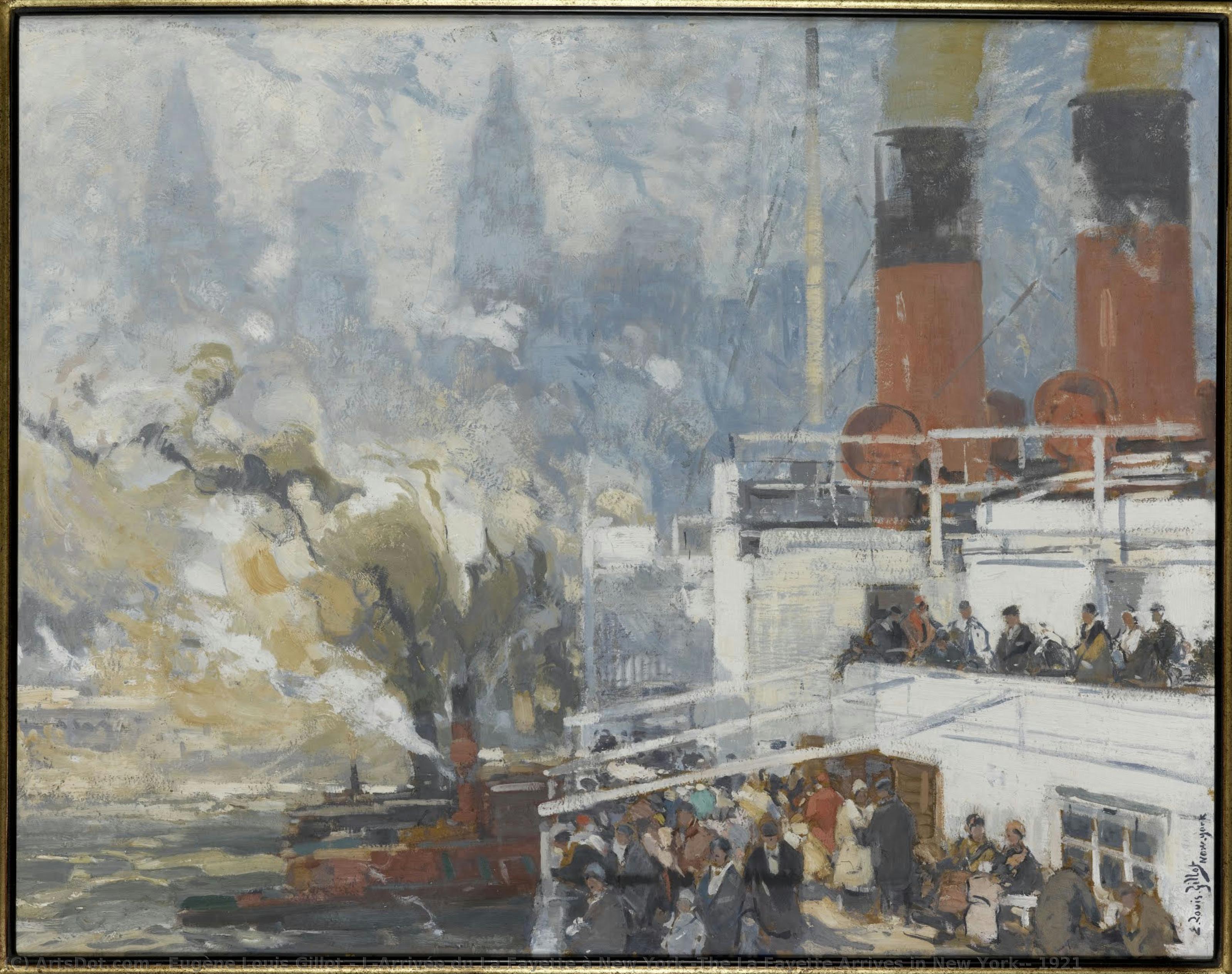
L’Arrivée du La Fayette à New York (The La Fayette Arrives in New York), 1921
 Oil On Canvas
- WallArt
- Impressionistic Landscape
 19th Century
 82.0 x 105.0 cm
 グラン・パレ
 詳細を見る
詳細を見る
オンラインプレビューをはるかに凌ぐ、高解像度で鮮明なデジタル画像をご購入いただけます。
各ファイルは、社内の専門家が高度なツールと熟練した手作業によるレタッチを用いて、細心の注意を払って準備されています。すべての画像において、卓越した鮮明度、正確な色彩再現性、そして繊細なディテールを保証いたします。
最終ファイルは、プロフェッショナルな編集・印刷環境ですぐにご利用いただけるよう最適化された状態で、72時間以内にメールにてお届けいたします。これは、一流のデザインスタジオ、出版社、ギャラリーから信頼されているものと同等の品質です。
デジタル画像のご注文に付随する特典
高品質なデジタル画像配信を、確かな品質で。
ArtsDot.com を選ぶことは、単に画像を手に入れることではありません。それは、プロの手によって精密に仕上げられ、満足保証が付いた高品質なデジタルアートワークを受け取ることを意味します。ご注文いただいた際に自動的に付随する内容は、以下の通りです:

メールですぐにお届け
ご注文から72時間以内に、高解像度のデジタル画像ファイルがメールでお手元に届きます。すぐにそのままご利用いただけます。

AI技術で最適化されたデジタルファイル
お客様の作品は、高度なAIツールと専門家による手作業の編集を組み合わせてプロフェッショナルに最適化されており、細部のディテール、鮮明さ、そして正確な色再現性を最大限に引き出しています。

一生涯無料の再送サービス
ファイルを誤って削除したり、紛失してしまったりしましたか?ご安心ください。いつでも無料で再送いたします。

輸入手数料は一切かかりません
関税や手数料、配送料を気にすることなく、お気に入りのアートワークをすぐにお楽しみいただけます。デジタルダウンロードは常に免税です。

色彩再現の保証
プロ仕様のツールとカラーマネジメント技術を用いることで、デジタル画像が元の色を最大限に忠実に再現することを保証いたします。

60日間満足保証
ご購入いただいたデジタル画像にご満足いただけない場合は、60日以内であれば、修正または100%の返金(理由を問う必要はありません)をさせていただきます。

100% 返金保証
ご満足いただけない場合は、デジタルファイルを受け取ってから60日以内であれば、理由を問わず全額返金いたします。

まとめ買い割引
3枚購入で10%OFF - 5枚購入で15%OFF - 10枚以上購入で20%OFF。クリエイティブなプロジェクト、ギャラリー、エージェンシーに最適です。
A Transatlantic Echo: Eugène-Louis Gillot’s “L’Arrivée du La Fayette à New York”
Eugène-Louis Gillot's "L’Arrivée du La Fayette à New York," painted in 1921, isn’t merely a depiction of a ship arriving at port; it’s a carefully constructed tableau brimming with historical significance and evocative atmosphere. This monumental oil on canvas captures a pivotal moment – the arrival of the French liner *La Fayette* – against the backdrop of a burgeoning American metropolis, offering a glimpse into an era defined by transatlantic trade, technological advancement, and a nascent sense of global connection. Gillot, deeply influenced by the atmospheric perspective of J.M.W. Turner, masterfully employs light, mist, and color to create a scene that feels both grand and subtly melancholic.
The painting immediately draws the eye to the *La Fayette* itself, a proud symbol of French maritime prowess. Gillot’s meticulous attention to detail is evident in the ship's imposing structure – particularly its prominent red chimneys, deliberately positioned to mirror the height of the towering skyscrapers rising from the swirling fog. This compositional device subtly elevates the ship, suggesting its importance and dominance within the harbor. The inclusion of a train arriving on the dock further emphasizes the interconnectedness of transportation networks during this period, highlighting the dynamism of the era.
A Symphony of Mist and Color
Gillot’s masterful use of color is central to the painting's impact. He eschews sharp contrasts in favor of a muted palette dominated by grays, whites, blues, and browns – mirroring the dense fog that blankets New York Harbor. Yet, within this seemingly somber scheme, he strategically introduces warm accents: the fiery red of the ship’s chimneys, the golden hues of the foreground details, and the subtle oranges and yellows of the mist itself. These carefully placed pops of color draw the viewer's eye and create a sense of depth and warmth amidst the prevailing gloom.
The artist’s technique is equally noteworthy. Gillot employs a thick impasto application in certain areas, particularly around the foreground details – the dockworkers, the ship’s railings, and the textures of the buildings – lending a tactile quality to the canvas. This textural richness contrasts with the looser brushwork used to depict the distant cityscape and the enveloping fog, creating a dynamic interplay between detail and atmosphere. The overall effect is one of painterly immediacy, as if the scene were captured in real-time.
Historical Context and Symbolic Resonance
“L’Arrivée du La Fayette à New York” was created during a period of significant transatlantic exchange. The *La Fayette* itself played a crucial role in this era, serving as a vital link between Europe and America on the Bordeaux-New York and later the Le Havre-New York routes. Tragically, the ship met its end in 1940, sinking after colliding with a mine during World War II – an event that adds a layer of poignant resonance to the painting. Gillot’s choice to focus on the ship's arrival speaks to this moment of connection and departure, hinting at both promise and impending loss.
Beyond its historical context, the painting also carries symbolic weight. The fog itself can be interpreted as representing uncertainty, transition, or even the passage of time. Gillot’s deliberate use of atmospheric perspective – a technique borrowed from Turner – suggests that the scene is not simply a snapshot of a particular moment but rather an exploration of mood and feeling. The distant skyscrapers, partially obscured by mist, evoke a sense of ambition and progress, while the overall composition subtly conveys a hint of melancholy, acknowledging the impermanence of human endeavors.
A Legacy of Impressionistic Grandeur
“L’Arrivée du La Fayette à New York” stands as a testament to Eugène-Louis Gillot's artistic skill and his deep understanding of atmospheric perspective. It is a captivating work that seamlessly blends historical documentation with evocative artistry, inviting viewers to contemplate the complexities of transatlantic travel, technological innovation, and the enduring power of art to capture both beauty and melancholy. Reproductions of this impressive piece offer a remarkable opportunity to bring its grandeur into any space, serving as a timeless reminder of a pivotal moment in history and a celebration of Gillot’s masterful Impressionistic style.
関連作品

作家の略歴
Paul Klee: A Life Painted in Color and Emotion
Paul Klee (1879-1940) remains one of the most enigmatic and profoundly influential figures in 20th-century art. Born in Munichbuchsee, Switzerland, his artistic journey was a remarkable blend of influences – from the rigorous training in music instilled by his parents to the vibrant currents of Expressionism, Cubism, and Surrealism that shaped his unique visual language. More than simply an artist, Klee was a meticulous observer of human experience, translating emotions, ideas, and even musicality onto canvas with a deceptively simple yet deeply complex approach.
Klee’s early life provided a foundation for both artistic and intellectual pursuits. His father, Hans Wilhelm Klee, was a music teacher who fostered a love of sound and rhythm within the family, while his mother, Ida Frick, possessed a beautiful singing voice. This environment instilled in Paul a deep appreciation for harmony and balance – qualities that would later manifest powerfully in his art. He initially pursued poetry and philosophy as serious academic endeavors, but it was through drawing that he discovered his true calling. His formal training at the Kunstakademie in Munich and later at the Academy of Fine Arts in Zurich provided him with technical skills, yet it was his independent experimentation – exploring color theory, typography, and even musical notation – that truly defined his artistic vision.
The Bauhaus Years and Artistic Evolution
A pivotal moment in Klee’s career arrived in 1920 when he joined the revolutionary art school at the Bauhaus in Weimar, Germany. Under the guidance of masters like Johannes Itten and Wassily Kandinsky, Klee immersed himself in a radical exploration of form, color, and design. The Bauhaus emphasized the unity of art, craft, and technology, encouraging students to break down traditional artistic conventions and develop their own individual styles. This period witnessed a significant shift in Klee’s work – he began to incorporate geometric abstraction, explore the expressive potential of color, and experiment with techniques like collage and printmaking. His collaboration with Kandinsky was particularly fruitful, as they shared a fascination with the spiritual dimension of art and sought to capture inner states through visual representation.
Following the closure of the Bauhaus in 1933 due to political pressures, Klee relocated to Switzerland and later to France. Despite the upheaval of exile, his artistic output continued to flourish. During this time, he developed a distinctive style characterized by whimsical imagery, playful compositions, and a subtle sense of melancholy. His work became increasingly influenced by Surrealism, as he began to explore dreamlike landscapes, symbolic figures, and the subconscious mind.
Key Characteristics and Artistic Techniques
Klee’s art is instantly recognizable for its distinctive visual vocabulary. He frequently employed childlike simplicity in his drawings and paintings, creating a sense of intimacy and vulnerability. His use of color was particularly innovative – he developed a unique system of color theory based on the principles of musical harmony, believing that colors could evoke specific emotions and create a sense of balance within a composition. He often layered colors over one another, creating complex textures and shimmering effects.
Klee’s technique varied greatly throughout his career. He worked in a wide range of media, including watercolor, gouache, oil paint, pastel, lithography, and woodcut. His drawings were characterized by loose, expressive lines and spontaneous gestures, while his paintings often featured meticulously planned compositions with carefully considered details. He frequently incorporated musical notation into his artwork, reflecting his lifelong fascination with music and its ability to convey emotion.
Legacy and Historical Significance
Paul Klee’s legacy extends far beyond the confines of the art world. His work continues to inspire artists, designers, and thinkers today. His exploration of color theory, his innovative use of materials, and his willingness to challenge conventional artistic norms have had a profound impact on modern art. He was a master of visual communication, capable of conveying complex ideas and emotions with remarkable clarity and grace.
Despite suffering from deteriorating health in his final years, Klee continued to create until shortly before his death in 1940. His work remains a testament to the power of imagination, creativity, and the enduring human spirit. His art invites us to look beyond the surface and delve into the depths of our own emotions and experiences – a timeless message that resonates deeply with audiences around the world.
eugène louis gillot
1879 - 1940

