 プレビュー
プレビュー
 シェアする
シェアする シェアする
シェアする
 詳細を見る
詳細を見る

 ダウンロード
 似ている作品
 X線調査
X線調査 スライドショー
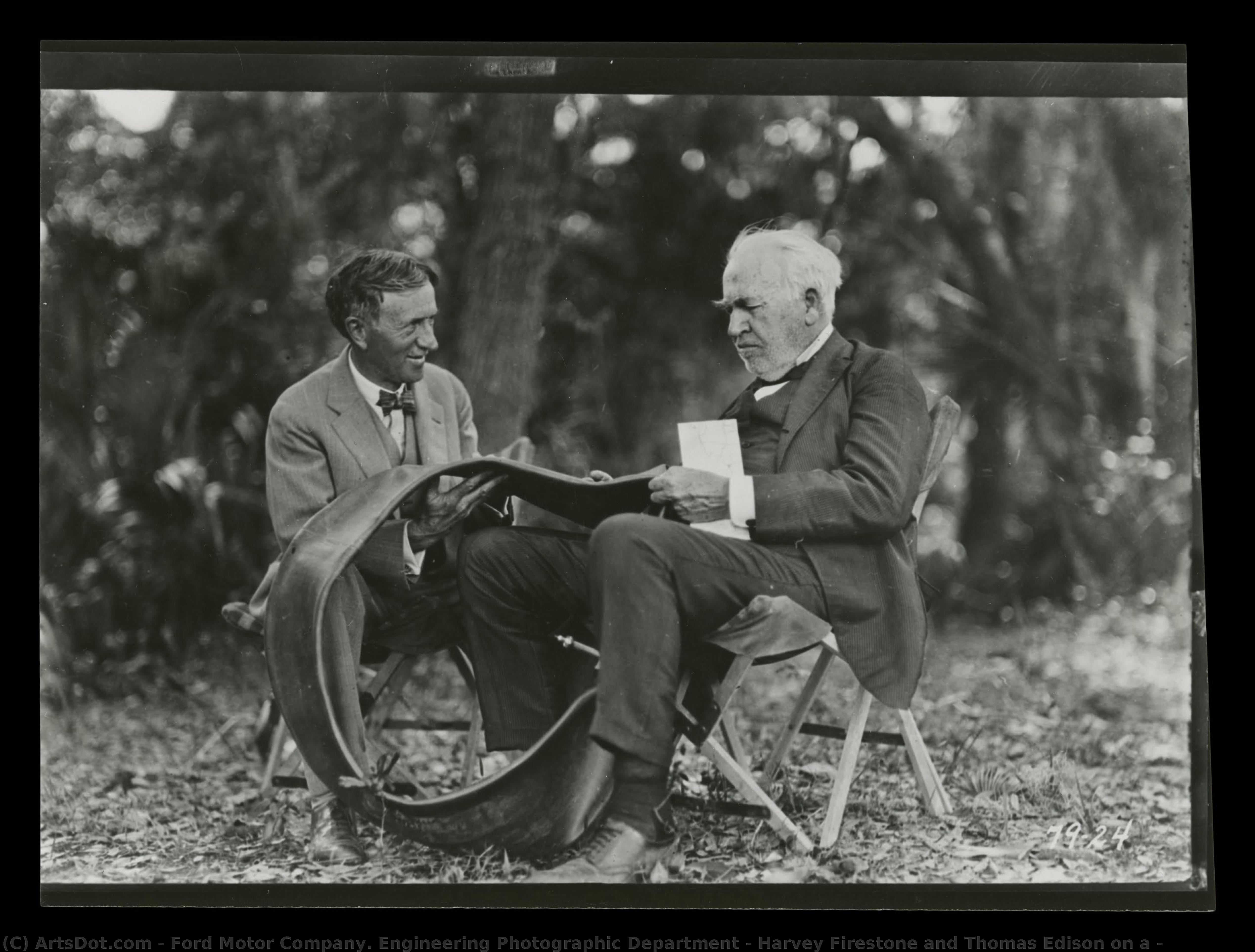
Harvey Firestone and Thomas Edison on a

Ford Motor Company's Engineering Photographic Department documented the rise of industrial production with iconic images of assembly lines and early automobiles like the Model T, offering a fascinating glimpse into automotive history—discover their visual legacy today.
 詳細を見る
詳細を見る
ジークレー/アートプリント
迅速な制作と多彩な仕上げオプションを備えた、ミュージアムクオリティのジークレーまたはキャンバスプリント。 ( 手描きの絵画を購入 画像を購入)




































Standard
custom
CM
INCH
作品のオリジナル比率に合わせた、当店の規定サイズからお選びください。
Loading sizes...

幅
高さ
特定のフレームやスペースに合わせて、ご自身でサイズを指定することも可能です。選択されたサイズが元の画像の比率と一致しない場合、作品をトリミングするか、鏡面反射または単色での塗りつぶしによって画像を拡張いたします。制作を開始する前に、ご確認用のデジタルモックアップをお送りいたします。
画面上のプレビューには、実際のトリミングや拡張は反映されませんのでご注意ください。最終的な構図を正確に確認できるのは、モックアップのみとなります。
カスタムサイズも承っておりますが、元の比率を維持するためには、あらかじめ用意されたリストからサイズを選択することをお勧めいたします。


 ガラスオプションは、110cm未満のサイズでのみご利用いただけます。

Harvey Firestone and Thomas Edison on a
ジークレー/アートプリント
複製画のサイズ
-


合計金額
$ 62
関連作品




![[president Lincoln, United States Headquarters, Army Of The Potomac, Near Antietam] — アレクサンダー・ガードナー, Photographic Realism](/media/artworks/images-thumb/95/08/95088c95b192a800df5a4e7bbf3dfa45.jpg)

アーティストの略歴
The Ford Motor Company: Documenting the Rise of a Mechanical Age
The Ford Motor Company, and specifically its Engineering Photographic Department, occupies a unique position in the history of visual culture. It isn’t an artist in the traditional sense – no single visionary wielding brush or chisel – but rather a collective entity that produced a vast archive of images fundamentally shaping how we perceive technology, labor, and progress in the 20th century. Founded by Henry Ford in 1903, the company quickly moved beyond simply manufacturing automobiles; it embarked on an ambitious project to document its own innovations, processes, and impact on American life. This documentation wasn’t merely for internal record-keeping but was strategically disseminated through publications, advertising, and public relations, creating a powerful visual narrative of modernity. The Engineering Photographic Department became the crucial instrument in this endeavor, staffed by skilled photographers who captured not just the finished product – the Model T and its successors – but also the intricate ballet of assembly lines, the raw power of machinery, and the faces of the workers who brought it all to life.From Assembly Line to Iconography: The Evolution of a Visual Language
Initially, photographs served a practical purpose: illustrating technical manuals, showcasing design improvements, and providing evidence of quality control. However, as Fordism revolutionized production methods, the photographic style evolved alongside it. Early images often resembled industrial documentation – precise, detailed, and focused on functionality. But soon, a more dynamic aesthetic emerged, influenced by emerging trends in commercial photography and cinematography. Photographers began to emphasize speed, motion, and scale, capturing the rhythmic precision of the assembly line as a symbol of efficiency and progress. The Model T itself became an increasingly prominent subject, not just as a vehicle but as an emblem of American ingenuity and accessibility. Images depicted families embarking on adventures in their Fords, farmers utilizing them for work, and even the car integrated into scenes of leisure and social life. This deliberate framing transformed the automobile from a mere product into a cultural icon, deeply interwoven with the aspirations and identity of a burgeoning middle class. The department’s work wasn't about artistic expression but about constructing a specific image of Ford – an image that resonated powerfully with the American public.Influences and Technical Innovations
While not directly influenced by established art movements, the Engineering Photographic Department absorbed techniques from various sources. The rise of Pictorialism in photography, emphasizing artistic composition and tonal qualities, likely informed a shift towards more visually appealing imagery. Furthermore, the burgeoning field of motion study, pioneered by Frank and Lillian Gilbreth, undoubtedly impacted how Ford photographers captured the dynamics of labor. Their photographs often sought to break down complex processes into sequential frames, highlighting efficiency and standardization. Technically, the department embraced advancements in photographic technology – large-format cameras for detailed documentation, fast lenses for capturing movement, and sophisticated printing techniques for mass reproduction. The use of standardized lighting and composition further contributed to a consistent visual style that reinforced Ford’s brand identity. The very act of documenting these processes with such precision became a form of aesthetic control.Major Achievements and Lasting Legacy
The most significant achievement of the Engineering Photographic Department lies in its creation of a comprehensive visual archive that documented the rise of Fordism and its profound impact on American society. These photographs weren’t simply records; they were carefully crafted narratives designed to shape public perception. The images played a crucial role in establishing Ford as a leader in innovation, affordability, and social progress. Beyond their immediate promotional value, these photographs have become invaluable historical documents, offering insights into the working conditions of early 20th-century factories, the evolution of automotive design, and the changing landscape of American life. The department’s work continues to be studied by historians, sociologists, and visual culture scholars. The aesthetic influence can also be seen in subsequent industrial photography and advertising campaigns, demonstrating a lasting impact on how technology is visually represented.Historical Significance: Beyond the Automobile
The Ford Motor Company’s Engineering Photographic Department represents more than just a corporate archive; it embodies a pivotal moment in the history of visual communication. It exemplifies the power of photography to construct narratives, shape public opinion, and solidify brand identity. The images produced by this department weren't simply about selling cars – they were about selling a vision of modernity, progress, and the American dream.- The photographs documented the transformation of labor practices.
- They showcased the impact of mass production on consumer culture.
- They contributed to the creation of a powerful national mythology surrounding the automobile.