

 プレビュー
プレビュー
 プリントを購入
 シェアする
シェアする シェアする
シェアする
 詳細を見る
詳細を見る

 ダウンロード
 似ている作品
 X線調査
X線調査 スライドショー
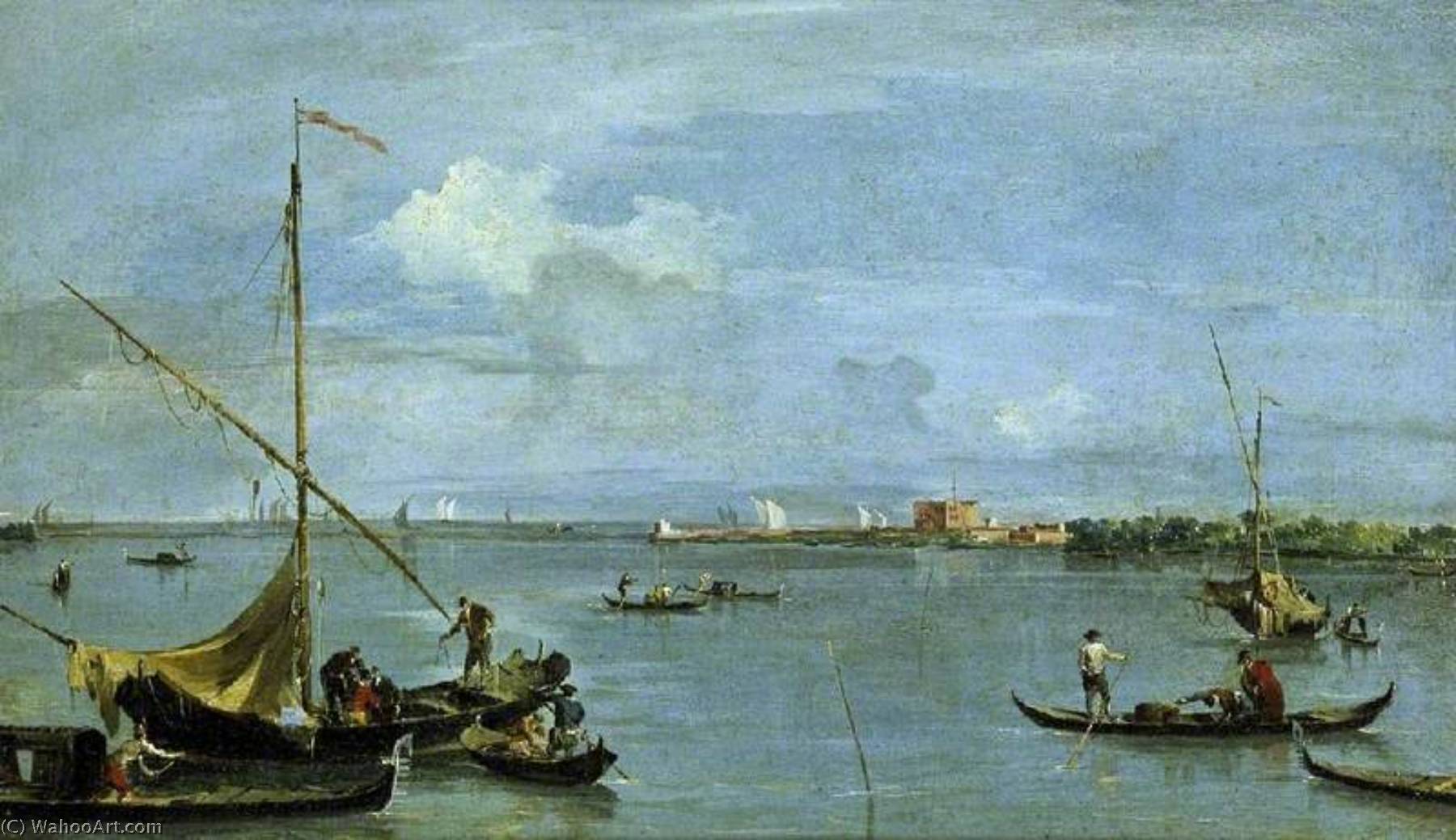
Forte San Andrea del Lido, Venice
 Oil On Canvas
- WallArt
- Venetian School
 1770
1770 32.0 x 53.0 cm
 Fitzwilliam College
 詳細を見る
詳細を見る
オンラインプレビューをはるかに凌ぐ、高解像度で鮮明なデジタル画像をご購入いただけます。
各ファイルは、社内の専門家が高度なツールと熟練した手作業によるレタッチを用いて、細心の注意を払って準備されています。すべての画像において、卓越した鮮明度、正確な色彩再現性、そして繊細なディテールを保証いたします。
最終ファイルは、プロフェッショナルな編集・印刷環境ですぐにご利用いただけるよう最適化された状態で、72時間以内にメールにてお届けいたします。これは、一流のデザインスタジオ、出版社、ギャラリーから信頼されているものと同等の品質です。
デジタル画像のご注文に付随する特典
高品質なデジタル画像配信を、確かな品質で。
ArtsDot.com を選ぶことは、単に画像を手に入れることではありません。それは、プロの手によって精密に仕上げられ、満足保証が付いた高品質なデジタルアートワークを受け取ることを意味します。ご注文いただいた際に自動的に付随する内容は、以下の通りです:

メールですぐにお届け
ご注文から72時間以内に、高解像度のデジタル画像ファイルがメールでお手元に届きます。すぐにそのままご利用いただけます。

AI技術で最適化されたデジタルファイル
お客様の作品は、高度なAIツールと専門家による手作業の編集を組み合わせてプロフェッショナルに最適化されており、細部のディテール、鮮明さ、そして正確な色再現性を最大限に引き出しています。

一生涯無料の再送サービス
ファイルを誤って削除したり、紛失してしまったりしましたか?ご安心ください。いつでも無料で再送いたします。

輸入手数料は一切かかりません
関税や手数料、配送料を気にすることなく、お気に入りのアートワークをすぐにお楽しみいただけます。デジタルダウンロードは常に免税です。

色彩再現の保証
プロ仕様のツールとカラーマネジメント技術を用いることで、デジタル画像が元の色を最大限に忠実に再現することを保証いたします。

60日間満足保証
ご購入いただいたデジタル画像にご満足いただけない場合は、60日以内であれば、修正または100%の返金(理由を問う必要はありません)をさせていただきます。

100% 返金保証
ご満足いただけない場合は、デジタルファイルを受け取ってから60日以内であれば、理由を問わず全額返金いたします。

まとめ買い割引
3枚購入で10%OFF - 5枚購入で15%OFF - 10枚以上購入で20%OFF。クリエイティブなプロジェクト、ギャラリー、エージェンシーに最適です。
作品の詳細
Francesco Guardi’s Venetian Serenity: A Study of ‘Forte San Andrea del Lido’
Francesco Lazzaro Guardi (1712 – 1793) stands as one of the last luminaries of Venice's illustrious artistic heritage, a painter who captured the city’s fading splendor with an unparalleled sensitivity—a melancholic beauty that foreshadowed the Impressionist movement. Born into a family steeped in artistic tradition, Guardi initially honed his craft alongside his brother Gian Antonio, primarily focusing on religious commissions which instilled him with foundational technical skills. However, it was after Gian Antonio's untimely demise in 1760 that Guardi truly blossomed as an independent artist, decisively shifting his gaze toward landscapes and maritime scenes—a genre that would become synonymous with his name. ‘Forte San Andrea del Lido,’ painted circa 1770, exemplifies Guardi’s mastery of Venetian landscape painting. This monumental canvas depicts the fortified island of San Andrea della Certosa overlooking the tranquil waters of Venice Lagoon. Immediately striking is the masterful use of atmospheric perspective—a technique perfected by Guardi and his contemporaries—that imbues the scene with a palpable sense of distance and luminosity. The muted blues and browns dominate the palette, mirroring the subdued tones of Venetian twilight and conveying an underlying mood of quiet contemplation. The composition itself adheres to classical principles: horizontal bands delineate the expansive sky and water surfaces, creating a harmonious balance that draws the eye inward. Precise lines define the boats—primarily fishing vessels—and the shoreline, while subtle brushstrokes contribute texture without sacrificing clarity. Guardi’s meticulous attention to detail is evident in every element of the artwork, from the reflections shimmering on the lagoon's surface to the delicate rendering of clouds drifting across the horizon. The fort itself, perched atop the island, serves as a focal point, anchoring the composition and symbolizing Venice’s enduring resilience amidst political turbulence. Beyond its aesthetic beauty, ‘Forte San Andrea del Lido’ carries symbolic weight. It speaks to the Venetian spirit—a blend of maritime tradition and artistic refinement—and reflects the artist's fascination with capturing fleeting moments of natural grandeur. The painting embodies a profound appreciation for light and color, characteristics that would later inspire Impressionist painters like Monet and Renoir. Guardi’s legacy resides not merely in his technical prowess but also in his ability to evoke emotion through visual representation—a testament to the enduring power of art to transcend time and capture the essence of its era.- Artist: Francesco Lazzaro Guardi
- Year Painted: Circa 1770
- Medium: Oil on Canvas
- Dimensions: 32 x 53 cm
Technique and Style: Venetian Baroque Refinement
Guardi’s technique is characterized by a layered approach—building up color and form through successive applications of oil paint—resulting in surfaces rich with texture and luminous hues. He skillfully employed glazing techniques to achieve subtle tonal variations, enhancing the atmospheric depth and creating an illusion of realism that captivated audiences during his lifetime. The painting exemplifies Venetian Baroque style, albeit tempered by Guardi’s distinctive sensitivity to light and color—a stylistic hallmark that distinguishes him from many of his contemporaries.Historical Context: Venice at Twilight
‘Forte San Andrea del Lido’ was created during a period of significant decline for Venice—the city's once dominant maritime empire had begun to crumble under the pressures of Napoleonic warfare and economic stagnation. Yet, Guardi refused to succumb to despair; instead, he celebrated Venice’s beauty through his art, preserving its visual memory for posterity. The painting reflects the broader artistic currents of the era, foreshadowing the Impressionist movement's emphasis on capturing fleeting sensations and prioritizing subjective experience over objective representation.Symbolism: Resilience Amidst Change
The fort itself symbolizes Venice’s enduring spirit—its determination to persevere despite adversity. The tranquil lagoon and expansive sky represent serenity and contemplation, inviting viewers to reflect on the passage of time and the beauty of nature. Ultimately, Guardi's masterpiece serves as a poignant reminder that even in moments of decline, art can illuminate the sublime and capture the essence of an era.関連作品
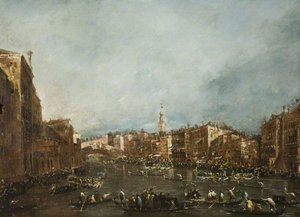
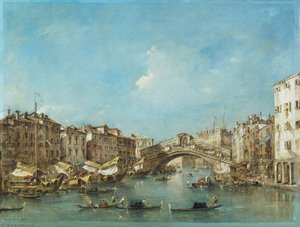
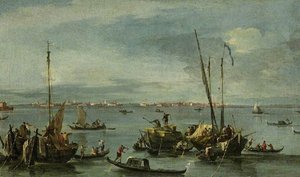
作家の略歴
ヴェネツィアの黄昏:フランチェスコ・グアルディの生涯と芸術
1712年10月5日、ヴェネツィアで生まれたフランチェスコ・ラッツァーロ・グアルディは、輝かしいヴェネツィア派絵画の終焉を象徴する人物として存在感を放つ。彼の人生は、かつて商業と文化の中心地であったが、政治的衰退と経済的苦難に直面していたヴェネツィアそのものの変遷を映し出していた。グアルディは単なる画家ではなく、この黄昏の時代の美しさと根底にある憂鬱を、後に印象派に深く共鳴する独特な感性で描き出した記録者であった。彼の父ドメニコが設立したグアルディ家のアトリエは、活気あふれる芸術制作の中心地であり、フランチェスコは当初、兄ジャン・アントニオと共に宗教画の制作に関わっていた。この初期の共同作業は確かな技術的基盤を提供したが、1760年にジャン・アントニオが亡くなった後、フランチェスコは真に独自の表現を見出し、彼が名声を博すことになる*ヴェドゥータ*—魅惑的な都市風景画—へと焦点を移していった。協働から個性の開花へ
当初、グアルディの作品には、紛れもなくヴェドゥータの巨匠カナレットの影響が色濃く見られた。両者の絵画は、ヴェネツィアの運河、宮殿、賑やかな広場を詳細に描き出していた。しかしながら、カナレットが地形的な正確性を重視したのに対し、グアルディは徐々に、より表現的で想像力豊かなアプローチへと移行していった。彼は写真のような写実性よりも、ヴェネツィアの*感覚*—きらめく光、大気中の霞、そしてその美しさに浸透する儚さ—を伝えることに心を注いだ。この変化は、活気に満ちた筆致と自由な発想で描かれた建築細部に顕著に表れている。彼の空は特に注目され、劇的な雲の描写が迫り来る変化を示唆していた。この厳密な表現からの逸脱は、カナレットの技術を否定するものではなく、むしろより個人的で感情的な共鳴を生み出すスタイルへの進化であった。家族の遺産も重要な役割を果たしており、妹マリア・チェチーリアがジョヴァンバッティスタ・ティエポロと結婚したことは、彼を当時の主要な芸術家たちとの交流を深め、豊かなアイデアの交換を促進することになった。ドージェの饗宴と*ピットゥーラ・ディ・トッコ*
グアルディが最も野心的な試みとして取り組んだのは、1763年に依頼された『ドージェの饗宴』であった。これは、アルヴィゼ4世モチェニゴの選挙を記念する12枚の大作からなる連作である。これらの絵画は単なる記録ではなく、活気に満ちた人物と鮮やかな細部で溢れる壮大な劇場的なスペクタクルであった。それらはグアルディの構成力と、ヴェネツィア市民生活のエネルギーと華やかさを捉える能力を示していた。この時期に、彼のシグネチャーである*ピットゥーラ・ディ・トッコ*(タッチによる絵画)という技法が完全に開花した。この技法は、小さな断片的な筆致で絵具を塗布し、光と動きで振動するように見える表面を作り出すことを特徴とする。その効果は精密な細部描写ではなく、むしろ形態と大気の印象的な表現であった。この革新的なアプローチは彼を同時代の人々から際立たせ、数十年後にフランスで展開される芸術的革命を予見させた。雰囲気の遺産と影響
フランチェスコ・グアルディは1793年1月1日にカンナレージョ地区のマドンピエッロで亡くなり、今日まで観客を魅了し続ける作品群を残した。彼の絵画は単なる都市の描写ではなく、あるムード—過ぎ去った時代への郷愁と美しさの脆弱性に対する意識—の喚起であった。カナレットが明るい太陽光の中でヴェネツィアを描くことが多かったのに対し、グアルディはしばしば薄暮に包まれたり雲に覆われた空の下で都市を描き、その憂鬱な魅力を強調した。この大気的な質は、クロード・モネやエドガー・ドガといったフランス印象派たちに特にアピールし、彼らは彼の作品の中に親和性を見出し—厳密な表現よりも感覚と感情を優先する芸術家—を発見した。グアルディの影響は、彼ら自身の光、色彩、大気の探求に見ることができる。グアルディの再発見:永続的な印象
生前カナレットほどの名声を得られなかったフランチェスコ・グアルディの名声は、世紀を経て着実に高まっている。今日彼は、古典的伝統と現代的な感性の間に架け橋を築いたヴェネツィア美術の重要な人物として認められている。彼の絵画は、リアリズムと想像力のユニークな融合、喚起的な雰囲気、そして変化の瀬戸際に立つ都市の痛切な描写のために高く評価されている。彼の作品を探求することは、18世紀のヴェネツィアを垣間見るだけでなく、時代を超えて観客に共鳴する場所と時間の本質をとらえる芸術の永続的な力を理解することにもつながる。- 主要な日付: 1712年10月5日:誕生; 1793年1月1日:没
- スタイル: *ヴェドゥータ*、*ピットゥーラ・ディ・トッコ*(タッチによる絵画)
- 影響を受けた芸術家: カナレット、ヴェネツィア派の伝統。

フランチェスコ・ラッツァーロ・グアルディ
1712 - 1793 , イタリア
プロフィール概要
- Artistic Movement Or Style: ヴェドゥータ派、ヴェネツィア派
- Artists Or Movements Influenced By This Artist: ['フランス印象派']
- Artists Who Influenced This Artist: ['カナルエット']
- Date Of Birth: 1712年10月5日
- Date Of Death: 1793年1月1日
- Full Name: フランチェスコ・ラッザロ・グアルディ
- Nationality: イタリア人
- Notable Artworks:
- 運河の風景
- サン・ジョルジョ・マッジョーレ
- ドージェの饗宴
- Place Of Birth (City And Country): イタリア、ヴェネツィア

