

 プレビュー
プレビュー
 シェアする
シェアする シェアする
シェアする
 詳細を見る
詳細を見る

 ダウンロード
 似ている作品
 X線調査
X線調査 スライドショー
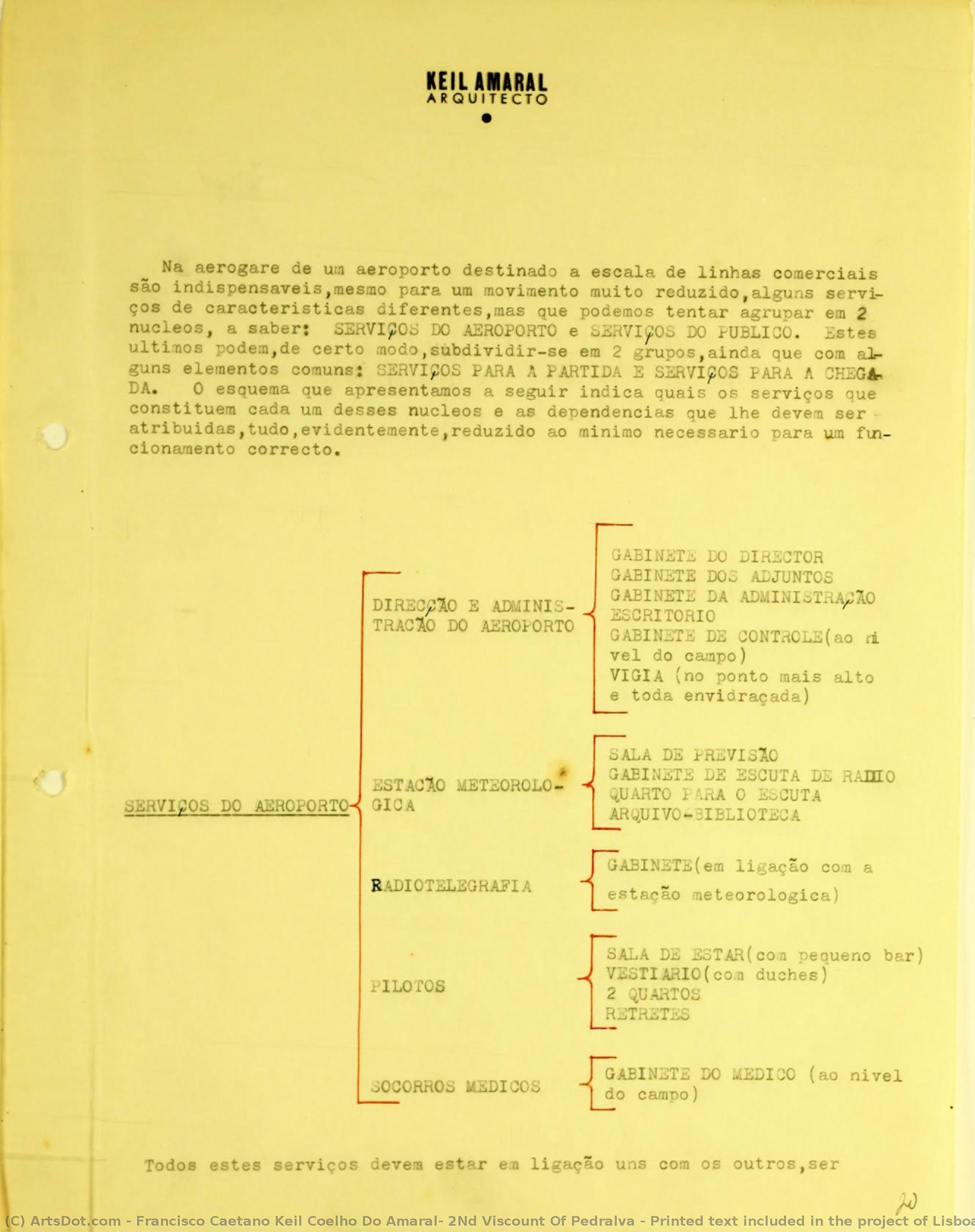
Printed text included in the project of Lisboa airport terminal building


 詳細を見る
詳細を見る
ジークレー/アートプリント
迅速な制作と多彩な仕上げオプションを備えた、ミュージアムクオリティのジークレーまたはキャンバスプリント。 ( 手描きの絵画を購入 画像を購入)




































作品のオリジナル比率に合わせた、当店の規定サイズからお選びください。

特定のフレームやスペースに合わせて、ご自身でサイズを指定することも可能です。選択されたサイズが元の画像の比率と一致しない場合、作品をトリミングするか、鏡面反射または単色での塗りつぶしによって画像を拡張いたします。制作を開始する前に、ご確認用のデジタルモックアップをお送りいたします。
画面上のプレビューには、実際のトリミングや拡張は反映されませんのでご注意ください。最終的な構図を正確に確認できるのは、モックアップのみとなります。
カスタムサイズも承っておりますが、元の比率を維持するためには、あらかじめ用意されたリストからサイズを選択することをお勧めいたします。


 ガラスオプションは、110cm未満のサイズでのみご利用いただけます。

Printed text included in the project of Lisboa airport terminal building
ジークレー/アートプリント
複製画のサイズ
-


合計金額
$ 62
A Blueprint of Modernity: The Visionary Script of Keil do Amaral
In the delicate, yellowed fibers of this 1945 document, we find more than mere technical notation; we encounter the very heartbeat of a nation in transition. This piece, titled Printed text included in the project of Lisboa airport terminal building, serves as a profound window into the mind of Francisco Caetano Keil Coelho do Amaral, the 2nd Viscount of Pedralva. As an architect, painter, and photographer, Keil do Amaral possessed a rare ability to weave the rational requirements of modern infrastructure with the soulful essence of Portuguese identity. This fragment of paper, bearing the weight of historical ambition, captures a moment when the skies over Lisbon were being reimagined through the lens of mid-century progress.
The aesthetic allure of this work lies in its raw, archival authenticity. The aged patina of the paper evokes a sense of nostalgia and reverence, inviting the viewer to step back into the post-war era of reconstruction and expansion. The interplay between the precise Portuguese typography—featuring evocative words such as "Lisboa," "Aeroporto," and "Terminal"—and the delicate, hand-drawn diagrams creates a rhythmic visual texture. It is a composition where information meets artistry, where the utilitarian purpose of an airport blueprint dissolves into a beautiful, abstract dance of lines and linguistic markers.
The Architect's "Third Way": Context and Symbolism
To understand this piece is to understand the architectural struggle of the 20th century. Operating within the complex political landscape of the Estado Novo regime, Keil do Amaral famously sought a "third way." He rejected both the hollow imitation of historical styles and the cold, sterile internationalism that threatened to erase local character. This document is a physical manifestation of that struggle—a blueprint for a gateway to the world that remains rooted in the soil of Portugal. The diagrams are not merely instructions for construction; they are symbols of connectivity, representing the bridge between the traditional Portuguese landscape and the burgeoning era of global aviation.
For the collector or the interior designer, this work offers a sophisticated layer of intellectual depth. It is not just an object of decoration but a conversation piece that speaks to themes of movement, legacy, and the intersection of art and industry. The subtle warmth of the yellowed parchment provides a neutral yet emotionally resonant palette that complements both minimalist contemporary settings and richly textured, classical interiors. It brings an air of scholarly elegance and historical gravity to any curated space.
A Timeless Addition to the Modern Collection
Integrating a high-quality reproduction of this historical artifact into a design scheme allows for a unique sensory experience. The visual weight of the text and the structural grace of the architectural sketches provide a focal point that is both grounding and inspiring. It serves as a tribute to the era of great thinkers who believed that progress should never come at the cost of heritage. Whether displayed in a private study, a professional studio, or a grand living area, this piece invites contemplation on how we build our future while honoring the blueprints of our past.
関連作品

アーティストの略歴
A Pioneer of Modern Portuguese Architecture: Francisco Keil do Amaral
Francisco Caetano Keil Coelho do Amaral, 2nd Viscount of Pedralva (1910-1975), stands as a pivotal figure in the development of modern architecture in Portugal. More than simply an architect, he was a painter and photographer whose unique vision sought to reconcile the principles of rational design with a deep respect for traditional Portuguese building practices. His career unfolded during the complex political landscape of the Estado Novo regime, where he navigated a path independent of both its historicist tendencies and the rigid internationalism of the time, forging what he termed a “third way” in architectural expression. Born into a family with significant public service ties – his father served as Governor-General of Portuguese Angola – Keil do Amaral’s early life instilled a sense of civic responsibility that would permeate his professional endeavors. His childhood experiences, including a period spent in Luanda and formative years at Canas de Senhorim, shaped an aesthetic sensibility attuned to both the grandeur of colonial architecture and the understated beauty of rural Portugal.Early Influences and Artistic Formation
Keil do Amaral’s formal artistic training began with studies in advertising design, followed by enrollment in the Architecture course at Lisbon's School of Fine Arts in 1930. However, a conflict with his professor led him to pursue his education independently, working under the guidance of Carlos Ramos, whose functionalist approach profoundly influenced his early work. This period saw Keil do Amaral embrace purism and rational design principles, evident in projects like the Instituto Pasteur in Porto (1933-1935). Crucially, his time in Paris in 1936, winning the competition for the Portuguese Pavilion at the Universal Fair, marked a turning point. Exposure to international trends was tempered by travels through the Netherlands, where he discovered the work of Willem Marinus Dudok and developed an admiration for Frank Lloyd Wright. This encounter sparked a desire to integrate modern rationality with a thoughtful consideration of architectural traditions – a core tenet of his evolving philosophy. He recognized in Dutch architecture a progressive character that harmonized seamlessly with established customs, a binomial that would define his practice.A “Third Way” and Public Works
The 1940s and 50s witnessed Keil do Amaral’s most significant contributions to Portuguese architecture. He deliberately distanced himself from the prevailing aesthetic currents of the Estado Novo, rejecting both its revivalist tendencies and the wholesale adoption of International Style orthodoxy. Instead, he championed a uniquely Portuguese modernism – one that embraced functionality but remained deeply rooted in local materials, techniques, and cultural contexts. This approach is particularly evident in his public works projects. He assumed responsibility for important commissions without aligning himself with the political regime’s ideological preferences. Projects such as the *Project of the lake island in Campo Grande* demonstrate a sensitivity to landscape and urban space, while designs for commercial facades – like those for *Camisaria Confiança store* and *Sapataria Paris store* – showcase his ability to blend modern aesthetics with the character of Lisbon’s existing architectural fabric. His work consistently sought a balance between innovation and tradition, creating buildings that were both forward-looking and deeply connected to their surroundings.Legacy and Historical Significance
Francisco Keil do Amaral's influence extends beyond the physical structures he designed. He represented a rare instance of artistic independence within an authoritarian context, successfully navigating the complexities of the Estado Novo era while maintaining his own distinct vision. His emphasis on functionality, simplicity, and integration with local traditions paved the way for subsequent generations of Portuguese architects. He left behind a body of work that continues to inspire, demonstrating the power of architecture to reflect cultural identity and respond sensitively to its environment. The fact that his name graces a street in Lisbon is a testament to his enduring legacy as a pioneer of modern Portuguese design – an architect who sought not merely to build structures, but to create spaces that embodied a uniquely Portuguese spirit. His work remains a compelling example of how architectural innovation can be achieved through thoughtful engagement with history and context, rather than blind adherence to prevailing trends.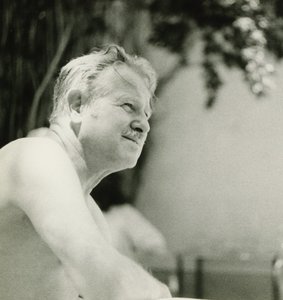
francisco caetano keil coelho do amaral, 2nd viscount of pedralva
1910 - 1975 , Portugal
基本情報
- Artistic Movement Or Style: Modernist architecture
- Artists Who Influenced This Artist:
- Carlos Ramos
- Willem Dudok
- Frank Lloyd Wright
- Date Of Birth: April 28, 1910
- Date Of Death: February 19, 1975
- Full Name: Francisco Keil do Amaral
- Nationality: Portuguese
- Notable Artworks:
- Lake Island Project
- Camisaria Confiança Facade
- Sapataria Paris Facade
- Place Of Birth: Lisbon, Portugal
関連記事
Echoes of Time: Nostalgia, Technique & Cultural Significance in Vintage Paintings
Explore the captivating world of vintage paintings! Discover key styles, cultural significance & collecting tips from art experts at ArtsDot. Find authentic reproductions and elevate your home décor.
Alfredo Roque Gameiro: A Portuguese Master of Historical Painting & Artistic Eclecticism
Discover Alfredo Roque Gameiro (1864-1935), a renowned Portuguese painter celebrated for his vibrant watercolors and historical illustrations. Explore his legacy & artworks at ArtsDot.
Echoes of Time: Exploring the Enduring Appeal of Vintage Artwork
Explore the captivating world of vintage art! Discover its history, enduring appeal, & how to build your own collection. Expert advice, custom reproductions & museum-quality prints at ArtsDot.

Echoes of Time: Exploring the Enduring Appeal & Historical Context of Vintage Art Prints
Explore the captivating world of vintage art prints! Discover their history, collecting tips & enduring appeal. Expert insights on chromolithography and building a legacy collection with ArtsDot.

Echoes of Eras Past: Exploring Themes & Techniques in Vintage Art Collections
Explore the captivating world of vintage art! Discover historical movements, iconic themes & collecting tips. Find handmade reproductions & expert appraisal at ArtsDot.

