

 プレビュー
プレビュー
 シェアする
シェアする シェアする
シェアする
 詳細を見る
詳細を見る

 ダウンロード
 似ている作品
 X線調査
X線調査 スライドショー
 Stats
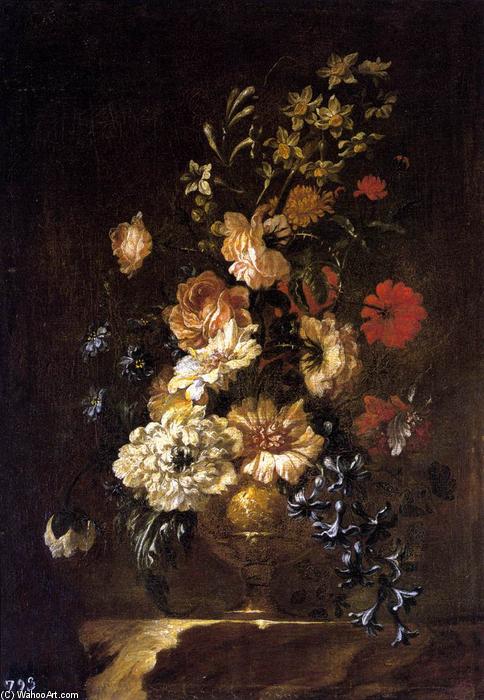
StatsVase of Flowers
 Baroque
 1690
1690 60.0 x 41.0 cm
 Monasterio de El Escorial
 詳細を見る
詳細を見る
手描き油彩複製画
当社のアーティストが、お客様のご希望のサイズと額縁に合わせて、キャンバスに手描きで制作する油彩画です。 ( Switch to Print Switch to Digital Image)




































作品のオリジナル比率に合わせた、当店の規定サイズからお選びください。

特定のフレームやスペースに合わせて、ご希望のサイズをご入力いただけます。選択されたサイズが元の画像の比率と異なる場合、アートワークをトリミングするか、手描きで要素を追加して絵画を拡張いたします。デジタルモックアップ を制作し、制作開始前にご確認(承認)をいただきます。
画面上のプレビューは、実際のトリミングや拡張を正確に反映しているものではありません。最終的な構図は、モックアップによってのみ正確にご確認いただけます。
カスタムサイズもご利用いただけますが、元の比率を維持するためには、あらかじめ用意されたリストからサイズを選択することをお勧めいたします。
ご注文後、ArtsDot.com チームより詳細な指示をお送りするとともに、仕上がりイメージ(モックアップ)をご提供いたします。


 ガラスオプションは、110cm未満のサイズでのみご利用いただけます。

Vase of Flowers
複製技法
複製画のサイズ
-


合計金額
$ 263
The Artist and His Style
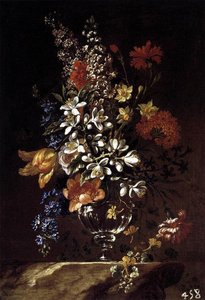
Francisco Pérez Sierra was a Neapolitan painter of Spanish origin, known for his works in the Baroque style. His paintings often featured still life compositions, including flowers, fruits, and other objects. The Vase of Flowers is a prime example of his skill in this genre, with its beautiful arrangement of blooms and delicate petals. Key Features of the Painting The painting features a stunning bouquet of flowers, including roses, lilies, and other varieties. The colors are rich and varied, with shades of red, yellow, white, and green dominating the palette. The vase holding the bouquet is not clearly visible due to the abundance of flowers, but it seems to be made of a dark material, possibly ceramic or metal.- The painting is characterized by its use of chiaroscuro, with strong contrasts between light and dark.
- The artist's attention to detail is evident in the delicate petals and leaves of the flowers.
- The composition is balanced and harmonious, with a sense of movement and energy.
For more information on Francisco Pérez Sierra and his works, visit Wikipedia. To explore more artworks and reproductions, visit ArtsDot.com.
関連作品
アーティストの略歴
The Dramatic Legacy of Francisco Pérez Sierra
In the grand, theatrical tapestry of the Spanish Baroque, few artists possessed the ability to navigate the extremes of human experience as gracefully as Francisco Pérez Sierra. A painter of profound duality, Sierra’s oeuvre oscillates between the thunderous chaos of the battlefield and the hushed, fragrant stillness of a floral arrangement. Born in Naples around 1627, his very identity was a bridge between cultures; he was a Neapolitan painter of Spanish descent, the son of a Spanish general, a lineage that perhaps prepared him for a life spent traversing the artistic landscapes of both Italy and Spain. His early years in Naples provided him with a foundation steeped in the dramatic tenebrism of the Italian masters, a style defined by sharp contrasts between light and shadow that would later become his signature method for breathing life into the most turbulent scenes.
The seeds of Sierra's mastery were sown under the watchful eye of Aniello Falcone, a preeminent specialist in battle painting. From Falcone, Sierra inherited more than just technical precision; he learned to capture the visceral energy of movement and the psychological weight of conflict. This training was further refined through his association with Juan de Toledo, whose influence helped steer Sierra toward the prestigious artistic circles of Madrid. As he transitioned from the vibrant, sun-drenched atmosphere of Naples to the austere yet opulent court of the Habsburg monarchs, Sierra’s work began to reflect a sophisticated blend of Italian dynamism and Spanish gravity.
A Master of Contrast: From Warfare to Still Life
To study the works of Pérez Sierra is to witness a remarkable evolution of genre. While he achieved significant renown for his ability to depict the grandeur and carnage of war, he was equally adept at capturing the ephemeral beauty of the natural world. His battle scenes were characterized by a meticulous attention to detail—the glint of steel, the billowing smoke, and the dramatic interplay of light across armored figures—all rendered with a sense of epic scale. Yet, in stark contrast to these monumental struggles, Sierra found a different kind of intensity in his still lifes. In works such as his celebrated Vase of Flowers, created around 1690, he demonstrated an exquisite sensitivity to texture and color.
In these floral compositions, the artist moved away from the sweeping narratives of combat to focus on the intimate and the delicate. He utilized a rich palette of reds, yellows, and whites to bring roses and lilies to life, using chiaroscuro to give each petal a sculptural presence. This ability to command both the epic and the intimate allowed him to serve a wide range of patrons, from religious institutions seeking devotional imagery to the royal court desiring decorative splendor. His versatility was not merely a matter of skill but a profound understanding of how light could be used to evoke either the terror of battle or the serene contemplation of nature.
Courtly Success and Artistic Influence
Sierra’s career in Madrid was marked by significant triumphs and high-profile commissions that cemented his status within the Spanish Golden Age. His presence at court allowed him to collaborate with some of the most influential figures of his era, including Matías de Torres and Francisco Rizi. These professional intersections enriched his style, integrating the monumental fresco techniques required for palace decorations with the refined oil painting traditions of the period. His work on large-scale projects, such as the frescoes for the Huerta de Sora, showcased a mastery of composition that could command vast architectural spaces.
Beyond his individual canvases, Sierra’s historical significance lies in his role as a cultural conduit. By bringing the stylistic innovations of Naples to the heart of Madrid, he helped sustain the vitality of the Baroque movement in Spain. His religious commissions, though many have been lost to time due to the destruction of various convents, once adorned the sacred spaces of the Trinitarias and San Plácido, providing a visual language for faith through his depictions of the Immaculate Conception and various saints. Today, the surviving fragments of his legacy—housed in prestigious institutions like the Museo del Prado and the Royal Palace in Madrid—stand as a testament to an artist who could find the sublime in both the roar of a charging cavalry and the silent bloom of a single rose.
francisco pérez sierra
1627 - 1709 , Italy
基本情報
- Artistic Movement Or Style: Baroque
- Artists Or Movements Influenced By This Artist: ['Diego Velázquez']
- Artists Who Influenced This Artist: ['Francisco de Zurbarán']
- Date Of Birth: Naples, Italy (1627)
- Date Of Death: 1709
- Full Name: Francisco Pérez Sierra
- Nationality: Spanish
- Notable Artworks:
- Vase of Flowers
- Saint Joachim
- Place Of Birth: Naples
関連記事

The Dramatic Flourish: Exploring the Baroque Movement's Enduring Legacy in Art History
Explore the dramatic world of Baroque art! Discover iconic artists like Caravaggio & Rubens, defining techniques, and its lasting impact on art history. Expert insights for collectors & enthusiasts at ArtsDot.
Silent Narratives: Exploring the Enduring Appeal of Still Life Painting Across Centuries
Explore the rich history of still life painting with ArtsDot. Discover Dutch Masters, decode vanitas symbolism & learn about collecting timeless art. Expert insights and museum-quality reproductions.

バロック美術を極めた至宝:時代を彩る10大名作の世界
バロック美術の華!カラヴァッジョ、ベルニーニら巨匠が創り上げた10大名作を徹底解剖。ドラマチックな色彩と豪華絢爛の世界観に触れ、至宝のアートプリントで空間を彩ろう。ArtsDot.comで美術館品質の複製と洗練されたインテリアを見つけましょう!

ゴヤ傑作25選:スペインの魂を揺さぶる、深遠な芸術の世界 | ArtsDot
ゴヤ傑作25選:ロマン主義を代表するスペインの巨匠、フランシスコ・デ・ゴヤの世界へ。黒衣の女からマハまで、魂を揺さぶる絵画の物語と技法を紐解きます。ArtsDotで高品質なアートレプリカを見つけ、インテリアに深みと風格を。今すぐコレクションをご覧ください。
Decoding Baroque Grandeur: A Guide to the Drama and Emotion of 17th-Century Art
Explore the breathtaking drama of 17th-century Baroque art. Our expert guide decodes the use of chiaroscuro, emotional intensity, and historical grandeur to help you appreciate and curate timeless masterpieces for your collection.