

 プレビュー
プレビュー
 シェアする
シェアする シェアする
シェアする
 詳細を見る
詳細を見る

 ダウンロード
 似ている作品
 X線調査
X線調査 スライドショー
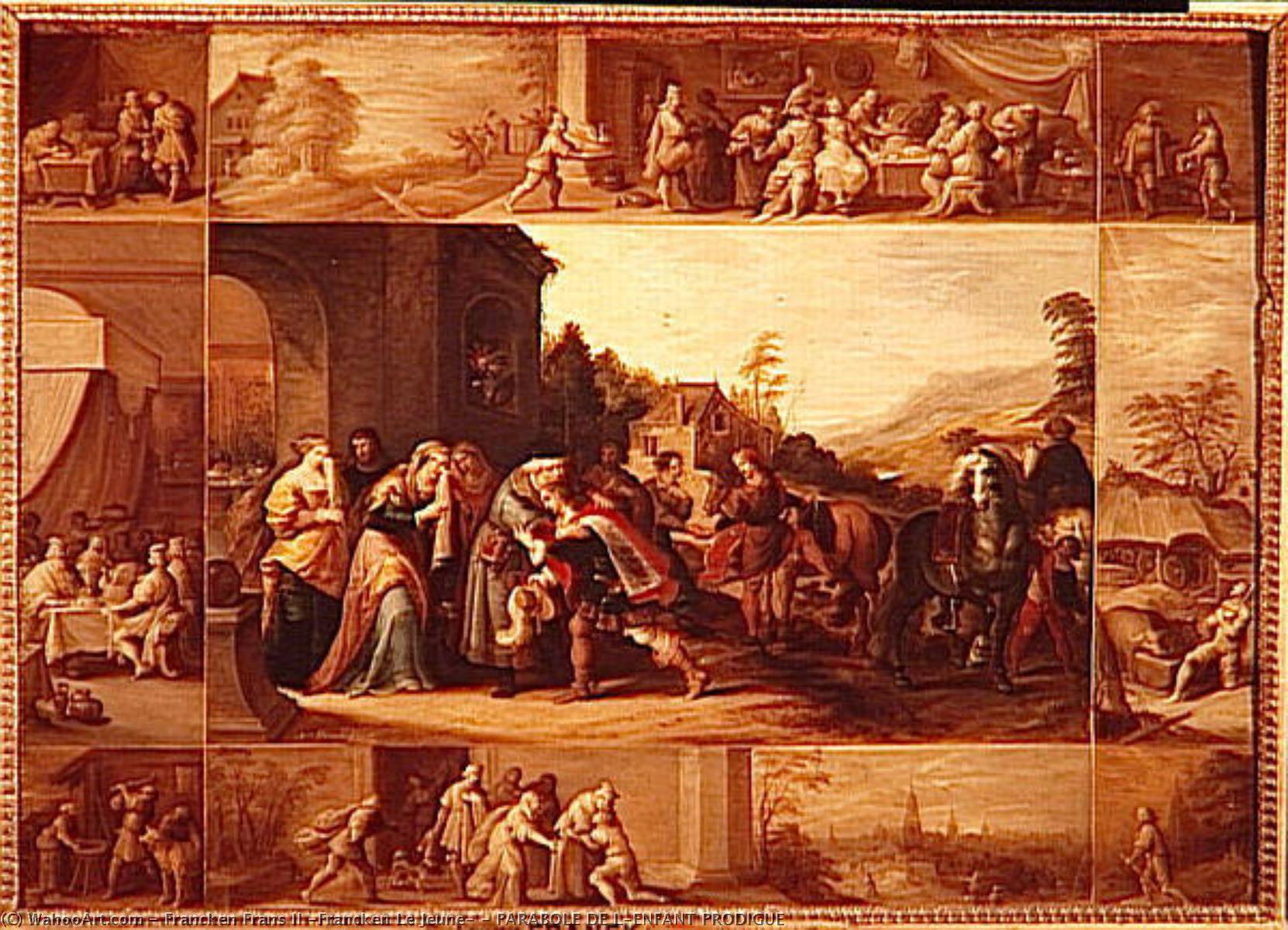
PARABOLE DE L'ENFANT PRODIGUE

 詳細を見る
詳細を見る
ジークレー/アートプリント
迅速な制作と多彩な仕上げオプションを備えた、ミュージアムクオリティのジークレーまたはキャンバスプリント。 ( 手描きの絵画を購入 画像を購入)




































作品のオリジナル比率に合わせた、当店の規定サイズからお選びください。

特定のフレームやスペースに合わせて、ご自身でサイズを指定することも可能です。選択されたサイズが元の画像の比率と一致しない場合、作品をトリミングするか、鏡面反射または単色での塗りつぶしによって画像を拡張いたします。制作を開始する前に、ご確認用のデジタルモックアップをお送りいたします。
画面上のプレビューには、実際のトリミングや拡張は反映されませんのでご注意ください。最終的な構図を正確に確認できるのは、モックアップのみとなります。
カスタムサイズも承っておりますが、元の比率を維持するためには、あらかじめ用意されたリストからサイズを選択することをお勧めいたします。


 ガラスオプションは、110cm未満のサイズでのみご利用いただけます。

PARABOLE DE L'ENFANT PRODIGUE
ジークレー/アートプリント
複製画のサイズ
-


合計金額
$ 62
関連作品

アーティストの略歴
A Master of the Miniature: The Life and Legacy of Frans Francken the Younger
In the vibrant, bustling heart of seventeenth-century Antwerp, a period defined by profound cultural shifts and artistic metamorphosis, there emerged a painter whose delicate touch could capture the vastness of human morality within the smallest of frames. Frans Francken the Younger, born in 1581, was not merely a participant in the Flemish Golden Age; he was a pivotal bridge between the elegant, often artificial grace of Mannerism and the dramatic, emotive power of the Baroque. Born into a lineage of celebrated creators, his very identity was woven from the threads of tradition established by his father, Frans Francken I. This familial foundation provided him with more than just technical training; it offered him entry into a prestigious workshop culture that would become one of the most prolific engines of artistic production in Northern Europe.
Francken’s early years were steeped in the rigorous discipline of the Antwerp Guild of Saint Luke, where he honed his ability to render intricate details with breathtaking precision. His training likely extended beyond the borders of Flanders, as evidence suggests an apprenticeship or period of study under his uncle in Paris, a journey that undoubtedly broadened his stylistic horizons. By 1605, he had achieved the status of master, and by 1615, he was elected Dean of the Guild, a testament to his standing among his peers. His early works reflect the lingering influence of Mannerist masters like Parmigianino and Giulio Romano, characterized by elongated, graceful figures and complex, almost theatrical compositions. Yet, as his career progressed, one can observe a fascinating evolution in his technique—moving from a thick, textured impasto toward more refined, translucent glazes that allowed for a luminous, ethereal quality in his depictions of light and shadow.
The Cabinet of Wonders: Innovation and Subject Matter
While many of his contemporaries sought grandeur through massive altarpieces, Francken found his greatest triumph in the intimate realm of cabinet paintings. These small-scale, exquisitely crafted works were designed for the private collections of connoisseurs, intended to be studied closely, almost like jewels. He possessed a singular talent for creating "imaginary art galleries"—meticulous depictions of kunstkamers or collectors' cabinets—where precious objects, sculptures, and paintings are arranged in a dense, fascinating tapestry of human curiosity. This fascination with the collection of wonders did more than just showcase his skill; it actively influenced the trajectory of Flemish art, leaving an indelible mark on the works of legends such as Peter Paul Rubens and Jan Brueghel the Elder.
Beyond the architectural splendor of these galleries, Francken’s imagination wandered into the whimsical and the moralizing. He was a master of diverse narratives, ranging from the deeply religious to the playfully allegorical. His oeuvre includes:
- Biblical Narratives: Movingly rendered scenes such as The Visitation, which demonstrate his ability to infuse sacred history with human emotion and meticulous detail.
- Allegorical Moralism: Complex paintings that utilized symbolism to explore virtue and vice, often employing the clever motif of "monkeys' kitchens"—scenes where primates mimic human follies to provide a satirical critique of society.
- Historical and Mythological Themes: Grand tales of antiquity reimagined within intimate, highly detailed settings.
A Prolific Legacy and Artistic Influence
The true scale of Francken’s impact lies in the sheer productivity of his studio. He was a central figure in a collaborative ecosystem, often working alongside landscape specialists like Abel Grimmer or architecture experts to create multifaceted masterpieces where every element—from the sweeping sky to the smallest human gesture—was executed by a master hand. This collaborative spirit allowed his workshop to produce an enormous volume of work, ranging from original compositions to highly skilled replicas that populated the homes of the European elite. His ability to adapt his style, transitioning from the structured elegance of his youth to a more fluid, genre-focused approach in his later years, mirrors the broader movement of European art toward a more naturalistic and emotionally accessible Baroque aesthetic.
When Frans Francken the Younger passed away in 1642, he left behind a legacy that transcended simple portraiture or religious iconography. He had taught the world how to look closely—how to find the infinite within the minute. Through his mastery of small-scale storytelling and his ability to blend the intellectual complexity of Mannerism with the visceral energy of the Baroque, he ensured that the spirit of Antwerp’s artistic brilliance would endure for generations to come.
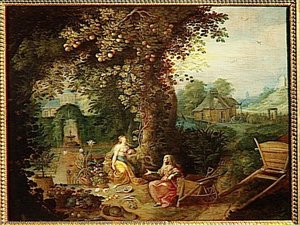
francken frans ii (francken le jeune)
1581 - 1642
基本情報
- Artistic Movement Or Style: Baroque & Mannerism
- Artists Or Movements Influenced By This Artist: ['Peter Paul Rubens']
- Artists Who Influenced This Artist:
- Pieter Bruegel the Elder
- Albrecht Dürer
- Date Of Birth: 1581
- Full Name: Frans Francken II
- Nationality: Flemish
- Notable Artworks:
- The Visitation
- Saint Jerome in His Study
- Place Of Birth: Antwerp

