

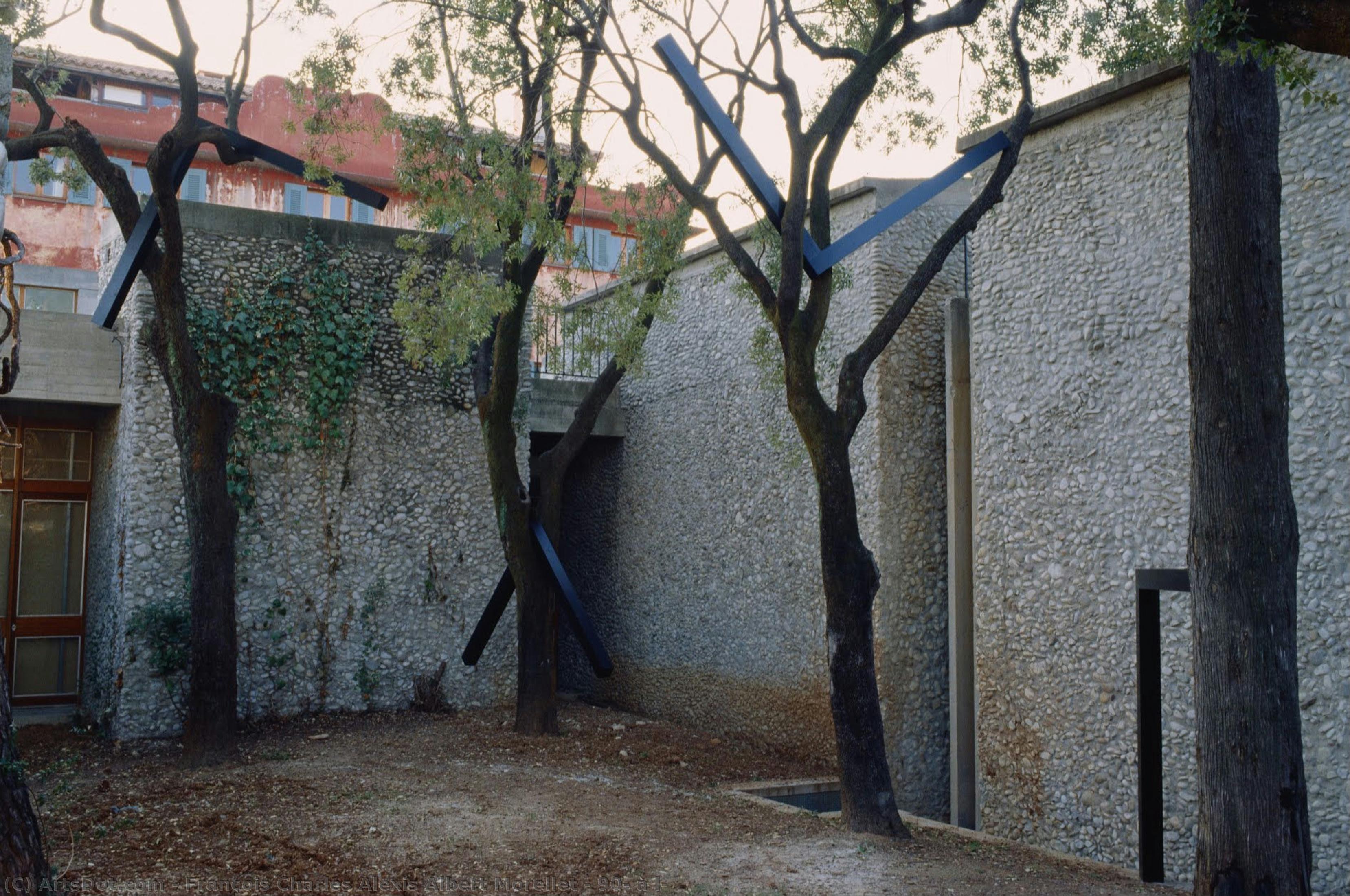
 プレビュー
プレビュー
 シェアする
シェアする シェアする
シェアする
 詳細を見る
詳細を見る

 ダウンロード
 似ている作品
 X線調査
X線調査 スライドショー
90° à l


 詳細を見る
詳細を見る
ジークレー/アートプリント
迅速な制作と多彩な仕上げオプションを備えた、ミュージアムクオリティのジークレーまたはキャンバスプリント。 ( 手描きの絵画を購入 画像を購入)




































作品のオリジナル比率に合わせた、当店の規定サイズからお選びください。

特定のフレームやスペースに合わせて、ご自身でサイズを指定することも可能です。選択されたサイズが元の画像の比率と一致しない場合、作品をトリミングするか、鏡面反射または単色での塗りつぶしによって画像を拡張いたします。制作を開始する前に、ご確認用のデジタルモックアップをお送りいたします。
画面上のプレビューには、実際のトリミングや拡張は反映されませんのでご注意ください。最終的な構図を正確に確認できるのは、モックアップのみとなります。
カスタムサイズも承っておりますが、元の比率を維持するためには、あらかじめ用意されたリストからサイズを選択することをお勧めいたします。


 ガラスオプションは、110cm未満のサイズでのみご利用いただけます。

90° à l
ジークレー/アートプリント
複製画のサイズ
-


合計金額
$ 62
関連作品







アーティストの略歴
A Life Dedicated to Systematic Vision
François Charles Alexis Albert Morellet, born in Cholet, France, in 1926 and passing in his hometown in 2016, was a quietly revolutionary figure in the landscape of post-war abstract art. His journey wasn’t one of immediate artistic immersion; rather, it unfolded alongside a practical life as an industrialist from 1948 to 1975. This dual existence—the precision of manufacturing and design coupled with a burgeoning artistic sensibility—proved profoundly formative. It instilled in Morellet a unique approach: art not as spontaneous expression, but as the logical outcome of predetermined systems, a synthesis of mathematical rigor and aesthetic exploration. He wasn’t simply *making* art; he was devising rules by which art could make itself, relinquishing some control to the inherent logic of his chosen parameters.Early Influences and the Birth of Systematic Art
Morellet's artistic education was largely self-directed, yet deeply informed by the currents swirling around him in the mid-20th century. The influence of Constructivism, particularly the work of Josef Albers with his explorations of color interaction, is palpable. He also drew inspiration from Neo-Plasticism—Piet Mondrian’s reduction to essential geometric forms—and the burgeoning field of kinetic art, which explored movement and perception. These movements emphasized rational construction and a departure from subjective emotionality, resonating strongly with Morellet's own inclinations. A pivotal moment in his development was his involvement with the Groupe de Recherche d’Art Visuel (GRAV) between 1961 and 1968. GRAV, a collective of artists dedicated to investigating the intersection of art, science, and technology, championed dematerialization—the idea that the artwork's conceptual process held greater significance than its physical manifestation—and encouraged viewer participation. This collaborative spirit and emphasis on systematic approaches would become cornerstones of Morellet’s artistic practice. It was within this context that his signature “systematic art” began to truly take shape, a practice rooted in establishing rules – angles, lines, colors, spatial relationships – and then executing the artwork based on those constraints, allowing the system itself to dictate the final form.Geometric Explorations and Expanding Boundaries
Morellet’s paintings are immediately recognizable for their precise geometry: grids, linear structures, and carefully rendered forms executed in a limited palette. However, these aren't static compositions; repetition and subtle variations within the systems create visual rhythms and optical effects that actively engage the viewer’s perception. He wasn’t interested in creating pleasing images, but rather in revealing the underlying logic of his chosen system. This exploration extended beyond painting. Morellet expanded into installations, sculptures, drawings, and even jewelry, consistently challenging traditional notions of artistic boundaries. His installations often involved spatial interventions using light, mirrors, and geometric shapes, crafting immersive environments that questioned our understanding of space and reality. The recurring motif of the 90-degree angle became a signature element, used to dissect and reconfigure perceptions of perspective. Works like his “90° à l…” series exemplify this exploration, repeating angled lines to create dynamic spatial relationships. He wasn’t merely representing space; he was *constructing* it through systematic intervention.Legacy and Lasting Influence
François Morellet occupies a unique position in art history. While often associated with minimalism due to his reduction of form and emphasis on objectivity, his work distinguishes itself through its inherent methodology. Unlike some minimalist artists who sought complete anonymity or the erasure of the artist’s hand, Morellet's systematic approach was deliberate—a conscious choice to prioritize logic over personal expression. His influence extends far beyond geometric abstraction, impacting generations of contemporary artists working in installation art, algorithmic art, and conceptual practices. He demonstrated that rigorous systems could yield aesthetically compelling and intellectually stimulating results, pushing the boundaries of artistic inquiry. Throughout his career, Morellet was recognized by prestigious galleries like Kamel Mennour, Hauser & Wirth, and Minimasterpiece, solidifying his place within the international art scene. His work is now held in numerous museum collections worldwide, a testament to its enduring power and significance. He leaves behind a legacy not just of visually striking artworks, but of a profound rethinking of the artistic process itself—a synthesis of industrial precision, mathematical rigor, and unwavering dedication to systematic exploration.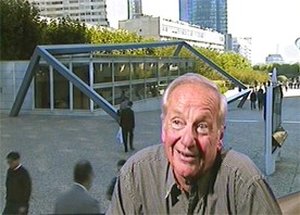
François Charles Alexis Albert Morellet
1926 - 2016 , France
基本情報
- Artistic Movement Or Style: Geometric Abstraction, Minimalism
- Artists Or Movements Influenced By This Artist:
- Minimalism
- Installation Art
- Artists Who Influenced This Artist:
- Josef Albers
- Piet Mondrian
- Date Of Birth: 1926
- Date Of Death: 2016
- Full Name: François Charles Alexis Albert Morellet
- Nationality: French
- Notable Artworks: ['90° à l… series']
- Place Of Birth: Cholet, France