 プレビュー
プレビュー
 シェアする
シェアする シェアする
シェアする
 詳細を見る
詳細を見る

 ダウンロード
 似ている作品
 X線調査
X線調査 スライドショー
 統計情報
統計情報The Birth of Spring
 1947
1947 102.0 x 152.0 cm
 詳細を見る
詳細を見る
ジークレー/アートプリント
迅速な制作と多彩な仕上げオプションを備えた、ミュージアムクオリティのジークレーまたはキャンバスプリント。 ( 手描きの絵画を購入 デジタル画像販売へ切り替え)




































標準サイズ
オーダーメイド
CM
INCH
作品のオリジナル比率に合わせた、当店の規定サイズからお選びください。
Loading sizes...

幅
高さ
特定のフレームやスペースに合わせて、ご自身でサイズを指定することも可能です。選択されたサイズが元の画像の比率と一致しない場合、作品をトリミングするか、鏡面反射または単色での塗りつぶしによって画像を拡張いたします。制作を開始する前に、ご確認用のデジタルモックアップをお送りいたします。
画面上のプレビューには、実際のトリミングや拡張は反映されませんのでご注意ください。最終的な構図を正確に確認できるのは、モックアップのみとなります。
カスタムサイズも承っておりますが、元の比率を維持するためには、あらかじめ用意されたリストからサイズを選択することをお勧めいたします。


 ガラスオプションは、110cm未満のサイズでのみご利用いただけます。

The Birth of Spring
ジークレー/アートプリント
複製画のサイズ
-


合計金額
$ 62
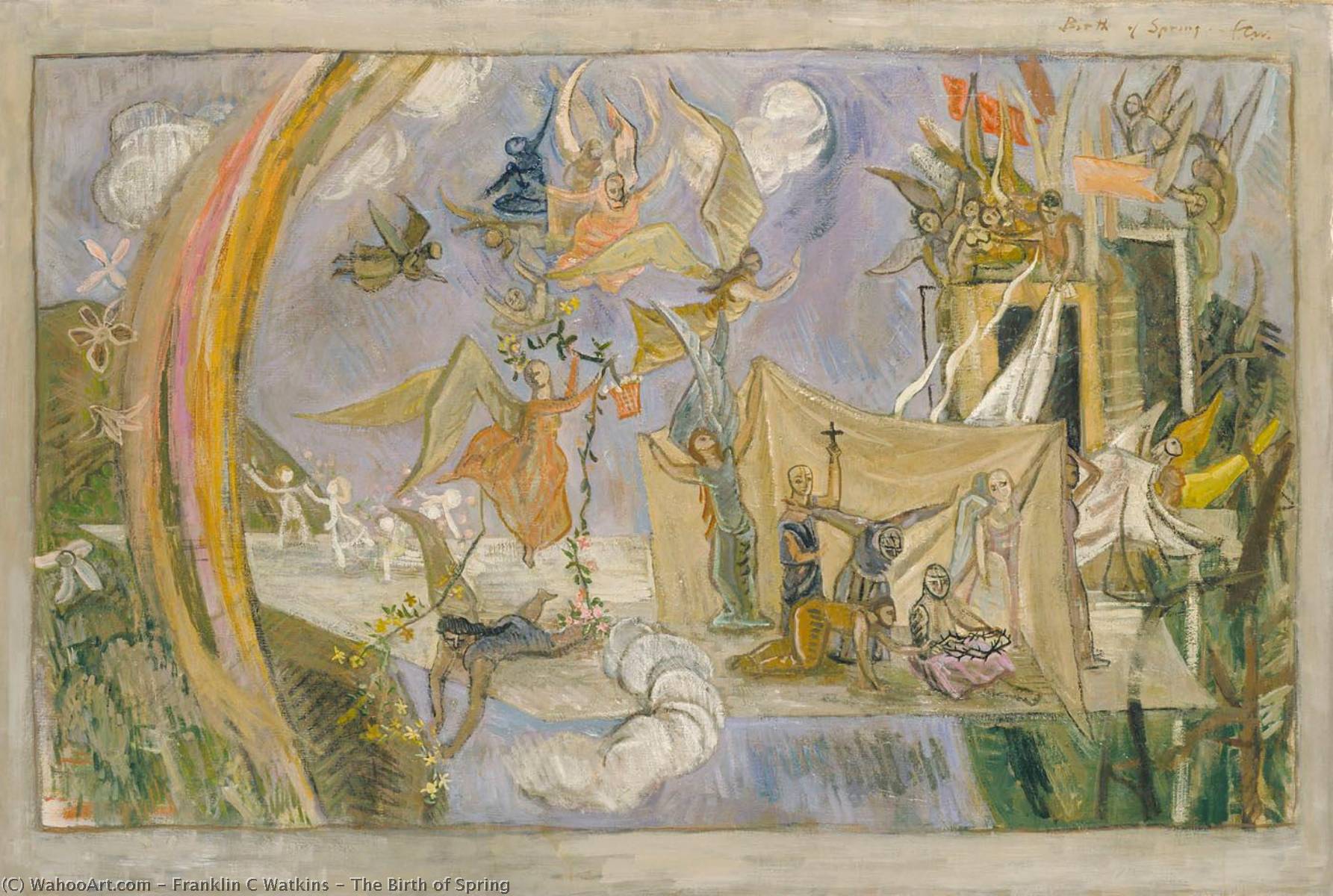
The Birth of Spring is a captivating oil on canvas painting created by Franklin C Watkins in 1947. This stunning artwork is currently housed at the Smithsonian American Art Museum in the United States. Measuring 102 x 152 cm, this large-scale painting is a testament to the artist's skill and attention to detail.
For more information on the Birth of Spring and other artworks by Franklin C Watkins, visit the ArtsDot.com website or the Smithsonian American Art Museum website on Wikipedia.
Artist Background
Franklin C Watkins was an American artist known for his vibrant and expressive paintings. His work often featured scenes of everyday life, landscapes, and figurative compositions. The Birth of Spring is a prime example of his ability to capture the essence of a season and convey it through his art.Painting Description
The painting depicts a lively scene with several angels flying in the sky above a group of people celebrating the arrival of spring. The atmosphere is joyful, with birds scattered throughout the sky, adding to the sense of freedom and renewal. The use of color and light in the painting is particularly noteworthy, as it creates a sense of depth and dimensionality.- The painting features a range of colors, from soft pastels to vibrant hues, which adds to its visual appeal.
- The composition is well-balanced, with a clear sense of movement and energy.
- The artist's use of brushstrokes and texture creates a sense of tactility, drawing the viewer into the scene.
For more information on the Birth of Spring and other artworks by Franklin C Watkins, visit the ArtsDot.com website or the Smithsonian American Art Museum website on Wikipedia.
関連作品








アーティストの略歴
A Legacy Etched in Stone: The Architectural Vision of Franklin C. Watkins
Franklin C. Watkins stands as a pivotal, yet often unsung, figure in the architectural landscape of the American West. His name isn’t immediately recognizable to many outside specialist circles, but his influence is profoundly visible – etched into the brick and mortar of over 240 schools, libraries, and public buildings that define towns and cities across Utah, Idaho, Wyoming, Nevada, and beyond. Born in a time of rapid expansion and community building, Watkins dedicated his career to crafting structures that weren’t merely functional spaces but embodiments of civic pride and educational aspiration. He wasn't an architect who sought grand monuments to personal glory; instead, he focused on the practical needs of burgeoning communities, leaving behind a remarkable portfolio of buildings that speak volumes about the spirit of the Intermountain West during the late 19th and early 20th centuries.Early Life and Formative Influences
Details surrounding Watkins’s earliest life remain somewhat scarce, a testament to his unassuming nature and dedication to his work rather than self-promotion. What is known is that he established his architectural practice in Salt Lake City, Utah, around the turn of the 20th century. This location proved crucial to his development as an architect. The region was experiencing significant growth fueled by railroad expansion, mining booms, and agricultural settlements. The demand for public buildings – schools to educate a growing population, libraries to foster intellectual pursuits, and commercial structures to support economic activity – was immense. Watkins quickly recognized this need and positioned himself to become a leading provider of these essential services. His early work demonstrates a clear understanding of prevailing architectural styles of the time, particularly those influenced by Victorian eclecticism and the emerging Prairie School movement. However, he wasn’t simply a mimic; he adapted these styles to suit the unique climate, materials, and cultural context of the Intermountain West.The Carnegie Library Boom & Watkins's Signature Style
Watkins truly distinguished himself through his prolific work designing Carnegie libraries. Andrew Carnegie’s philanthropic efforts provided funding for over 1,600 libraries across the United States, and Franklin C. Watkins secured a significant number of commissions to design these institutions throughout the West. This partnership allowed him to refine his architectural vision and develop a signature style characterized by practicality, durability, and understated elegance. His Carnegie libraries weren’t imposing structures; they were welcoming community hubs designed to encourage learning and civic engagement. He frequently employed red brick construction – readily available and well-suited to the region's climate – and incorporated large windows to maximize natural light. A hallmark of his designs was a symmetrical façade, often adorned with simple yet refined detailing such as decorative brickwork, cornices, and prominent entrances that emphasized the library’s role as a public institution. Beyond Carnegie libraries, Watkins designed numerous schoolhouses, courthouses, commercial buildings, and even residences, consistently applying these principles of functional design and regional sensitivity.A Commitment to Intermountain Design
Watkins's architectural philosophy was deeply rooted in a commitment to the specific needs and characteristics of the Intermountain West. He understood that buildings designed for eastern cities wouldn’t necessarily translate well to this rugged landscape. He prioritized materials that were locally sourced, construction techniques that were appropriate for the climate, and designs that reflected the cultural values of the communities he served. This pragmatic approach extended beyond mere aesthetics; Watkins was known for his meticulous attention to detail, ensuring that his buildings were structurally sound, energy-efficient, and adaptable to changing needs. He often incorporated features such as wide eaves to protect against harsh sunlight and snow loads, and strategically placed windows to maximize ventilation.- Schoolhouse Designs: Watkins designed hundreds of schoolhouses, each tailored to the specific size and needs of the local community.
- Courthouse Architecture: His courthouses were often built in a classical revival style, symbolizing justice and civic authority.
- Commercial Buildings: Watkins’s commercial structures blended functionality with aesthetic appeal, contributing to the economic vitality of western towns.