

 プレビュー
プレビュー
 プリントを購入
 シェアする
シェアする シェアする
シェアする
 詳細を見る
詳細を見る

 ダウンロード
 似ている作品
 X線調査
X線調査 スライドショー
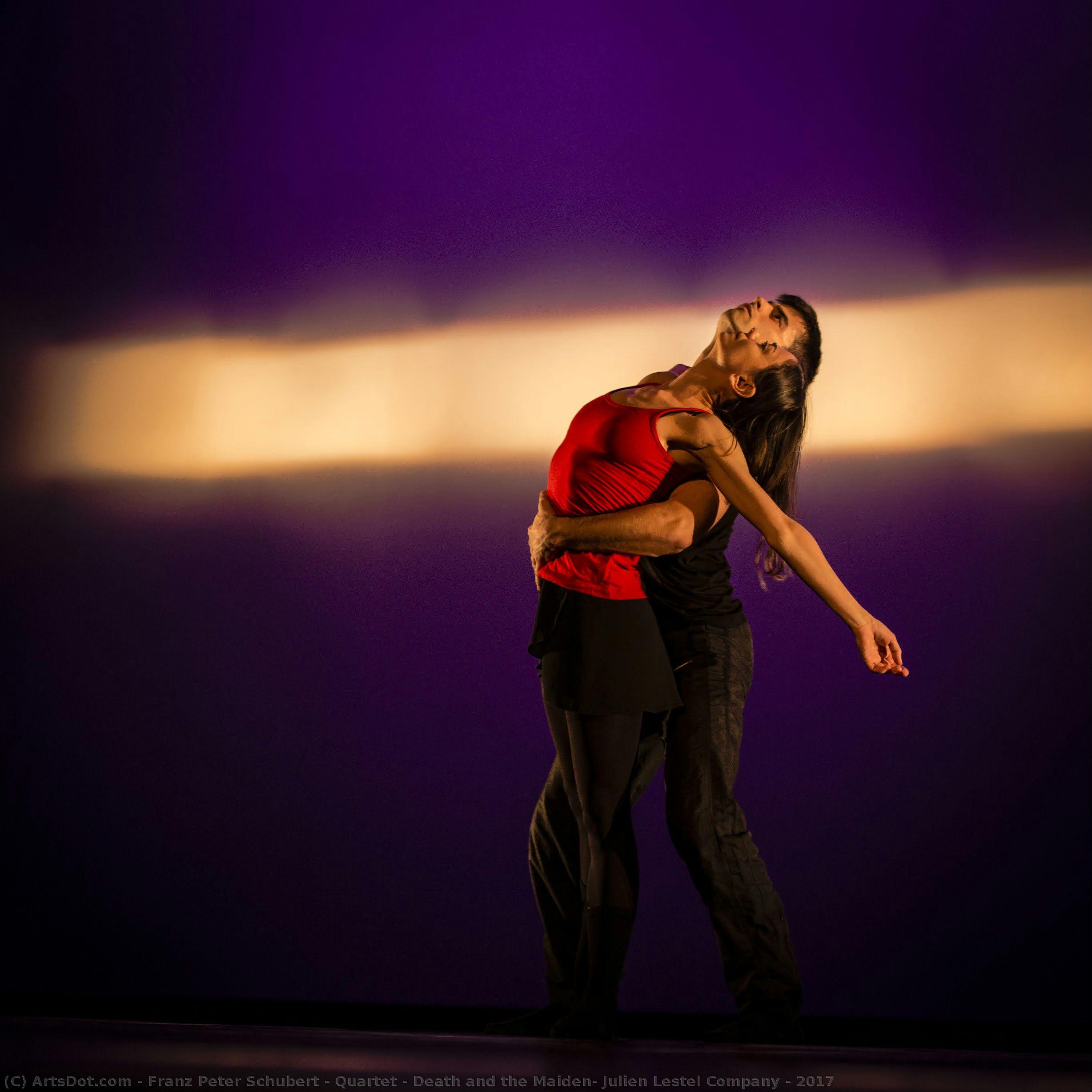
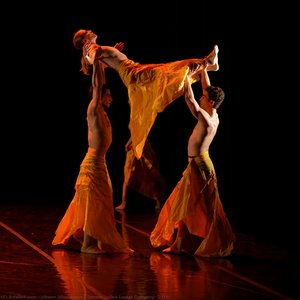
Quartet / Death and the Maiden, Julien Lestel Company , 2017


 詳細を見る
詳細を見る




































作品のオリジナル比率に合わせた、当店の規定サイズからお選びください。

特定のフレームやスペースに合わせて、ご希望のサイズをご入力いただけます。選択されたサイズが元の画像の比率と異なる場合、アートワークをトリミングするか、手描きで要素を追加して絵画を拡張いたします。デジタルモックアップ を制作し、制作開始前にご確認(承認)をいただきます。
画面上のプレビューは、実際のトリミングや拡張を正確に反映しているものではありません。最終的な構図は、モックアップによってのみ正確にご確認いただけます。
カスタムサイズもご利用いただけますが、元の比率を維持するためには、あらかじめ用意されたリストからサイズを選択することをお勧めいたします。
ご注文後、ArtsDot.com チームより詳細な指示をお送りするとともに、仕上がりイメージ(モックアップ)をご提供いたします。


 ガラスオプションは、110cm未満のサイズでのみご利用いただけます。

Quartet / Death and the Maiden, Julien Lestel Company , 2017
複製技法
複製画のサイズ
-


合計金額
$ 263
関連作品






アーティストの略歴
Franz Schubert: A Soulful Bridge Between Worlds
Franz Peter Schubert, born in Vienna’s Himmelpfortgrund district on January 31st, 1797, remains one of the most profoundly felt and enduring figures in Western classical music. His tragically short life—a mere thirty-one years—yielded a staggering output of over 600 compositions, encompassing symphonies, operas, lieder (art songs), chamber works, and sacred music. Schubert’s genius wasn't merely technical; it resided in his unparalleled ability to capture the nuances of human emotion – joy, sorrow, longing, and despair – within exquisitely crafted melodies and harmonies. He stands as a pivotal figure, bridging the formal structures of the Classical era with the burgeoning emotionalism of the Romantic movement, creating a uniquely personal and deeply resonant musical language.
Schubert’s early life was marked by a deep connection to music fostered by his father, a schoolmaster who recognized and nurtured Franz's exceptional talent. While his elder brother initially provided piano instruction, Schubert quickly surpassed him, demonstrating an innate gift for composition from a remarkably young age. Despite his family’s aspirations for him to pursue a career as a schoolteacher, Schubert remained passionately devoted to music, studying diligently alongside his father and absorbing the works of Haydn, Mozart, and Beethoven – composers whose influence would subtly shape his own developing style.
The Flowering of a Genius: Composition and Early Recognition
Despite facing financial hardship and limited professional opportunities during his lifetime, Schubert’s musical output steadily grew. He gained recognition within the Viennese music scene through performances by the Gesellschaft der Musikfreunde, an influential society that provided him with exposure and patronage. This association proved crucial in establishing his reputation and securing commissions for works such as his Symphony No. 8 (“Unfinished”), a poignant testament to his creative spirit even in its incomplete state. Schubert’s lieder, or art songs, quickly gained prominence, showcasing his mastery of melody and his ability to imbue simple texts with profound emotional depth. Works like “Erlkönig,” “Gretchen am Spinnrade,” and “Winterreise” – a cycle exploring themes of isolation and despair – became immediate favorites among audiences and critics alike.
Schubert’s compositional style was characterized by its lyrical beauty, harmonic richness, and expressive intensity. He frequently employed chromaticism—the use of notes outside the prevailing key—to heighten emotional impact and create a sense of yearning or melancholy. His music is often described as “soulful,” reflecting his deep empathy for human experience. The influence of Beethoven’s dramatic innovations can be heard in Schubert's symphonies, while the delicate beauty of Mozart permeates his lieder.
A Legacy Forged in Posthumous Appreciation
Tragically, Schubert’s life was cut short by illness—the precise cause remains debated, with syphilis often cited as a contributing factor. He died on November 19th, 1828, leaving behind a vast and largely unappreciated body of work. During his lifetime, Schubert received only modest recognition, and many of his compositions were published posthumously. However, following his death, his music experienced a remarkable resurgence in popularity, championed by influential figures such as Felix Mendelssohn, Robert Schumann, and Johannes Brahms. These composers recognized the profound beauty and emotional depth of Schubert’s work and played a vital role in ensuring its enduring legacy.
Key Works and Enduring Themes
Schubert's output is remarkably diverse, encompassing nearly every genre of his time. His symphonies—including the iconic Symphony No. 8 (“Unfinished”)—demonstrate his evolving compositional skills and his ability to evoke a wide range of emotions. The “Winterreise” song cycle stands as a masterpiece of German Lieder, exploring themes of isolation, loss, and despair with unparalleled psychological insight. Other notable works include the “Schwanengesang” (Swan Song) cycle, featuring some of the most beloved lieder in the repertoire; the String Quintet in C major; the impromptu pieces D. 899 and D. 935; and the opera *Fierrabras*. Throughout his work, Schubert consistently explored themes of love, loss, nature, spirituality, and the human condition—themes that continue to resonate deeply with audiences today.
Franz Schubert’s music continues to be performed and studied worldwide. His profound emotional depth, lyrical beauty, and innovative harmonic language have secured his place as one of the greatest composers in history – a soulful bridge between the Classical and Romantic eras, whose melodies still stir our hearts centuries later.
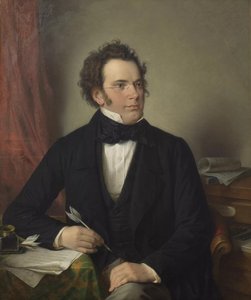
franz peter schubert
1797 - 1828 , Austria
基本情報
- Artistic Movement Or Style: Classical & Romantic
- Artists Or Movements Influenced By This Artist:
- Schumann
- Brahms
- Artists Who Influenced This Artist:
- Haydn
- Mozart
- Beethoven
- Date Of Birth: January 31, 1797
- Date Of Death: November 19, 1828
- Full Name: Franz Peter Schubert
- Nationality: Austrian
- Notable Artworks:
- Winterreise
- Erlkönig
- Ave Maria
- Death and Maiden
- Place Of Birth: Vienna, Austria