

 プレビュー
プレビュー
 プリントを購入
 シェアする
シェアする シェアする
シェアする
 詳細を見る
詳細を見る

 ダウンロード
 似ている作品
 X線調査
X線調査 スライドショー
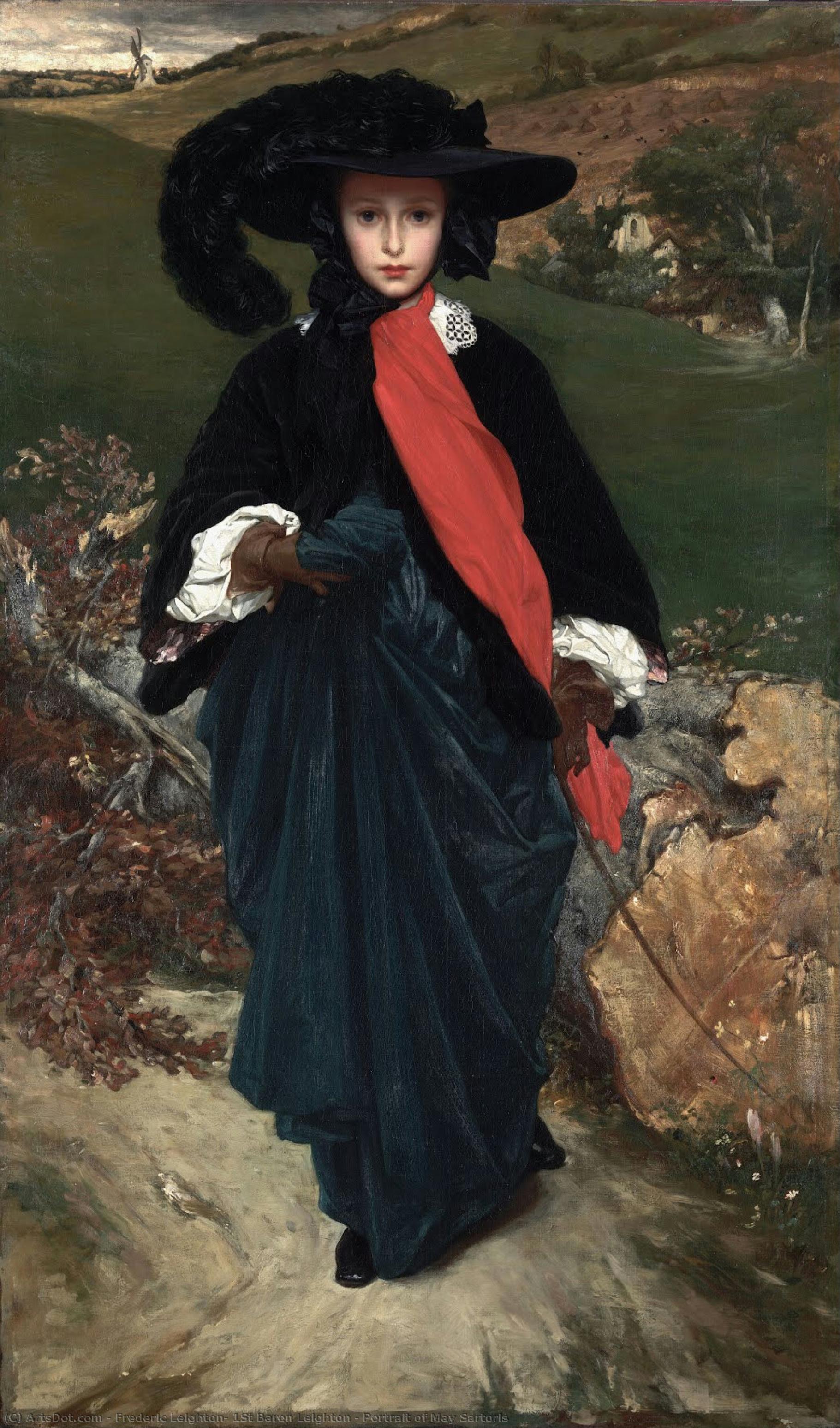
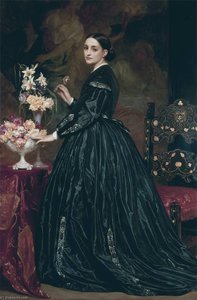
Portrait of May Sartoris
 Oil On Canvas
- WallArt
- Academic Realism
 1860
1860 152.0 x 90.0 cm
 Kimbell Art Museum
 詳細を見る
詳細を見る




P118B $10

P118H $10

P118W $10

P438Z $10

P508JH $12

P508YH $12

P805H $10

P805Z $10

P919BZ $10

P919G $10

P919XJ $10

P959ZH $10

P968JZ $12

W106C $8

W218G $10

W218JH $8

W218Y $10

W307PJ $10

W316G $10

W316PJ $8

W316Y $10

W398PJ $8

W4111J $10

W500HY $15

W500JH $15

W692G $12

W849H $8

W940BG $15

W953PJ $8




作品のオリジナル比率に合わせた、当店の規定サイズからお選びください。

特定のフレームやスペースに合わせて、ご希望のサイズをご入力いただけます。選択されたサイズが元の画像の比率と異なる場合、アートワークをトリミングするか、手描きで要素を追加して絵画を拡張いたします。デジタルモックアップ を制作し、制作開始前にご確認(承認)をいただきます。
画面上のプレビューは、実際のトリミングや拡張を正確に反映しているものではありません。最終的な構図は、モックアップによってのみ正確にご確認いただけます。
カスタムサイズもご利用いただけますが、元の比率を維持するためには、あらかじめ用意されたリストからサイズを選択することをお勧めいたします。
ご注文後、ArtsDot.com チームより詳細な指示をお送りするとともに、仕上がりイメージ(モックアップ)をご提供いたします。


 ガラスオプションは、110cm未満のサイズでのみご利用いただけます。

Portrait of May Sartoris
複製技法
複製画のサイズ
-


合計金額
$ 263
作品解説
A Glimpse into Victorian Society: Frederic Leighton’s ‘Portrait of May Sartoris’
Frederic Leighton's “Portrait of May Sartoris,” painted around 1860, is more than just a likeness; it’s a meticulously crafted window into the social and artistic currents of mid-Victorian England. Leighton, already establishing himself as a leading figure in the Aesthetic Movement, sought to capture not merely appearance but also an atmosphere – a sense of delicate beauty intertwined with the poignant awareness of time's passage. The painting depicts May Sartoris, the young daughter of Adelaide Sartoris, a celebrated hostess and socialite whose circle included Leighton himself. This connection imbued the portrait with a subtle layer of aristocratic intrigue, reflecting the era’s fascination with both artistic patronage and the complexities of high society.
- Historical Context: The mid-19th century was a period of immense social change in Britain, marked by rapid industrialization, evolving class structures, and a burgeoning interest in art and beauty. Leighton’s work reflects this shift, embracing the ideals of the Aesthetic Movement – an emphasis on beauty, sensuality, and emotional expression, often drawing inspiration from classical mythology and literature.
- The Sartoris Circle: Adelaide Sartoris's salon was renowned for its artistic gatherings, providing Leighton with invaluable exposure to influential figures in London’s cultural scene. The portrait itself can be viewed as a testament to this social connection, subtly showcasing the influence of wealth and refinement.
A Study in Academic Realism – Technique and Composition
Leighton's mastery lies not just in capturing a subject’s likeness but in rendering it with an almost photographic realism, tempered by a distinctly academic approach. The painting is executed primarily in oil on canvas, utilizing layered brushstrokes and glazing techniques to build up depth and luminosity. Notice the meticulous attention to detail – the delicate folds of May's dress, the subtle texture of her skin, and the intricate patterns of the background landscape. The composition itself is carefully balanced, with May occupying a significant portion of the canvas while the surrounding elements provide context without overwhelming the subject.
The artist employs a flattened perspective, characteristic of portraiture from this era, creating a sense of intimacy and immediacy. Atmospheric perspective – the softening of distant features – subtly recedes into the background, drawing the viewer’s eye towards May's face. The use of light is particularly noteworthy; it’s soft and diffused, casting gentle shadows that enhance the three-dimensionality of the figure and create a mood of quiet contemplation.
Symbolism and Emotional Resonance – A Fragile Beauty
Beyond its technical brilliance, “Portrait of May Sartoris” is rich in symbolic meaning. The fallen tree in the background immediately evokes themes of mortality and the fleeting nature of beauty—a poignant reminder that even youthful grace is subject to time’s relentless march. May's expression is serene yet melancholic, hinting at a quiet awareness of her own vulnerability. Her gaze, direct and slightly averted, suggests both introspection and a subtle reserve.
The setting – a country residence in Hampshire – further reinforces the painting’s themes of nostalgia and domesticity. It speaks to a world of privilege and refinement, yet also hints at the isolation inherent in such an environment. The overall effect is one of understated elegance and profound emotional depth—a testament to Leighton's ability to imbue his subjects with a sense of timelessness.
A Legacy of Beauty – Reproduction and Appreciation
Frederic Leighton’s “Portrait of May Sartoris” remains a captivating example of Victorian portraiture, admired for its technical skill, evocative symbolism, and enduring beauty. Today, high-quality reproductions offer an accessible way to experience this masterpiece firsthand. When selecting a reproduction, consider the artist's interpretation – ensuring it faithfully captures Leighton’s nuanced approach to light, color, and composition. This painting serves as a poignant reminder of a bygone era, inviting us to contemplate the complexities of beauty, mortality, and the enduring power of art.
関連作品
アーティストの略歴
early life and education
frederic leighton, a renowned british painter, draughtsman, and sculptor, was born on december 3, 1830, in scarborough, united kingdom. his family's wealth, courtesy of his grandfather's successful medical practice for russian tsars, provided him with the means to pursue his artistic endeavors. leighton received his early education at university college school, london, followed by artistic training under eduard von steinle and giovanni costa.artistic career
leighton's works, characterized by their academic style, often depicted historical, biblical, and classical subject matter. his paintings were highly popular and expensive during his lifetime, but fell out of favor in the early 20th century. notable works include:- june flaming (1895; museo de arte de ponce), a masterpiece showcasing leighton's skill with vibrant colors.
- after vespers (1871; princeton university art museum), a poignant piece reflecting the artist's ability to capture emotional depth.
- cymon and iphigenia (218 x 390 cm, art gallery of new south wales, sydney, australia), a sculpture that marked the beginning of a renaissance in british sculpture, known as the new sculpture.
achievements and legacy
leighton was elected president of the royal academy in 1878, a position he held until his death. he also designed elizabeth barrett browning's tomb for robert browning in the english cemetery, florence, in 1861. leighton's contributions to british art are undeniable, with his works representing britain at the 1900 paris exhibition. important links:- discover frederic leighton's "the bath of psyche" (tate britain, london, united kingdom)
- explore frederic leighton's artworks on ArtsDot
- read more about frederic leighton on wikipedia
museums and collections
leighton's works can be found in various museums, including the tate britain (london, united kingdom), princeton university art museum (united states), and the art gallery of new south wales (sydney, australia). his legacy continues to inspire artists and art enthusiasts alike. lord frederic leighton, a true master of british victorian art, left an indelible mark on the world of painting and sculpture.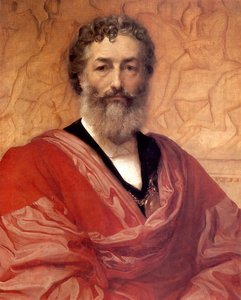
frederic leighton, 1st baron leighton
1830 - 1896 , United Kingdom
基本情報
- Artistic Movement Or Style: Academic Painting
- Artists Or Movements Influenced By This Artist:
- Pre-Raphaelites
- New Sculpture
- Artists Who Influenced This Artist:
- Eduard von Steinle
- Giovanni Costa
- Date Of Birth: December 3, 1830
- Date Of Death: January 25, 1896
- Full Name: Frederic Leighton, 1st Baron Leighton
- Nationality: British
- Notable Artworks:
- June Flaming
- After Vespers
- Cymon and Iphigenia
- Place Of Birth: Scarborough, United Kingdom
関連記事
Sir Frederic Leighton: Aestheticism, Academic Mastery & Victorian Masculinity
Explore the life & art of Sir Frederic Leighton, a master of Victorian Aestheticism. Discover his academic training, sculptural innovations, and captivating depictions of beauty. Expert insights for collectors.
Edmund Blair Leighton: Victorian Romance & Narrative Painting's Golden Age
Explore the captivating world of Edmund Blair Leighton, Victorian master of romantic narrative painting. Discover his iconic works & Pre-Raphaelite influences at ArtsDot.
Academic Realism's Finest: 10 Masterpieces for Art Lovers & Home Decor
Explore 10 defining Academic Realism masterpieces by Bouguereau, Gérôme & Cabanel. Discover the stories behind these iconic paintings and bring timeless art into your home with museum-quality reproductions from ArtsDot.com. Explore the full collection online!

The Refined Aesthetic of Victorian Illustration: A Study in Narrative & Technique
Explore the captivating world of Victorian illustration! Discover Pre-Raphaelite influences, key artists like Rossetti & Stephens, and the era's rich narrative detail. A deep dive for art enthusiasts.
ダンテ・ガブリエル・ロセッティ傑作25選:美と象徴が織りなす芸術の世界 | ArtsDot
ダンテ・ガブリエル・ロセッティの傑作25選。プレラファエライトの象徴主義、美しい女性画の世界へ。油絵やアートプリントで、リビングや寝室を彩るインテリアアートを見つけましょう。ArtsDot.comで名画コレクションを探索。

