

 プレビュー
プレビュー
 シェアする
シェアする シェアする
シェアする
 詳細を見る
詳細を見る

 ダウンロード
 似ている作品
 X線調査
X線調査 スライドショー
 統計情報
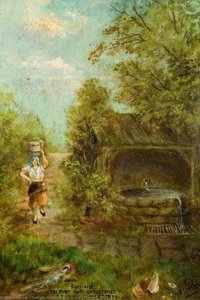
統計情報Well at Fulwell, 1879
 1930
1930 36.0 x 25.0 cm
 Sunderland Museum - Winter Gardens
 詳細を見る
詳細を見る
ジークレー/アートプリント
迅速な制作と多彩な仕上げオプションを備えた、ミュージアムクオリティのジークレーまたはキャンバスプリント。 ( 手描きの絵画を購入 デジタル画像販売へ切り替え)




































作品のオリジナル比率に合わせた、当店の規定サイズからお選びください。

特定のフレームやスペースに合わせて、ご自身でサイズを指定することも可能です。選択されたサイズが元の画像の比率と一致しない場合、作品をトリミングするか、鏡面反射または単色での塗りつぶしによって画像を拡張いたします。制作を開始する前に、ご確認用のデジタルモックアップをお送りいたします。
画面上のプレビューには、実際のトリミングや拡張は反映されませんのでご注意ください。最終的な構図を正確に確認できるのは、モックアップのみとなります。
カスタムサイズも承っておりますが、元の比率を維持するためには、あらかじめ用意されたリストからサイズを選択することをお勧めいたします。


 ガラスオプションは、110cm未満のサイズでのみご利用いただけます。

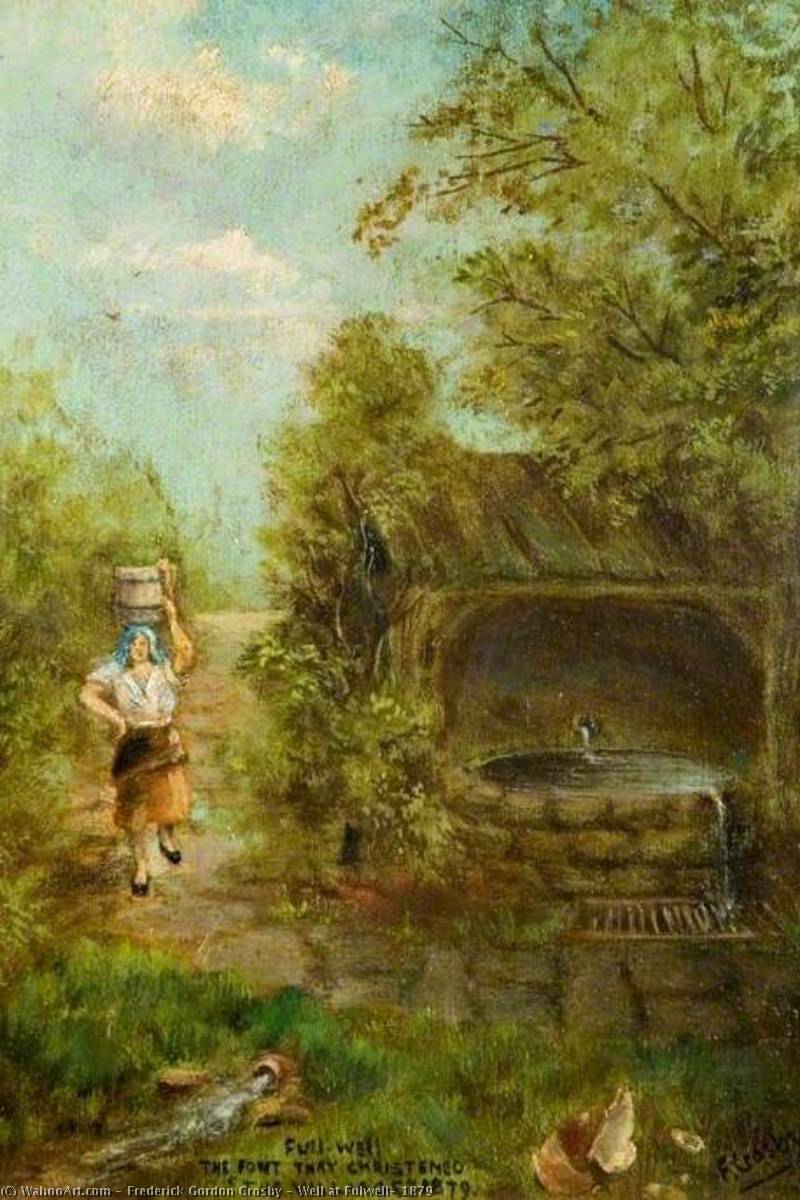
Well at Fulwell, 1879
ジークレー/アートプリント
複製画のサイズ
-


合計金額
$ 62
A Peaceful Scene
The painting depicts a woman walking down a path with a bucket on her head, set against the backdrop of a small building, possibly a shed or barn. The scene is tranquil, with several birds scattered throughout the image, adding life and movement to the painting. The woman's dress complements her role as a caretaker or worker in this rural setting, emphasizing the peaceful atmosphere of the scene.Artist's Style
Frederick Gordon Crosby's style is characterized by his attention to detail and ability to capture the beauty of everyday life. His work is reminiscent of other notable artists, such as George Fagan Bradshaw, who also explored rural themes in their paintings. For more information on Frederick Gordon Crosby's life and work, visit https://ArtsDot.com/@/Frederick-Gordon-Crosby.Similar Paintings
Other notable paintings by artists such as William Crosby and Oliver Hall can be found at the Sunderland Museum - Winter Gardens. These paintings, including HMS 'Delhi' by George Fagan Bradshaw and Ronda, Spain by Oliver Hall, showcase the diversity of artistic talent on display at the museum. To view these paintings, visit /art/list/?Filter=AQUEXQ-George-Fagan-Bradshaw-HMS-Delhi- and /art/list/?Filter=AQVG3V-Oliver-Hall-Ronda-Spain.- For handmade oil painting reproductions of Well at Fulwell, visit /art/list/?Filter=ARD86H-Frederick-Gordon-Crosby-Well-at-Fulwell-1879.
- To learn more about the Sunderland Museum - Winter Gardens, visit /art/list/?Filter=A@D3BTFK-The-Museum-Chiswick-House-And-Gardens-(United-Kingdom).
The beauty and serenity of Well at Fulwell make it a must-see for anyone interested in rural landscapes and the work of Frederick Gordon Crosby.
関連作品





アーティストの略歴
The Visionary of Velocity: The Life and Legacy of Frederick Gordon Crosby
In the golden age of mechanical discovery, when the roar of engines first began to punctuate the quietude of the countryside, there arose an artist capable of translating raw power into visual poetry. Frederick Gordon Crosby (1885–1943) was not merely an illustrator; he was a chronicler of progress. While his contemporaries sought solace in the soft light of pastoral landscapes or the dignified stillness of formal portraiture, Crosby turned his gaze toward the burgeoning world of the automobile. His work captured the very essence of early motoring—a period defined by a heady mixture of danger, glamour, and unbridled technological optimism.
Born in Norwich, Norfolk, Crosby’s path to artistic distinction was unconventional. Educated at the prestigious Christ’s Hospital School, he lacked the formal academic training that often anchored the fine artists of his era. Instead, his education was forged through a self-motivated passion for observation and a dedicated pursuit of life classes. This lack of rigid academic dogma allowed him to develop a visual language that was uniquely suited to the subject matter he loved. His early professional years as a draughtsman at the Daimler Motor Company in Coventry provided the technical foundation upon which his later brilliance would be built, instigating a lifelong fascination with the intricate mechanics of motion.
A Master of Detail and Social Commentary
Crosby’s career was inextricably linked to the legendary magazine Autocar, where he spent much of his professional life. It was within the vibrant, enthusiast-driven atmosphere of Coventry that Crosby forged creative bonds with figures such as Sammy Davis and Monty Tombs. Together, they birthed the beloved humorous series “Keeping Up Appearances,” a publication that used wit to satirize the automotive industry. Through his sketches, Crosby offered a sharp, often poignant critique of an era where the aesthetic beauty of a vehicle was frequently sacrificed at the altar of mere functionality—a tension that he felt deeply as an artist.
Beyond the humor, however, lay a profound technical mastery. Crosby possessed a rare ability to render the complex anatomy of machinery with breathtaking precision. He is credited with pioneering the exploded view technique, a method of drawing that deconstructed components to reveal the hidden logic of an engine. This skill transformed his illustrations from simple pictures into educational masterpieces, allowing readers to grasp the mechanical soul of the machines they admired. His work breathed life into the steel and rubber, making the cold surfaces of pistons and gears appear dynamic and vital.
Capturing the Spirit of an Era
The historical significance of Crosby’s oeuvre extends far beyond the boundaries of automotive enthusiasts. His paintings serve as a window into a transformative epoch in human history. Whether he was depicting the high-stakes drama of motor racing or the sweeping, perilous flight of wartime aircraft, his brush captured the adrenaline and the atmosphere of the early 20th century. His ability to convey movement—the blur of a spinning wheel, the spray of gravel, or the slipstream of a passing plane—imbued his work with a cinematic quality that remains captivating to modern eyes.
As we reflect on his contributions, several key elements of his legacy emerge:
- Technical Innovation: His pioneering use of perspective and exploded views revolutionized technical illustration.
- Cultural Documentation: He provided a visual record of the birth of the automotive industry and the evolution of aerial warfare.
- Artistic Versatility: While famed for machines, his ability to blend social satire with meticulous realism created a unique genre of "mechanical romanticism."
- Enduring Influence: His work continues to inspire collectors and historians, standing as a testament to the era when man and machine first began their legendary dance.
Frederick Gordon Crosby remains a singular figure in British art. He did not just draw cars; he captured the heartbeat of an age of invention. Through his eyes, we see the early 20th century not as a static period of history, but as a vibrant, speeding, and ever-evolving landscape of human ingenuity.
frederick gordon crosby
1885 - 1943
基本情報
- Artistic Movement Or Style: Automotive Illustration
- Artists Or Movements Influenced By This Artist: ['']
- Artists Who Influenced This Artist: ['']
- Date Of Birth: 1885
- Date Of Death: 1943
- Full Name: Frederick Gordon Crosby
- Nationality: British
- Notable Artworks:
- Well at Fulwell
- Naval Patrol Boat
- The Village Pond and West Farm
- Place Of Birth: England