

 プレビュー
プレビュー
 プリントを購入
 シェアする
シェアする シェアする
シェアする
 詳細を見る
詳細を見る

 ダウンロード
 似ている作品
 X線調査
X線調査 スライドショー
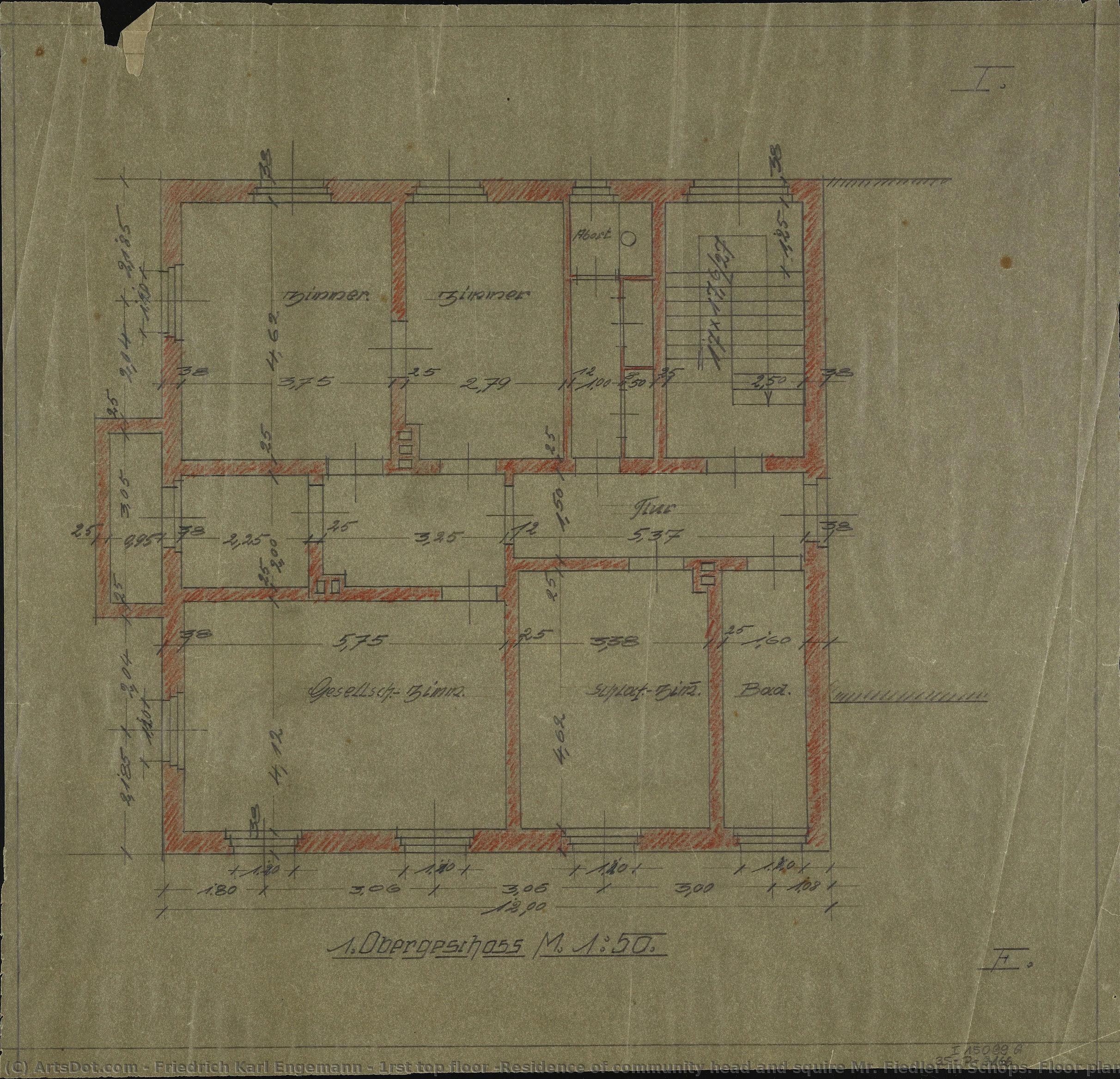
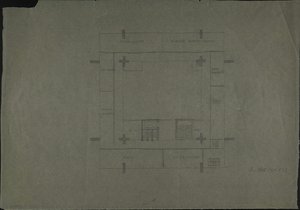
1rst top floor (Residence of community head and squire Mr. Fiedler in Schöps. Floor plan)
 Graphite Pencil
- Bauhaus Dessau
 38.0 x 39.0 cm
 バウハウス デッサウ フンドウション
 詳細を見る
詳細を見る




P118B $10

P118H $10

P118W $10

P438Z $10

P508JH $12

P508YH $12

P805H $10

P805Z $10

P919BZ $10

P919G $10

P919XJ $10

P959ZH $10

P968JZ $12

W106C $8

W218G $10

W218JH $8

W218Y $10

W307PJ $10

W316G $10

W316PJ $8

W316Y $10

W398PJ $8

W4111J $10

W500HY $15

W500JH $15

W692G $12

W849H $8

W940BG $15

W953PJ $8




作品のオリジナル比率に合わせた、当店の規定サイズからお選びください。

特定のフレームやスペースに合わせて、ご希望のサイズをご入力いただけます。選択されたサイズが元の画像の比率と異なる場合、アートワークをトリミングするか、手描きで要素を追加して絵画を拡張いたします。デジタルモックアップ を制作し、制作開始前にご確認(承認)をいただきます。
画面上のプレビューは、実際のトリミングや拡張を正確に反映しているものではありません。最終的な構図は、モックアップによってのみ正確にご確認いただけます。
カスタムサイズもご利用いただけますが、元の比率を維持するためには、あらかじめ用意されたリストからサイズを選択することをお勧めいたします。
ご注文後、ArtsDot.com チームより詳細な指示をお送りするとともに、仕上がりイメージ(モックアップ)をご提供いたします。


 ガラスオプションは、110cm未満のサイズでのみご利用いただけます。

1rst top floor (Residence of community head and squire Mr. Fiedler in Schöps. Floor plan)
複製技法
複製画のサイズ
-


合計金額
$ 263
A Blueprint of Domestic Life: Exploring Engemann's Floor Plan
To gaze upon this drawing is not merely to observe lines on paper; it is to step into the very skeleton of a bygone era. This depiction, titled "1rst top floor (Residence of community head and squire Mr. Fiedler in Schöps. Floor plan)," offers an intimate glimpse into the structured domesticity of a significant residence. The graphite pencil work lends the piece an immediate patina of age, suggesting countless hands have traced these very lines before us. It speaks to a time when architecture was not just about shelter, but about the careful orchestration of social life and familial routine within defined walls.
The Craftsmanship of Function: Technique and Detail
Friedrich Karl Engemann, known for his pivotal role in Bauhaus design, approaches this architectural study with the precision of a master draftsman. The technique employed—graphite pencil on paper—is inherently restrained yet profoundly expressive. There is an economy of line; every wall, every labeled space, serves a clear narrative purpose. Notice how the varying sizes and shapes of the rooms suggest a complex social hierarchy or a highly functional community structure. This drawing transcends mere drafting; it becomes an artifact celebrating human organization. For those interested in interior design or historical restoration, this piece offers unparalleled insight into spatial planning, allowing one to visualize the flow and purpose behind every corner.
Historical Echoes of Community Structure
The context provided by the title—a residence belonging to a community head and squire—grounds the artwork firmly within a specific social stratum. It invites us to contemplate the roles played within such an establishment. The layout itself becomes a subtle commentary on community dynamics: which rooms were for private contemplation, where did communal gathering occur, and how was status physically manifested through square footage? Engemann’s hand captures this tension between personal space and collective life. Owning a reproduction of this plan allows one to connect with the enduring human need to build order out of chaos, echoing the foundational principles that guided modern design movements.
Emotional Resonance for the Modern Collector
While seemingly purely technical, the emotional impact of this floor plan is surprisingly deep. It evokes a sense of nostalgia—a longing not just for a specific time, but for a perceived orderliness now often lost in contemporary living. For the collector or designer, it serves as a powerful muse. It whispers lessons on proportion, light ingress (even if only implied), and the beauty found in meticulous planning. This piece is a sophisticated meditation on structure itself; a quiet reminder that even the most grand of lives must be contained within thoughtful boundaries.
関連作品
アーティストの略歴
The Architect of Form: The Life and Legacy of Friedrich Karl Engemann
In the annals of modernism, certain names resonate with the structural clarity of the steel and glass they helped define. Friedrich Karl Engemann (1898–1970) was such a figure, a man whose life story serves as a bridge between the rugged tactile reality of manual craftsmanship and the ethereal, avant-garde visions of the Bauhaus movement. Born in Meuselwitz, Germany, Engemann’s journey did not begin in the lofty studios of fine art, but rather in the dust and grit of labor. His early years were defined by a profound connection to the physical world; having trained as a mason between 1912 and 1915, he possessed an innate understanding of the weight, texture, and permanence of building materials—a foundation that would later allow him to ground revolutionary design theories in structural reality.
This early immersion in trade was complemented by a rigorous academic pursuit of technical and aesthetic mastery. Through his studies at the Polytechnicum Görlitz and an apprenticeship in cabinetmaking, Engemann developed a dual perspective: the precision of the engineer and the soul of the artisan. His intellectual expansion continued at Dresden’s Applied Arts Academy, where he delved into the nuances of interior design and art criticism. This period of his life was not merely about acquiring skill, but about cultivating a vision where form and function were not opposing forces, but a singular, harmonious entity. His personal life further intertwined with the pulse of modernism when he married Alma Else Imboden, a student of the Bauhaus, creating a domestic and professional synergy that placed him at the very heart of Germany's most influential design revolution.
The Bauhaus Years and the Geometry of Modernity
When Engemann arrived in Dessau, he entered a crucible of radical thought. His association with the Bauhaus was transformative, moving from the role of a student to that of an assistant and eventually a teacher of architectural drawing, construction, and descriptive geometry. Working within the orbit of legends like Wassily Kandinsky and Paul Klee, Engemann absorbed the movement's core mission: the dissolution of the barrier between high art and industrial utility. His work during this era reflected the quintessential Bauhaus aesthetic—a pursuit of geometric precision, clarity, and an unapologetic embrace of modern technology.
Engemann’s contribution to the movement was characterized by a unique ability to translate complex architectural concepts into legible, instructional forms. While many focused on the purely abstract, Engemann remained tethered to the practicalities of construction. His drawings and designs, such as those documenting the Engemann house at Fischereiweg 13, showcase a masterful use of graphite and pencil to capture the interplay of light, space, and structural rhythm. He championed an approach where every line served a purpose, and every void was as intentional as the solid mass. This period of his career solidified his reputation as a designer who could navigate the tension between the experimental spirit of the avant-garde and the disciplined requirements of the building craftsman.
A Lasting Blueprint for Design
The trajectory of Engemann’s career was shaped by the turbulent political tides of 20th-century Germany. Following the closure of the Bauhaus in 1933, his role shifted, yet his commitment to architectural education remained steadfast. He continued to influence generations of designers through his work in various educational institutions, eventually playing a formative role in the architectural landscape of the GDR. His ability to maintain the integrity of design principles through periods of intense political transition is a testament to the enduring strength of his convictions.
Today, Friedrich Karl Engemann is remembered not merely as a participant in a movement, but as a vital architect of its educational and practical foundations. His legacy resides in:
- The Synthesis of Craft and Theory: His ability to merge the manual expertise of a mason with the intellectual rigor of an academic.
- Architectural Pedagogy: His significant contributions to teaching construction and descriptive geometry, which helped codify the language of modern design.
- Functional Elegance: A body of work that remains a benchmark for how simplicity and geometric clarity can achieve timelessness.
As we look back upon his life, Engemann stands as a reminder that the most profound innovations often arise from a deep respect for the fundamental elements of our built environment. His life was a continuous dialogue between the earth and the idea, leaving behind a blueprint that continues to inspire the pursuit of functional beauty.
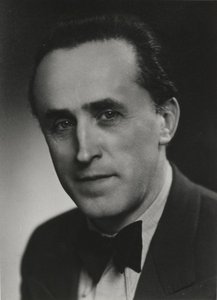
friedrich karl engemann
1898 - 1970 , Germany
基本情報
- Artistic Movement Or Style: Bauhaus
- Artists Or Movements Influenced By This Artist: ['Modern Art']
- Artists Who Influenced This Artist:
- Wassily Kandinsky
- Paul Klee
- Joost Schmidt
- Date Of Birth: May 13, 1898
- Date Of Death: January 21, 1970
- Full Name: Friedrich Karl Engemann
- Nationality: German
- Notable Artworks:
- Franz ehrlich: 2 display cases
- Franz ehrlich: Sales counter
- Franz ehrlich: Book and document repository
- Place Of Birth: Meusechwitz, Germany
関連記事

Caspar David Friedrich: Romanticism's Master of Landscape & the Sublimity of Inner Experience
Explore the profound landscapes of Caspar David Friedrich, a master of German Romanticism. Discover the symbolism, themes & enduring influence of this iconic artist. A deep dive into his life and work.
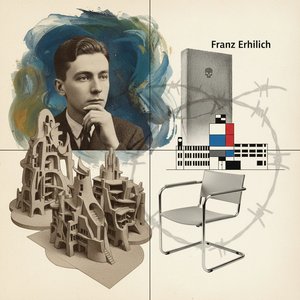
Franz Ehrlich: Bridging Expressionism, Bauhaus & the Shadows of History
Explore the life of Franz Ehrlich, a pivotal Bauhaus architect whose career spanned Expressionism, resistance during Nazi Germany, and GDR reconstruction. Discover his complex legacy & view museum-quality reproductions at ArtsDot.
German Expressionism's 10 Defining Masterpieces | Art for Your Home
Explore 10 defining German Expressionism masterpieces – from Munch's 'The Scream' to Kandinsky’s abstracts. Discover the artists, stories & bold colors behind this powerful art movement. Find museum-quality reproductions at ArtsDot.com.

Anton von Werner: Imperial Painter, Historical Witness & Shifting German Identity
Explore the life & work of Anton von Werner, Imperial Germany's leading painter. Discover his dramatic depictions of war, unification, and court life – a fascinating insight into 19th-century German history & art.
The Northern Awakening: Artistic Innovation & Cultural Transformation in the German Renaissance
Explore the artistic innovation of the German Renaissance! Discover Dürer, the Danube School & Reformation art. Learn about techniques, materials & lasting influence. Find museum-quality reproductions at ArtsDot.

