

 プレビュー
プレビュー
 シェアする
シェアする シェアする
シェアする
 詳細を見る
詳細を見る

 ダウンロード
 似ている作品
 X線調査
X線調査 スライドショー
 Stats
StatsThe boy and the cat
 Painting
- Cubism
 1992
1992- Contemporary
 64.0 x 44.0 cm
 Pinacoteca Universidad de Colima
 詳細を見る
詳細を見る
ジークレー/アートプリント
迅速な制作と多彩な仕上げオプションを備えた、ミュージアムクオリティのジークレーまたはキャンバスプリント。 ( 手描きの絵画を購入 Switch to Digital Image)




P118B $10

P118H $10

P118W $10

P438Z $10

P508JH $12

P508YH $12

P805H $10

P805Z $10

P919BZ $10

P919G $10

P919XJ $10

P959ZH $10

P968JZ $12

W106C $8

W218G $10

W218JH $8

W218Y $10

W307PJ $10

W316G $10

W316PJ $8

W316Y $10

W398PJ $8

W4111J $10

W500HY $15

W500JH $15

W692G $12

W849H $8

W940BG $15

W953PJ $8




作品のオリジナル比率に合わせた、当店の規定サイズからお選びください。

特定のフレームやスペースに合わせて、ご自身でサイズを指定することも可能です。選択されたサイズが元の画像の比率と一致しない場合、作品をトリミングするか、鏡面反射または単色での塗りつぶしによって画像を拡張いたします。制作を開始する前に、ご確認用のデジタルモックアップをお送りいたします。
画面上のプレビューには、実際のトリミングや拡張は反映されませんのでご注意ください。最終的な構図を正確に確認できるのは、モックアップのみとなります。
カスタムサイズも承っておりますが、元の比率を維持するためには、あらかじめ用意されたリストからサイズを選択することをお勧めいたします。


 ガラスオプションは、110cm未満のサイズでのみご利用いただけます。

The boy and the cat
ジークレー/アートプリント
複製画のサイズ
-


合計金額
$ 62
A Vibrant Encounter: The Soul of Mexican Modernism
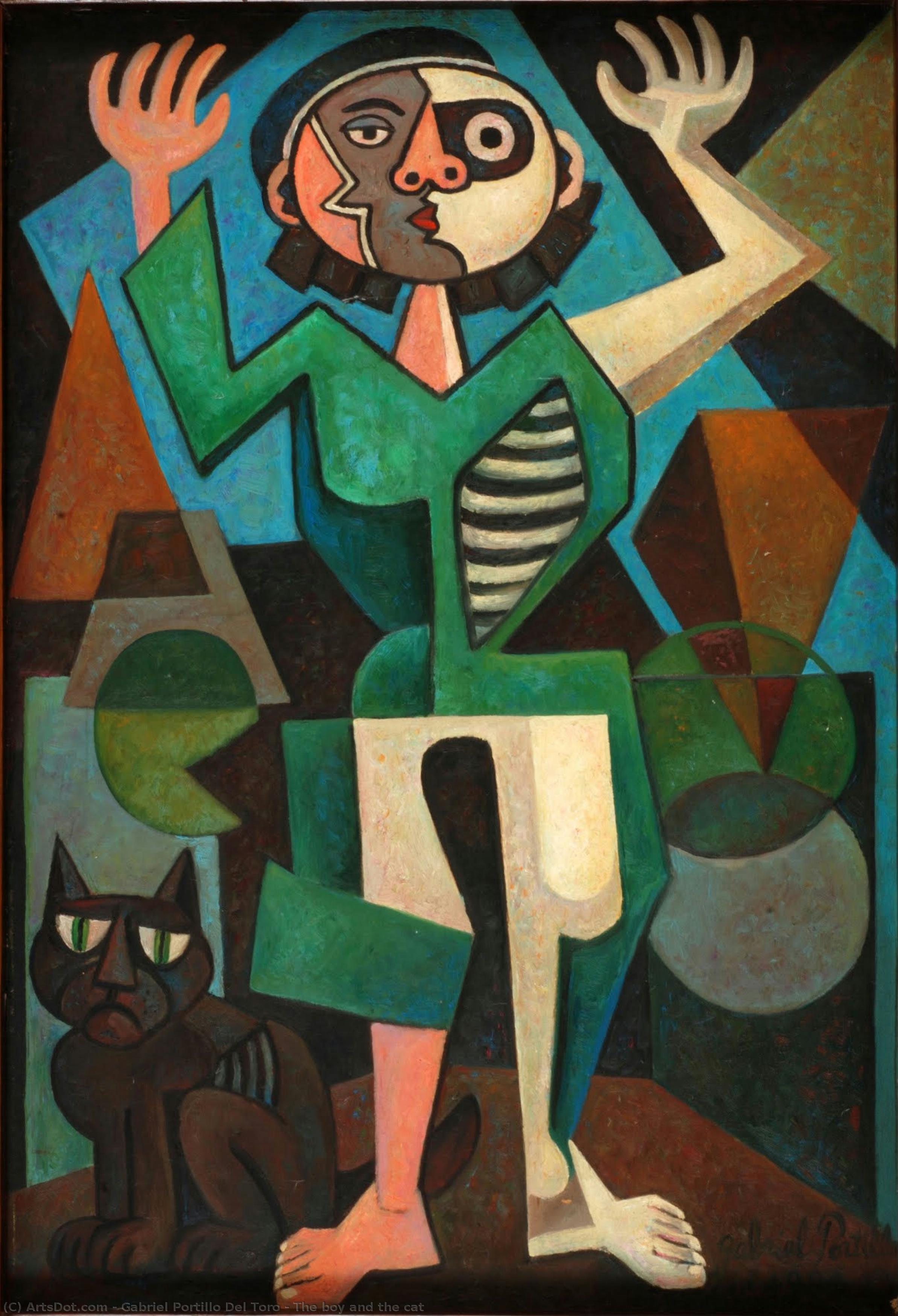
In the evocative masterpiece The Boy and the Cat, the viewer is transported into a world where color and form dance in a delicate, Cubist-inspired rhythm. Created in 1992 by the esteemed Mexican artist Gabriel Portillo del Toro, this painting serves as a profound window into the artist's unique ability to blend regional Mexican warmth with the structured complexities of modernism. The scene captures an intimate, quiet moment between a man and his feline companion, yet it transcends simple portraiture to become an exploration of presence and companionship. Through a masterful use of a vibrant palette—rich with emerald greens, deep blues, and sudden bursts of fiery orange and red—Portillo del Toro breathes life into the canvas, inviting us to linger within this colorful, dreamlike domesticity.
The composition is a sophisticated play of geometry and emotion. The central figure, a man with a weathered beard and mustache, is depicted in a moment of deep introspection, his face cradled in his hands as if lost in thought or perhaps sharing a silent communion with the black cat at his side. This sense of stillness is punctuated by the deliberate placement of everyday objects: two bowls that anchor the lower portion of the frame and a solitary cup to the left. These elements are not merely props but are integrated into the painting's structural logic, echoing the artist's training under the giants of Mexican muralism. The way the green of his attire interacts with the surrounding hues creates a visual texture that is both tactile and ethereal, making the artwork feel as though it is vibrating with life.
For the discerning collector or interior designer, The Boy and the Cat offers much more than mere decoration; it provides a focal point of intellectual and emotional depth. The painting’s stylistic lineage—rooted in the legacy of Colima’s cultural heritage and the bold strokes of the Mexican school—makes it a significant piece for those who appreciate art that tells a story of identity and tradition. Its balanced composition and striking color contrasts allow it to integrate seamlessly into diverse high-end interiors, whether placed in a contemporary gallery setting or a classic study. To possess a reproduction of this work is to bring a fragment of Mexico's rich artistic soul into one's personal space, offering a perennial source of inspiration through its celebration of life, color, and the quiet beauty found in the simplest of connections.
関連作品
アーティストの略歴
The Vibrant Legacy of Gabriel Portillo del Toro
In the grand tapestry of Mexican modernism, few artists managed to weave together the structural rigor of European avant-garde with the soulful warmth of regional tradition as masterfully as Gabriel Portly Del Toro. Born in 1927 in the culturally rich landscape of Colima, Mexico, his life and work served as a bridge between the monumental social realism of the muralist movement and the fragmented, rhythmic beauty of Cubism. His artistic journey was not merely a pursuit of aesthetic perfection but a profound exploration of identity, where the geometric precision of modern art met the sun-drenched, folkloric essence of his homeland.
Portillo del Toro’s early years were deeply rooted in the textures of Colima, an environment that nurtured his initial appreciation for indigenous art forms and local folklore. This foundational connection to Mexican heritage would later become the heartbeat of his compositions. Seeking to refine this raw, intuitive talent, he pursued formal studies at the Universidad Nacional Autónoma de México (UNAM). It was within these hallowed halls that he encountered the towering shadows of legends like Diego Rivera and José Clemente Orozco. While he absorbed their commitment to art as a vehicle for national consciousness, Portillo del Toro chose a different path—one that moved away from strictly didactic social realism toward a more lyrical, abstract language of form and color.
A Symphony of Cubist Geometry and Coastal Light
As his style matured, the influence of Cubism became the defining architectural element of his oeuvre. Inspired by the revolutionary techniques of Picasso and Braque, he embraced the fragmentation of perspective, allowing him to depict multiple viewpoints within a single plane. Yet, unlike the often austere or intellectualized Cubism of Europe, Portillo del Toro infused his geometric compositions with a vibrant, pulsating energy. He utilized bold, deliberate strokes to define shapes, yet his brushwork remained fluid, breathing life into every canvas so that even the most structured forms seemed to vibrate with movement.
His subject matter often returned to the serene and the pastoral, finding extraordinary beauty in the everyday rhythms of Mexican life. His paintings frequently act as windows into sun-soaked moments, where the boundaries between humanity and nature dissolve:
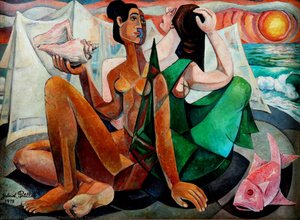
- Women on the Beach (1978): A masterpiece of tranquility, where figures are anchored by a profound stillness amidst a lively environment of birds and distant maritime horizons.
- The Circus (1973): A dynamic display of Cubist style, capturing the swirling motion of dancers and horses through interlocking circles and shapes.
- Bather with Horse (1986): A breathtaking exploration of vitality, where the coastal landscape becomes a rhythmic dance of light and shadow.
- The Boy and the Cat (1992): An intimate encounter that showcases his ability to blend regional warmth with the structured complexities of modernism.
Historical Significance and Artistic Endurance
Beyond the individual beauty of his canvases, Gabriel Portillo del Toro’s significance lies in his role as a transitional figure in Mexican art history. He proved that the revolutionary spirit of the muralists could be translated into a more personal, decorative, and abstract vocabulary without losing its cultural soul. His monumental murals, which adorned public spaces across Mexico, solidified his reputation as an artist capable of commanding large-scale narratives, while his smaller paintings offered a more intimate dialogue with the viewer.
Through his death in 2013, a significant chapter of Mexican modernism closed, yet his legacy remains vibrant. His work continues to resonate with collectors and scholars because it refuses to be categorized solely as either traditional or abstract. Instead, it exists in that magical, liminal space where the geometric precision of the modern age meets the eternal, sun-drenched spirit of Mexico. To look upon a Portillo del Toro painting is to witness a lasting dialogue between form and feeling, a legacy of color that continues to illuminate the history of Latin American art.
gabriel portillo del toro
1927 - 2013 , Mexico
基本情報
- Artistic Movement Or Style: Cubism
- Date Of Death: 2013
- Full Name: Gabriel Portillo del Toro
- Nationality: Mexican
- Notable Artworks:
- Girls
- Bathers
- Place Of Birth: Mexico
関連記事
Verdant Visions: Exploring the Symbolism & Aesthetic Impact of Green in Art History
Explore the rich history & symbolism of green in art! Discover iconic paintings, techniques, and how to bring verdant harmony into your home with ArtsDot's expert guide.
Seafoam & Masterpieces: 10 Paintings Dominated by Medium Sea Green | ArtsDot
Dive into serenity with 10 famous paintings bathed in calming medium sea green. Explore Impressionist masterpieces by Monet, Degas & Renoir. Find museum-quality art reproductions and elevate your home decor at ArtsDot.com.

Dark Masterpieces: 10 Iconic Paintings Dominated by Black Tones |
Explore 10 iconic paintings dominated by black tones, from Rembrandt’s chiaroscuro to Goya's dark expressions. Discover the stories behind these masterpieces & find museum-quality art reproductions for your home at .

Emerald Visions: Top 10 Paintings Dominated by Cadmium Green |
Explore 10 iconic paintings where cadmium green reigns supreme! From Monet to Van Gogh, discover the stories behind these masterpieces & the power of color. Find museum-quality art reproductions and elevate your home decor on .
Chrome Green Masterpieces: 10 Famous Paintings & Their Alluring Hues |
Explore 10 famous paintings where 'Chrome Green' reigns supreme! Discover Monet, Manet & Van Gogh’s masterpieces. Learn the stories behind these iconic artworks and find museum-quality art reproductions for your home at .