

 プレビュー
プレビュー
 シェアする
シェアする シェアする
シェアする
 詳細を見る
詳細を見る

 ダウンロード
 似ている作品
 X線調査
X線調査 スライドショー
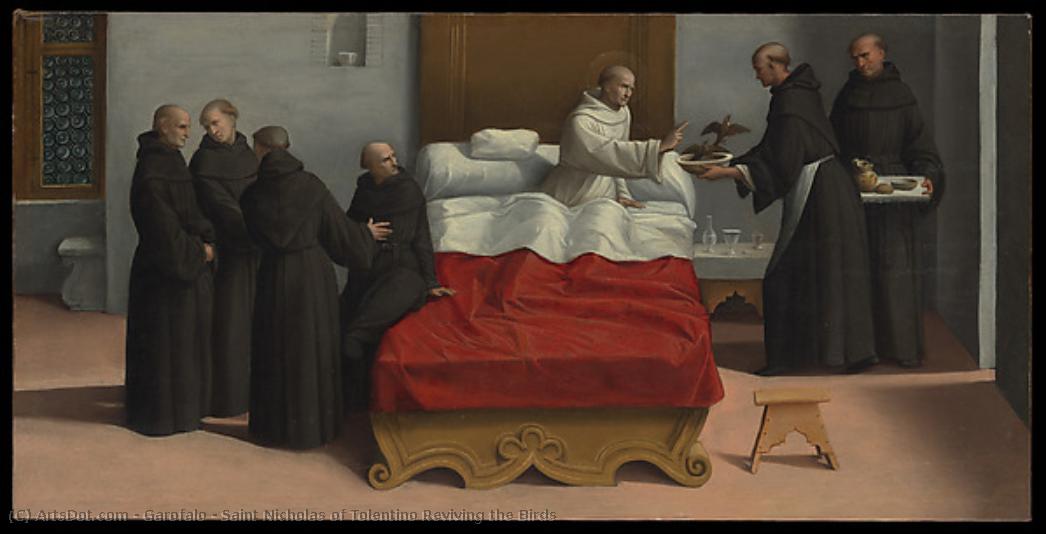
Saint Nicholas of Tolentino Reviving the Birds
 Oil
Oil- WallArt
- Late Renaissance Ferrara
 1530
1530- Renaissance
 33.0 x 66.0 cm
 メトロポリタン美術館
 詳細を見る
詳細を見る
ジークレー/アートプリント
迅速な制作と多彩な仕上げオプションを備えた、ミュージアムクオリティのジークレーまたはキャンバスプリント。 ( 手描きの絵画を購入 画像を購入)




P118B $10

P118H $10

P118W $10

P438Z $10

P508JH $12

P508YH $12

P805H $10

P805Z $10

P919BZ $10

P919G $10

P919XJ $10

P959ZH $10

P968JZ $12

W106C $8

W218G $10

W218JH $8

W218Y $10

W307PJ $10

W316G $10

W316PJ $8

W316Y $10

W398PJ $8

W4111J $10

W500HY $15

W500JH $15

W692G $12

W849H $8

W940BG $15

W953PJ $8




作品のオリジナル比率に合わせた、当店の規定サイズからお選びください。

特定のフレームやスペースに合わせて、ご自身でサイズを指定することも可能です。選択されたサイズが元の画像の比率と一致しない場合、作品をトリミングするか、鏡面反射または単色での塗りつぶしによって画像を拡張いたします。制作を開始する前に、ご確認用のデジタルモックアップをお送りいたします。
画面上のプレビューには、実際のトリミングや拡張は反映されませんのでご注意ください。最終的な構図を正確に確認できるのは、モックアップのみとなります。
カスタムサイズも承っておりますが、元の比率を維持するためには、あらかじめ用意されたリストからサイズを選択することをお勧めいたします。


 ガラスオプションは、110cm未満のサイズでのみご利用いただけます。

Saint Nicholas of Tolentino Reviving the Birds
ジークレー/アートプリント
複製画のサイズ
-


合計金額
$ 62
A Miraculous Vision in Renaissance Color
In the delicate interplay of light and shadow within Benvenuto Garofalo’s Saint Nicholas of Tolentino Reviving the Birds, we encounter a profound moment of divine intervention captured with the exquisite precision of the Ferrarese School. Painted around 1530, this work serves as a window into the spiritual fervor of the sixteenth century, specifically focusing on the miraculous life of the Augustinian saint. The scene is not merely a depiction of a miracle but a masterclass in narrative composition, where the boundaries between the earthly and the divine become beautifully blurred. As Garofalo guides our eyes through the room, we are drawn into a sacred space where the simple act of a gesture—the sign of the cross—results in the breathtaking resurrection of life.
The composition is anchored by the striking presence of Saint Nicholas, whose calm and pious demeanor contrasts with the surrounding movement of the monks and nuns. The artist utilizes a rich, warm palette to breathe life into the interior, where a large red bed draped in white linens dominates the visual field, acting as a stage for this holy event. Garofali’s technique is particularly noteworthy for its ability to render textures—the softness of the fabric, the delicate feathers of the birds, and the solemn expressions of the gathered faithful—with a clarity that invites close inspection. This meticulous attention to detail ensures that every element, from the humble bowl placed upon the bed to the quiet shadows in the corners of the room, contributes to an atmosphere of deep devotion and hushed reverence.
Symbolism and the Art of Devotion
Beyond its aesthetic splendor, the painting is steeped in profound religious symbolism that would have been immediately legible to a Renaissance audience. The revival of the birds serves as a powerful metaphor for the triumph of faith over death and the restorative power of grace. As the saint refuses the cooked partridges due to his vegetarian devotion, the subsequent animation of the creatures symbolizes a harmony between nature and divine will. This theme of spiritual renewal is echoed in the surrounding figures; the kneeling monks and standing nuns represent the communal aspect of faith, illustrating how a single moment of sanctity can uplift an entire community.
For the discerning collector or interior designer, this piece offers more than just historical significance; it provides a focal point of profound emotional resonance. The painting’s ability to evoke a sense of peace and wonder makes it an extraordinary addition to any curated space. Whether placed in a room designed for contemplation or used as a sophisticated accent in a classical setting, the work brings with it a legacy of Renaissance mastery. A high-quality reproduction of this masterpiece allows the timeless beauty of Garofalo’s vision to inhabit modern environments, offering a touch of historical elegance and a constant reminder of the enduring power of the miraculous.
関連作品
アーティストの略歴
Benvenuto Garofalo: A Master of Ferrara’s Late Renaissance
Benvenuto Garofalo, born in Canaro near Ferrara in 1481 and tragically dying in 1559, stands as a pivotal figure within the School of Ferrara – a vibrant artistic movement that flourished during the late Italian Renaissance. More than simply a painter, Garofalo was a meticulous craftsman, a skilled storyteller, and a keen observer of human emotion, whose works offer a captivating glimpse into the refined tastes and complex sensibilities of 16th-century Italy. His career began as an apprentice within the court of the Duke d’Este, quickly establishing him amongst a circle of artists known for their opulent commissions and elaborate conceits. While his early pieces are often described as “idyllic,” reflecting the luxurious setting of Ferrara, they demonstrate a sophisticated understanding of perspective and color that would evolve dramatically over time.
Garofalo’s nickname, "Il Garofalo," likely derives from his habit of signing some works with a depiction of a carnation (garofano in Italian). This seemingly small detail speaks volumes about the artist's personality – a touch of personal flair within a highly structured artistic environment. His early career was marked by collaborations, notably with Dosso Dossi, and he benefited greatly from the tutelage of Boccaccino, who introduced him to Venetian painting techniques, influencing his later stylistic choices. The period spent in Rome between 1509 and 1512 proved particularly transformative, exposing Garofalo to the influence of Giulio Romano’s classical style – a shift that would profoundly impact his approach to composition and subject matter.
The Delizia di Belriguardo and Beyond
Returning to Ferrara after Rome, Garofalo found himself deeply involved in decorating several palaces for Duke Alfonso I. The “Delizia di Belriguardo,” a lavishly decorated room within the Palazzo del Belvedere, stands as one of his most celebrated achievements. This project showcased his mastery of fresco painting and his ability to seamlessly integrate classical motifs with the prevailing Mannerist style. Alongside Dosso Dossi, Garofalo created a series of scenes depicting mythological subjects, demonstrating a remarkable command of detail and a deep appreciation for the beauty of the human form. The Duke’s patronage provided him with consistent work, allowing him to hone his skills and explore new artistic avenues.
His output extended beyond palace walls; Garofalo painted extensively in oil and fresco, producing works such as “The Massacre of the Innocents” (1519) at the church of S. Francesco and the powerfully evocative "Betrayal of Christ" (1524). Notably, he employed clay models for study – a testament to his dedication to anatomical accuracy and compositional planning. The “Massacre of the Innocents,” in particular, reveals Garofalo’s meticulous approach; he created detailed clay figures to analyze perspective, drapery, and the emotional impact of each scene.
A Mannerist Style Shaped by Influences
Garofalo's style is often characterized as a synthesis of various influences. The Lombard influence is evident in his use of rich color palettes and dynamic compositions. Roman art provided him with a foundation in classical mythology and portraiture, while Venetian painting instilled within him an appreciation for atmospheric perspective and the subtle nuances of light and shadow. His work reflects this complex interplay of styles, creating a unique visual language that is both elegant and emotionally resonant.
The years spent in Rome were particularly formative, exposing Garofalo to the innovations of Raphael and Giulio Romano. He absorbed their emphasis on illusionistic space, dramatic lighting, and intricate detail, incorporating these elements into his own work. His later paintings demonstrate a growing interest in Mannerist conventions – elongated figures, distorted perspectives, and exaggerated gestures – reflecting a deliberate departure from the more balanced proportions of High Renaissance art.
Legacy and Tragic End
Garofalo continued to paint until 1550, when blindness forced him to seek work in monasteries. He dedicated his remaining years to creating devotional paintings, driven by a profound sense of faith. He married at the age of forty-eight and died in Ferrara on September 6th (or 16th) 1559, leaving behind two children. His life was tragically cut short, but his artistic legacy endures through his masterful depictions of religious subjects, his innovative use of color and composition, and his profound understanding of the human condition.
Garofalo’s story is one of artistic brilliance tempered by personal hardship. He remains a significant figure in the history of Italian painting, representing the culmination of the School of Ferrara's distinctive style and embodying the complex aesthetic sensibilities of the late Renaissance.

garofalo
1481 - 1559
基本情報
- Artistic Movement Or Style: Late Renaissance & Mannerism
- Artists Or Movements Influenced By This Artist:
- Ferrara School
- Venetian Colouring
- Artists Who Influenced This Artist:
- Dosso Dossi
- Giulio Romano
- Date Of Birth: 1481
- Date Of Death: 1559
- Full Name: Benvenuto Garofalo
- Nationality: Italian
- Notable Artworks:
- Massacre of the Innocents
- Betrayal of Christ
- Place Of Birth: Canaro, Ferrara
関連記事
Feathered Visions: A Historical & Artistic Exploration of Birds in Painting
Explore the rich history of birds in painting! Discover symbolism, artistic movements & master artists like Audubon. High-quality reproductions available at ArtsDot.
Discover the Divine: Inspiring Saint Anthony Artworks to Elevate Your Home Decor
Transform your home with the profound beauty of Saint Anthony artworks. Explore exquisite Baroque reproductions by Murillo and Zurbarán, hand-painted on 100% cotton canvas to bring divine serenity and timeless elegance to your interior design.
Mario Sironi: A Poetic of Modern Italian Identity Through Symbolism & Social Commentary
Explore the profound works of Mario Sironi, a key figure in Italian Modernism. Discover his evolution from Futurism to Metaphysical painting and his powerful social commentary. Learn about his legacy at ArtsDot.
Giovanni Fattori: Realism, Identity & the Tuscan Landscape – A Macchiaioli Master
Explore the life & art of Giovanni Fattori, a leading figure of the Macchiaioli movement. Discover his revolutionary realism, captivating Tuscan landscapes, and lasting impact on Italian painting. Learn more at ArtsDot.
Carlo Carrà: Futurist Visions & Metaphysical Transformations in Early 20th-Century Italian Painting
Explore the artistic journey of Carlo Carrà, a pivotal figure in Italian Futurism & Metaphysical painting. Discover his dynamic compositions, collaborations with de Chirico, and lasting influence on modern art history.

