

 プレビュー
プレビュー
 シェアする
シェアする シェアする
シェアする
 詳細を見る
詳細を見る

 ダウンロード
 似ている作品
 X線調査
X線調査 スライドショー
 Stats
StatsDucks
 1862
1862 29.0 x 39.0 cm
 The Stirling Smith Art Gallery - Museum
 詳細を見る
詳細を見る
ジークレー/アートプリント
迅速な制作と多彩な仕上げオプションを備えた、ミュージアムクオリティのジークレーまたはキャンバスプリント。 ( 手描きの絵画を購入 Switch to Digital Image)




































作品のオリジナル比率に合わせた、当店の規定サイズからお選びください。

特定のフレームやスペースに合わせて、ご自身でサイズを指定することも可能です。選択されたサイズが元の画像の比率と一致しない場合、作品をトリミングするか、鏡面反射または単色での塗りつぶしによって画像を拡張いたします。制作を開始する前に、ご確認用のデジタルモックアップをお送りいたします。
画面上のプレビューには、実際のトリミングや拡張は反映されませんのでご注意ください。最終的な構図を正確に確認できるのは、モックアップのみとなります。
カスタムサイズも承っておりますが、元の比率を維持するためには、あらかじめ用意されたリストからサイズを選択することをお勧めいたします。


 ガラスオプションは、110cm未満のサイズでのみご利用いただけます。

Ducks
ジークレー/アートプリント
複製画のサイズ
-


合計金額
$ 62
A Peaceful Scene
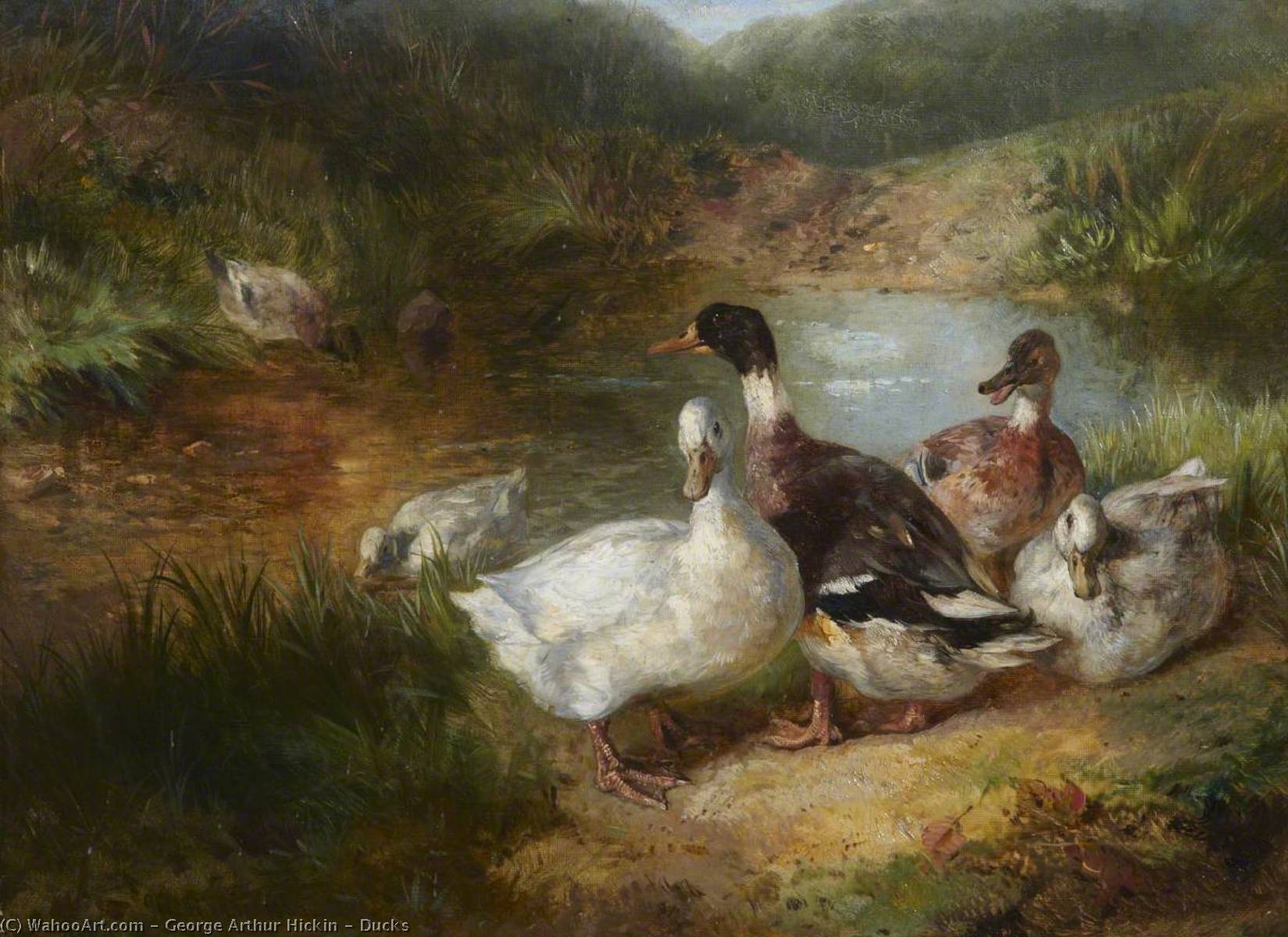
The painting depicts a tranquil scene of ducks gathered around a small pond or stream, surrounded by lush greenery and trees. The ducks appear to be enjoying their time together, engaging in social activities or simply resting near the water. The overall atmosphere of the image conveys a sense of harmony and balance between the birds and their surroundings.Artist's Style
George Arthur Hickin's style is characterized by his attention to detail and ability to capture the subtleties of light and color. His use of oil on canvas allows for a depth and richness that brings the scene to life. The artist's other works, such as Fowls in the Stubble, also showcase his talent for capturing the beauty of nature.- View more of George Arthur Hickin's work on ArtsDot.com
- Learn about other artists, such as George Paul Chalmers and his painting A Brittany Chorister, on ArtsDot.com
- Discover more about the The Stirling Smith Art Gallery - Museum and its collection on ArtsDot.com
The painting Ducks by George Arthur Hickin is a beautiful example of 19th-century art, showcasing the artist's talent for capturing the serene beauty of nature. With its peaceful scene and stunning use of color and light, this piece is sure to delight art lovers and nature enthusiasts alike.
関連作品










アーティストの略歴
The Soul of the English Countryside: The Life and Art of George Arthur Hickin
In the heart of the Victorian era, a period defined by rapid industrial expansion and the soot-stained growth of urban centers, there existed a profound longing for the untouched serenity of the natural world. It was within this cultural tension that George Arthur Hickin emerged as a vital chronicler of the British landscape. Born around 1830 in Wolverhampton, Staffordshire, Hickin’s early life was far removed from the prestigious ateliers of London. Before he ever picked up a brush to capture the flight of a bird or the stillness of a meadow, he served an apprenticeship as a printer. This early immersion in the precision of typography and the mechanics of reproduction likely instilled in him a foundational respect for detail and clarity—traits that would later become the hallmarks of his painterly style.
Though Hickin lacked the formal academic pedigree of his contemporaries, never attending the renowned Slade School of Fine Art, his talent possessed an undeniable, self-taught magnetism. He did not merely observe nature; he sought to translate its very essence onto canvas. His artistic vision was deeply anchored in the traditions of Realism, yet it was infused with a romantic sensibility inherited from the masters who preceded him. One can trace the lineage of his technique directly to the atmospheric brilliance of J.M.W. Turner and the grounded, pastoral honesty of John Constable. From Turner, Hickin learned to manipulate light and color to evoke the shifting moods of a stormy sky; from Constable, he adopted a devotion to the authentic character of the English countryside, ensuring that every leaf and feather felt rooted in reality.
A Mastery of Motion and Wildlife
While his landscapes provided the stage, it was Hickin’s profound intimacy with wildlife that secured his enduring legacy. He possessed a rare, almost scientific ability to document the species inhabiting the lush terrains of Worcestershire and Staffordshire. His canvases are far more than mere biological records; they are vibrant, breathing moments frozen in time. In works such as "A Pair of Lapwings," exhibited at the prestigious Royal Academy in 1864, the viewer is thrust into a moment of high drama, where the birds are captured mid-flight against an unpredictable, tempestuous sky. This ability to convey movement and immediacy—the frantic beat of a wing or the sudden descent of a predator—demonstrates a technical brilliance that resonated deeply with Victorian audiences.
Beyond the kinetic energy of flight, Hickin also mastered the art of stillness. His depictions of larger fauna and pastoral life offered a sense of profound tranquility. In "Landscape and Cattle," painted in 1847, he presents a serene vision of cows grazing near a quiet water source, a scene that celebrates the harmony between animals and their environment. Even his more monumental compositions, such as "The Rookery," showcase a sophisticated command of tonal gradation and complex arrangement, allowing him to portray the sheer grandeur of a rook colony with remarkable anatomical and environmental accuracy.
Legacy and Historical Significance
As the nineteenth century drew to a close, Hickin’s work stood as a testament to a vanishing way of life. His paintings served as a visual sanctuary for an era increasingly preoccupied with the machine. By focusing on the delicate textures of plumage and the soft light of rural afternoons, he preserved the dignity of the English pastoral tradition. His passing in 1916 in Stoke Newington marked the end of a prolific career that bridged the gap between the ruggedness of early Romanticism and the meticulous observation of late Victorian naturalism.
Today, the significance of George Arthur Hickin lies in his role as an artist-observer. His contributions to the art world can be summarized through several key achievements:
- Technical Versatility: The ability to transition seamlessly between the dramatic, atmospheric effects of sky and storm and the quiet, detailed study of small woodland creatures.
- Documentary Value: Providing a rich, visual record of the flora and fauna of the English Midlands during a period of significant ecological change.
- Cultural Resonance: Capturing the Victorian zeitgeist—a period marked by a deep-seated nostalgia for the pastoral and an intense fascination with the natural sciences.
Through his dedicated brushwork, Hickin ensured that the fleeting beauty of a bird in flight or the quiet majesty of a mountain scene would remain eternally preserved, inviting every generation to rediscover the timeless splendor of the natural world.
基本情報
- Artistic Movement Or Style: Realism
- Date Of Birth: Living
- Full Name: George Arthur Hickin
- Nationality: British
- Notable Artworks: ['On the Conway']
- Place Of Birth: Wolverhampton