

 プレビュー
プレビュー
 プリントを購入
 シェアする
シェアする シェアする
シェアする
 詳細を見る
詳細を見る

 ダウンロード
 似ている作品
 X線調査
X線調査 スライドショー
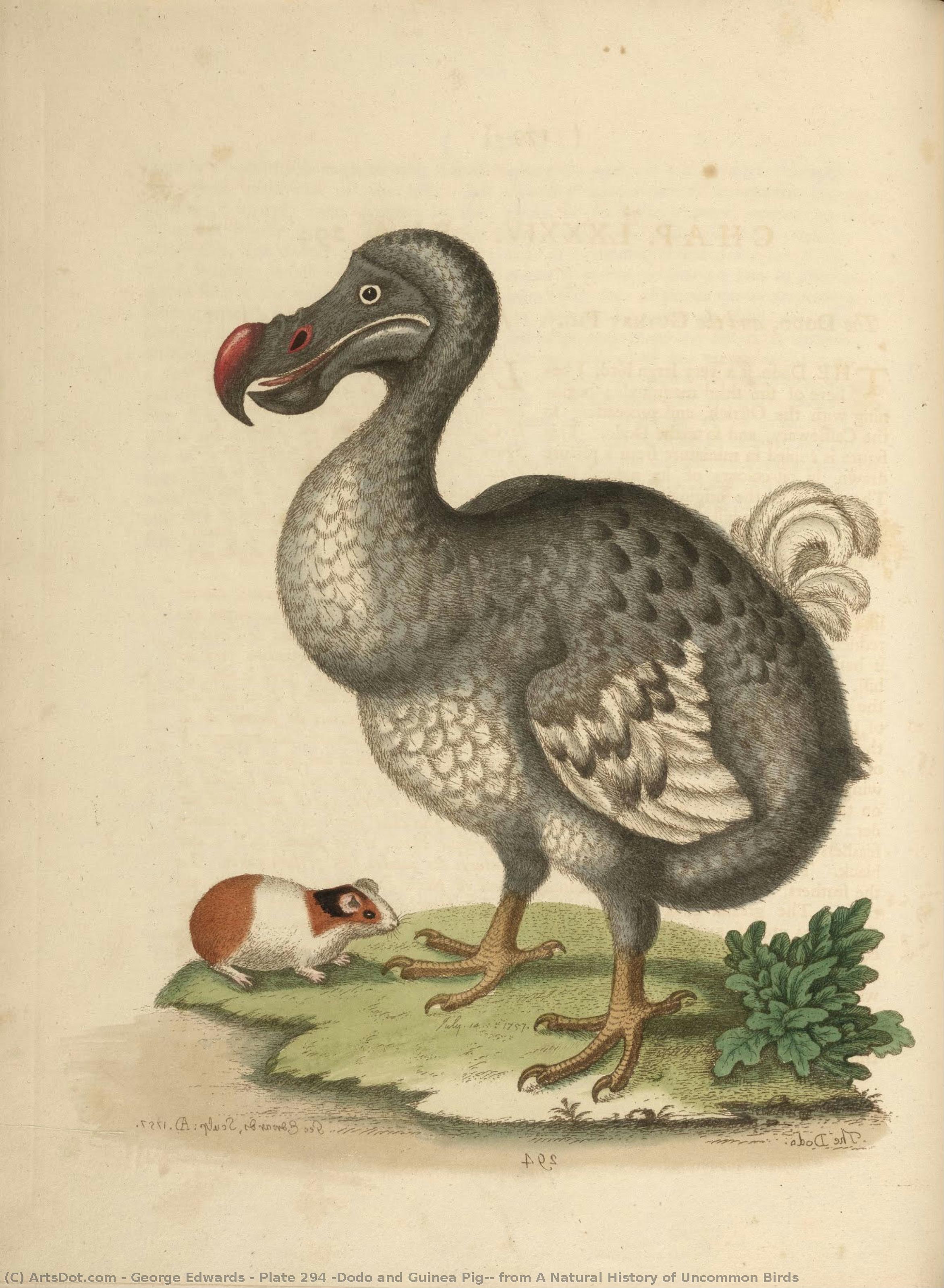
Plate 294 (Dodo and Guinea Pig), from A Natural History of Uncommon Birds


 詳細を見る
詳細を見る
オンラインプレビューをはるかに凌ぐ、高解像度で鮮明なデジタル画像をご購入いただけます。
各ファイルは、社内の専門家が高度なツールと熟練した手作業によるレタッチを用いて、細心の注意を払って準備されています。すべての画像において、卓越した鮮明度、正確な色彩再現性、そして繊細なディテールを保証いたします。
最終ファイルは、プロフェッショナルな編集・印刷環境ですぐにご利用いただけるよう最適化された状態で、72時間以内にメールにてお届けいたします。これは、一流のデザインスタジオ、出版社、ギャラリーから信頼されているものと同等の品質です。
デジタル画像のご注文に付随する特典
高品質なデジタル画像配信を、確かな品質で。
ArtsDot.com を選ぶことは、単に画像を手に入れることではありません。それは、プロの手によって精密に仕上げられ、満足保証が付いた高品質なデジタルアートワークを受け取ることを意味します。ご注文いただいた際に自動的に付随する内容は、以下の通りです:

メールですぐにお届け
ご注文から72時間以内に、高解像度のデジタル画像ファイルがメールでお手元に届きます。すぐにそのままご利用いただけます。

AI技術で最適化されたデジタルファイル
お客様の作品は、高度なAIツールと専門家による手作業の編集を組み合わせてプロフェッショナルに最適化されており、細部のディテール、鮮明さ、そして正確な色再現性を最大限に引き出しています。

一生涯無料の再送サービス
ファイルを誤って削除したり、紛失してしまったりしましたか?ご安心ください。いつでも無料で再送いたします。

輸入手数料は一切かかりません
関税や手数料、配送料を気にすることなく、お気に入りのアートワークをすぐにお楽しみいただけます。デジタルダウンロードは常に免税です。

色彩再現の保証
プロ仕様のツールとカラーマネジメント技術を用いることで、デジタル画像が元の色を最大限に忠実に再現することを保証いたします。

60日間満足保証
ご購入いただいたデジタル画像にご満足いただけない場合は、60日以内であれば、修正または100%の返金(理由を問う必要はありません)をさせていただきます。

100% 返金保証
ご満足いただけない場合は、デジタルファイルを受け取ってから60日以内であれば、理由を問わず全額返金いたします。

まとめ買い割引
3枚購入で10%OFF - 5枚購入で15%OFF - 10枚以上購入で20%OFF。クリエイティブなプロジェクト、ギャラリー、エージェンシーに最適です。
A Window into a Lost World
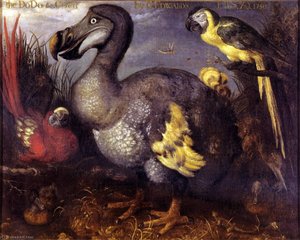
In the quiet, meticulous strokes of George Edwards’ 1764 masterpiece, Plate 294, we are invited to witness a moment frozen in time—a window into an era when the boundaries between scientific discovery and artistic wonder were beautifully blurred. The illustration presents a poignant encounter between two creatures: the iconic, flightless Dodo and a small, curious guinea pig, set against a soft tapestry of verdant foliage. There is an immediate, profound stillness to the composition, a sense of observational reverence that captures the viewer in a state of quiet contemplation. As we gaze upon the heavy, rounded form of the Dodo, we are not merely looking at a biological specimen, but at a ghost from the past, rendered with such lifelike precision that its presence feels almost tangible within the room.
The artistry of Edwards lies in his ability to marry the rigid requirements of scientific accuracy with a soulful, painterly grace. Utilizing the delicate technique of hand-colored engraving, the artist employs intricate hatching and cross-hatching to sculpt the bird’s plumage, giving weight to its thick feathers and volume to its unmistakable beak. The application of soft watercolor washes provides a gentle luminosity, creating a diffused light that suggests an intimate, indoor study. For the discerning collector or interior designer, this piece offers a sophisticated texture; the organic shapes and fine linework provide a rhythmic complexity that complements both classical and contemporary decor, acting as a focal point that commands attention through subtlety rather than spectacle.
The Elegance of Natural History
Beyond its aesthetic charm, Plate 294 carries a heavy symbolic weight that resonates deeply with the modern consciousness. The Dodo, an emblem of extinction, serves as a haunting memento mori—a reminder of the fragility of life and the irreversible impact of human presence on our planet's biodiversity. This layer of melancholy is balanced by the charming, grounded presence of the guinea pig, creating a narrative tension between the lost wonders of the wild and the familiar companions of our domestic lives. It is this emotional duality—the celebration of life alongside the mourning of what has been lost—that gives the work its enduring power.
To possess a reproduction of this work is to bring a piece of Enlightenment history into one's personal sanctuary. It is an invitation to slow down, to observe the minute details of the natural world, and to appreciate the legacy of George Edwards, the father of British ornithology. Whether placed in a sunlit library or a curated gallery wall, this illustration serves as more than mere decoration; it is a conversation piece that bridges the gap between the scientific intellect and the artistic heart, offering a timeless elegance that transcends the centuries.
関連作品
作家の略歴
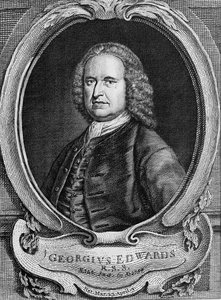
George Edwards (1694-1773): The Father of British Ornithology
The name George Edwards might not immediately conjure images of grand artistic movements or revolutionary techniques, yet his legacy is profoundly significant within the history of both art and science. Born in Stratford, Essex, in 1694 – a small village then on the fringes of London – Edwards’ life was one of relentless curiosity, meticulous observation, and an unwavering dedication to documenting the natural world. He wasn't merely an artist; he was a naturalist, an ornithologist, and a pioneer who fundamentally reshaped how Europeans understood and represented birds.
Edwards’ early years were marked by a pragmatic apprenticeship in London’s merchant trade, a path deemed suitable for his social standing. However, the burgeoning world of books and natural history ignited within him a passion that quickly eclipsed any ambition for mercantile success. He devoured texts on botany, zoology, and exploration, fueled by an insatiable desire to understand the intricacies of the animal kingdom. This intellectual awakening led him to embark on extensive travels throughout Europe – Holland, France, and Scandinavia – where he honed his artistic skills while immersing himself in the study of diverse species. Crucially, Edwards’s artistic training wasn't confined to formal instruction; it was deeply intertwined with his scientific pursuits, demanding a level of accuracy and detail previously unseen in depictions of animals.
The Rise of the Ornithological Illustrator
Edwards’ career truly took flight when he secured a position as beadle – essentially an administrator and librarian – to the Royal College of Physicians in 1733. This role afforded him invaluable access to the college's extensive library, providing him with the resources and time necessary to pursue his artistic and scientific endeavors. It was during this period that he began publishing his monumental *Natural History of Uncommon Birds*, a seven-volume work that would cement his place in ornithological history. These volumes weren’t simply collections of illustrations; they were meticulously researched accounts, incorporating detailed descriptions of each species' habitat, behavior, and plumage – information painstakingly gathered through observation and correspondence with fellow naturalists across Europe.
Edwards’s artistic style was characterized by a remarkable blend of scientific accuracy and elegant draughtsmanship. He employed hand-coloured etchings, a technique that allowed him to capture the subtle nuances of colour and texture with astonishing precision. Unlike earlier depictions of birds, which often relied on idealized representations, Edwards strived for realism, meticulously rendering every feather, scale, and detail. His work wasn’t merely decorative; it was a testament to his deep understanding of avian anatomy and behaviour. The first four volumes, published between 1743 and 1751, established him as the leading ornithological illustrator of his time, while the subsequent three volumes (1758-1764) further solidified his reputation.
Influences and Techniques
Edwards’s artistic development was undoubtedly influenced by several key figures. The meticulous illustrations of Flemish artists like Jan van Hoegaerden, who specialized in depicting animals with remarkable realism, served as a model for Edwards' approach. Furthermore, the work of Carl Linnaeus, the Swedish botanist and naturalist, played a crucial role. Linnaeus’s *Systema Naturae*, a comprehensive taxonomic guide to the natural world, provided Edwards with a framework for classifying and describing birds, which he then meticulously illustrated. Edwards’s use of watercolour was particularly innovative; he combined it with meticulous black-and-white etching to achieve a vibrant and lifelike effect.
It's important to note that Edwards’s work wasn’t entirely devoid of controversy. Some critics questioned the accuracy of his depictions, arguing that they were overly embellished or idealized. However, Edwards consistently defended his methods, emphasizing his commitment to scientific observation and rigorous documentation. His dedication to detail and his willingness to challenge conventional artistic norms ultimately established him as a groundbreaking figure in both art and science.
Legacy and Historical Significance
George Edwards’s contribution to the field of ornithology is immeasurable. He not only produced some of the most beautiful and scientifically accurate illustrations of birds ever created but also pioneered a new approach to natural history illustration – one that prioritized observation, documentation, and artistic skill. His *Natural History of Uncommon Birds* remains a valuable resource for scholars and enthusiasts alike, offering a unique window into the world of 18th-century science and art.
Beyond his specific achievements, Edwards’s life exemplifies the burgeoning spirit of Enlightenment inquiry – a period characterized by a renewed interest in reason, observation, and the pursuit of knowledge. He represents a pivotal moment in the history of scientific illustration, demonstrating how artistic skill can be harnessed to advance our understanding of the natural world. His legacy continues to inspire artists and scientists today, reminding us of the enduring power of curiosity and meticulous observation.
george edwards
1694 - 1773 , Australia
プロフィール概要
- Artistic Movement Or Style: Naturalist, Ornithologist
- Artists Or Movements Influenced By This Artist: ['Linnaeus']
- Artists Who Influenced This Artist: ['Hans Sloane']
- Date Of Birth: April 3, 1694
- Date Of Death: July 23, 1773
- Full Name: George Edwards
- Nationality: British
- Notable Artworks: ['A Natural History of Uncommon Birds']
- Place Of Birth: West Ham, Essex, England

