

![Untitled [hugh Crawford In Two Views Off A Rocky Coast] — George Leman Tuthill](/media/artworks/images-full/cd/e4/cde48b701a2d36613d13ae8040011084.jpg)
 プレビュー
プレビュー
 プリントを購入
 シェアする
シェアする シェアする
シェアする
 詳細を見る
詳細を見る

 ダウンロード
 似ている作品
 X線調査
X線調査 スライドショー
Untitled [HUGH CRAWFORD in two views off a rocky coast]

 詳細を見る
詳細を見る




































作品のオリジナル比率に合わせた、当店の規定サイズからお選びください。

特定のフレームやスペースに合わせて、ご希望のサイズをご入力いただけます。選択されたサイズが元の画像の比率と異なる場合、アートワークをトリミングするか、手描きで要素を追加して絵画を拡張いたします。デジタルモックアップ を制作し、制作開始前にご確認(承認)をいただきます。
画面上のプレビューは、実際のトリミングや拡張を正確に反映しているものではありません。最終的な構図は、モックアップによってのみ正確にご確認いただけます。
カスタムサイズもご利用いただけますが、元の比率を維持するためには、あらかじめ用意されたリストからサイズを選択することをお勧めいたします。
ご注文後、ArtsDot.com チームより詳細な指示をお送りするとともに、仕上がりイメージ(モックアップ)をご提供いたします。


 ガラスオプションは、110cm未満のサイズでのみご利用いただけます。

Untitled [HUGH CRAWFORD in two views off a rocky coast]
複製技法
複製画のサイズ
-


合計金額
$ 263
関連作品










アーティストの略歴
A Life Bridging Science and Art: The World of George Leman Tuthill
George Leman Tuthill, born in the quiet Suffolk town of Halesworth in 1772, embodies a fascinating intersection of disciplines—a man who dedicated himself to both the rigorous study of medicine and the expressive world of painting. His life unfolded during a period of significant intellectual ferment, straddling the Enlightenment’s emphasis on reason with the burgeoning Romantic movement's embrace of emotion and individuality. Tuthill wasn’t merely a physician who dabbled in art; he was a fully realized artist whose scientific background profoundly informed his approach to observation, composition, and ultimately, representation. Educated at Caius College, Cambridge, where he distinguished himself as a scholar before obtaining his medical degree in 1816, Tuthill’s early academic pursuits laid the foundation for a unique perspective that would permeate both his professional and artistic endeavors. His election to the Royal Society in 1810 signaled recognition of his intellectual capabilities beyond the realm of medicine, foreshadowing a career marked by diverse interests and accomplishments.Navigating Parisian Detainment and Returning to Cambridge
An intriguing chapter in Tuthill’s biography involves a period of unexpected adversity. While residing in Paris with his wife, the outbreak of the French Revolutionary Wars led to their detention as British subjects. This involuntary sojourn, lasting several years, proved formative in ways that are not fully documented but undoubtedly shaped his worldview. The eventual release secured through Maria Tuthill’s direct appeal to Napoleon himself speaks volumes about her determination and resourcefulness. Upon returning to Cambridge, Tuthill resumed his academic pursuits, earning a Master of Arts degree in 1809 and actively participating in the intellectual life of the university. This period saw him deepen his engagement with medical research while simultaneously nurturing his artistic inclinations. He became a licensed practitioner in 1812, solidifying his position within the medical community, and was formally admitted as a Fellow of the Royal College of Physicians in 1817—a testament to his growing reputation and expertise.A Physician’s Eye: The Intersection of Medicine and Painting
Tuthill's artistic output, though not extensive, reveals a keen observational skill honed by years of medical training. He exhibited works in Britain between 1824 and 1826, primarily historical paintings that demonstrate a meticulous attention to detail and a sophisticated understanding of anatomy and perspective. While specific details about his painting style remain somewhat elusive due to the limited number of surviving artworks, it is clear that his background as a physician profoundly influenced his approach. His medical illustrations, though less widely known, likely benefited from this same precision and clarity. He wasn’t simply recreating scenes; he was analyzing form, light, and shadow with the discerning eye of a scientist—a quality that sets his work apart. The appointment as Gulstonian lecturer in 1818 further underscores his commitment to scholarly pursuits and his ability to articulate complex ideas effectively.Royal Recognition and Contributions to Medical Scholarship
The knighthood bestowed upon Tuthill in 1820 was not merely an honorific title; it reflected his significant contributions to the medical profession and his standing within British society. His long-term positions as physician at Westminster Hospital, Bridewell, and Bethlehem Hospitals placed him at the forefront of healthcare provision during a period of considerable social change. He wasn’t simply treating patients; he was actively involved in shaping the landscape of medical practice. Furthermore, his involvement with the preparation of the *Pharmacopœia Londinensis* in 1824 highlights his dedication to standardization and accuracy within pharmaceutical science. His role extended beyond mere participation—he was responsible for the linguistic clarity of the text itself, ensuring that it was accessible and understandable to a wide audience. This commitment to clear communication reflects his broader intellectual ethos: a desire to disseminate knowledge effectively and promote understanding across disciplines.Legacy and Historical Significance
George Leman Tuthill’s life serves as a compelling example of the interconnectedness of seemingly disparate fields. He was not simply a physician who painted, or an artist with a medical degree; he was a polymath whose scientific training enriched his artistic vision and whose artistic sensibility informed his medical practice. His election to the Royal Society, knighthood, and contributions to medical scholarship attest to his intellectual prowess and societal impact. While his paintings may not be as widely celebrated as those of his contemporaries, they offer a unique glimpse into the mind of a man who bridged the gap between reason and emotion, observation and expression. He died in 1835, leaving behind a legacy that reminds us of the power of interdisciplinary thinking and the enduring value of pursuing knowledge with both rigor and passion. His story is a testament to the idea that true understanding often lies at the intersection of different worlds—a world he navigated with grace, intelligence, and unwavering dedication.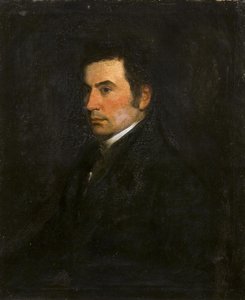
george leman tuthill
1772 - 1835 , United Kingdom
基本情報
- Artistic Movement Or Style: Historical paintings
- Date Of Birth: 1772
- Date Of Death: 1835
- Full Name: George Leman Tuthill
- Nationality: English
- Notable Artworks: ['Hugh Crawford in two views']
- Place Of Birth: Halesworth, UK

