

 プレビュー
プレビュー
 シェアする
シェアする シェアする
シェアする
 詳細を見る
詳細を見る

 ダウンロード
 似ている作品
 X線調査
X線調査 スライドショー
 Stats
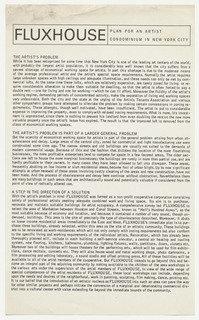
StatsFluxhouse, Plan for an Artist Condominium in New York City
 1966
1966 36.0 x 22.0 cm
 詳細を見る
詳細を見る
手描き油彩複製画
当社のアーティストが、お客様のご希望のサイズと額縁に合わせて、キャンバスに手描きで制作する油彩画です。 ( Switch to Print Switch to Digital Image)




































作品のオリジナル比率に合わせた、当店の規定サイズからお選びください。

特定のフレームやスペースに合わせて、ご希望のサイズをご入力いただけます。選択されたサイズが元の画像の比率と異なる場合、アートワークをトリミングするか、手描きで要素を追加して絵画を拡張いたします。デジタルモックアップ を制作し、制作開始前にご確認(承認)をいただきます。
画面上のプレビューは、実際のトリミングや拡張を正確に反映しているものではありません。最終的な構図は、モックアップによってのみ正確にご確認いただけます。
カスタムサイズもご利用いただけますが、元の比率を維持するためには、あらかじめ用意されたリストからサイズを選択することをお勧めいたします。
ご注文後、ArtsDot.com チームより詳細な指示をお送りするとともに、仕上がりイメージ(モックアップ)をご提供いたします。


 ガラスオプションは、110cm未満のサイズでのみご利用いただけます。

Fluxhouse, Plan for an Artist Condominium in New York City
複製技法
複製画のサイズ
-


合計金額
$ 263
関連作品






アーティストの略歴
A Life Forged in Displacement: The Early Years of George Maciunas
Born Jurgis Mačiūnas in 1931 Kaunas, Lithuania, the life of George Maciunas was fundamentally shaped by the tumultuous currents of 20th-century history. His parents, Alexander M. Maciunas – an architect and engineer – and Leokadija, a dancer with connections to figures like Aleksandr Kerensky, instilled in him a sensibility that blended artistic expression with intellectual rigor. The looming shadow of World War II forced the family into flight in 1944, a desperate escape from the advancing Red Army. This period of displacement—brief stays in Germany before finally reaching the United States in 1948—left an indelible mark on Maciunas, fostering a lifelong questioning of boundaries and a deep empathy for those existing outside established norms. His subsequent eleven years of intensive study – spanning Cooper Union, Carnegie Institute of Technology, and New York University’s Institute of Fine Arts – weren't merely academic pursuits; they were a relentless quest to understand the very foundations of artistic creation. He immersed himself in art history, graphic design, architecture, and even musicology, specializing in European and Siberian art, all while beginning his ambitious, never-fully-realized “Time/Space Chart,” an attempt to map the interconnectedness of artistic movements throughout history. This chart wasn’t simply a catalog; it was a visual representation of Maciunas's burgeoning belief that art existed not in isolation, but as part of a vast, interwoven network of ideas and influences.The Genesis of Fluxus: Challenging the Status Quo
Maciunas didn’t simply observe the art world; he sought to dismantle it, or rather, to redefine its very essence. He is rightfully considered the founding member and central coordinating force behind Fluxus, an international, interdisciplinary movement that emerged in the early 1960s as a radical rejection of traditional artistic conventions. Fluxus wasn’t defined by a single style or medium; it was a spirit of experimentation, a playful subversion of established hierarchies, and a commitment to blurring the lines between art and life. Maciunas's own 1963 manifesto laid out these core principles, advocating for “intermedia”—a deliberate mixing of artistic disciplines—and a rejection of commercialism. He gathered around him a constellation of like-minded artists – Ay-O, Joseph Beuys, Jonas Mekas, George Brecht, Dick Higgins, Yoko Ono, Nam June Paik, and Wolf Vostell among them – creating a collaborative network that challenged the very notion of individual artistic genius. The movement’s roots were diverse, drawing inspiration from John Cage's experimental music, Eastern philosophy, the happenings at Black Mountain College, the provocative spirit of the Nouveaux Réalistes, and, crucially, Marcel Duchamp’s revolutionary concept of the readymade. Maciunas wasn’t interested in creating beautiful objects for a privileged few; he wanted to make art accessible, democratic, and integral to everyday experience.Multiples, Happenings, and the Democratization of Art
Maciunas translated his radical ideas into tangible form through several groundbreaking innovations. He became renowned for organizing pivotal happenings and festivals that served as laboratories for Fluxus experimentation. These weren’t passive exhibitions; they were immersive events designed to challenge audience expectations and disrupt conventional notions of artistic presentation. Perhaps his most enduring legacy lies in the creation of artists' multiples – mass-produced artworks intended to be affordable and widely available. This was a direct assault on the exclusivity of the art market, a deliberate attempt to democratize access to creative expression. The “Flux Kit,” perhaps the most iconic example of this approach, was a boxed collection of works by various Fluxus artists distributed through a mailing list – a remarkably prescient precursor to contemporary art distribution models and subscription services. Alongside these practical endeavors, Maciunas continued developing his complex "Diagram of Historical Development of Fluxus," an ongoing project that visually mapped the interconnectedness of artistic movements and sensory experiences, reflecting his enduring fascination with historical context and the flow of ideas.A Lasting Legacy: From Dada to Contemporary Practice
The influence of Dada – its anti-art stance and rejection of conventional aesthetics – is readily apparent in Maciunas’s work. However, he moved beyond mere negation, forging a path toward what would become known as conceptual art, emphasizing the idea behind the artwork over traditional artistic skills or materials. His emphasis on process, collaboration, and interdisciplinary approaches continues to resonate with contemporary artists today. One can see echoes of Maciunas’s spirit in the performance work of Marina Abramović, the boundary-pushing installations of Damien Hirst, and the exploration of everyday life as artistic material that characterizes much modern practice. Maciunas played a crucial role in dismantling the traditional concept of the art object, promoting a more inclusive and accessible understanding of art—one where creativity wasn’t confined to galleries or museums but permeated all aspects of human experience. Though he died prematurely in 1978 at the age of 46, his impact continues to grow as scholars reassess his contributions, recognizing him not just as an organizer, but as a visionary artist who fundamentally altered the landscape of contemporary art. His work remains a potent reminder that art can be a force for social change, a catalyst for dialogue, and a celebration of the unexpected.
George Maciunas
1931 - 1978 , Lithuania
基本情報
- Artistic Movement Or Style: Fluxus, Conceptual Art
- Artists Or Movements Influenced By This Artist:
- Marina Abramović
- Damien Hirst
- Artists Who Influenced This Artist:
- John Cage
- Marcel Duchamp
- Date Of Birth: November 8, 1931
- Date Of Death: May 9, 1978
- Full Name: George Maciunas
- Nationality: Lithuanian-American
- Notable Artworks:
- Photographic Ballet
- Face Anatomy Mask
- Poster for Yoko Ono
- Place Of Birth: Kaunas, Lithuania