

 プレビュー
プレビュー
 シェアする
シェアする シェアする
シェアする
 詳細を見る
詳細を見る

 ダウンロード
 似ている作品
 X線調査
X線調査 スライドショー
 Stats
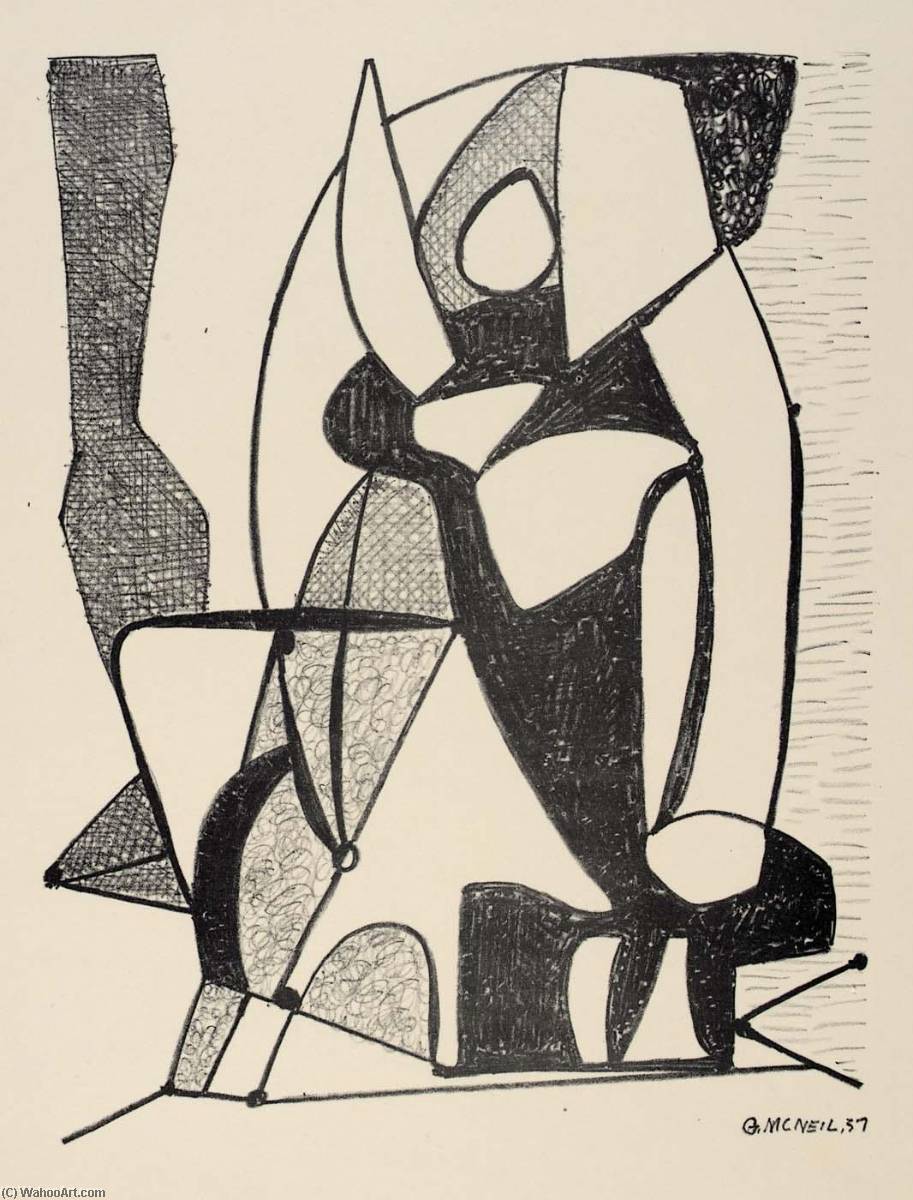
StatsUntitled, from the portfolio American Abstract Artists
 1937
1937 23.0 x 17.0 cm
 詳細を見る
詳細を見る
手描き油彩複製画
当社のアーティストが、お客様のご希望のサイズと額縁に合わせて、キャンバスに手描きで制作する油彩画です。 ( Switch to Print Switch to Digital Image)




































作品のオリジナル比率に合わせた、当店の規定サイズからお選びください。

特定のフレームやスペースに合わせて、ご希望のサイズをご入力いただけます。選択されたサイズが元の画像の比率と異なる場合、アートワークをトリミングするか、手描きで要素を追加して絵画を拡張いたします。デジタルモックアップ を制作し、制作開始前にご確認(承認)をいただきます。
画面上のプレビューは、実際のトリミングや拡張を正確に反映しているものではありません。最終的な構図は、モックアップによってのみ正確にご確認いただけます。
カスタムサイズもご利用いただけますが、元の比率を維持するためには、あらかじめ用意されたリストからサイズを選択することをお勧めいたします。
ご注文後、ArtsDot.com チームより詳細な指示をお送りするとともに、仕上がりイメージ(モックアップ)をご提供いたします。


 ガラスオプションは、110cm未満のサイズでのみご利用いただけます。

Untitled, from the portfolio American Abstract Artists
複製技法
複製画のサイズ
-


合計金額
$ 263
関連作品








アーティストの略歴
The Vibrant Pulse of Abstract Expressionism: The Life of George McNeil
George McNeil stands as a monumental figure within the pantheon of American Abstract Expressionism, a painter whose brushwork captured the very essence of movement and emotional intensity. Born on February 22, 1908, in the bustling borough of Queens, New York, McNeil was the youngest child of an Irish Catholic working-class family. This heritage provided a foundational grit and a deep-seated connection to the urban landscape that would later permeate his canvases. His early intellectual and artistic journey took him through Brooklyn Technical High School and the prestigious Pratt Institute, though he famously departed before completing his degree. Instead of formal academic titles, McNeil sought truth in the halls of the Metropolitan Museum of Art, where he spent countless hours meticulously copying the masters, a practice that instilled in him a profound respect for the lineage of great art while simultaneously fueling his desire to break free from representational constraints.
The trajectory of McNeil’s career was irrevocably shaped by his encounters with the titans of modernism. In the early 1930s, his studies at the Art Students League under Jan Matulka introduced him to the possibilities of collage and experimental textures. However, it was his profound association with Hans Hofmann that would become the cornerstone of his stylistic evolution. Serving as Hofmann’s monitor and assistant between 1932 and 1936, McNeil absorbed the master's revolutionary approach to color and form, learning to prioritize a reductive, essentialist language that favored the visceral impact of pigment over mere depiction. This period of mentorship allowed him to bridge the gap between structured composition and the raw, intuitive energy that would define his later works.
A Synthesis of Form and Figure
As the mid-century approached, McNeil’s work began to mirror the social and political turbulence of his era. During the Great Depression, he joined the Works Progress Administration’s Mural and Easel Section, a role that allowed him to engage directly with the concept of art as a social necessity. This period of public service coincided with his emergence as a founding member of the American Abstract Artists group, signaling his commitment to the avant-garde. While many of his contemporaries in the New York School drifted toward total abstraction, McNeil carved out a unique niche by navigating the delicate tension between pure abstraction and expressive figuration. He possessed a rare ability to weave recognizable elements—faces, bodies, and urban fragments—into a swirling vortex of color and motion.
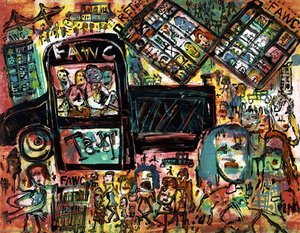
His canvases often feel like living organisms, pulsing with a rhythmic vitality that suggests a dialogue between art freedom and controlled composition. In works such as Surprize 4, one can witness the fractured faces and bold, clashing colors that evoke the frantic energy of modern life. This stylistic trajectory—moving from the geometric explorations of his early years to a more fluid, gestural approach—allowed him to capture not just the sight of the world, but its psychological weight. His marriage to Dora Tamler in 1936 provided a stable emotional anchor amidst this creative whirlwind, supporting a life that saw the birth of his children, Helen and James, even as his artistic reach expanded across the global stage.
Legacy and Historical Significance
The historical significance of George McNeil lies in his refusal to be confined by the rigid boundaries of any single movement. He was a bridge-builder, connecting the disciplined lessons of the old masters with the explosive freedom of the post-war era. His work remains a testament to the power of Dynamic Abstract Expressionism, a term that perfectly encapsulates his ability to command both the eye and the spirit. Through his mastery of color field techniques and his unique brand of figurative abstraction, he helped define the visual language of the New York School.
Today, McNeil’s contributions are preserved in some of the world's most esteemed institutions, including the Smithsonian American Art Museum. His legacy is characterized by several enduring hallmarks:
- The Evolution of Style: A seamless transition from pure abstraction to a sophisticated, expressive figuration.
- Technical Mastery: An expert use of collage, texture, and color to create depth and movement.
- Cultural Impact: A significant role in the development of American modernism through his involvement with the WPA and the American Abstract Artists group.
- Emotional Resonance: The ability to translate the chaos and beauty of the modern human experience into a cohesive, painterly language.
Ultimately, George McNeil was more than just a painter; he was an architect of emotion, leaving behind a body of work that continues to vibrate with the same restless, beautiful energy that first ignited his soul in the streets of New York.
George McNeil
1908 - 1995
基本情報
- Artistic Movement Or Style: Abstract Expressionism
- Date Of Birth: 1908
- Date Of Death: 1995
- Full Name: George McNeil
- Nationality: American
- Notable Artworks: ['Untitled, from the portfolio The New Provincetown Print Project']
- Place Of Birth: Queens, New York
- Surprize 4", "Artists Who Influenced This Artist: ['Hans Hofmann']