 プレビュー
プレビュー
 シェアする
シェアする シェアする
シェアする
 詳細を見る
詳細を見る

 ダウンロード
 似ている作品
 X線調査
X線調査 スライドショー
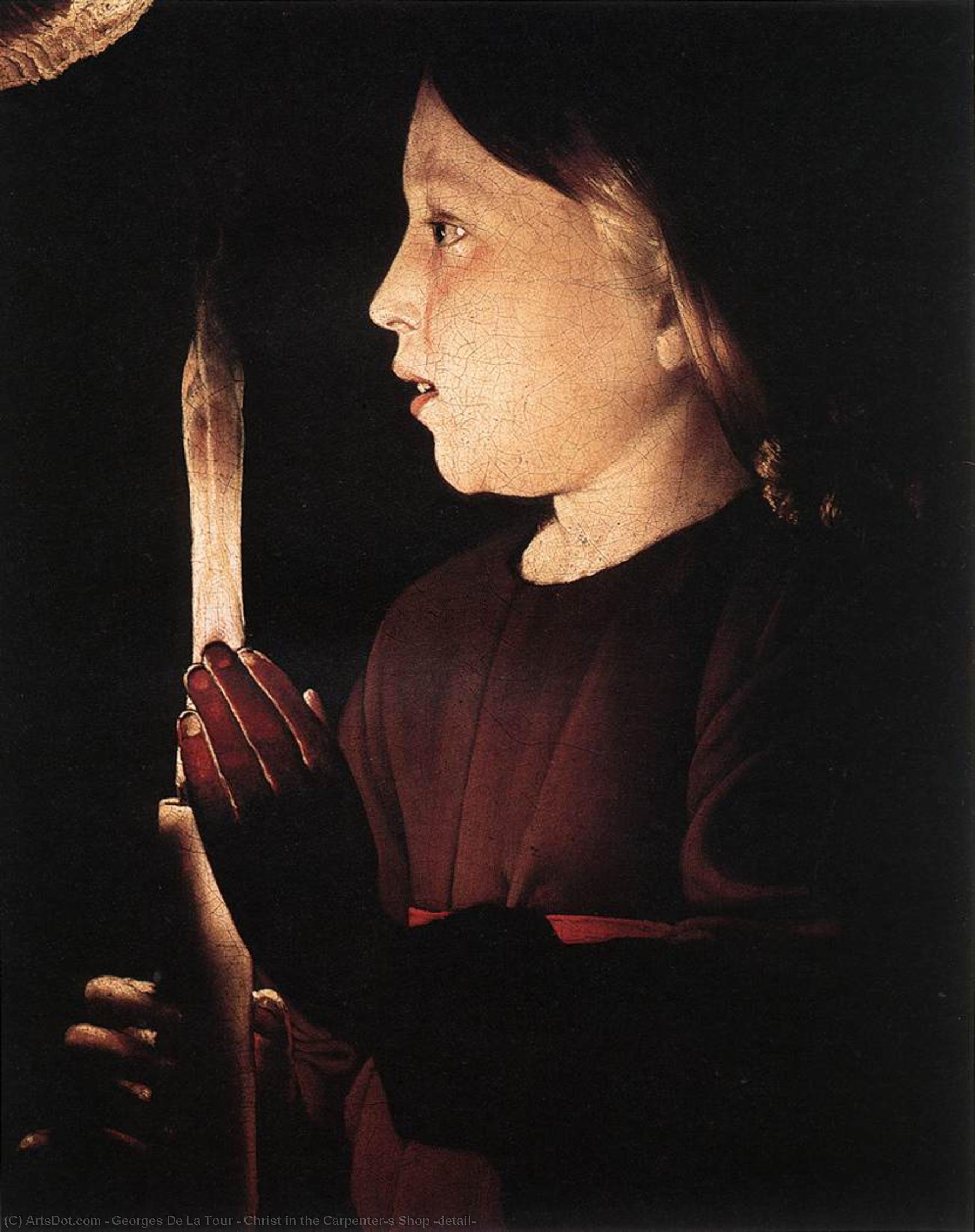
Christ in the Carpenter's Shop (detail)


 詳細を見る
詳細を見る
ジークレー/アートプリント
迅速な制作と多彩な仕上げオプションを備えた、ミュージアムクオリティのジークレーまたはキャンバスプリント。 ( 手描きの絵画を購入 画像を購入)




P118B $10

P118H $10

P118W $10

P438Z $10

P508JH $12

P508YH $12

P805H $10

P805Z $10

P919BZ $10

P919G $10

P919XJ $10

P959ZH $10

P968JZ $12

W106C $8

W218G $10

W218JH $8

W218Y $10

W307PJ $10

W316G $10

W316PJ $8

W316Y $10

W398PJ $8

W4111J $10

W500HY $15

W500JH $15

W692G $12

W849H $8

W940BG $15

W953PJ $8




作品のオリジナル比率に合わせた、当店の規定サイズからお選びください。

特定のフレームやスペースに合わせて、ご自身でサイズを指定することも可能です。選択されたサイズが元の画像の比率と一致しない場合、作品をトリミングするか、鏡面反射または単色での塗りつぶしによって画像を拡張いたします。制作を開始する前に、ご確認用のデジタルモックアップをお送りいたします。
画面上のプレビューには、実際のトリミングや拡張は反映されませんのでご注意ください。最終的な構図を正確に確認できるのは、モックアップのみとなります。
カスタムサイズも承っておりますが、元の比率を維持するためには、あらかじめ用意されたリストからサイズを選択することをお勧めいたします。


 ガラスオプションは、110cm未満のサイズでのみご利用いただけます。

Christ in the Carpenter's Shop (detail)
ジークレー/アートプリント
複製画のサイズ
-


合計金額
$ 62
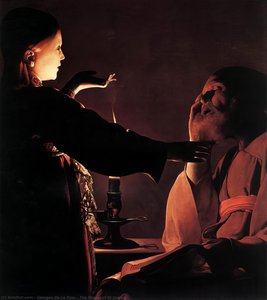
A Moment of Divine Illumination: Georges de la Tour’s *Christ in the Carpenter's Shop (detail)*
This captivating detail from Georges de la Tour’s *Christ in the Carpenter's Shop* offers a profoundly intimate glimpse into a pivotal moment – not of action, but of quiet anticipation. The image centers on a young man, undeniably Christ as a youth, bathed in the warm, flickering glow of a single candle. It is a scene steeped in both earthly realism and spiritual resonance.Stylistic Mastery: Baroque Tenebrism & Northern Realism
De la Tour was a master of *tenebrism*, a dramatic use of light and shadow characteristic of the Baroque period, heavily influenced by Caravaggio. However, unlike the often flamboyant Italian Baroque, de la Tour’s style is restrained and deeply rooted in Northern European realism. The meticulous detail – visible brushstrokes suggesting layered oil paint – speaks to a careful observation of form and texture. The composition isn't grand or sweeping; it’s intensely focused, drawing all attention to the figure and his contemplative act. This focus on intimate scenes set apart de la Tour from many of his contemporaries.Technique & Materials
Executed in oil on panel (likely), the painting showcases de la Tour's exceptional skill in manipulating light. The candle flame isn’t merely a source of illumination; it *is* the focal point, creating a halo effect around Christ’s face and hands. The dark background isn’t simply absence of light, but an active element that enhances the luminosity and emphasizes the figure’s presence. This technique creates a remarkable sense of depth despite a somewhat flattened perspective – common in earlier painting styles – effectively rendering a three-dimensional form.Historical & Religious Context (1645)
Painted around 1645, during a period of religious and political upheaval in France, this work reflects a renewed interest in devotional art. De la Tour’s paintings often depict scenes from the lives of saints or biblical narratives intended to inspire piety and contemplation. The depiction of Christ as a humble carpenter – a profession held in high regard – underscores his humanity and approachability. It's important to note that de la Tour worked during a time when religious imagery was carefully scrutinized, making his subtle yet powerful depictions all the more significant.Symbolism & Interpretation
The candle itself is rich with symbolism. It represents Christ as the “light of the world,” illuminating the darkness and offering hope. The act of holding the candle aloft can be interpreted as a gesture of offering, revelation, or even self-sacrifice. The solitary nature of the scene invites viewers to engage in their own personal reflection on faith, purpose, and the divine presence within everyday life. It’s not merely a depiction of carpentry; it's an allegory for spiritual craftsmanship.Emotional Resonance & Interior Design
The painting evokes a powerful sense of introspection, piety, and quiet mystery. The somber color palette – dominated by deep browns and reds contrasted with the vibrant yellow-orange light – creates a mood of solemnity and reverence. This detail would be a stunning addition to any interior seeking a touch of Old World elegance and spiritual depth. Its restrained palette and focused composition make it surprisingly versatile, complementing both traditional and contemporary spaces. The artwork’s emotional weight invites contemplation and provides a focal point for quiet reflection – perfect for libraries, studies, or meditation rooms.関連作品

アーティストの略歴
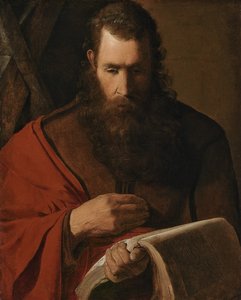
Georges de La Tour (1593–1652): French Baroque Master of Dramatic Chiaroscuro & Tenebrism
Georges de La Tour, a name that resonates with the hushed reverence reserved for masters of light and shadow, remains one of the most compelling figures of the French Baroque. Born in 1593 in Vic-sur-Seille, Lorraine—now Moselle—his life unfolded against a backdrop of religious fervor and political upheaval. While details surrounding his early training remain somewhat elusive—scholars speculate about potential journeys to Italy or apprenticeships with local artists like Jacques Bellange—the seeds of his artistic vision were undoubtedly sown in this environment. He wasn’t born into an artistically established family; his father was a baker, yet the circumstances of his mother's lineage hint at a possible connection to nobility, a subtle influence perhaps reflected in the dignity and quiet grace that permeate his work.
Early Life & Artistic Influences
Georges de La Tour’s educational background remains somewhat unclear, but it is assumed that he traveled either to Italy or the Netherlands early in his career. He may possibly have trained under Jacques Bellange in Nancy—the capital of Lorraine—although their styles are very different. His paintings reflect the Baroque naturalism of Caravaggio—the Italian master who revolutionized painting with his intensely realistic and emotionally charged scenes—yet, De La Tour didn’t simply imitate; he filtered Caravaggism through the prism of Dutch Caravaggisti, particularly those from the Utrecht School like Hendrick Terbrugghen. This fusion resulted in a style that was both powerful and restrained, characterized by a muted palette dominated by earth tones and subtle gradations of light. The Utrecht School's emphasis on dramatic lighting—a technique known as *tenebrism*—significantly shaped De La Tour’s artistic approach.
The Style of Lunéville & Major Works
In 1620 he established his studio in Lunéville, where he would spend much of his career serving both the French court and the Dukes of Lorraine. This dual patronage allowed him to flourish, yet it was within the intimate confines of domestic scenes and religious contemplation that his true genius found expression. His distinctive style—marked by a profound simplification of forms and an almost obsessive attention to detail—became synonymous with the Lunéville School. Among De La Tour’s most iconic works are *The Fortune Teller*, painted around 1630, which captures the eerie atmosphere of nocturnal storytelling; *St Joseph Carpenter*, depicting a serene domestic scene illuminated by candlelight—a motif that would become central to his oeuvre; and *The Lamentation over St Sebastian*, rendered with heartbreaking subtlety and realism—demonstrating De La Tour’s unparalleled ability to convey profound emotional truths.
Rediscovery & Legacy
Despite achieving recognition during his lifetime—he was appointed “Painter to the King” by Louis XIII in 1638—De La Tour’s work fell into relative obscurity after his death in 1652. For centuries, many of his paintings were misattributed to other artists, and his name faded from art historical memory. It wasn't until the early 20th century that a concerted effort was made to rediscover and re-evaluate his oeuvre, led by scholars like Hermann Voss. This rediscovery revealed an artist of extraordinary originality and depth—whose work bridged the gap between Caravaggism and French Classicism—solidifying his place as a pivotal figure in the history of European art. His innovative use of light and shadow—combined with his psychological insight into his subjects—continues to captivate audiences today. He remains celebrated for his ability to imbue everyday scenes with profound meaning and emotional depth.
ジョルジュ・ド・ラ・トゥール
1593 - 1652 , フランス
基本情報
- Artistic Movement Or Style: Барокко, Тенебризм
- Artists Who Influenced This Artist:
- Караваджо
- Генрик Тербрюгген
- Date Of Birth: 13 марта 1593 г.
- Date Of Death: 30 января 1652 г.
- Full Name: Georges de La Tour
- Nationality: Французский
- Notable Artworks:
- Пророк Эзекииль
- Поклонение пастухов
- Слезы святого Петра
- Place Of Birth: Вик-сюр-Сейль, Франция
関連記事
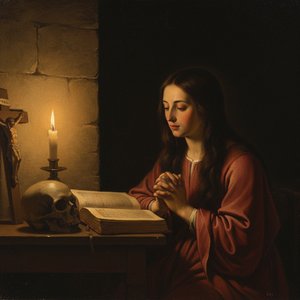
Georges de La Tour: Luminosity, Spirituality & Realism in Baroque Painting
Discover the captivating world of Georges de La Tour, a Baroque master renowned for his dramatic chiaroscuro & spiritual realism. Explore key works, influences, and his remarkable rediscovery. Learn more at ArtsDot.
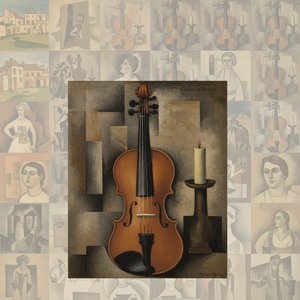
ジョルジュ・ブラック傑作25選:革新的なキュビスムの世界と装飾への誘い
ジョルジュ・ブラックの傑作25選。キュビスムを代表する画家、その革新的な色彩と技法に迫ります。名画から知られざる逸品まで、美術史に残る作品群をArtsDot.comで鑑賞。お部屋を彩るアートプリントも多数ご用意。今すぐオンラインでコレクションをご覧ください。

ジョルジュ・スーラ傑作25選:光と色彩の科学が織りなす芸術の世界|ArtsDot
ジョルジュ・スーラの傑作25選。点描画の光と色彩、印象派から新印象派へ—ArtsDotで美術史を紐解き、リビングやダイニングを彩る高品質なアートプリントを見つけましょう。セーラ作品集をオンラインで鑑賞ください。

ゴヤ傑作25選:スペインの魂を揺さぶる、深遠な芸術の世界 | ArtsDot
ゴヤ傑作25選:ロマン主義を代表するスペインの巨匠、フランシスコ・デ・ゴヤの世界へ。黒衣の女からマハまで、魂を揺さぶる絵画の物語と技法を紐解きます。ArtsDotで高品質なアートレプリカを見つけ、インテリアに深みと風格を。今すぐコレクションをご覧ください。
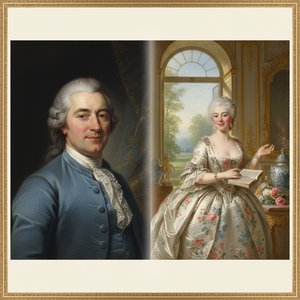
Maurice Quentin de La Tour: Light, Shadow & the Rococo Portrait
Explore the captivating world of Maurice Quentin de La Tour, a master of Rococo portraiture. Discover his innovative pastel techniques, intimate depictions of French aristocracy, and lasting artistic legacy. Learn more at ArtsDot.