

 プレビュー
プレビュー
 シェアする
シェアする シェアする
シェアする
 詳細を見る
詳細を見る

 ダウンロード
 似ている作品
 X線調査
X線調査 スライドショー
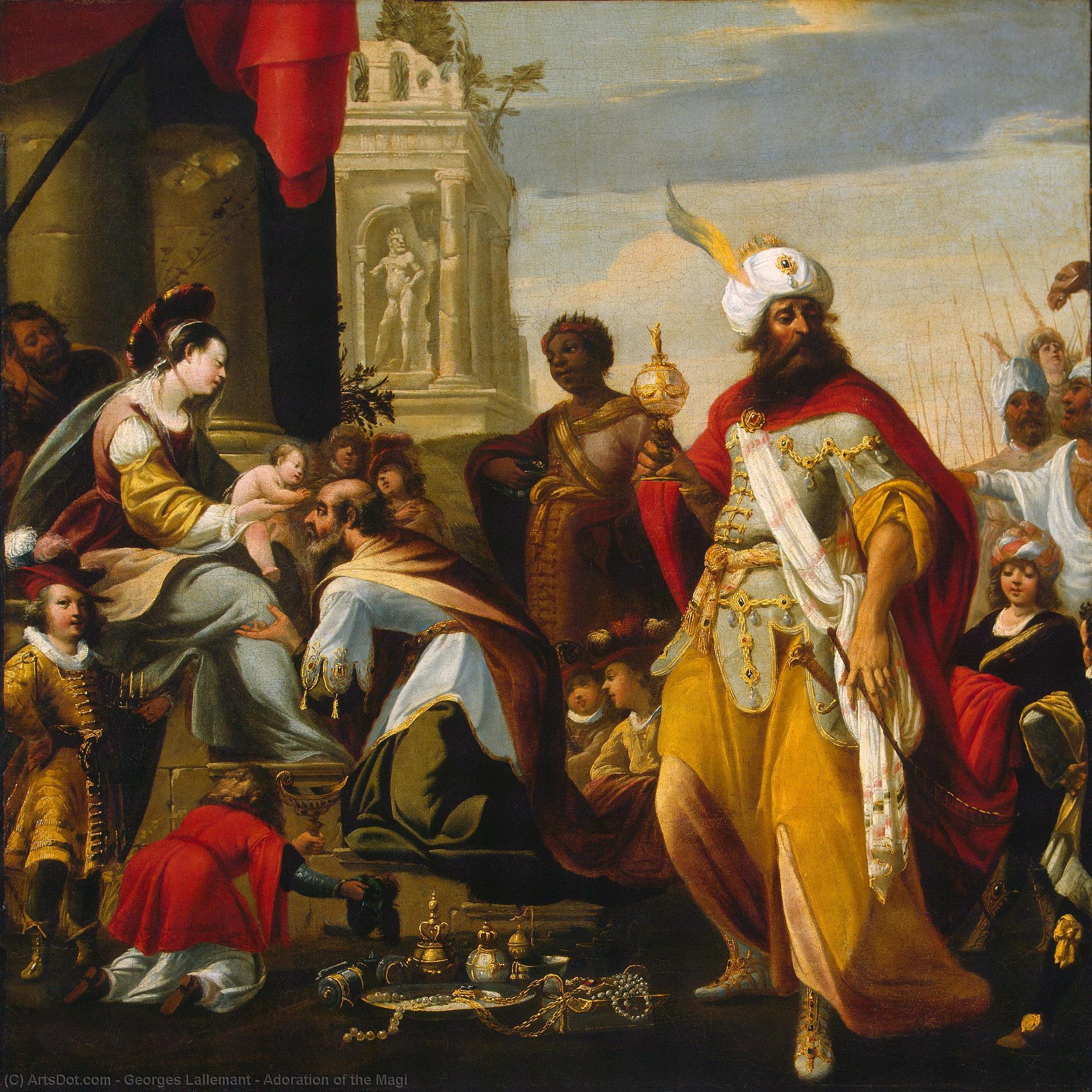
Adoration of the Magi
 Acrylic On Canvas
- WallArt
- Baroque
 74.0 x 92.0 cm
 エルミタージュ美術館
 詳細を見る
詳細を見る
ジークレー/アートプリント
迅速な制作と多彩な仕上げオプションを備えた、ミュージアムクオリティのジークレーまたはキャンバスプリント。 ( 手描きの絵画を購入 画像を購入)




P118B $10

P118H $10

P118W $10

P438Z $10

P508JH $12

P508YH $12

P805H $10

P805Z $10

P919BZ $10

P919G $10

P919XJ $10

P959ZH $10

P968JZ $12

W106C $8

W218G $10

W218JH $8

W218Y $10

W307PJ $10

W316G $10

W316PJ $8

W316Y $10

W398PJ $8

W4111J $10

W500HY $15

W500JH $15

W692G $12

W849H $8

W940BG $15

W953PJ $8




作品のオリジナル比率に合わせた、当店の規定サイズからお選びください。

特定のフレームやスペースに合わせて、ご自身でサイズを指定することも可能です。選択されたサイズが元の画像の比率と一致しない場合、作品をトリミングするか、鏡面反射または単色での塗りつぶしによって画像を拡張いたします。制作を開始する前に、ご確認用のデジタルモックアップをお送りいたします。
画面上のプレビューには、実際のトリミングや拡張は反映されませんのでご注意ください。最終的な構図を正確に確認できるのは、モックアップのみとなります。
カスタムサイズも承っておりますが、元の比率を維持するためには、あらかじめ用意されたリストからサイズを選択することをお勧めいたします。


 ガラスオプションは、110cm未満のサイズでのみご利用いただけます。

Adoration of the Magi
ジークレー/アートプリント
複製画のサイズ
-


合計金額
$ 62
Georges Lallemant’s L’Adoration des Mages – A Flemish Renaissance Masterpiece
Georges Lallemand (1575–1636) remains an artist shrouded in artistic obscurity—a testament to the capricious nature of art history and the unfortunate fate that befell many talented artists during the turbulent era of Louis XIV. Despite the scarcity of surviving paintings and biographical details, Lallemant’s legacy persists through his masterful woodcuts and the enduring impact of his stylistic innovations on a generation of painters. His artistic education is largely unknown, yet speculation suggests he was influenced by Jacques Bellange, whose distinctive style—characterized by bold color palettes and expressive brushwork—clearly resonated within Lallemand's oeuvre. Around 1601, Lallemant relocated to Paris, establishing himself as a prolific artist and fostering a studio that nurtured the talents of luminaries like Philippe de Champaigne, Laurent de la Hyre, and Nicolas poussin. This Parisian envirThe Subject: The Magi Revisited
The Adoration of the Magi or Adoration of the Kings or Visitation of the Wise Men is the name traditionally given to the subject in the Nativity of Jesus in art in which the three Magi, represented as kings, especially in the West, having found Jesus by following a star, lay before him gifts of gold, frankincense, and myrrh, and worship him. It is related in the Bible by Matthew 2:11: “On entering the house, they saw the child with Mary his mother; and they knelt down and paid him homage. Then, opening their treasure chests, they offered him gifts of gold, frankincense, and myrrh. And having been warned in a dream not to return to Herod, they left for their own country by another path”. Christian iconography considerably expanded the bare account of the Biblical Magi described in the Gospel of Matthew (2:1–22). By the later Middle Ages this drew from non-canonical sources like the Golden Legend by Jacobus de Voragine. Artists used the expanded Christian iconography to reinforce the idea that Jesus was recognized, from his earliest infancy, as king of the earth. The adoration scene was often used to represent the Nativity, one of the most indispensable episodes in cycles of the Life of the Virgin as well as the Life of Christ. Stories throughout the Middle Ages started circulating, which speculated who exactly were the three kings who were famous for visiting the Christ child. Many people assumed that they came from somewhere in the east. Eventually it was decided that the three kings would represent the three main continents at the time; Europe, Asia, and Africa. The three names that prevailed over the centuries for the three kings were Gaspar (or Caspar), Melchior, and Balthasar. The prominence of this story, as well as the three kings or magi, is due to the great theological significance that the Biblical story holds, their exotic clothes and looks, as well as their great and expensive gifts.Style & Technique: Flemish Realism Meets Mannerist Drama
Georges Lallemand’s style was eclectic, combining Flemish realist and mannerist influences. He was greatly influenced by Jacques Bellange, whose work seems to have had a significant impact on him. His artistic education is largely unknown, yet speculation suggests he was influenced by Jacques Bellange, whose distinctive style—characterized by bold color palettes and expressive brushwork—clearly resonated within Lallemand's oeuvre. The artist’s meticulous attention to detail—evident in the rendering of textures like silk, fur, jewels and gold—contrasts sharply with the stylized poses and elongated figures typical of Mannerism. This stylistic fusion reflects the broader artistic currents of his time, demonstrating a desire for grandeur and emotional intensity while retaining a grounding in observation and naturalistic representation. The painting’s perspective is carefully constructed, drawing inspiration from Flemish masters like Rogier van der Weyden, creating an illusion of depth that draws the viewer into the scene.Historical Context & Symbolism: Pagan Ruins and Divine Revelation
The Adoration of the Magi was especially popular with the artists of Antwerp Mannerism from about 1500 to 1530. These mostly anonymous artists lived in the Golden Age of Flemish painting, a period marked by unprecedented artistic innovation and prosperity. Lallemand’s depiction incorporates symbolic elements that underscore the narrative's theological significance: The ruins represent the pagan world supplanted by the Christian world inaugurated by the events in the foreground. On the right side, the most credible self-portrait of Leonardo da Vinci as a 30-year-old can be seen, according to several critics. The palm tree symbolizes triumph over death—a reference to the Song of Solomon and its depiction of Mary as “You are stately as a palm tree.” The gifts themselves – gold, frankincense and myrrh – represent spiritual riches and earthly treasures, symbolizing divine grace and human piety.A Legacy Preserved: Rediscovering Lallemand’s Vision
Georges Lallemand's work is mostly known from a series of chiaoscuro woodcuts made by Ludolph Büsinck in the 1620s after his smaller religious and genre compositions. His meticulous attention to detail—evident in the rendering of textures like silk, fur, jewels and gold—contrasts sharply with the stylized poses and elongated figures typical of Mannerism. This stylistic fusion reflects the broader artistic currents of his time, demonstrating a desire for grandeur and emotional intensity while retaining a grounding in observation and naturalistic representation. The painting’s perspective is carefully constructed, drawing inspiration from Flemish masters like Rogier van der Weyden, creating an illusion of depth that draws the viewer into the scene.関連作品

アーティストの略歴
Georges Lallemant (1575-1636): A Parisian Mannerist Painter
Georges Lallemand, born around 1575 in Nancy, France, remains a figure shrouded in artistic obscurity—a testament to the capricious nature of art history and the unfortunate fate that befell many talented artists during the turbulent era of Louis XIV. Despite the scarcity of surviving paintings and biographical details, Lallemand’s legacy persists through his masterful woodcuts and the enduring impact of his stylistic innovations on a generation of painters. His artistic education is largely unknown, yet speculation suggests he was influenced by Jacques Bellange, whose distinctive style—characterized by bold color palettes and expressive brushwork—clearly resonated within Lallemand's oeuvre. Around 1601, Lallemand relocated to Paris, establishing himself as a prolific artist and fostering a studio that nurtured the talents of luminaries like Philippe de Champaigne, Laurent de la Hyre, and Nicolas poussin. This Parisian environment proved pivotal in shaping his artistic vision, propelling him into the heart of the burgeoning Baroque movement. His style was remarkably eclectic, deftly blending Flemish realism with Mannerist tendencies—a fusion that produced images imbued with both meticulous detail and a heightened sense of drama and emotion. The resulting paintings are notable for their dynamic compositions and masterful use of chiaroscuro, techniques borrowed directly from Bellange’s work. Few of Lallemand's canvases survive today; many were dispersed during the French Revolution when church property was seized, erasing much of his artistic output from public view. However, his earliest known masterpiece, “The Mayor and Aldermen of Paris” (circa 1611), housed in Musée Carnavalet, offers a glimpse into his early stylistic explorations—a scene rendered with remarkable precision and imbued with subtle psychological nuance. In 1626, he ascended to the prestigious position of peintre ordinaire du roi, securing royal patronage and furthering his artistic endeavors. During his final years, Lallemand undertook ambitious commissions for altarpieces and tapestries destined for Notre Dame Cathedral, alongside six monumental paintings commissioned for Saint Geneviève Church in Paris—works that exemplify the grandeur and sophistication of Baroque art. Furthermore, his contributions can be appreciated in St Joseph’s Carmelite Church in Lille and another version of “The Adoration of Magi” resides in The Hermitage Museum. Lallemand's artistic reputation gained considerable traction through the collaborative efforts of Ludolph Büsinck, who produced a series of striking woodcuts based on Lallemand’s smaller religious and genre compositions. These prints—characterized by their dramatic lighting effects and expressive linework—served as an invaluable conduit for disseminating Lallemand’s artistic vision beyond the confines of Parisian ateliers and solidified his place within the broader artistic landscape of 17th-century France. His enduring influence can be seen in the stylistic choices of subsequent artists, cementing his position as a significant figure in the history of Mannerist painting and Baroque printmaking.- Notable Works: “The Mayor and Aldermen of Paris”, “Jesus At The Temple”, “Adoration of Magi”
- Influences: Jacques Bellange
- Style: Flemish Realism & Mannerism
Georges Lallemant
1575 - 1636 , France
基本情報
- Artistic Movement Or Style: Mannerist & Flemish Realist
- Artists Or Movements Influenced By This Artist: Philippe de Champaigne
- Artists Who Influenced This Artist: Jacques Bellange
- Date Of Birth: Nancy, France (1575)
- Date Of Death: 1636
- Full Name: Georges Lallemant
- Nationality: French
- Notable Artworks:
- The Mayor and Aldermen of Paris
- Jesus At The Temple
- Adoration of Magi
- Place Of Birth: Nancy, France
関連記事

ジョルジュ・ブラック傑作25選:革新的なキュビスムの世界と装飾への誘い
ジョルジュ・ブラックの傑作25選。キュビスムを代表する画家、その革新的な色彩と技法に迫ります。名画から知られざる逸品まで、美術史に残る作品群をArtsDot.comで鑑賞。お部屋を彩るアートプリントも多数ご用意。今すぐオンラインでコレクションをご覧ください。

ジョルジュ・スーラ傑作25選:光と色彩の科学が織りなす芸術の世界|ArtsDot
ジョルジュ・スーラの傑作25選。点描画の光と色彩、印象派から新印象派へ—ArtsDotで美術史を紐解き、リビングやダイニングを彩る高品質なアートプリントを見つけましょう。セーラ作品集をオンラインで鑑賞ください。

The Dramatic Flourish: Exploring the Baroque Movement's Enduring Legacy in Art History
Explore the dramatic world of Baroque art! Discover iconic artists like Caravaggio & Rubens, defining techniques, and its lasting impact on art history. Expert insights for collectors & enthusiasts at ArtsDot.

バロック美術を極めた至宝:時代を彩る10大名作の世界
バロック美術の華!カラヴァッジョ、ベルニーニら巨匠が創り上げた10大名作を徹底解剖。ドラマチックな色彩と豪華絢爛の世界観に触れ、至宝のアートプリントで空間を彩ろう。ArtsDot.comで美術館品質の複製と洗練されたインテリアを見つけましょう!

The Visceral Stage: Exploring Dramatic Narratives & Emotional Intensity in Baroque Art
Explore the dramatic world of Baroque art! Discover iconic masters like Caravaggio & Rembrandt, their techniques, and the movement's lasting impact. Expert insights for collectors & enthusiasts at ArtsDot.

