

 プレビュー
プレビュー
 シェアする
シェアする シェアする
シェアする
 詳細を見る
詳細を見る

 ダウンロード
 似ている作品
 X線調査
X線調査 スライドショー
 Stats
StatsThe Marquise


 詳細を見る
詳細を見る
オンラインプレビューをはるかに凌ぐ、高解像度で鮮明なデジタル画像をご購入いただけます。
各ファイルは、社内の専門家が高度なツールと熟練した手作業によるレタッチを用いて、細心の注意を払って準備されています。すべての画像において、卓越した鮮明度、正確な色彩再現性、そして繊細なディテールを保証いたします。
最終ファイルは、プロフェッショナルな編集・印刷環境ですぐにご利用いただけるよう最適化された状態で、72時間以内にメールにてお届けいたします。これは、一流のデザインスタジオ、出版社、ギャラリーから信頼されているものと同等の品質です。
デジタルアート
個人での鑑賞、印刷、クリエイティブなプロジェクト用に、高解像度ファイルをダウンロードできます。 ( Switch to Print 手描きの絵画を購入)
デジタル画像のご注文に付随する特典
高品質なデジタル画像配信を、確かな品質で。
ArtsDot.com を選ぶことは、単に画像を手に入れることではありません。それは、プロの手によって精密に仕上げられ、満足保証が付いた高品質なデジタルアートワークを受け取ることを意味します。ご注文いただいた際に自動的に付随する内容は、以下の通りです:

メールですぐにお届け
ご注文から72時間以内に、高解像度のデジタル画像ファイルがメールでお手元に届きます。すぐにそのままご利用いただけます。

AI技術で最適化されたデジタルファイル
お客様の作品は、高度なAIツールと専門家による手作業の編集を組み合わせてプロフェッショナルに最適化されており、細部のディテール、鮮明さ、そして正確な色再現性を最大限に引き出しています。

一生涯無料の再送サービス
ファイルを誤って削除したり、紛失してしまったりしましたか?ご安心ください。いつでも無料で再送いたします。

輸入手数料は一切かかりません
関税や手数料、配送料を気にすることなく、お気に入りのアートワークをすぐにお楽しみいただけます。デジタルダウンロードは常に免税です。

色彩再現の保証
プロ仕様のツールとカラーマネジメント技術を用いることで、デジタル画像が元の色を最大限に忠実に再現することを保証いたします。

100日間満足保証
ご購入いただいたデジタル画像にご満足いただけない場合は、100日以内であれば、理由を問わず修正または100%の返金対応をさせていただきます。

100% 返金保証
ご満足いただけない場合は、デジタルファイルを受け取ってから100日以内であれば、理由を問わず全額返金いたします。

まとめ買い割引
3枚購入で10%OFF - 5枚購入で15%OFF - 10枚以上購入で20%OFF。クリエイティブなプロジェクト、ギャラリー、エージェンシーに最適です。
A Riot of Color and Emotion: Unpacking “The Marquise” by Georgy Zelenko
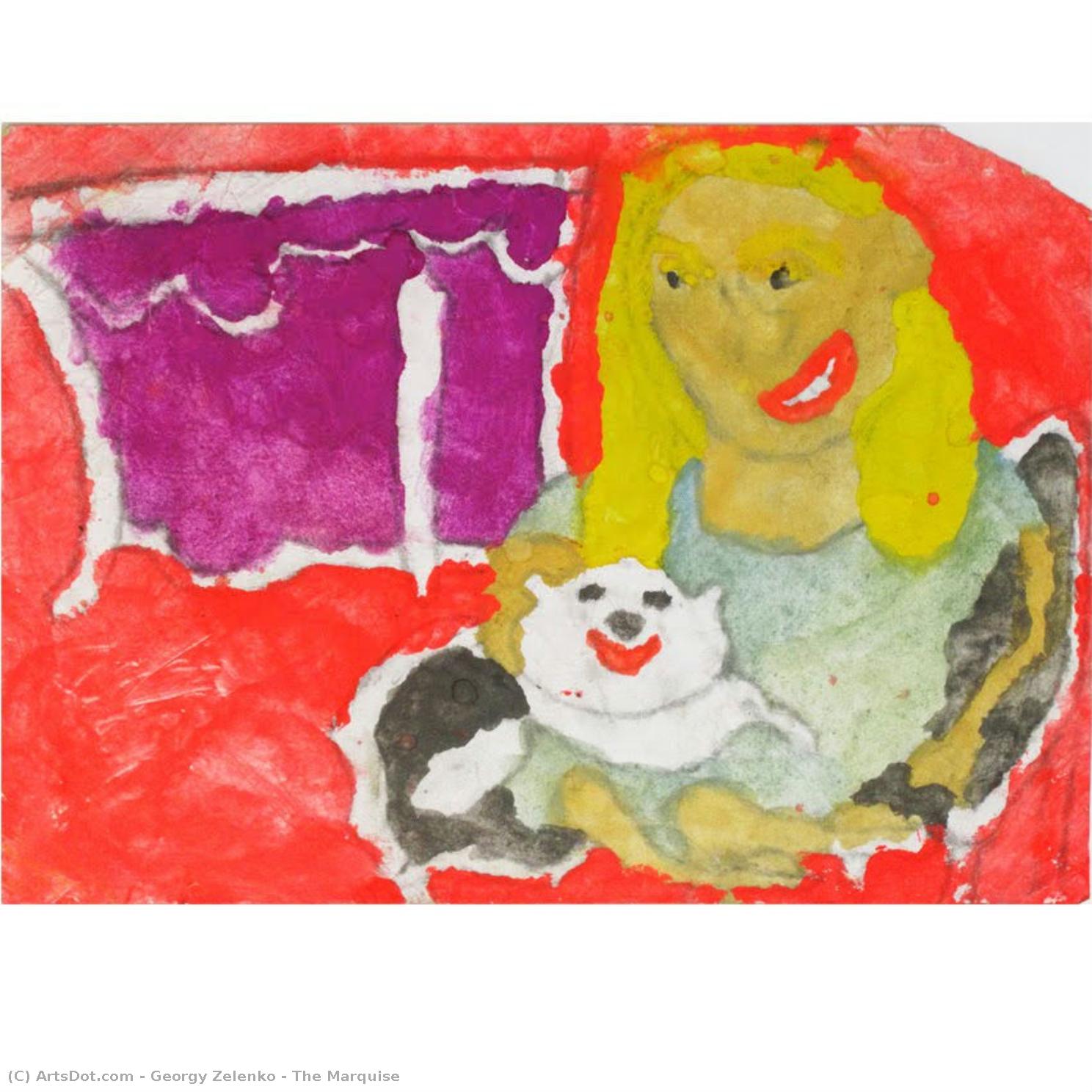
Georgy Zelenko’s “The Marquise,” painted in 2019, isn't merely a portrait; it’s an immediate emotional experience. The artwork grabs the viewer with its audacious palette and dynamic composition, pulling them into a world where color reigns supreme and formal representation yields to raw feeling. Zelenko masterfully employs watercolor techniques to create a sense of movement and instability, mirroring perhaps the complex inner life he seeks to capture.
The painting centers on a woman seated with a feline companion – a cat, naturally – set against a backdrop of intense crimson and swirling purples. The red dominates, not as a simple background color, but as an active force, pulsating with energy and demanding attention. It’s a bold choice, immediately establishing a dramatic mood that feels both vibrant and slightly unsettling. Notice how the artist utilizes wet-on-wet watercolor washes; these create soft edges and blurred forms, contributing to the painting's dreamlike quality. The loose brushstrokes are evident throughout, adding texture and a sense of immediacy – as if the image were captured in a fleeting moment.
Decoding Symbolism: Woman, Cat, and the Language of Domesticity
The pairing of woman and cat is rich with symbolic potential. Traditionally, cats have represented independence, mystery, and intuition—qualities often associated with women. The seated posture suggests contemplation or perhaps a quiet strength. The presence of the cat beside her could signify companionship, loyalty, or even a subtle challenge to societal expectations. While the painting doesn’t offer explicit narrative, it invites us to project our own interpretations onto this intimate scene.
Furthermore, consider the overall atmosphere. The bold colors and distorted features hint at an underlying emotional intensity—a sense of vulnerability or perhaps a suppressed longing. The flattened perspective, devoid of traditional depth, further enhances this feeling, creating a space that feels contained and intensely personal. It’s as if Zelenko is inviting us into a private world, offering a glimpse beyond the surface.
Technique and Artistic Process: A Masterclass in Watercolor
Zelenko's skill lies not just in his color choices but also in his masterful manipulation of watercolor. The painting exemplifies the wet-on-wet technique—a challenging method that requires careful control and a deep understanding of how water interacts with pigment. The resulting washes are luminous, blending seamlessly to create soft transitions and atmospheric effects. Observe how he builds up layers of color, allowing each wash to subtly influence the ones beneath it. This layering creates depth and complexity within the seemingly simple composition.
The artist’s use of contrasting colors—the fiery red against the cooler purples—further enhances the dynamism of the piece. He doesn't shy away from bold contrasts, embracing a style that is both expressive and visually arresting. The overall effect is one of controlled chaos, reflecting perhaps the complexities of human emotion.
A Legacy of Raw Emotion: Zelenko’s Artistic Voice
Zelenko’s work resonates with echoes of Tracey Emin's exploration of personal experience—a shared commitment to unflinching honesty and vulnerability. Like Emin, Zelenko doesn’t offer polished beauty or easy answers; instead, he presents raw emotion in its purest form. “The Marquise” is a testament to the power of watercolor as a vehicle for expressing complex feelings, inviting viewers to contemplate the depths of human experience.
関連作品
作家の略歴
Tracey Emin: Excavating the Self Through Raw Emotion
Tracey Emin, born in Margate, Kent, on July 3rd, 1963, is an artist whose work has relentlessly interrogated the complexities of personal experience, particularly through the lens of memory, sexuality, and trauma. From her early beginnings as a “enfant terrible” within the Young British Artists (YBAs) movement to her current status as a Royal Academician, Emin’s career has been defined by its unflinching honesty and willingness to expose vulnerability – often in ways that were initially shocking but have since become deeply resonant with contemporary audiences. Her art isn't about polished beauty or grand narratives; it’s an excavation of the self, laid bare for all to witness.Early Life and Artistic Beginnings
Emin’s childhood was marked by instability and a fractured family life, experiences that would profoundly shape her artistic trajectory. Raised primarily by her grandmother after her mother's death, she spent much of her youth in a series of foster homes and temporary residences. This sense of displacement and the lingering absence of maternal figures became recurring themes in her early work. She initially pursued studies at Medway College of Design and Maidstone College of Art, focusing on printmaking – a technique that provided a foundational understanding of image-making while also offering a degree of control over the creative process, something she later sought to relinquish. It was during this period that she began experimenting with drawing and collage, laying the groundwork for her distinctive style. Her early artistic explorations were largely influenced by outsider art and autobiographical approaches, foreshadowing the intensely personal nature of her future work.The Sensation Years and a Turning Point
Emin’s career gained significant momentum in 1997 with her participation in Charles Saatchi's controversial *Sensation* exhibition at the Royal Academy in London. Her piece, *Everyone I Have Ever Slept With 1963–1995*, a vast tent appliquéd with the names of all individuals she had ever slept with, caused considerable uproar and sparked intense debate about the role of art, sexuality, and public exposure. The work’s sheer scale and explicit content were unprecedented at the time, pushing boundaries and challenging conventional notions of artistic propriety. This event catapulted her into the spotlight, cementing her reputation as a provocative and uncompromising artist. Shortly after, she became embroiled in a highly publicized television appearance on *The Death of Painting*, where she repeatedly swore after being asked to articulate her opinion on art, further solidifying her image as a rebellious figure.Major Works and Artistic Evolution
Following the success of *Everyone I Have Ever Slept With*, Emin continued to explore themes of memory, loss, and identity through a diverse range of media. *My Bed* (1998), arguably her most iconic work, remains a powerful testament to her willingness to confront uncomfortable truths. The installation – a photograph of her own unmade, dirty bed littered with personal belongings, including used condoms and blood-stained underwear – was initially met with mixed reactions but quickly became recognized as a seminal piece of feminist art. It’s a raw, visceral depiction of emotional turmoil and the complexities of female experience. Throughout her career, Emin has utilized various techniques, including drawing, painting, sculpture, film, neon text, and sewn appliqué, often combining these approaches to create layered and multi-faceted works. Her later pieces have explored themes of loneliness, addiction, and the search for connection, reflecting a continued engagement with her own personal history.Legacy and Historical Significance
Tracey Emin’s impact on contemporary art is undeniable. She helped pave the way for a new generation of artists who were unafraid to explore deeply personal subjects and challenge established artistic conventions. Her work has been praised for its honesty, vulnerability, and emotional resonance, while also facing criticism for its potentially exploitative nature. Despite these debates, Emin’s influence extends beyond her own art practice; she is a significant figure in the broader discourse surrounding feminism, identity politics, and the role of art in reflecting and shaping our understanding of the human experience. Her willingness to expose herself—both literally and figuratively—has made her one of the most recognizable and discussed artists working today, solidifying her place as a pivotal voice in 21st-century art. Her ongoing commitment to creating work rooted in personal narrative ensures that her legacy will continue to evolve and resonate with audiences for years to come.
georgy zelenko
1963 -