

 プレビュー
プレビュー
 シェアする
シェアする シェアする
シェアする
 詳細を見る
詳細を見る

 ダウンロード
 似ている作品
 X線調査
X線調査 スライドショー
 統計情報
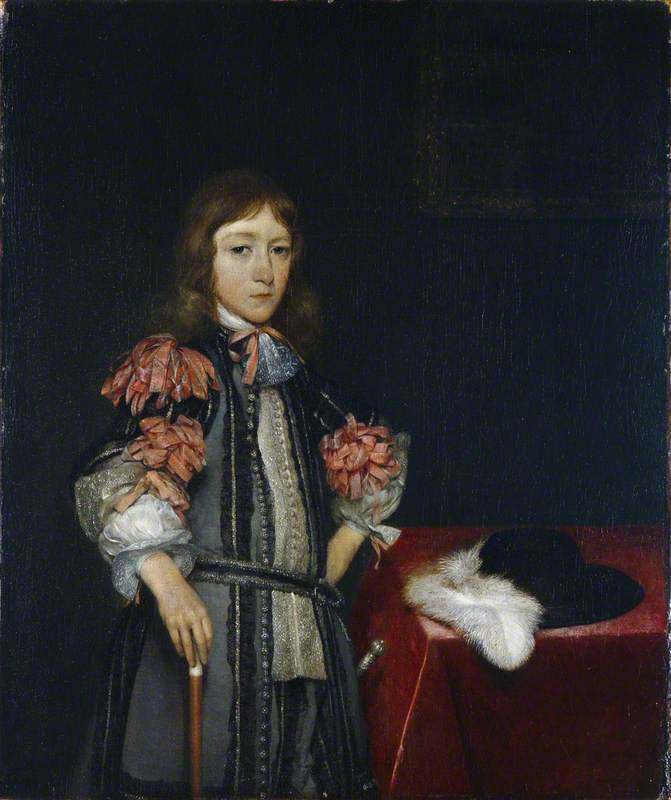
統計情報Gerbrand Pancras, Formerly Known as Hendrick Casimir II, Prince of Nassau Dietz


 詳細を見る
詳細を見る
手描き油彩複製画
当社のアーティストが、お客様のご希望のサイズと額縁に合わせて、キャンバスに手描きで制作する油彩画です。 ( プリント版に切り替え デジタル画像販売へ切り替え)




































作品のオリジナル比率に合わせた、当店の規定サイズからお選びください。

特定のフレームやスペースに合わせて、ご希望のサイズをご入力いただけます。選択されたサイズが元の画像の比率と異なる場合、アートワークをトリミングするか、手描きで要素を追加して絵画を拡張いたします。デジタルモックアップ を制作し、制作開始前にご確認(承認)をいただきます。
画面上のプレビューは、実際のトリミングや拡張を正確に反映しているものではありません。最終的な構図は、モックアップによってのみ正確にご確認いただけます。
カスタムサイズもご利用いただけますが、元の比率を維持するためには、あらかじめ用意されたリストからサイズを選択することをお勧めいたします。
ご注文後、ArtsDot.com チームより詳細な指示をお送りするとともに、仕上がりイメージ(モックアップ)をご提供いたします。


 ガラスオプションは、110cm未満のサイズでのみご利用いただけます。

Gerbrand Pancras, Formerly Known as Hendrick Casimir II, Prince of Nassau Dietz
複製技法
複製画のサイズ
-


合計金額
$ 263
関連作品



アーティストの略歴
Gerard Terborch: The Intimate Master of Dutch Interiors
Gerard Terborch (1617-1681) stands as a singular figure in the pantheon of Dutch Golden Age painters, renowned not for grand historical scenes or heroic portraits, but for his exquisitely observed and profoundly intimate depictions of domestic life. Born in Zwolle, he inherited an artistic lineage that propelled him toward a career marked by both technical mastery and a unique sensibility—a quiet elegance that continues to captivate viewers centuries later. His work offers a rare glimpse into the lives of the prosperous middle class, revealing their subtle gestures, unspoken emotions, and the carefully constructed atmosphere of their homes.
Terborch’s early artistic education was shaped by his father, Gerard Terborch the Elder, a skilled artist who had spent formative years in Rome. This exposure to Italian Renaissance principles instilled in young Gerard a deep appreciation for detail, light, and shadow—qualities he would later translate into his own distinctive style. He began his training in Amsterdam under Willem Cornelisz Duyster and Pieter de Molijn, absorbing the techniques of these influential masters while simultaneously forging his own path. A brief sojourn in London during 1635 exposed him to a different artistic environment, likely influencing his later depictions of aristocratic subjects.
His travels extended beyond Europe, including stays in Spain and Germany, where he encountered the influence of Diego Velázquez, whose masterful use of light and color profoundly impacted Terborch’s approach. The Spanish court's patronage further refined his skills, contributing to a subtle refinement in his palette and composition. Returning to Holland in 1650, he settled in Deventer, where he established a studio and continued to produce works that would cement his reputation as one of the most discerning observers of domestic life.
The Language of Domesticity
Terborch’s genius lay not in dramatic narratives but in capturing the quiet moments of everyday existence. He eschewed grand gestures and theatrical poses, instead focusing on the subtle interactions between individuals within a carefully rendered interior setting. His paintings are populated by figures engaged in seemingly mundane activities—reading letters, playing musical instruments, conversing quietly—yet these scenes resonate with an underlying sense of emotion and psychological depth.
A key element of Terborch’s technique was his meticulous attention to detail. He rendered fabrics with astonishing realism, capturing the textures of satin, velvet, and lace with a precision that bordered on obsessive. Light plays a crucial role in his compositions, subtly illuminating faces and objects while creating an atmosphere of intimacy and warmth. His use of muted colors—primarily browns, grays, and ochres—contributes to the overall sense of quietness and restraint.
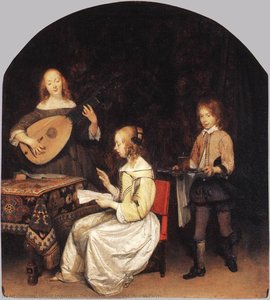
His most celebrated works, such as *The Letter* (c. 1660-65) and *The Concert* (c. 1657), exemplify his mastery of this technique. In *The Letter*, a young woman receives a missive from her husband, her expression conveying a mixture of anticipation and melancholy. In *The Concert*, a family gathers for an evening musicale, their faces illuminated by candlelight, creating a scene of serene domesticity. These paintings are not merely representations of scenes; they are windows into the hearts and minds of the people depicted.
Influences and Artistic Development
Terborch’s artistic development can be traced through several distinct phases. Initially influenced by the Haarlem school, characterized by its emphasis on realism and meticulous detail, he gradually moved toward a more refined and introspective style. His early works often featured scenes of soldiers and guardsmen, reflecting the influence of Pieter Codde and Willem Duyster. However, as he matured, he developed his own unique approach to interior genre painting, prioritizing psychological depth and atmospheric effects over literal representation.
The impact of Diego Velázquez is evident in Terborch’s later works, particularly in his masterful use of light and shadow. Velázquez's ability to capture the nuances of human expression—the subtle flicker of an eye, the fleeting emotion on a face—served as a model for Terborch, who sought to convey similar levels of psychological insight in his own paintings.
Legacy and Historical Significance
Despite producing a relatively small number of works, Gerard Terborch’s influence on Dutch painting is undeniable. He established a new framework for subject matter, taking viewers into the sanctum of the home and revealing the complexities of domestic life. His paintings are not merely decorative; they offer valuable insights into the social customs, values, and emotional lives of 17th-century Hollanders.
Terborch’s work has been admired by art historians for its technical brilliance, psychological depth, and understated elegance. He is considered one of the masters of Dutch interior genre painting, alongside artists such as Gerrit Dou and Johannes Vermeer. His legacy continues to inspire contemporary artists who seek to capture the beauty and complexity of everyday life.
gerard terborch ii
1617 - 1681
基本情報
- Artistic Movement Or Style: Baroque
- Artists Or Movements Influenced By This Artist:
- Gabriel Metsu
- Gerrit Dou
- Johannes Vermeer
- Artists Who Influenced This Artist:
- Pieter de Molijn
- Pieter Codde
- Willem Duyster
- Date Of Birth: December 1617
- Date Of Death: December 8, 1681
- Full Name: Gerard ter Borch
- Nationality: Dutch
- Notable Artworks:
- The Swearing of the Oath
- The Letter
- The Concert
- Paternal Advice
- Place Of Birth: Zwolle, Netherlands
関連記事

Illuminating Innovation: Exploring the Dutch Golden Age of Painting
Explore the Dutch Golden Age of painting with ArtsDot. Discover Rembrandt, Vermeer & other Masters. Learn about key characteristics, iconic artworks, and lasting influence. Expert insights for collectors & enthusiasts.

Golden Age Reflections: Dutch Baroque Painting & Cultural Innovation
Explore the Dutch Golden Age of painting! Discover key artists like Vermeer & ter Borch, their innovative techniques, and the rich cultural context behind these Baroque masterpieces. Learn about collecting & appreciating this iconic art period.
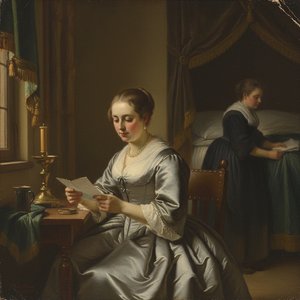
Gerard ter Borch: Intimacy & Light in the Dutch Golden Age
Explore the captivating world of Gerard ter Borch, a master of Dutch Golden Age genre painting. Discover his intimate scenes, masterful light, and lasting influence on art history. Learn more at ArtsDot.

黄金世紀の巨匠たち:バロック絵画が彩る10選|ArtsDot
オランダ黄金時代の10大傑作を紐解く!レンブラント、フェルメール…バロック絵画の魅力と時代背景を深く探求。ArtsDotで、至高のアートコレクションと空間演出のヒントを見つけよう。高品質なアートプリントで、お部屋を華やかに。

Illuminating Realism: Exploring the Dutch Golden Age of Painting (1600-1700)
Explore the Dutch Golden Age of painting (1600-1700) with ArtsDot. Discover Rembrandt, Vermeer & other masters. Learn about techniques, history & find museum-quality reproductions.