

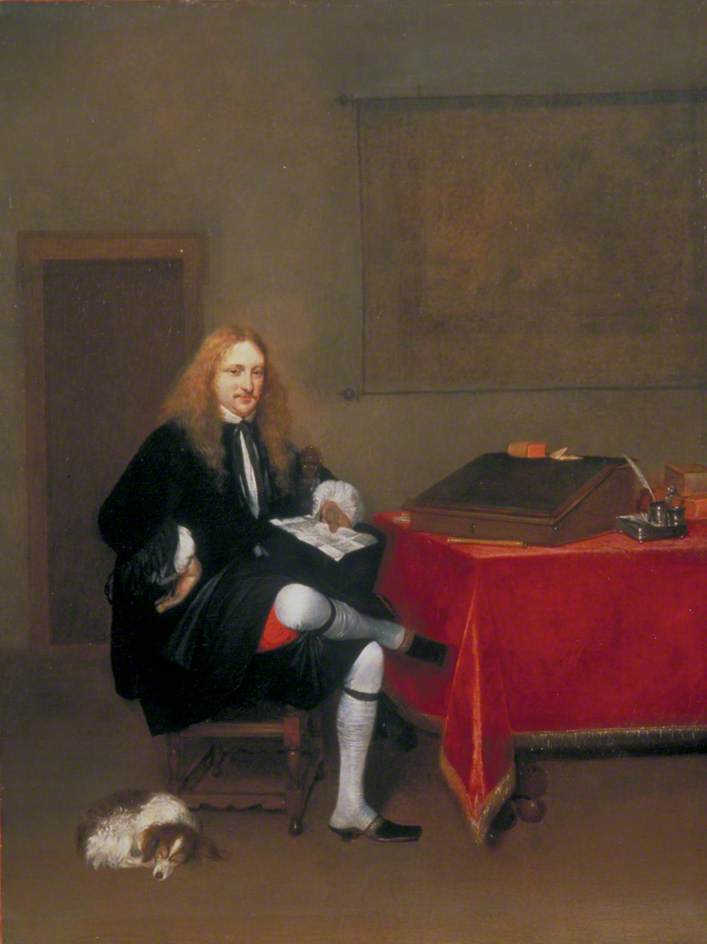
 プレビュー
プレビュー
 シェアする
シェアする シェアする
シェアする
 詳細を見る
詳細を見る

 ダウンロード
 似ている作品
 X線調査
X線調査 スライドショー
 統計情報
統計情報Portrait of a Man in His Study
 1669
1669 73.0 x 55.0 cm
 Guildhall Art Gallery
 詳細を見る
詳細を見る
オンラインプレビューをはるかに凌ぐ、高解像度で鮮明なデジタル画像をご購入いただけます。
各ファイルは、社内の専門家が高度なツールと熟練した手作業によるレタッチを用いて、細心の注意を払って準備されています。すべての画像において、卓越した鮮明度、正確な色彩再現性、そして繊細なディテールを保証いたします。
最終ファイルは、プロフェッショナルな編集・印刷環境ですぐにご利用いただけるよう最適化された状態で、72時間以内にメールにてお届けいたします。これは、一流のデザインスタジオ、出版社、ギャラリーから信頼されているものと同等の品質です。
デジタルアート
個人での鑑賞、印刷、クリエイティブなプロジェクト用に、高解像度ファイルをダウンロードできます。 ( プリント版に切り替え 手描きの絵画を購入)
デジタル画像のご注文に付随する特典
高品質なデジタル画像配信を、確かな品質で。
ArtsDot.com を選ぶことは、単に画像を手に入れることではありません。それは、プロの手によって精密に仕上げられ、満足保証が付いた高品質なデジタルアートワークを受け取ることを意味します。ご注文いただいた際に自動的に付随する内容は、以下の通りです:

メールですぐにお届け
ご注文から72時間以内に、高解像度のデジタル画像ファイルがメールでお手元に届きます。すぐにそのままご利用いただけます。

AI技術で最適化されたデジタルファイル
お客様の作品は、高度なAIツールと専門家による手作業の編集を組み合わせてプロフェッショナルに最適化されており、細部のディテール、鮮明さ、そして正確な色再現性を最大限に引き出しています。

一生涯無料の再送サービス
ファイルを誤って削除したり、紛失してしまったりしましたか?ご安心ください。いつでも無料で再送いたします。

輸入手数料は一切かかりません
関税や手数料、配送料を気にすることなく、お気に入りのアートワークをすぐにお楽しみいただけます。デジタルダウンロードは常に免税です。

色彩再現の保証
プロ仕様のツールとカラーマネジメント技術を用いることで、デジタル画像が元の色を最大限に忠実に再現することを保証いたします。

100日間満足保証
ご購入いただいたデジタル画像にご満足いただけない場合は、100日以内であれば、理由を問わず修正または100%の返金対応をさせていただきます。

100% 返金保証
ご満足いただけない場合は、デジタルファイルを受け取ってから100日以内であれば、理由を問わず全額返金いたします。

まとめ買い割引
3枚購入で10%OFF - 5枚購入で15%OFF - 10枚以上購入で20%OFF。クリエイティブなプロジェクト、ギャラリー、エージェンシーに最適です。
関連作品







作家の略歴
Gerard Terborch: The Intimate Master of Dutch Interiors
Gerard Terborch (1617-1681) stands as a singular figure in the pantheon of Dutch Golden Age painters, renowned not for grand historical scenes or heroic portraits, but for his exquisitely observed and profoundly intimate depictions of domestic life. Born in Zwolle, he inherited an artistic lineage that propelled him toward a career marked by both technical mastery and a unique sensibility—a quiet elegance that continues to captivate viewers centuries later. His work offers a rare glimpse into the lives of the prosperous middle class, revealing their subtle gestures, unspoken emotions, and the carefully constructed atmosphere of their homes.
Terborch’s early artistic education was shaped by his father, Gerard Terborch the Elder, a skilled artist who had spent formative years in Rome. This exposure to Italian Renaissance principles instilled in young Gerard a deep appreciation for detail, light, and shadow—qualities he would later translate into his own distinctive style. He began his training in Amsterdam under Willem Cornelisz Duyster and Pieter de Molijn, absorbing the techniques of these influential masters while simultaneously forging his own path. A brief sojourn in London during 1635 exposed him to a different artistic environment, likely influencing his later depictions of aristocratic subjects.
His travels extended beyond Europe, including stays in Spain and Germany, where he encountered the influence of Diego Velázquez, whose masterful use of light and color profoundly impacted Terborch’s approach. The Spanish court's patronage further refined his skills, contributing to a subtle refinement in his palette and composition. Returning to Holland in 1650, he settled in Deventer, where he established a studio and continued to produce works that would cement his reputation as one of the most discerning observers of domestic life.
The Language of Domesticity
Terborch’s genius lay not in dramatic narratives but in capturing the quiet moments of everyday existence. He eschewed grand gestures and theatrical poses, instead focusing on the subtle interactions between individuals within a carefully rendered interior setting. His paintings are populated by figures engaged in seemingly mundane activities—reading letters, playing musical instruments, conversing quietly—yet these scenes resonate with an underlying sense of emotion and psychological depth.
A key element of Terborch’s technique was his meticulous attention to detail. He rendered fabrics with astonishing realism, capturing the textures of satin, velvet, and lace with a precision that bordered on obsessive. Light plays a crucial role in his compositions, subtly illuminating faces and objects while creating an atmosphere of intimacy and warmth. His use of muted colors—primarily browns, grays, and ochres—contributes to the overall sense of quietness and restraint.
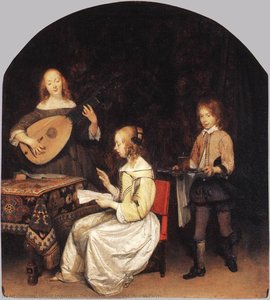
His most celebrated works, such as *The Letter* (c. 1660-65) and *The Concert* (c. 1657), exemplify his mastery of this technique. In *The Letter*, a young woman receives a missive from her husband, her expression conveying a mixture of anticipation and melancholy. In *The Concert*, a family gathers for an evening musicale, their faces illuminated by candlelight, creating a scene of serene domesticity. These paintings are not merely representations of scenes; they are windows into the hearts and minds of the people depicted.
Influences and Artistic Development
Terborch’s artistic development can be traced through several distinct phases. Initially influenced by the Haarlem school, characterized by its emphasis on realism and meticulous detail, he gradually moved toward a more refined and introspective style. His early works often featured scenes of soldiers and guardsmen, reflecting the influence of Pieter Codde and Willem Duyster. However, as he matured, he developed his own unique approach to interior genre painting, prioritizing psychological depth and atmospheric effects over literal representation.
The impact of Diego Velázquez is evident in Terborch’s later works, particularly in his masterful use of light and shadow. Velázquez's ability to capture the nuances of human expression—the subtle flicker of an eye, the fleeting emotion on a face—served as a model for Terborch, who sought to convey similar levels of psychological insight in his own paintings.
Legacy and Historical Significance
Despite producing a relatively small number of works, Gerard Terborch’s influence on Dutch painting is undeniable. He established a new framework for subject matter, taking viewers into the sanctum of the home and revealing the complexities of domestic life. His paintings are not merely decorative; they offer valuable insights into the social customs, values, and emotional lives of 17th-century Hollanders.
Terborch’s work has been admired by art historians for its technical brilliance, psychological depth, and understated elegance. He is considered one of the masters of Dutch interior genre painting, alongside artists such as Gerrit Dou and Johannes Vermeer. His legacy continues to inspire contemporary artists who seek to capture the beauty and complexity of everyday life.
gerard terborch ii
1617 - 1681
プロフィール概要
- Artistic Movement Or Style: Baroque
- Artists Or Movements Influenced By This Artist:
- Gabriel Metsu
- Gerrit Dou
- Johannes Vermeer
- Artists Who Influenced This Artist:
- Pieter de Molijn
- Pieter Codde
- Willem Duyster
- Date Of Birth: December 1617
- Date Of Death: December 8, 1681
- Full Name: Gerard ter Borch
- Nationality: Dutch
- Notable Artworks:
- The Swearing of the Oath
- The Letter
- The Concert
- Paternal Advice
- Place Of Birth: Zwolle, Netherlands