

 プレビュー
プレビュー
 シェアする
シェアする シェアする
シェアする
 詳細を見る
詳細を見る

 ダウンロード
 似ている作品
 X線調査
X線調査 スライドショー
 統計情報
統計情報Dessounin, ou remise du secret du Houngan


 詳細を見る
詳細を見る
オンラインプレビューをはるかに凌ぐ、高解像度で鮮明なデジタル画像をご購入いただけます。
各ファイルは、社内の専門家が高度なツールと熟練した手作業によるレタッチを用いて、細心の注意を払って準備されています。すべての画像において、卓越した鮮明度、正確な色彩再現性、そして繊細なディテールを保証いたします。
最終ファイルは、プロフェッショナルな編集・印刷環境ですぐにご利用いただけるよう最適化された状態で、72時間以内にメールにてお届けいたします。これは、一流のデザインスタジオ、出版社、ギャラリーから信頼されているものと同等の品質です。
デジタルアート
個人での鑑賞、印刷、クリエイティブなプロジェクト用に、高解像度ファイルをダウンロードできます。 ( プリント版に切り替え 手描きの絵画を購入)
デジタル画像のご注文に付随する特典
高品質なデジタル画像配信を、確かな品質で。
ArtsDot.com を選ぶことは、単に画像を手に入れることではありません。それは、プロの手によって精密に仕上げられ、満足保証が付いた高品質なデジタルアートワークを受け取ることを意味します。ご注文いただいた際に自動的に付随する内容は、以下の通りです:

メールですぐにお届け
ご注文から72時間以内に、高解像度のデジタル画像ファイルがメールでお手元に届きます。すぐにそのままご利用いただけます。

AI技術で最適化されたデジタルファイル
お客様の作品は、高度なAIツールと専門家による手作業の編集を組み合わせてプロフェッショナルに最適化されており、細部のディテール、鮮明さ、そして正確な色再現性を最大限に引き出しています。

一生涯無料の再送サービス
ファイルを誤って削除したり、紛失してしまったりしましたか?ご安心ください。いつでも無料で再送いたします。

輸入手数料は一切かかりません
関税や手数料、配送料を気にすることなく、お気に入りのアートワークをすぐにお楽しみいただけます。デジタルダウンロードは常に免税です。

色彩再現の保証
プロ仕様のツールとカラーマネジメント技術を用いることで、デジタル画像が元の色を最大限に忠実に再現することを保証いたします。

100日間満足保証
ご購入いただいたデジタル画像にご満足いただけない場合は、100日以内であれば、理由を問わず修正または100%の返金対応をさせていただきます。

100% 返金保証
ご満足いただけない場合は、デジタルファイルを受け取ってから100日以内であれば、理由を問わず全額返金いたします。

まとめ買い割引
3枚購入で10%OFF - 5枚購入で15%OFF - 10枚以上購入で20%OFF。クリエイティブなプロジェクト、ギャラリー、エージェンシーに最適です。
A Macabre Dance of Spirits: The Visionary World of Gerard Valcin
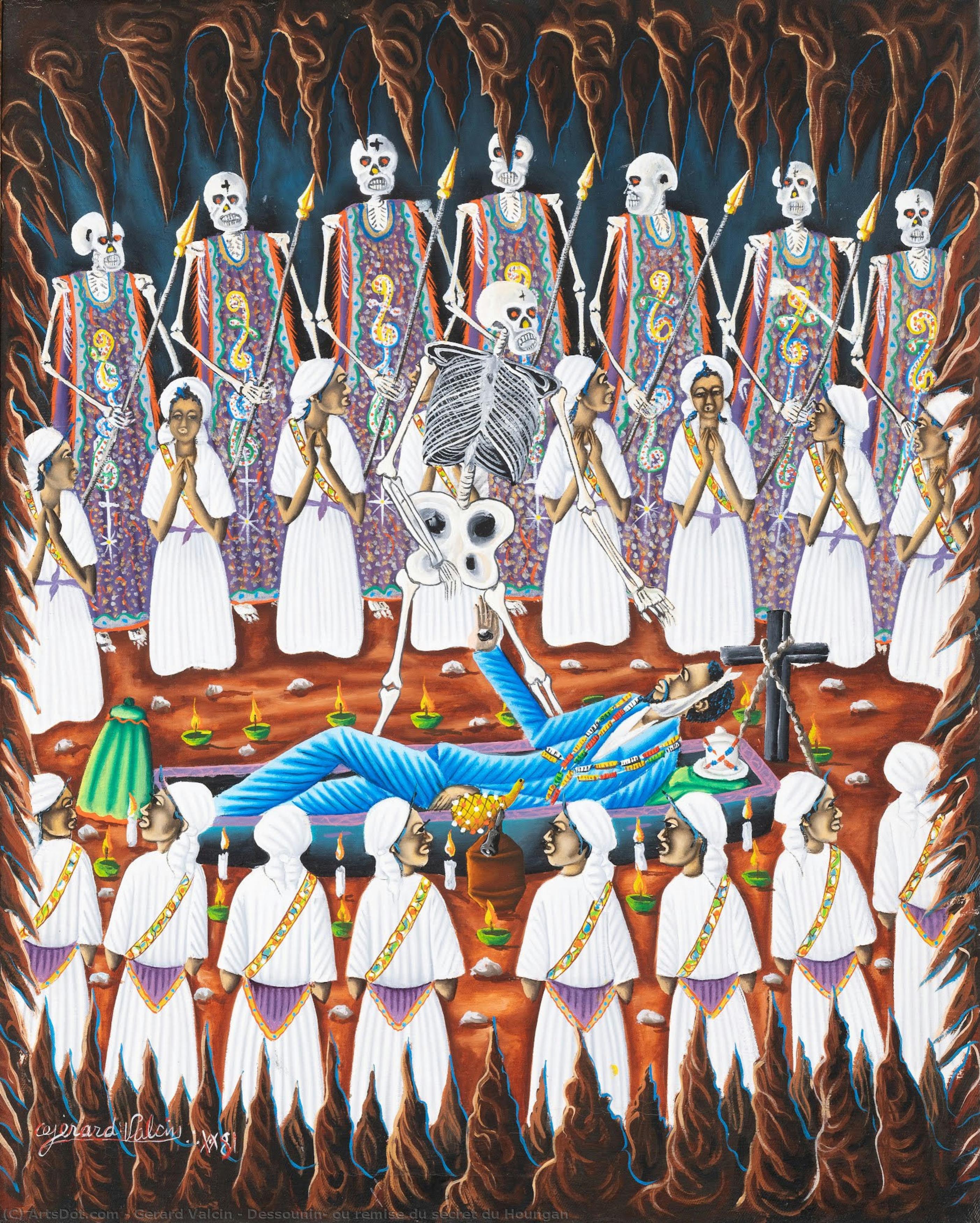
In the hauntingly beautiful masterpiece Dessounin, ou remise du secret du Houngan, the viewer is transported into a surreal, liminal space where the boundary between life and death dissolves. Created in 1981 by the renowned Haitian master Gerard Valcin, this work serves as a profound window into the spiritual complexities of Vodou cosmology. The painting presents a large, intricate assembly of skeletons, draped in vibrant, colorful clothing that contrasts sharply with their skeletal forms. This juxtaposition of the macabre and the celebratory is a hallmark of Valcin’s unique ability to find life within the imagery of mortality. At the heart of this rhythmic gathering lies a central figure, a man resting on his back, enveloped by a swirling congregation of spirits. The composition is dense and layered, pulling the observer into a deep, multidimensional ritual that feels both ancient and immediate.
The technique employed in this piece reflects Valcin’s disciplined background as a tile setter, manifesting in a meticulous sense of symmetry and placement. Every skeleton is positioned with intentionality, creating a complex geometry that guides the eye through the chaotic yet structured scene. His brushwork captures the textures of fabric and bone with equal fervor, lending a tactile quality to the painted surface. The use of color is particularly striking; rather than opting for a somber palette befitting a graveyard scene, Valcin utilizes bright, saturated hues that breathe energy into the skeletal figures. This stylistic choice transforms what could have been a frightening tableau into a vibrant, ceremonial dance, suggesting that in the Haitian spiritual tradition, death is not an end, but a transition—a colorful continuation of the soul's journey.
For the discerning collector or interior designer, this artwork offers much more than mere decoration; it provides a profound emotional resonance and a conversation piece of unparalleled depth. The symbolism within Dessounin speaks to the themes of secret knowledge, ritualistic succession, and the cyclical nature of existence. The title itself hints at the passing of sacred secrets, inviting the viewer to contemplate the hidden layers of reality that exist beneath the surface of the visible world. Incorporating a high-quality reproduction of this work into a curated space brings an element of storytelling and cultural prestige. It serves as a bold statement of sophistication, appealing to those who appreciate art that challenges the senses and invites deep, introspective thought through its masterful blend of folk tradition and visionary surrealism.
関連作品
作家の略歴
The Soul of the Soil: The Life and Legacy of Gerard Valcin
In the vibrant, rhythmic heart of Port-au-Prince, a legacy was forged from the very dust and grit of Haitian daily life. Gerard Valcin, born in 1925, did not emerge from the halls of formal academies, but rather from the industrious landscape of a man who understood the structural beauty of the world through his hands. Before he was an icon of Haitian Naïve art, Valcin was a tile setter. This early vocation, far from being a mere prelude to his creative life, became the silent architect of his aesthetic. The meticulous precision required to lay tiles—the careful consideration of symmetry, the balanced placement of patterns, and the geometric harmony of shapes—would later manifest in his paintings through the deliberate arrangement of figures, blades of grass, and swaying trees.
Valcin’s journey was one of profound transformation, moving from the physical labor of construction to the spiritual labor of painting. His early years were marked by the hardships of poverty and a limited formal education, yet these very struggles provided the emotional depth that would define his oeuvre. By 1950, his talent caught the attention of the Centre d’Art, where he began to refine a voice that was uniquely his own. Under the guidance of figures like DeWitt Peters, Valcin learned to translate the textures of his lived experience onto canvas, moving his artistry "from under his foot to his brain." This transition allowed him to become a central figure in the second generation of Haitian painters, elevating the folk traditions of his homeland into a sophisticated visual language recognized by the international art community.
A Tapestry of Ritual and Resilience
To look upon a Valcin canvas is to enter a world where the veil between the physical and the spiritual is thin. His work is deeply intertwined with the sacred rhythms of Vodou, capturing the intense, ceremonial energy of rituals with a clarity that feels both intimate and monumental. He did not merely observe these ceremonies; he immortalized them, using a palette of striking reds, sun-drenched yellows, and deep, oceanic blues to evoke the heat and spirit of Haiti. His compositions often feature Papa Zaca or scenes of Agoue, where the divine presence is felt through the vibrant, expressive lines and the rhythmic, symmetrical placement of characters that suggest a cosmic order within the chaos of ritual.
Beyond the spiritual, Valcin was a master chronicler of the Haitian landscape and its people. His paintings serve as windows into the rural villages of his youth, celebrating the dignity of daily life and the resilience of a culture that finds joy amidst adversity. There is a certain magic in his ability to blend the mundane with the mythic; a simple village scene can feel charged with the same intensity as a sacred dance. This duality—the celebration of the earthly and the honoring of the divine—is what makes his work so enduringly captivating. He painted not just what he saw, but what he felt, creating a visual folklore that resonates with the heartbeat of the Caribbean.
An Enduring Artistic Heritage
The significance of Gerard Valcin extends far beyond the borders of Haiti. His inclusion in landmark exhibitions, such as the 1978 show at the Brooklyn Museum, introduced his vision to a global audience and solidified his status as a "sacred monster" of Haitian art. He was not only a creator but also a mentor, passing his knowledge down to subsequent generations of artists, including his half-brother Pierre-Joseph Valcin and his nephew Favrange Valcin. His influence can be traced through the works of many who studied under him, ensuring that his particular brand of symmetrical, soulful storytelling would continue to evolve.
Today, the works of Valcin are preserved in some of the most prestigious institutions in the world, serving as permanent ambassadors of Haitian culture. His legacy is held in collections such as:
- Musée d’Art Haitien du Collège Saint-Pierre in Port-au-Prince
- The Milwaukee Museum of Art in the United States
- The Waterloo Museum of Art in Iowa
- Musée d’Art Nader
Though he passed away on May 15, 1988, Valcin’s presence remains undiminished. Every time a viewer encounters the balanced geometry and vivid color of his paintings, they are reminded of a man who took the fragments of a humble life and assembled them into a masterpiece of national identity.
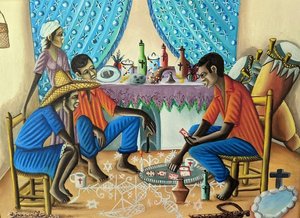
gerard valcin
1925 - 1988 , Haiti
プロフィール概要
- Artistic Movement Or Style: Naive genre
- Date Of Birth: 1925
- Full Name: Gerard Valcin
- Nationality: Haitian
- Notable Artworks:
- Papa Zaca
- Dessounin, ou remise du secret du Houngan
- Marriage of Agwe and La Sirene
- Place Of Birth: Port-au-Prince, Haiti