

 プレビュー
プレビュー
 シェアする
シェアする シェアする
シェアする
 詳細を見る
詳細を見る

 ダウンロード
 似ている作品
 X線調査
X線調査 スライドショー
 統計情報
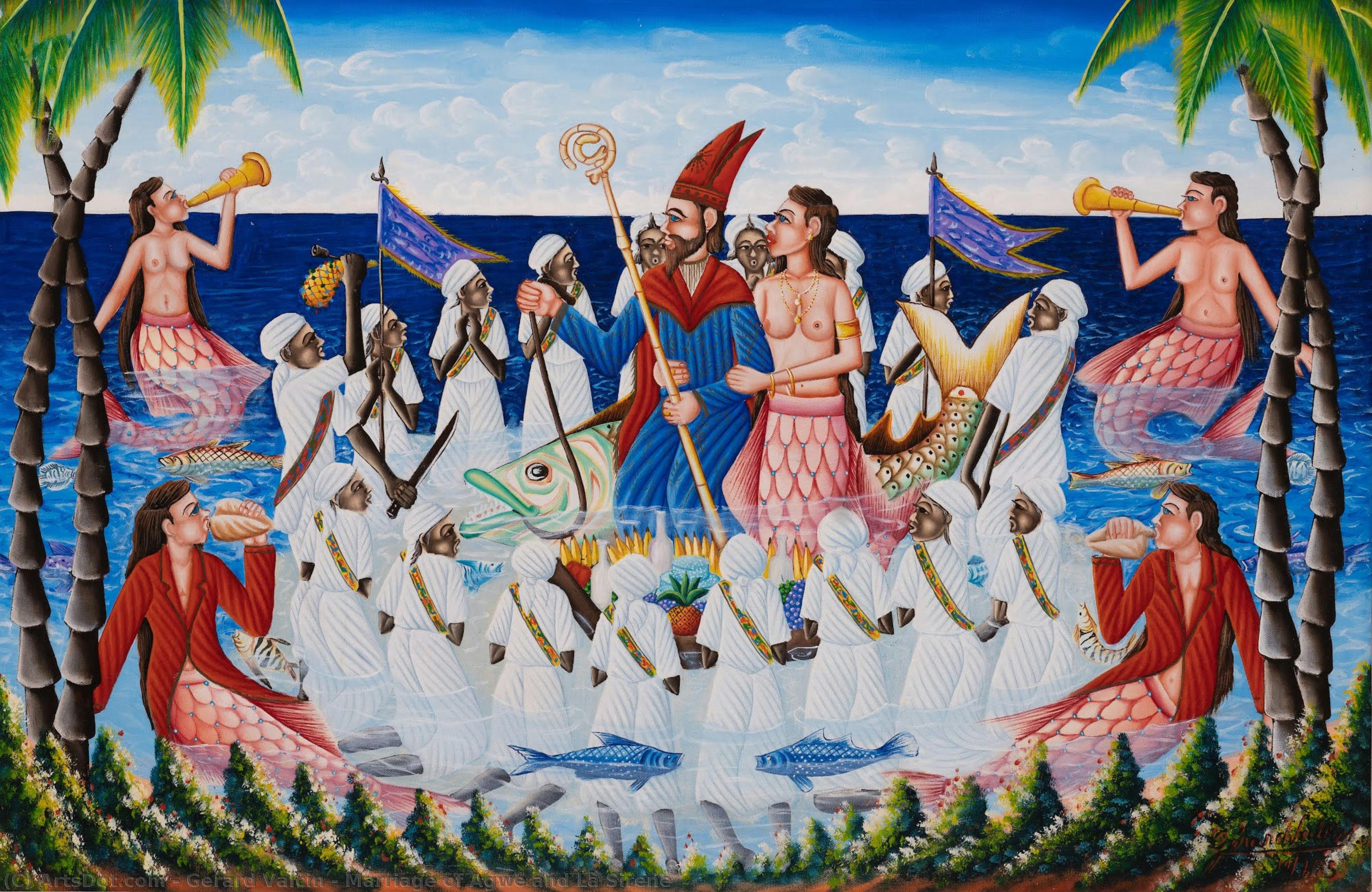
統計情報Marriage of Agwe and La Sirene


 詳細を見る
詳細を見る
手描き油彩複製画
当社のアーティストが、お客様のご希望のサイズと額縁に合わせて、キャンバスに手描きで制作する油彩画です。 ( プリント版に切り替え デジタル画像販売へ切り替え)




































作品のオリジナル比率に合わせた、当店の規定サイズからお選びください。

特定のフレームやスペースに合わせて、ご希望のサイズをご入力いただけます。選択されたサイズが元の画像の比率と異なる場合、アートワークをトリミングするか、手描きで要素を追加して絵画を拡張いたします。デジタルモックアップ を制作し、制作開始前にご確認(承認)をいただきます。
画面上のプレビューは、実際のトリミングや拡張を正確に反映しているものではありません。最終的な構図は、モックアップによってのみ正確にご確認いただけます。
カスタムサイズもご利用いただけますが、元の比率を維持するためには、あらかじめ用意されたリストからサイズを選択することをお勧めいたします。
ご注文後、ArtsDot.com チームより詳細な指示をお送りするとともに、仕上がりイメージ(モックアップ)をご提供いたします。


 ガラスオプションは、110cm未満のサイズでのみご利用いただけます。

Marriage of Agwe and La Sirene
複製技法
複製画のサイズ
-


合計金額
$ 263
関連作品






アーティストの略歴
The Soul of the Soil: The Life and Legacy of Gerard Valcin
In the vibrant, rhythmic heart of Port-au-Prince, a legacy was forged from the very dust and grit of Haitian daily life. Gerard Valcin, born in 1925, did not emerge from the halls of formal academies, but rather from the industrious landscape of a man who understood the structural beauty of the world through his hands. Before he was an icon of Haitian Naïve art, Valcin was a tile setter. This early vocation, far from being a mere prelude to his creative life, became the silent architect of his aesthetic. The meticulous precision required to lay tiles—the careful consideration of symmetry, the balanced placement of patterns, and the geometric harmony of shapes—would later manifest in his paintings through the deliberate arrangement of figures, blades of grass, and swaying trees.
Valcin’s journey was one of profound transformation, moving from the physical labor of construction to the spiritual labor of painting. His early years were marked by the hardships of poverty and a limited formal education, yet these very struggles provided the emotional depth that would define his oeuvre. By 1950, his talent caught the attention of the Centre d’Art, where he began to refine a voice that was uniquely his own. Under the guidance of figures like DeWitt Peters, Valcin learned to translate the textures of his lived experience onto canvas, moving his artistry "from under his foot to his brain." This transition allowed him to become a central figure in the second generation of Haitian painters, elevating the folk traditions of his homeland into a sophisticated visual language recognized by the international art community.
A Tapestry of Ritual and Resilience
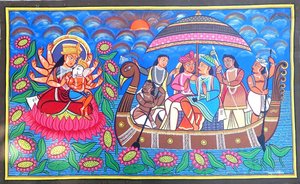
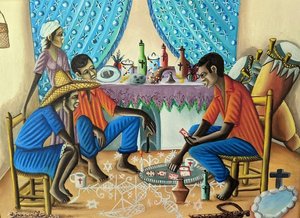
To look upon a Valcin canvas is to enter a world where the veil between the physical and the spiritual is thin. His work is deeply intertwined with the sacred rhythms of Vodou, capturing the intense, ceremonial energy of rituals with a clarity that feels both intimate and monumental. He did not merely observe these ceremonies; he immortalized them, using a palette of striking reds, sun-drenched yellows, and deep, oceanic blues to evoke the heat and spirit of Haiti. His compositions often feature Papa Zaca or scenes of Agoue, where the divine presence is felt through the vibrant, expressive lines and the rhythmic, symmetrical placement of characters that suggest a cosmic order within the chaos of ritual.
Beyond the spiritual, Valcin was a master chronicler of the Haitian landscape and its people. His paintings serve as windows into the rural villages of his youth, celebrating the dignity of daily life and the resilience of a culture that finds joy amidst adversity. There is a certain magic in his ability to blend the mundane with the mythic; a simple village scene can feel charged with the same intensity as a sacred dance. This duality—the celebration of the earthly and the honoring of the divine—is what makes his work so enduringly captivating. He painted not just what he saw, but what he felt, creating a visual folklore that resonates with the heartbeat of the Caribbean.
An Enduring Artistic Heritage
The significance of Gerard Valcin extends far beyond the borders of Haiti. His inclusion in landmark exhibitions, such as the 1978 show at the Brooklyn Museum, introduced his vision to a global audience and solidified his status as a "sacred monster" of Haitian art. He was not only a creator but also a mentor, passing his knowledge down to subsequent generations of artists, including his half-brother Pierre-Joseph Valcin and his nephew Favrange Valcin. His influence can be traced through the works of many who studied under him, ensuring that his particular brand of symmetrical, soulful storytelling would continue to evolve.
Today, the works of Valcin are preserved in some of the most prestigious institutions in the world, serving as permanent ambassadors of Haitian culture. His legacy is held in collections such as:
- Musée d’Art Haitien du Collège Saint-Pierre in Port-au-Prince
- The Milwaukee Museum of Art in the United States
- The Waterloo Museum of Art in Iowa
- Musée d’Art Nader
Though he passed away on May 15, 1988, Valcin’s presence remains undiminished. Every time a viewer encounters the balanced geometry and vivid color of his paintings, they are reminded of a man who took the fragments of a humble life and assembled them into a masterpiece of national identity.
gerard valcin
1925 - 1988 , Haiti
基本情報
- Artistic Movement Or Style: Naive genre
- Date Of Birth: 1925
- Full Name: Gerard Valcin
- Nationality: Haitian
- Notable Artworks:
- Papa Zaca
- Dessounin, ou remise du secret du Houngan
- Marriage of Agwe and La Sirene
- Place Of Birth: Port-au-Prince, Haiti